

At a time when the minorities and martyrs of society have gained so much influence and power in the delirious Society of North America in recent years, the marginalized and peripheral continent of Latin America has had to pay for its share of power and space in the contemporary art market. The recognition and awards are always dictated from the same centers (Europe and the United States) but today the prize goes to Latin America. The vast continent finally united as an emerging artistic force now taking over the international stage is synthesized in spaces and institutions bearing the banners of cross-breeding, pluralism, and syncretism.
Latin America was the guest of honor at this year’s edition of ARCO and was represented by a series of galleries selected by Octavio Zaya. In principle, the invitation made a few suggestions on how to meet the commitment of representing Latin American art within a commercial setting. The galleries endeavored to show works that would be up to the level of international discourse and to steer far away from the Third World complexities about art. They were also encouraged to avoid including too many artists (no more than three) and to give preference to one-person shows. Bearing in mind the commercial aspect of the fair (common to all such fairs), the galleries from Latin America were encouraged to take certain risks in exchange for the opportunity of participating in this debut. Although for many, it was, financially speaking, their only possibility for participating in such an important fair, they found themselves in the interesting situation of having to confront the massive public with their heads rather than their hands in their pockets.
Zaya established other restrictions by not allowing in particular the New York Carla Stellweg Gallery to participate, though representing emerging Latin American artists and artists of Latin origin living in the United States because this country is not located in the Latin American continent. "Territoriality imposes a line between two cultures, that of the United States and that of Latin America, cultures understood as a dynamic coexistence between the social and economic realities which make them up," argued Zaya, who nevertheless in his paper emphasized the growing importance of Latin roots in the culture of the United States, a country, which according to the 1996 census, has 30 million Spanish-speaking persons. In the same way, the 204 Gallery from Venezuela, the Grupo Roja from Argentina, and La Panaderia from Mexico were excluded from the final list, since they allegedly did not meet the commercial criteria established by the organizing committee.
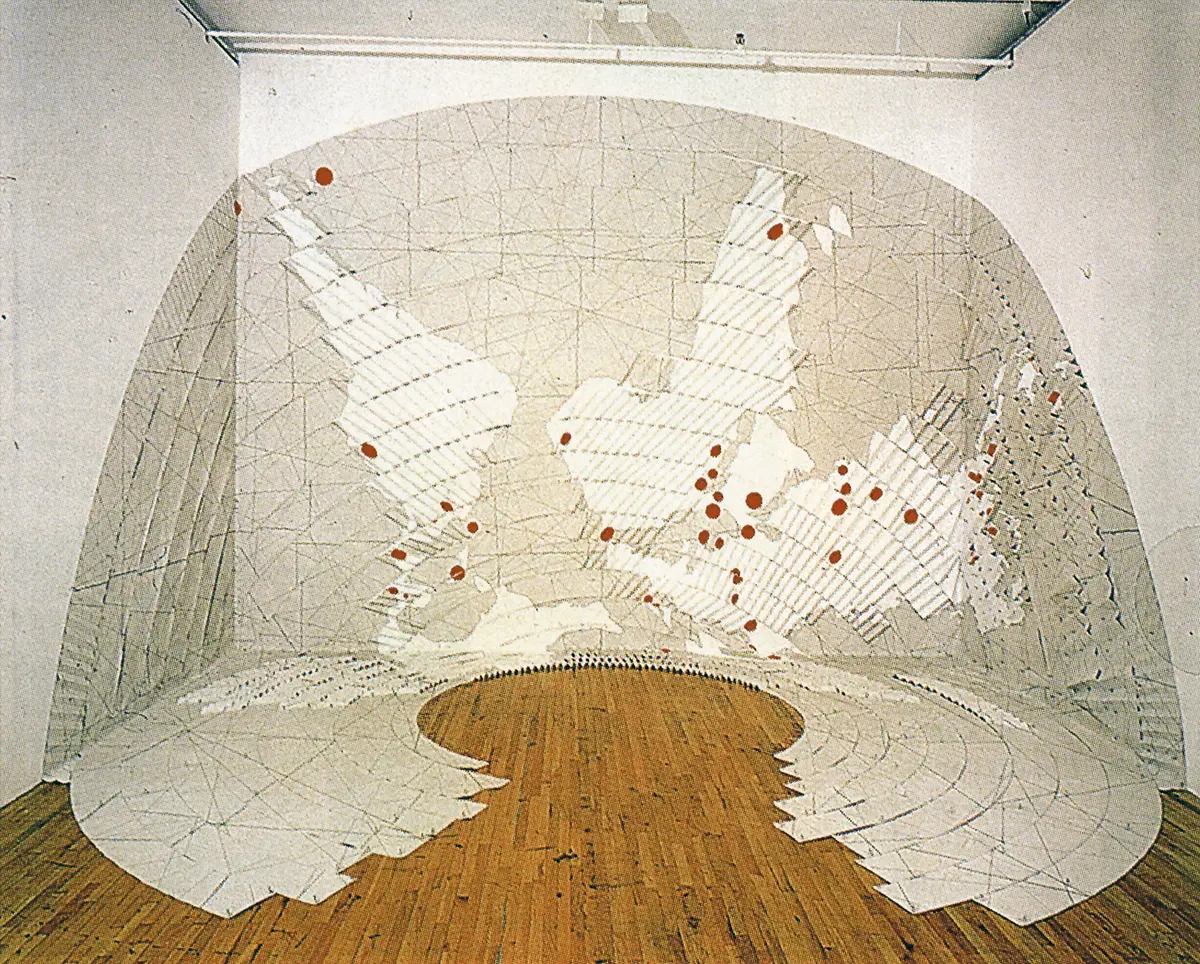
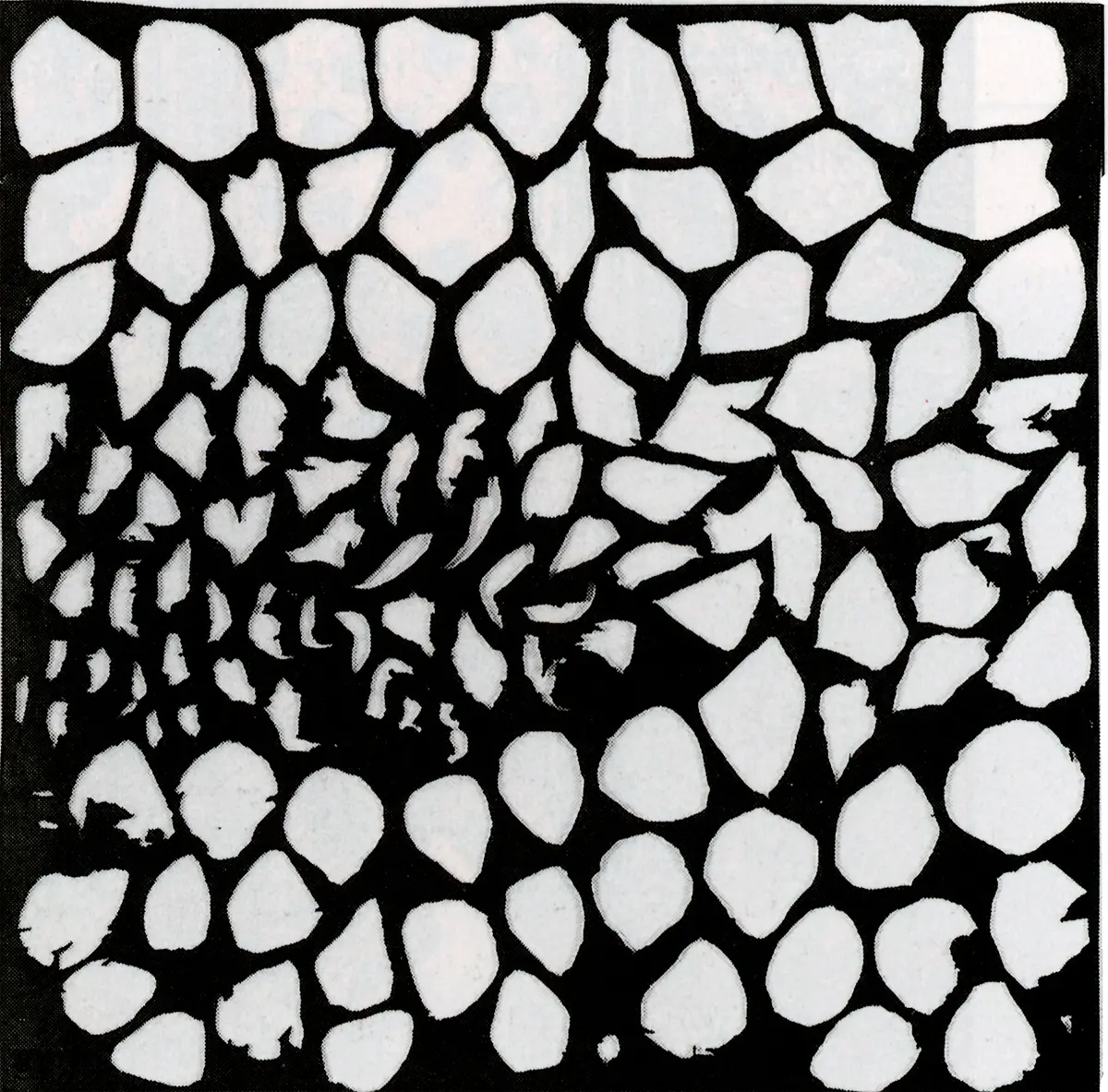
Of the 212 that did make the final list, thirty-four galleries stood out with exceptional brilliance. The "one-person- show" format was fully implemented only by the Arts Forum Gallery, which offered a handsome installation made up of work by the Venezuelan artist Roberto Obregon; the Tomas Andreu Gallery which exhibited a solitary work by the enigmatic Arturo Duclos; and the Fernando Quintana Gallery that displayed large format pieces by Miguel Ángel Ríos. Obregon, subtle and poetic, a sort of taxidermist of rose petals, showed different facets and formats of his characteristic dissections in an interesting montage that offered the visitor fascinating possibilities for interpretation. Duclos exhibited his well-formulated work of infinite combinations, discourses, and modes of deciphering. Miguel Ángel Ríos already occupied the place of honor at one of the entrances to the fair, where an institution presented his installation titled Pleats and Borders, a partially unfolded map of geography recorded by the conquistadores. The gallery also included his new paintings of autochthonous flora, as well as cartographies — discourses which in his own style speak from a continental perspective, in recognition of the original, historical, natural, and cultural differences of the "New World."
Expectations fulfilled
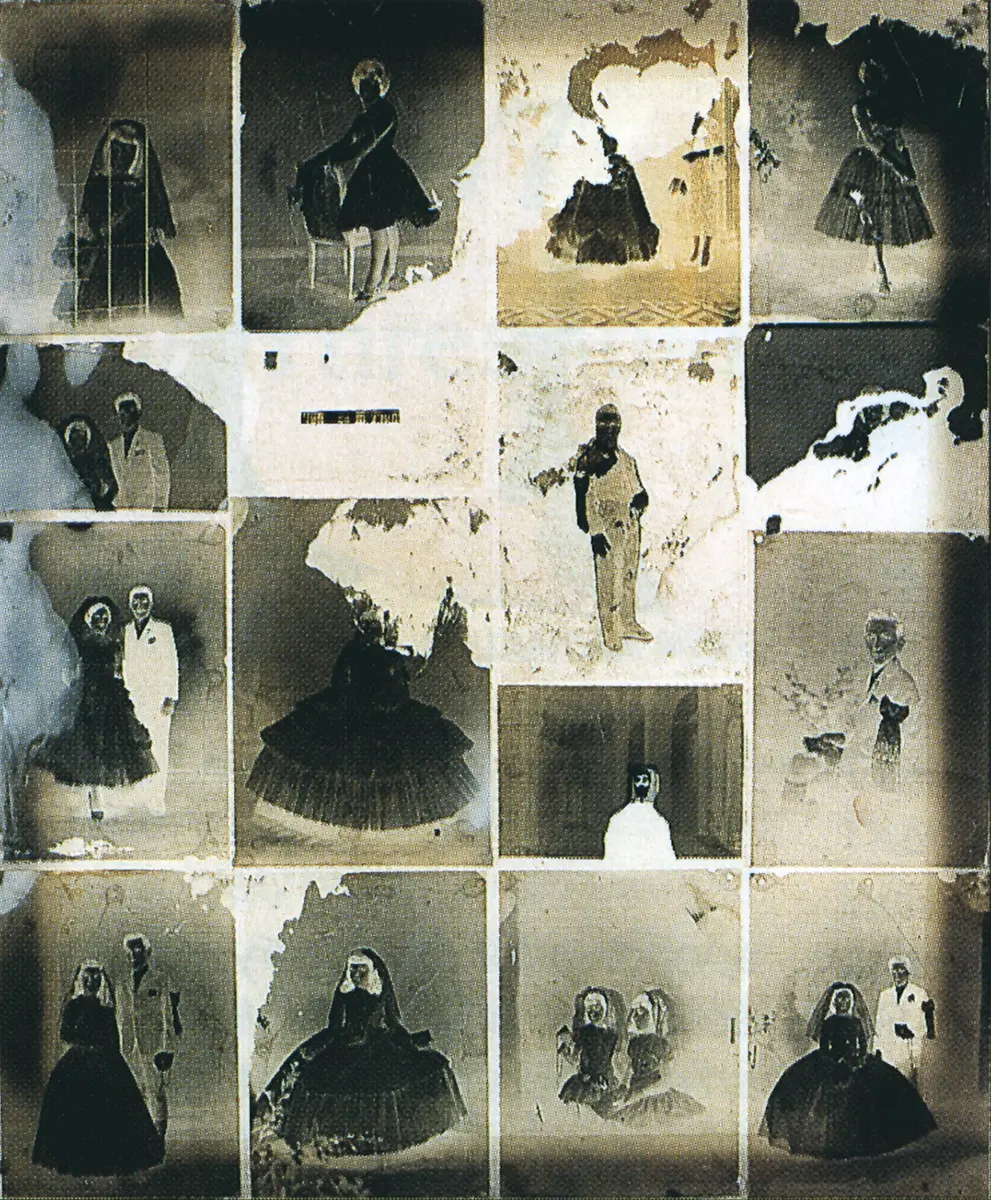
The "Latin American" label which has become fashionable in Europe since the 1992 Fifth Centenary celebrations of the discovery of the Americas is a rather weak term for encompassing the art of the continent. Some people recognize concerns about regional identity, whereas others, including critics, globalize particularities and refuse to use cultural categories. The first group would include, for example, a photographic retablo by the Colombian artist Jose Alejandro Restrepo, in which the myth of Adam and Eve demystifies the classical prohibited fruit by replacing it with a banana — a suggestive fruit from the authentic site of paradise, according to the artist. Mention may also be made, at a different level, of the trousers of Priscila Monge, impeccably made with sanitary towels, which in turn recalled the many other projects made at the fair based on sewing and clothing (Leda Catunda, Paula Santiago, Beth Moyses, Rosana Palazyan, Carlos Arias, to mention just a few artists).
Brazil is another country that shines with a special kind of brilliance. The charisma that is generally associated with its art, and its subtle dose of irony coupled with risks taken in the use of sources, all combine to produce works that are impressive, exquisite, and sophisticated. The small space at Joel Edelstein, for example, presented such works by Tunga, Meireles, Rio Branco, Oiticica, in an impressive exhibit of contemporary art.

Another outstanding example was offered by the Cubans. The Habana Gallery showed the original Creating Hand by Los Carpinteros, which won the public's prize for the best work: a piece of furniture/sculpture in wood allegorically symbolizing the "powerful hand” full of empty compartments and histories to be filled in. Belkis Aayón, Tania Bruguera, Fernando Rodriguez, and Esterio Segura accompanied the prize-winning hand, whose trio of artists continued to enjoy the Madrid venue prior to the inauguration of an individual show at the Angel Romero Gallery, their representative in Spain. Ramis Barquet, a fatherly figure who promotes art from and beyond Mexico, presented auto-photographic work by the Cuban Marta Maria Perez that was awarded a prize by the Fundacion Argentaria. Her photographs which are of her own image in extreme situations are a reflection of violence and the afflictions of women. Finally, another prize, awarded by the Spanish Association of Art Critics, went to Edgar Negret.
In general, this mega-show of Latin American works, perhaps the greatest ever organized, exceeded the expectations of most of the galleries. Jacobo Karpio said it offered "the hottest in Latin American art". For Memo Sepulveda, of Arte Actual Mexicano, this first event of its kind was still only exploratory and he felt that the presence of Latin American art should be a permanent feature of art fairs: "Spain, as well as Italy, Portugal, and Greece are a little bit like the 'poor cousins' of Europe, and they are looked at a certain disdain by such countries as Germany, England or France. I think that Spain spends a lot of time trying to get itself accepted, without realizing that it has an entire continent on the other side of the ocean with which it could enjoy greater unity, where it could become the mother welcoming her child back into her bosom." Says Diana Lowenstein of Der Brücke Gallery, who is also a member of the ARCO organizing committee, said that the results this time were so positive that the organization has decided to include regions of the Latin American continent in its future editions on a regular basis. The Caribbean, once again put into focus by Octavio Zaya, will be showcased at next year’s ARCO, with the following edition probably focusing on the Southern Cone.
There were of course some voices of protest, including that of Miguel Ángel Ríos, against the prevalence of quantity over quality and the serious absence, in such an important venue, of examples of some of the most representative examples of contemporary Latin American. Where, for example, was Meyer Vaisman? But there are some artists who are not interested in appearing in this kind of context, such as Hernandez-Diez, who was nevertheless represented by a couple of photographs from his series of little nibbled dolls on the walls of the Camargo Vilaga Gallery. At all events, it was a paradoxical context, a combination of commercial goals, and cultural objectives, essentially independent and generally opposing conditions. To look at ARCO from the critical standpoint of a spectator visiting an exhibition is a decontextualized pretension, but as a massive, instantaneous, multitudinous artistic and commercial event, the fair was really exceptional.
Theoretical horizons together in diversity
Within the cultural framework of the fair, a series of theoretical debates were organized, including one on Horizons in Latin American Art. None of those who presented papers wanted to pigeonhole Latin American art in geographical and historical parameters (the name "America" being due only to its relation with Americo Vespucio) and great caution was expressed concerning concepts like identity and idiosyncrasy, but the subject was indeed one likely to generate a number of conceptual speculations full of criticism, irony, and vindication. "Latin American art, in order to exist, must cease to exist," said David Suarez, art critic, and professor at the Faculty of Fine Arts of the Polytechnical University of Valencia. He mentioned the need to overcome the Latin American neurosis of identity, a cliché that perceived the continent as a realm of diversity. "Behind the illusion of an apparent diversity lurks a fear of what we are and as long as we define ourselves in one way or another, we shall be perpetuating our own obedience within frontiers. The cultural objective of Latin America, a continent whose adhesive aspects result from its exclusion from the discourses of the major metropolis, lies in being able to reject the rejection produced outside these countries." Perez’s view, that of an analytical and solitary European, was a charismatic warning about certain genetically recognized illusions. Like yet another colonizing process, it intervenes in a hegemonic and dictatorial way against others. The post-colonialist fallacy that calls for cultural equality does not recognize that today the world is more colonized than ever by mediated conditions and that the only multiculturalism is that of economic necessity. "What is now being colonized are the very structures on which art is based. There is only one culture in the world, that of the free market."

Marcelo Pacheco, Director of the Espigas Foundation of Buenos Aires, asked whether in speaking of Latin American art, categories from other spheres such as geopolitics, macroeconomics, cultural history, or anthropology were appropriate. He asked how a rewriting of the history of local art, its translation to the international level, and active participation in the current Latin American discussion could be achieved simultaneously. Sheila Leirner, art critic and former General Commissary of the São Paulo Biennial, in her paper on the "Art of the New World directed to a New World", did recognize the universality of art, including Latin American art, in the sense of actions synchronized within the same world circuit. "Universal culture proceeds from each of the regional cultures and it is necessary to recuperate one’s own view and express it through universal languages". She used the examples of Kahlo, Orozco, Rivera, Berni, Iturria, the CAYC group from Argentina to illustrate her ideas.
The ephemeral and the dynamic in the art of this "horizon" were evoked in the papers of Coco Fusco, an art professor at the Tyler School of Art of Temple University, and Cuauhtemoc Medina, art critic, and teacher at the UNAM in Mexico City. The former referred to performance art, which she illustrated with videotapes of various performances (for example, one in which a group of "savage" natives from Latin America in a cage was put on show in public places in the United States, garnering interesting reactions from a public which naively and literally believed what their eyes saw) that proposed a dialogue with a popular public which questioned the rule of the market. Medina, also using audiovisual material, talked about "young art" in Mexico and its incursions into new forms of creation and new exhibition circuits which broke with the routine of the salons and galleries generally associated with young art.

Maria del Carmen Ramírez, curator of Latin American art at the Archer M. Huntington Art Gallery and professor in the Department of Art of the University of Texas at Austin, referred to "contextures" — her own term — as oscillations or displacements which gave rise to new networks of artistic exchange through the overcoming of frontiers. This mobility, which has repercussions on artistic discourse, makes it possible in the same way for Latin American art to compete in global circuits without escaping either the need for legitimization or the vernacular context. The starting point is marked by the modes which represent something of one’s own, a mediated reality, although recognizing artistic production in Latin America that does not reflect any problem in particular.
Gerardo Mosquera, art critic and curator of the New Museum of New York, attracted the largest audience with his paper. As in a process of symbiosis, the gaze of colonization or access to the art of Latin America by the hegemonic structures is, he said, a form of manipulation that also has repercussions on the colonizer. Globalization, through its essential appropriation, is nowadays like "stealing the stolen cake." We are living in a time of differences, times of dynamism and contamination, and obviously, there is no question of returning to the pre-colonial tradition. "From the standpoint of power, there exists a totalizing reason. This idea of expansion of the world culminates curiously in an inverse totalization relationship: the world is becoming increasingly smaller."
Globalization implies an expansive-contractive concept. All cultures steal from one another, whether in a situation of dominion or subordination. We Latin Americans have transformed ourselves into the imitators of subtle transgressors. Power no longer seeks to repress but to control diversity. One of the decisions which the Latin American world has to take is whether to participate or not in the global circuits, in which everyone is in the end implicated.
The "how," "who," and "where" of dealing with fame is a delicate but by no means unimportant matter. The dignity of each movement will be one of reward or alienation and the incursion of each voice into the territory of recognition will open up the way to new images which will, at the very least, enrich the universal artistic discourse.
ALEJANDRA POZO
Venezuelan art critic. Lives in the Canary Islands.