At the end of ARCO, a visit was arranged for gallery owners, artists, and participants to the Museo Extremeho e Iberoamericano de Arte Contemporaneo (MEIAC) at Badajoz, which also included a selected series of lectures from those already presented at the Fair, by Mari Carmen Ramírez (The local beyond the global), Gerardo Mosquera (Art and globalization in Latin America: Some provocations) and Cuauhtémoc Medina (Skeptical approaches to identity).
On the spot, talks were also given on artists whose works are included in the Museum’s collection, by Marcelo Pacheco (The painting of Guillermo Kuitca), Virginia Perez-Ratton (Priscilla Monge), and Berta Sichel (The photographic field of Alfredo Jaar).
The Museum, which was established as a place of encounter and communication between Spain, Portugal, and Latin America, has prepared a series of exhibitions by artists whose works are represented in the collection. On this occasion, it presented The House of Memory, with works and installations by Carlos Capelan (Uruguay) and Florentino Diaz (Spain).
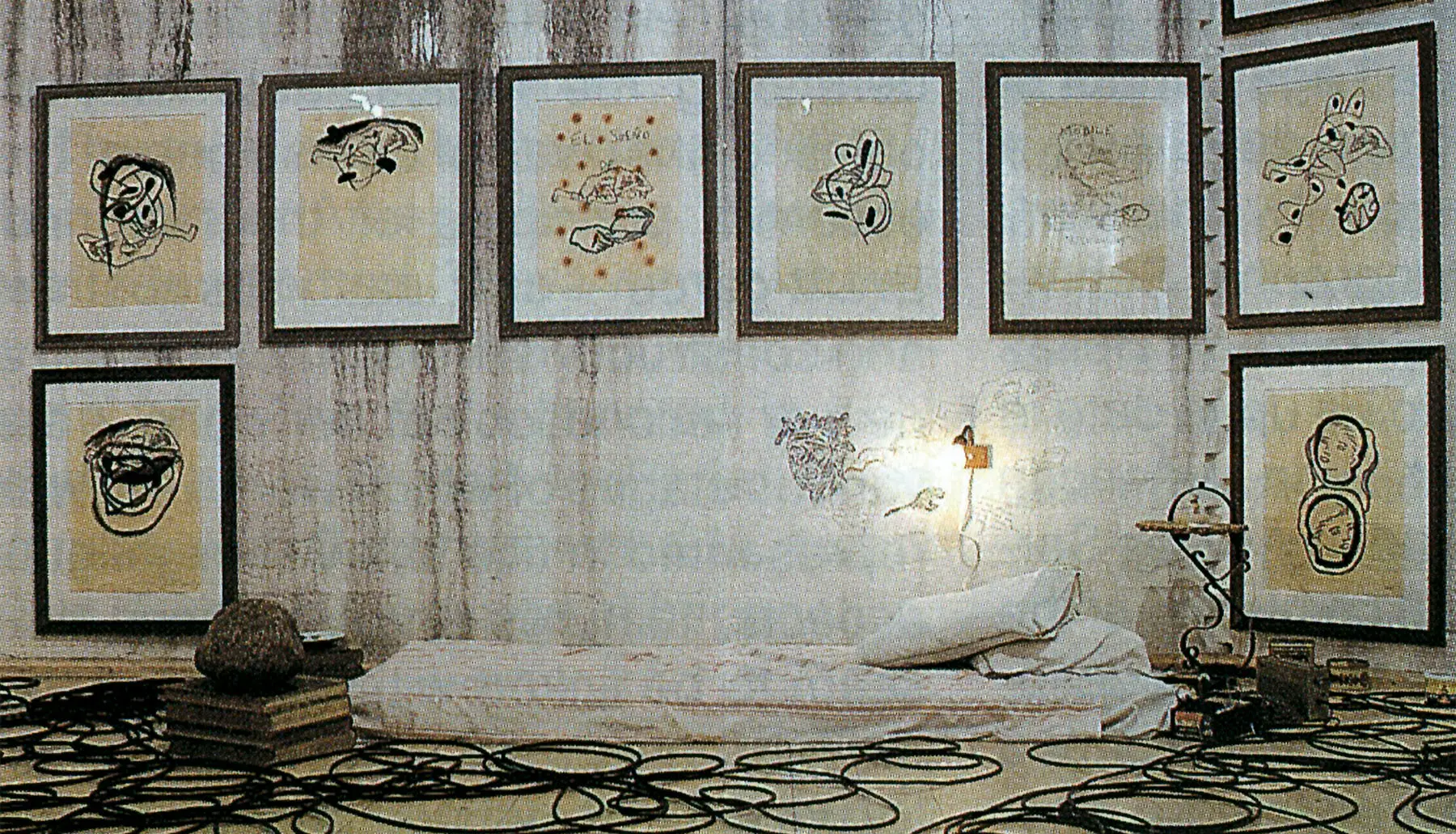
Capelan’s installation reflected the characteristics of his earlier work. On this occasion, the walls were grey, with drips in a darker shade of grey. A gigantic self-portrait of Capelan became transformed as one moved around. Thick black cables extended from one side of the floor to the other, making it difficult to cross, and forcing the visitor to stop to get a better view and perception of the space. There was however a change in his paintings: they are now on white prepared canvas, with small images which are repeated many times, and graphic elements are done with the finger in circular form, filling the space with pigments and mother's milk. The monochromatic pictures are in earth tones, ranging from ochers to chestnuts.
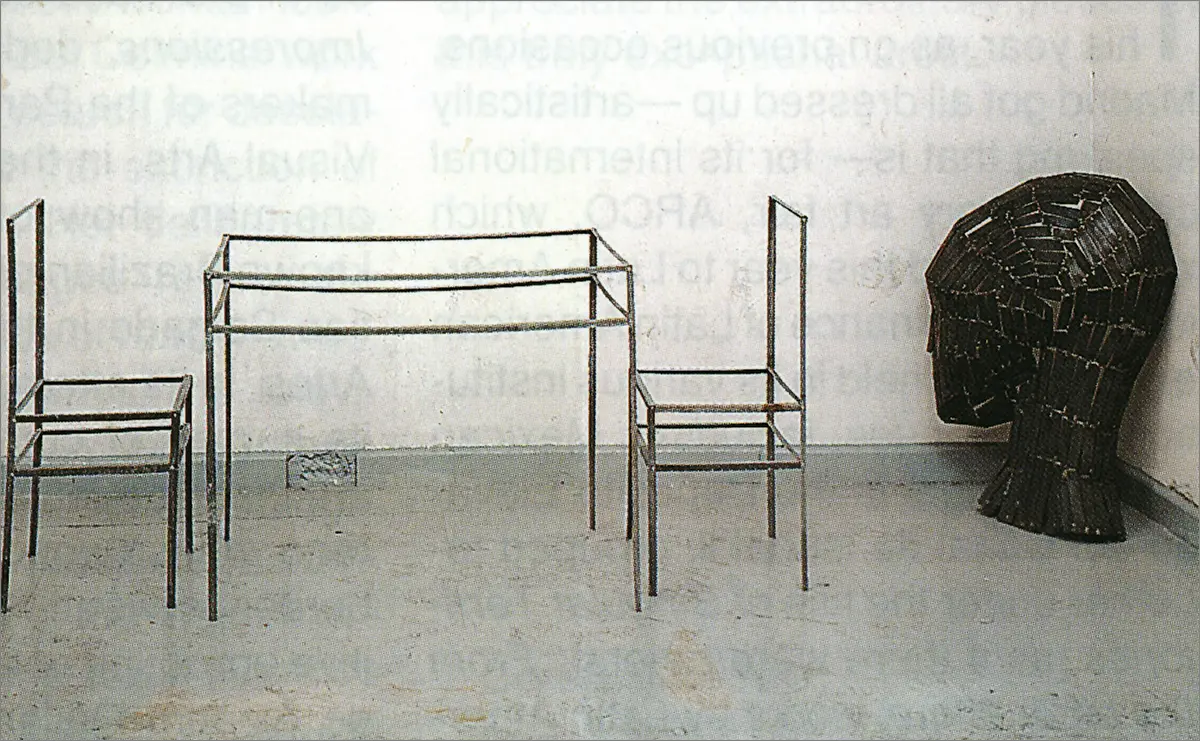
The Florentino Diaz exhibition included works from 1995, silhouettes of beds, chairs, and tables done in different techniques, and a series of wall sculptures done with the repeated use of fragments of wooden fruit boxes. There was also a subtle installation with aluminum silhouettes of two chairs and a table, which could not be used for sitting or eating.
There was an excellent, well-illustrated catalog, with texts by Fernando Castro Florez, Miguel Copon, and Juan Antonio Álvarez Reyes.
For its next edition, ARCO will be inviting Portugal, and the Badajoz encounter will focus on this country.
CELIA S. DE BIRBRAGHER