
The phenomenon known as the "Grand Tour" dates back to England at the end of the sixteenth century.1 It was during this period that the characteristics of the British Empire began to be defined, with the development of its foreign policy in Europe and its role as an international power. At the same time, the emergence of the British overseas empire was accompanied by the country's growing economic power, as Britain replaced Spain and France in the hegemony of Europe. It was during the eighteenth century that collecting works of art reached a high point. It was also during this century that the so-called "Grand Tour" became an essential component in the education of the young elites, who were sent on a tour of the "Continent" on the completion of their studies.2
Such a tour was considered a means of preparing the offspring of the great English families for holding high public office in the burgeoning British Empire. This class of privileged tourists could acquire knowledge about other cultures, languages, and customs—essential skills in the administrative bureaucracy of the Empire. Furthermore, the objects that they acquired during their travels were works of art that people began to collect for their country houses.3
The starting point of the Tour was Paris, followed by a long journey through Italy, including Venice,4 Florence, Rome, and Naples. The return journey included stops in Switzerland, Germany, or perhaps the Netherlands.
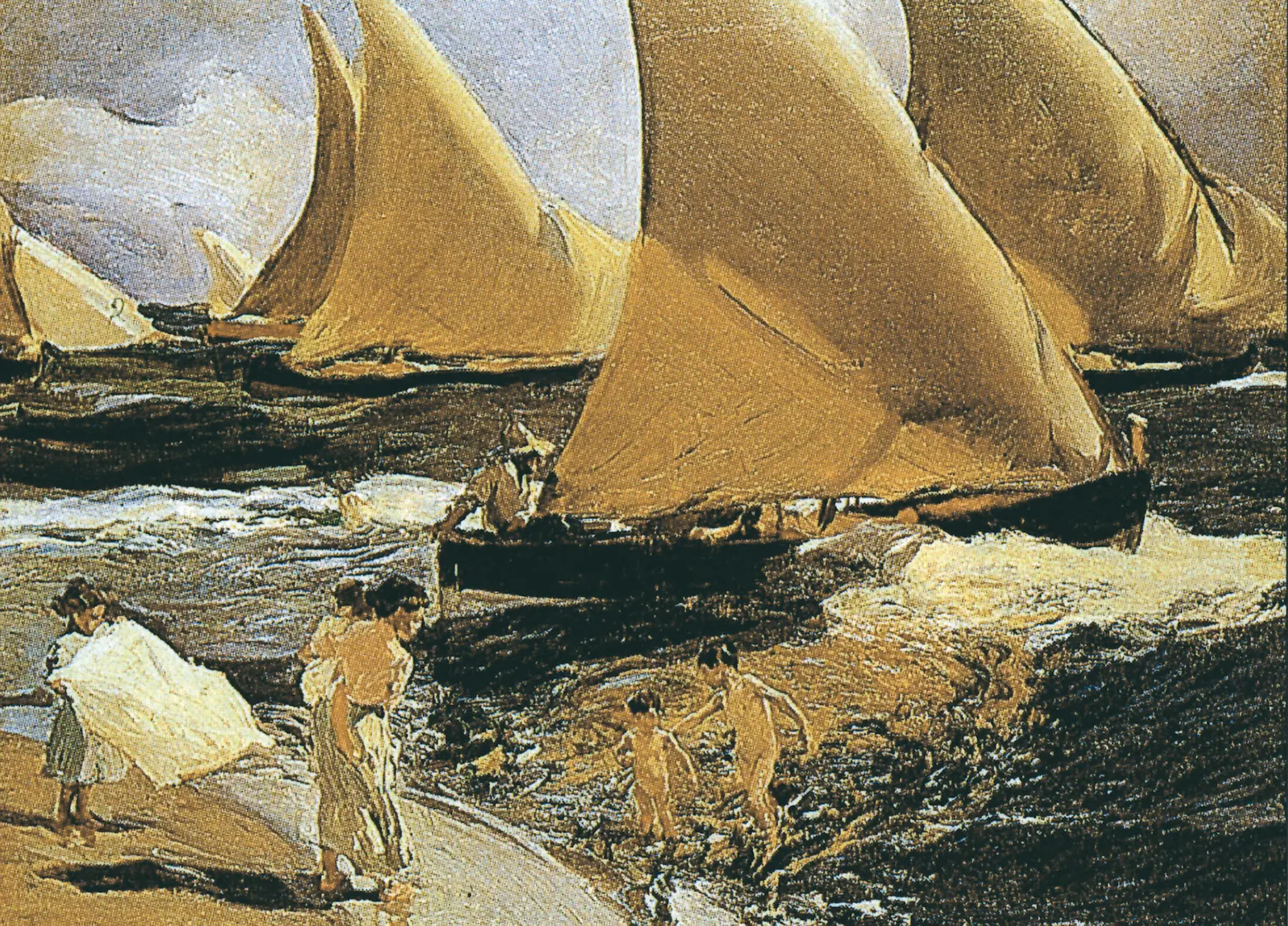
An essential part of the process was the commissioning of a portrait of the traveler by a distinguished painter. The favorite artist for this kind of souvenir portrait was Pompeo Batoni.5 He established a flourishing business doing them, and his portraits are still to be found in British collections as often as those of Canaletto,6 his contemporary, who developed a form of artistic expression directly related to the idea of the Grand Tour, namely paintings of vedute (views) seen while traveling. Similarly, portraits of Latin American travelers, painted by Federico Madrazo7 and later by Sorolla8 and Zuloaga9, are found in Latin American collections.
At the end of the nineteenth century, when the newly independent republics became firmly established, travelers from Latin America began to travel to the Old Continent and collect works of art. The United States also had a version of the Grand Tour, making it a cultural phenomenon in the Americas based on a desire to come into contact with the older civilizations of Europe. It was precisely at this time that the most important private collections in the United States were being formed—these would later become the basis of the country's national museums.
The collections of Andrew Mellon10 (The National Gallery of Art in Washington), Archer Milton Huntington11(The Hispanic Society of America), Benjamin Altman, and Robert Lehman12 (The Metropolitan Museum of Art, New York) all date from this period. Mansions were often transformed into museums after the death of the collectors, as in the case of J.P. Morgan13 (The Morgan Library, New York), Isabella Stewart Gardner14 (Fenway Court), and Henry Clay Frick15 (The Frick Collection, New York), to mention only a few of the most celebrated.
Many of the Latin American art collections that were assembled at this time became the foundation for our national museums or enriched their collections —as with the Marquesa de Pinar del Rio's collection of nineteenth-century Spanish painting16 (Museum of Fine Arts, Havana), the collection of European and Impressionist painting of Antonio Santamarina17 (Museum of Fine Arts, Buenos Aires) and the collection of European painting belonging to Alberto Pani18 (San Carlos Museum, Mexico City).
This development can be illustrated by referring to two collections that now form part of the cultural heritage of their respective countries: the Castro Maya collection in Brazil and the Oscar Cintas collection in Cuba, both of which reflect the characteristic tastes of the period. There are some interesting parallels between the two collectors, Oscar B. Cintas (1887-1957)19 and Raymundo Ottoni de Castro Maya (1894-1968)20. Both came from sugar plantation families, and both spent their early years or completed part of their education outside their respective countries — Cintra in England and Castro Maya in France — before subsequently coming home to head their family businesses. They both returned to Europe frequently to supplement their collections, acquiring European works, both in painting and the decorative arts. Both shared an interest in the development of national art. Castro Maya established the Sociedade dos Cem Bibliofolos do Brasil21 for the publication of books written and illustrated by contemporary Brazilian artists, and the Sociedade dos Amigos de Gravura which sponsored the development of graphic work by Brazilian artists. For his part, Cinta created the Cinta Foundation,22 which offered scholarships to Cuban artists. It is also interesting to note that although neither had any special interest in politics, both held public office: Cintas was his country's ambassador in Washington, and Castro Maya was director for the reconstruction of the Tijuca National Park.
In both cases, there was a family history of a relationship with art. Cintas' family23 traveled to Europe in the nineteenth century, and several of his relatives had their portraits done by Federico Madrazo in Madrid. Castro Maya's father had acquired several works from the Barbizon School in Paris, including paintings by Courbet, Bellange, and Rousseau, which he had purchased at auction at the Hotel Drouot in 1892. Between 1900 and 1921, the collection grew further with French paintings from the nineteenth century, including Troyon, Ziem, and Rosa Bonheur.
Castro Maya continued chronologically24 with the collection of French paintings that his father had begun, enriching it with pictures by Guys, Monet, and Morisot from the Impressionist school. He then moved to modernism, buying works by such major artists as Matisse, Picasso, Dali, Derain, Vlaminck, Braque, Seurat, Degas, Miro, Modigliani, Mathieu, Metzinger, Marcoussis, Leger, and Dufy. The criteria in each case focused on the beauty of the work, and the sensuality and preciousness characteristic of French taste, acquired from the collector's many years of residence and education in Paris.
Castro Maya's father was a passionate book collector25 and a member of Les Cent Bibliophiles in Paris. Castro Maya shared this passion and enriched his father's library with some major acquisitions, including books by traveling painters who had left graphic accounts of Brazil in their explorations. These acquisitions include the manuscripts of Charles Expilly, with drawings and more than 90 watercolors by Franz Keller-Leuzinger, and the famous Voyage Pintoresque au Bresil of Jean-Baptiste Debret, as well as important texts with prints by Rugendas, Auguste Moreau, and Abraham-Louis Buvelot. This offers another parallel with Cintas,26 who also possessed the first edition of Don Quixote and the fifth and final version of the manuscript of Abraham Lincoln's Gettysburg Address (donated to the United States just before his death).
With regard to the decorative arts, the two houses that today hold the Castro Maya collection have remained, as much as possible, as they were during the life of Maya himself.27 They contain a variety of pieces of furniture and objects that reflect French aesthetics in decoration, with a mixture of different styles. The collection includes an excellent combination of eighteenth-century Brazilian furniture, made in the exotic wood jacaranda (which is very much like mahogany), a varied selection of Japanese and Chinese screens, Oriental porcelain pieces, classical sculptures from Greece, China, and India, as well as a superb collection of Portuguese tiles from the eighteenth, nineteenth and twentieth centuries. The Cintas' residence in Havana was decorated in the English style, with eighteenth-century furniture. Special and extensive attention was paid to two English "favorites": silverware and China porcelain.28
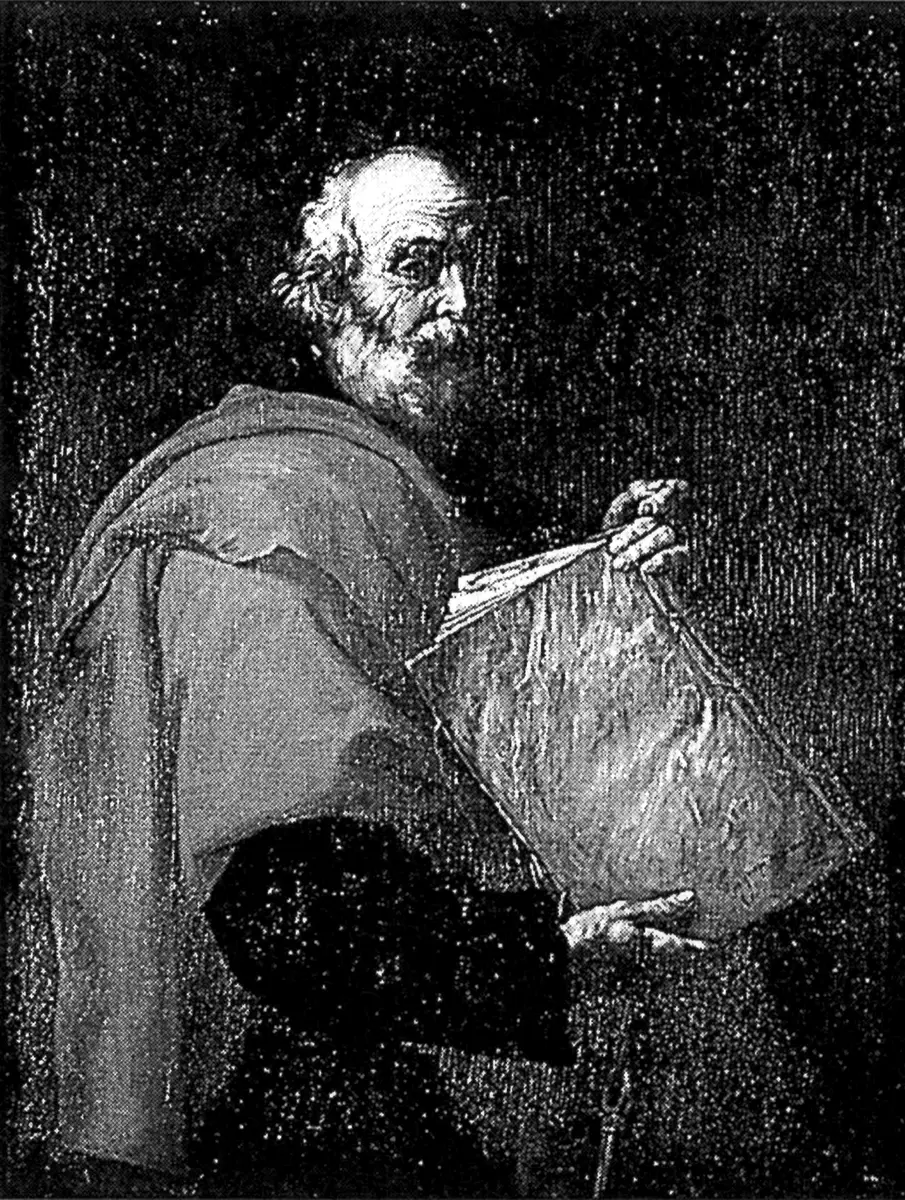
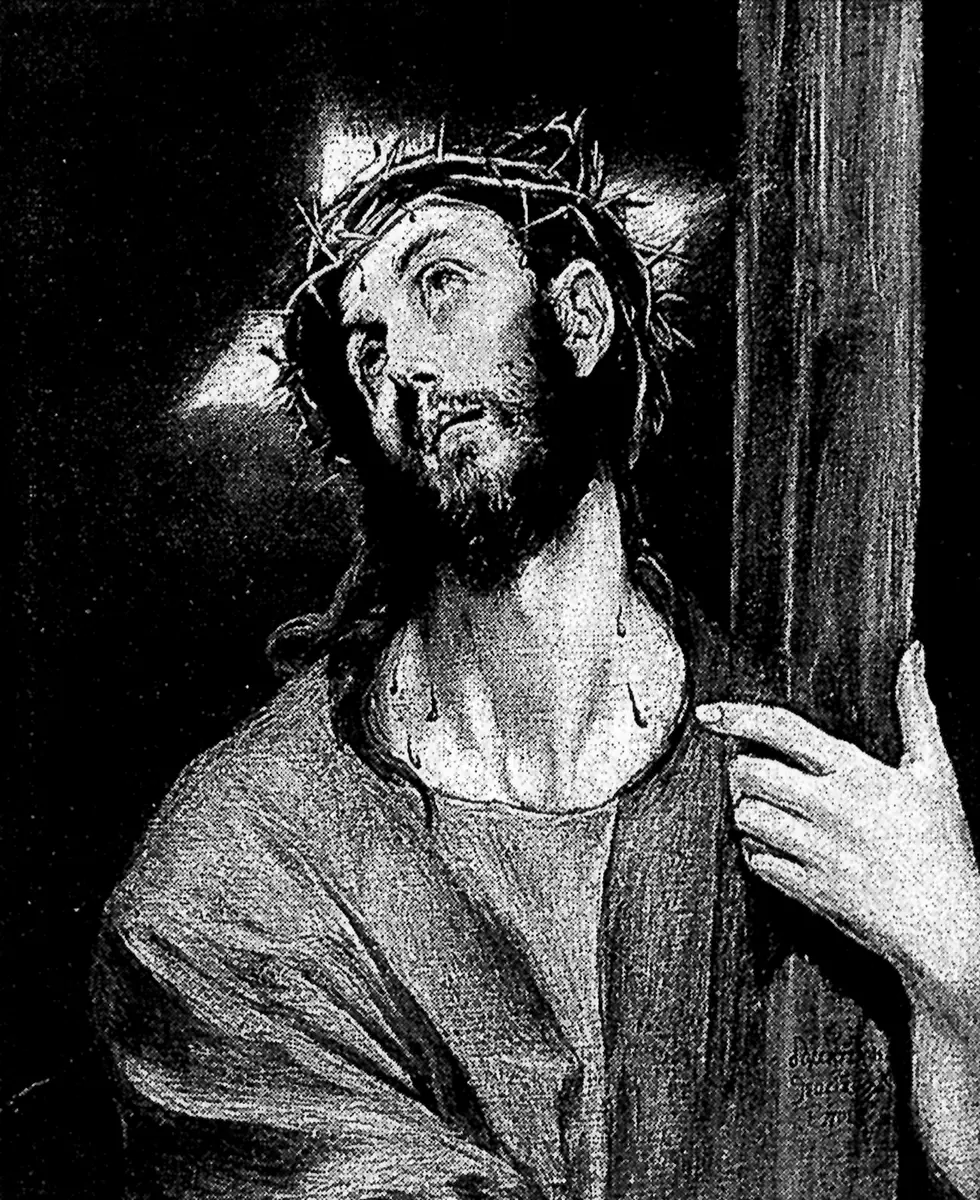
These collections reflect the personalities of their collectors. In the case of Cintas, there is a preference for the Old Masters, no doubt influenced by the English tradition of collecting Anglo-Saxon artists, but also with considerable interest in the Italian School29: Luca Giordano, Bellini, Moroni, Bronzino, and Rosselli. It is important also to note that the collection also includes works by two Italian artists of the eighteenth century who were particular favorites of Grand Tourclientele: Guardi and Canaletto.30 Representing the British School are Gainsborough, Constable, Lawrence, and Reynolds.31 There was, however, a common aesthetic interest of both the Spanish and Latin American collector, reflected not only in the Italian selection, which placed greater emphasis on the High Renaissance and the Baroque, but in the abundance of works from the Spanish School: El Greco (five pictures), Jose de Ribera, Goya (three pictures), Sanchez Coello, Murillo (two pictures), and Velazquez. The Dutch School was another favorite, with works by Van Dyck (two pictures), Rubens, Bol, Frans Hals (two pictures), and Rembrandt (two pictures).
After Cinta's death in 1963, part of his collection was auctioned off in New York. The pictures sold at that time included the Musician Playing the Viola by Frans Hals,32 which sold for the then extraordinary price of $600,000. A selection of works from all the art schools in the collection was also sold, including two pictures from the North American School, a portrait by Stuart, a picture by Bellows, and a portrait of President Washington by Sully (a copy of Stuart's famous portrait). These works were typical of British taste, and reflected both the continuity of the English aesthetic influence which was part of Cintas' education, and the natural result of repeated visits by Cintas to the United States, both before and after his tenure as ambassador. The works demonstrated as well as his marked preference for portraits.
NOTES
1. Anthony Burgen and Francis Haskell. The Age of the Grand Tour, New York. Crown Publishers. Inc., 1967.
2. Brinsley Ford, The Treasure Houses of Britain-Five Hundred Years of Private Patronage and Art Collecting, Gervase Jackson- Stops (editor), The National Gallery of Art and Yale University Press, New Haven and London, 1985, pp. 41-49.
3. Ibid, pp. 214,246,288,322 and 376.
4. Bruce Redford, Venice, and The Grand Tour. Yale University Press, New Haven, and London, 1996.
5. Anthony M. Clark. Pompeo Batoni-Complete Catalogue, New York University Press. New York. 1985, pp. 29-32.
6. Katherine Baetjer and J.G. Links, Canaletto. The Metropolitan Museum of Art, New York, 1989, pp.3-15.
7, José Manuel Amaiz, Javier López Jiménez and Manuel Merchán Díaz (Directors), Cien Años de Pintura en España y Portugal, Vol. V, Edidones Anticuaria S.A., Madrid 1988-1991, pp.63-122. See also: Carlos Gonzalez y Monse Marti, Spanish Painters in Paris. Sammer Galleries London y Tusquets Editores, Barcelona. 1989, p.159 and 271.
8. Bernardino de Pantorba, La vida y la Obra de Joaquin Sorolla, Editorial Mayfe, S.L. Madrid, 1953. pp. 198, 200 and 201. (Catalogue #1954, 2001 and 2007. See also: Edmund Peel (Director). The Painter Joaquin Sorolla y Bastida, Philip Wilson Publishers, LTD.
9. Enrique Laluente Ferrari, La Vida y obra de Ignacio Zuloaga, Editorial Planeta, Madrid 1901, p. 508, Cat. 330.333, p. 509, Cat. 335 and 336. p. 509. Cat. 347, p. 513, Cat. 424. and p. 527. Cat. 697.
10. S.N. Behrman. Duveen, Random House New York, 1952, p. 174 and 182. See also: Colin Simpson, Artlul Partners: Bernard Berenson and Joseph Duveen, Macmillan, New York, 1987.
11. Elizabeth du gue Trapier, (and others) The Hispanic Society of America-Handbook, New York, 1938.
12. Calvin Tomkins. Merchants and Masterpieces: The Story ot the Metropolitan Museum of Art. Henry Holt & Co. New York, 1970. by Benjamin Altman p. 169-170. Robert Lehman p. 335-338 and 357-358. Also, see Rene Brimo, L’Evolution Du GoutAux Etats-Unis, James Fortune, Paris, 1938. In reference to Benjamin Altman, see p. 83 (painting), p. 128,137 (decorative arts), in reference to Philip Lehman, ( Colección Robert Lehman pp. 110-111).
13. Aline B. Morgan Saarinen. The Proud Possessors, Random House, New York. 1958, pp. 56-91. On J.P. Morgan's collecting style: See also Wesley Towner, The Elegant Auctioneers, Hilliwang New York. 1970, p. 166-167.
14. Morris Carter, Isabella Stewart Gardner, and Fenway Court, Isabella Stewart Gardner Museum, Boston, 1925.
15. Charles Ryskamp (and others) Art in the Frick Collection, Harry Abrams. New York, 1996, pp. 15-33.
16. Fernando de la Presa. El Pintor Lucas Padilla y su tiempo. P. Fernandez y Cia. S.A. La Habana, 1956.
17. Marta De Buonode de Baibene (Interventory), Donadon Antonio Santamarina. Museo Naoonalde Bellas Artes, Buenos Aires. 1982.
18. Graciela de Reyes Retana, Guia Museo de San Carlos, Impresora Formal S.A. Mexico, 1988. Se agradece tambien la inlormacion proveida sobre este asunto por la present directors del Museo San Carlos, Lie. Roxana Velasquez.
19. Ileana Fuentes-Pérez, Fradella Cruz Taura y Ricardo Pau-Llosa (editors) Fnera de Cuba. Aristas Cubanos Contemporaneos. Editors Corripio. Santo Domingo. 1989, p. 342.
20. Carlos Martins (director) and Jose de Paulo Machado (editor), Museus Castro Maya, Editors Agir, Rio de Janeiro. 1994, pp. 8-9.
21. Ibid. pp. 42-43.
22. Ileana Fuentes Perez, ibid., p. 342.
23. Author conversations with friends and family of Oscar Cintas, i.e. Juan Portela, Miami, and Nueva York, 1995-1996.
24. C. Martins, ibid, p. 56.
25. C. Marlins, ibid, p. 56.
26. Christie’s Old Master Paintings, Sale Catalog. January 31. 1997. p.238.
27. C. Marlins, ibid. p. 26.
28. Conversations with the author. jfcj&
29. Parke-Bemet Galleries. Old Master Paintings. Sale Catalog, May 1, 1963.
30. Miguel Luis Nuriez-Gutiérrez, Salas del Museo Nadonal de Cuba, Palado de Bellas Artes. Editorial de letras Cubanas, La Habana. 1990, p. 49 and p. 52.
31. Ibid, pp. 74-86.
32. Parke-Bemet Galleries, ibid. pp. 23-27.
ALBERTO BARRAL
Director of Client Advisory Service for Latin American, Christie’s New York.