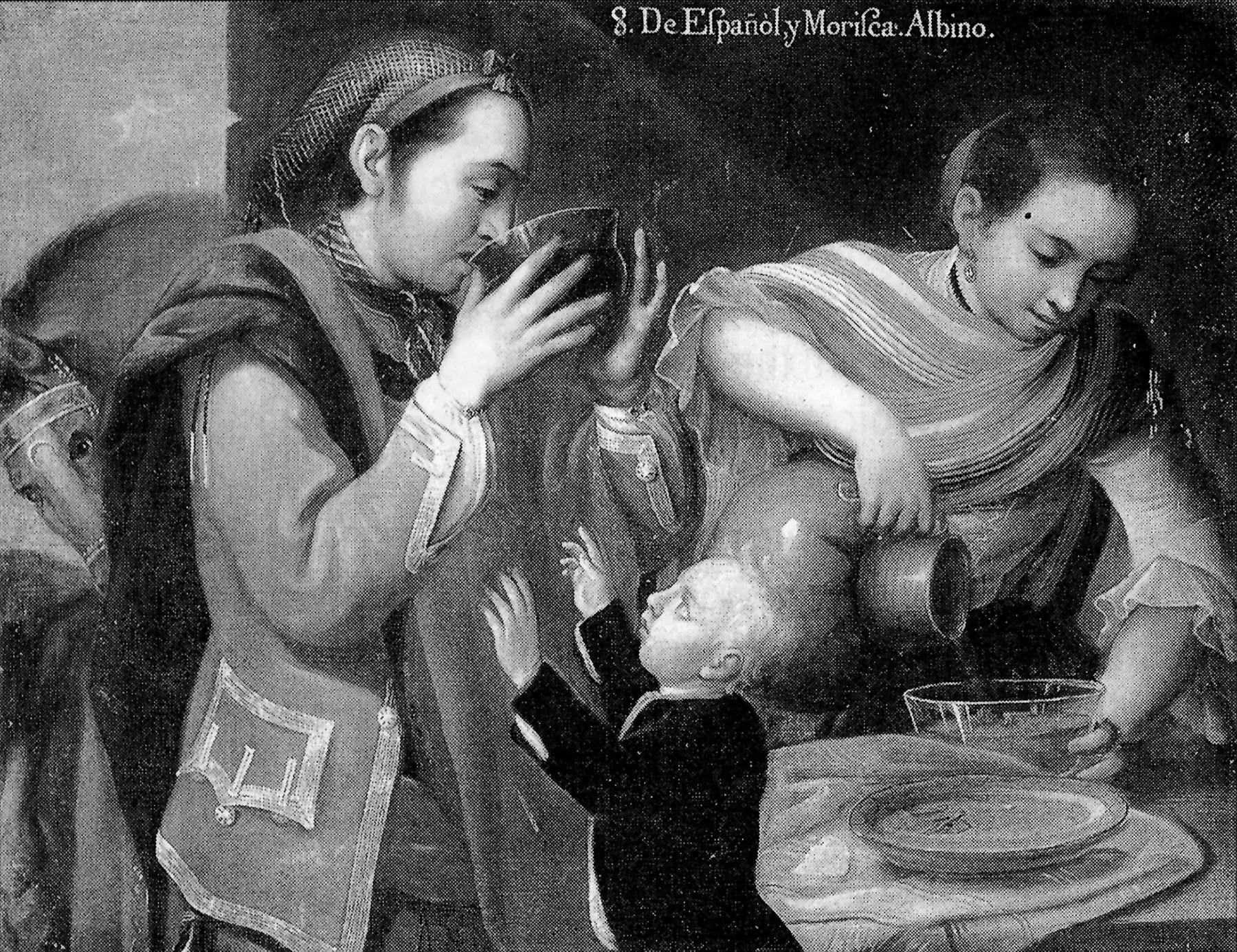
New World Orders: Casta Painting and Colonial Latin America held at the Americas Society in New York was devoted to casta paintings, unique series of images depicting mixed-race couples and their offspring that were produced in Mexico, Peru, and Bolivia during the seventeenth and eighteenth centuries. The casta system classified mixed-race individuals of Spanish, Indian, or African ancestry. Couples and their offspring were portrayed in typical dress, performing daily tasks or at leisure, and surrounded by flora or fauna of their region. Inscriptions were included by artists to catalog the diverse racial types, and most series were headed by a Spanish man and Indian woman with their mestizo offspring. Casta paintings were usually produced in a series of sixteen and grouped according to Spanish Colonial standards of racial hierarchy. Visitors to the Americas Society Gallery in New York were able to see two casta series in their entirety, a rare opportunity to examine the visual taxonomies of race elaborated by artists working in this genre.
Exhibition curator Ilona Katzew examined several aspects of this genre, which is unique to Latin America. Four works in private collections by the renowned Mexican painter Miguel Cabrera were shown alongside four other rarely-seen works in the collection of the Philadelphia Museum to illuminate how painters of casta transformed European sources. Northern European domestic and still-life genre scenes were adapted by painters such as Cabrera to represent mixed-race couples and their progeny in their typical surroundings. For instance, visitors to the exhibition could view an amusing domestic scene like Albarazado and Mestiza, Barcino, in which Cabrera portrays a mother examining her daughter’s head for lice. An accompanying text reproduced a Northern European print of a similar scene.
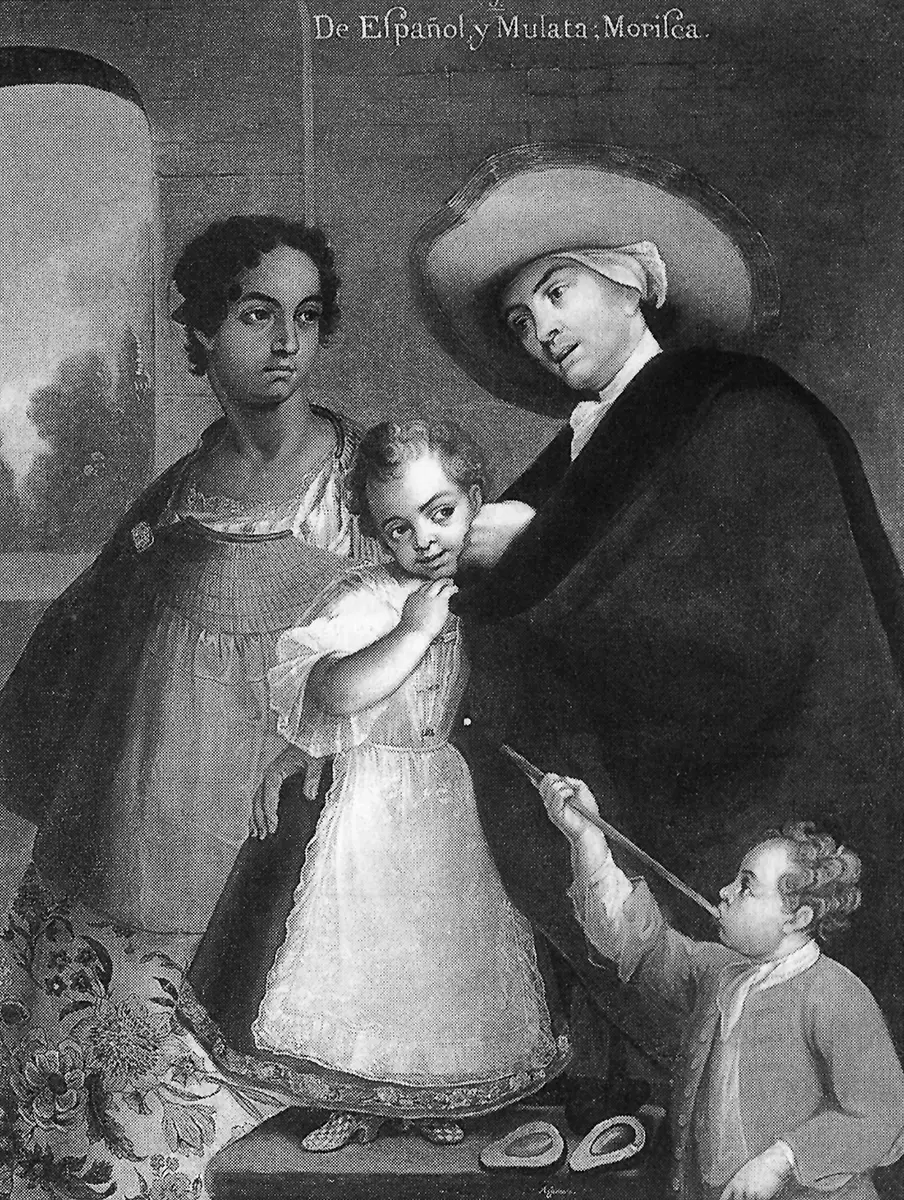
Colonial industrial products, such as tobacco, animals, and foodstuffs considered exotic by Europeans, such as parrots and avocados, were rendered in exquisite detail and often labeled similarly to the racial types portrayed.
The earliest known casta painting, executed by a member of the Arellano family in Mexico, was included in the exhibition and bears an inscription identifying the sitter as a "Mulatto, Daughter of a Black and Spaniard in Mexico City, Capital of America on the 22 of the month of August of 1711", which, along with the elegant dress, luxurious accessories, and bearing of the sitter, suggests a measure of local pride on the part of the patron and painter. This work raises the question of the possible functions of this type of imagery, and in her catalog essay, Katzew suggests two1: On the one hand are those, such as the Arellano work just cited, which may be viewed as part of the process of identity-formation for colonial subjects. On the other, are those casta paintings addressed to local elites and Spanish authorities that present a visual taxonomy of race in the colonies meant to assure their viewers of the fixity of social hierarchy.
Rare examples of casta paintings produced in Peru and Bolivia are included in the exhibition. Two anonymous works now in the collection of the Museum of Anthropology (which holds several important works of this type) were originally commissioned by Viceroy Manuel Amat y Juniet and sent to Prince Charles IV in 1770. Katzew cites a letter from the Viceroy in which he states his motives for presenting the work of the Prince: "I have thought it conductive to his enlightenment ... to send a rare product of these domains, which is the notable mutation of appearance, figure, and color; that results from subsequent generation of the mixtures of Indians and Blacks, which tends proportionately to be accompanied by certain proclivities and characteristics".2 A work by Jose Joaquin Magon, Spaniard and Black Make Mulatto (c.1770), reinforces racial hierarchy through the less elegant attire worn by the couple, and the depiction of the black mother as volatile and violent towards her son. Accounts authored by Spaniards demonstrate the prevailing belief that individuals of mixed Spanish and Indian descent were considered superior to those of African ancestry.3
Another work from the series by Magon depicts a more lavishly —and fashionably— dressed Spaniard and his Mestiza companion proudly holding their Castiza offspring, as the father offers their child a brightly-hued parrot. The couple's high social status is further suggested by the writing implemented on the table between them, while in both works, minutely-rendered still-lifes draw the viewer’s attention to "exotic" foodstuffs and plants found in the new world. Katzew points out that the convention of representing family groups in casta paintings -promoted an image of domesticity that masked racial tensions —and served to naturalize— the overall social hierarchy portrayed in casta paintings.4
Previous studies of casta paintings have tended to view them as "documents- of colonial Spanish America, illustrating elements of daily life such as agricultural production, local industries, or costumes. In her catalog essay, Katzew draws on disciplines including art history, history anthropology, and post-colonial theory to examine further the meanings of casta paintings. She utilizes traditional art historical methods such as the discussion of the careers of artists known to have authored casta paintings (many works are unsigned) attribution of dates of execution, or examination of the relationship of cast paintings with European genre painting and engravings. However, she also views the paintings as highly-constructed representations which functioned as part of larger attempts on the part of Spanish colonial authorities to control and survey the proliferating and socially unpredictable results of mixed-race couplings. Engravings found in castas — No te entiendo (I don’t understand you) or Tente en el Aire (Hold yourself in mid-air), to cite, just two— bespeak the anxieties of Spanish and Creole authorities unable to control the complex social implications of race-mixing.5 Katzew makes careful use of historical and primary sources to examine the context in which casta paintings developed and the constructions of racial identity and social hierarchy that informed the elaboration of this fascinating pictorial genre.
NOTES
1. Ilona Katzew. "Casta Painting: Identity and Social Stratification in Colonial Mexico," in New World Orders: Casla Painting and Colonial Latin America (New York: Americas Society, 1996). The well-illustrated catalog also includes essays by Maria Concepcion Garcia Saiz, "The Artistic Development of Casta Painting"; Elena Isabel Estrada de Gerlero, "The Representation of 'Heathen Indians' in Mexican Casta Painting"; and J. Jorge Klor de Alva. "Mestizaje from New Spain to Aztlan: On the Control and Classification of Collective Identities". Garcia Saiz has authored an important monograph on casta painting: Las castas mexicanas: Un genero pictorico americano (Milan: Olivetti. 1989). Casta painting is the subject of Katzew’s forthcoming doctoral dissertation at the Institute of Fine Arts, New York University.
2. Katzew, pp. 14-15
3. Katzew cites examples, pp. 10 - 12.
4. Katzew, p. 13.
5. Katzew. p. 10.
MIRIAM BASILIO