This year, as on previous occasions, Madrid got all dressed up—artistically speaking that is— for its international contemporary art fair, ARCO, which was dedicated this year to Latin America. A predominance of Latin American exhibits was held in its various institutions and venues, including Mexican photographers in the Deposito Elevado del Canal de Isabel II, grouped together under the title of Singular Territories (as if there were others); From the other shore, works by Latin American artists living in Spain and presented in the Casa de América; Itinerant Impressions, dedicated to the printmakers of the Parque Lage School of Visual Arts, in the Casa del Brasil; a one-man show of work by the well- known Brazilian photographer Sebastião Salgado in the Circulo de Bellas Artes. In its attempt to be up to date in its survey of current Latin American art, the fair even included Andres Serrano, whose work can be placed at the border between "Latino" and a definitive uprooting of that term. The Juana de Aizpuru Gallery presented a one-man show of his work, including his classic macro-photographs taken in a New York morgue and his even harsher (if that is possible) works of an openly pornographic kind.
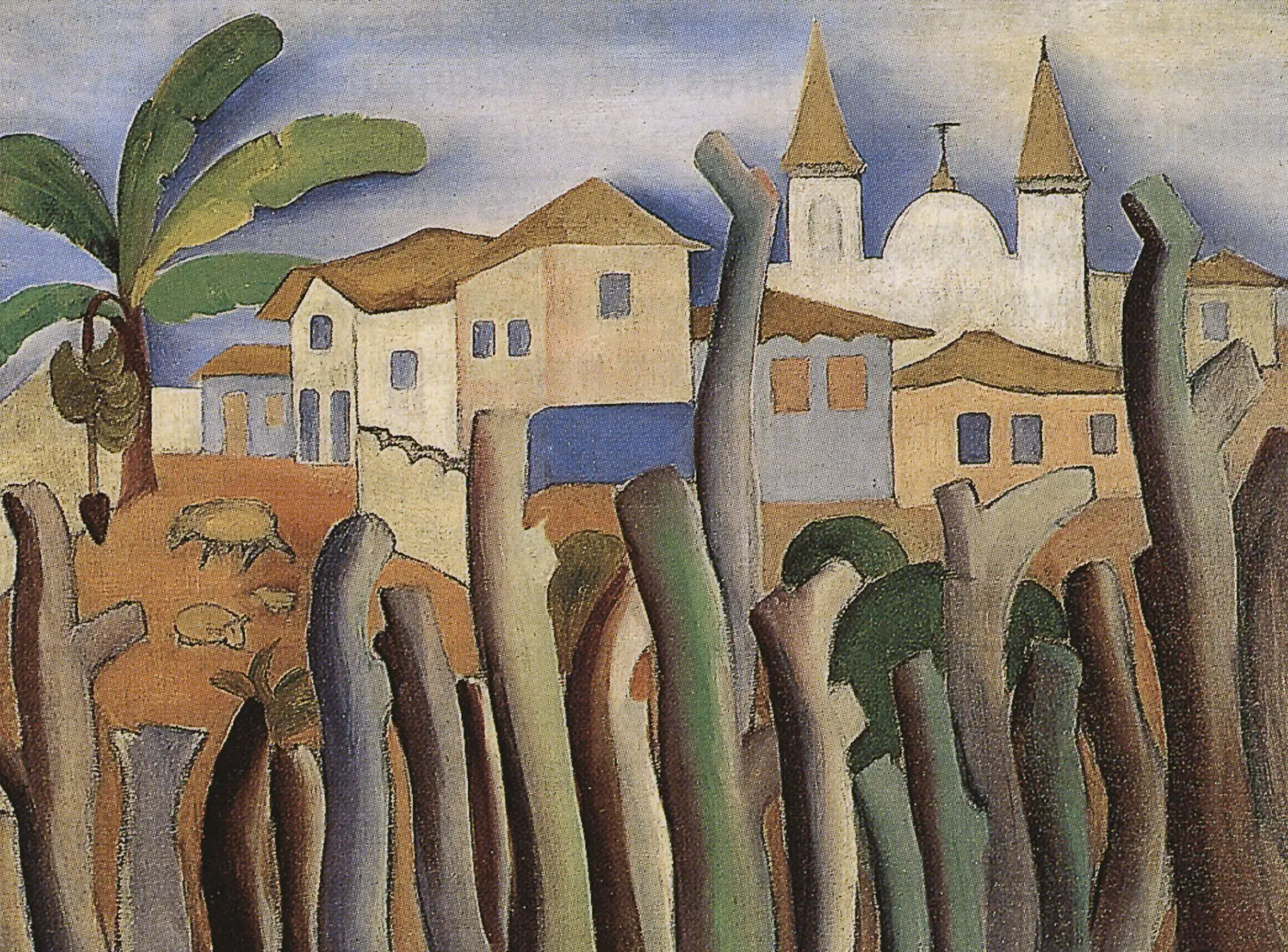
But the star of all these shows, which varied in quality, language, themes, and periods, was at the Exhibition Hall of the La Caixa Foundation, on Serrano Street. Its simple title, Tarsila, Frida, Amalia, indicated that it was devoted to three of the greatest female figures of modern art in Latin America. I write "modern" and immediately hesitate. Was Tarsila do Amaral, the Brazilian painter who after returning from her early training in Paris, played such a major role, along with her husband, the poet Oswald de Andrade? She probably was, if we limit ourselves literally to her pictures — so innovative and audacious, even in their figuration, in defending the radical autonomy of painting, that was of course one of the essential principles of the historical avant-garde — or at least in its abstract and constructivist versions. But then a new or second look at her work — the various stages of which were very well represented in this show — highlights aspects, features, and intentions that seem to be linked with typically postmodern concerns. I refer, for example, to the crucial debate on the role of allegory in art, which was addressed by a significant segment of Tarsila’s paintings, as in pictures like La Cuca, The Fruit Vendor, The Lake, or the justly celebrated Abaporu. The same could be said of the equally postmodern theme of national, racial, and sexual identity, which is a picture like The Black Woman, first painted in 1923, acquires a paradigmatic expression. All of these works, along with twenty or so others of equal quality and importance, were exhibited at La Caixa.
Something similar, and even more ostentatious, occurred with Frida Kahlo. During her lifetime, many of her contemporaries saw her as nothing more than the temperamental wife of Diego Rivera, the Mexican master of muralism. When attention was given to her work, critics like André Breton pigeon-holed it as the kind of surrealism that allegedly coexisted with the Mexican condition. It was not until the advent of radical feminism in the 1970s (a movement to which Benjamin Buchloh attributes a decisive role in the emergence of postmodernism in the United States) that Frida Kahlo was "discovered," along with the most contemporary and disturbing aspects of her work. The twenty paintings and ten drawings included in this show illustrated all the motifs which now make her work attractive. In one canvas, we see her holding the hand of her beloved Diego. In another, below the figure, a naked girl, she organizes the composition of her own family tree. A third work, The Four Inhabitants of Mexico, offers an allegorical and even emblematic version of the history of Mexico. Many of the other pictures were examples of her famous self-portraits, in which her prodigious hand combined expressions of her pride and beauty with the startling account of pain and misfortune through her maimed and barren body.
The third artist in the show, the Cuban painter Amelia Pelaez, was also well represented. There were pictures from all periods of her oeuvre, beginning with The Hare, painted in 1929 during her first visit to Paris, to an Interior with Columns from 1951, a work that revealed the range of her poetics, so ornamental, warm, and colorful. While Pelaez was clearly an excellent painter, she lacked the complexity and dramatic intensity that characterized the lives of Tarsila and Kahlo. More so than her paintings, I was moved in particular by a little drawing in pencil on board, Fruit bowl with fish, done around 1930. At first sight, it looks just a sketch done from life, but closer inspection reveals how marvelous it really is.
But it was not only Latin American women artists who were showcased at the fair. There was also Vija Celmins, one of the strangest and most fascinating figures in current North American painting. The Reina Sofía Museum presented over 60 of her paintings and drawings, along with seven prints, a dozen or so works of various and unusual techniques, as well as two or three little painted metal houses in somewhat of a mini-retrospective of her career which began in 1964. If one wanted to describe the work of this Lithuanian refugee to someone familiar with Latin American art, they might mention the painting of Santiago Cárdenas — particularly his early works from the 1960s, when he painted with the coldness of a war surgeon, his desolate domestic interiors, with their shutters and blinds and sockets, an atavistic woman looking out of a window. But Celmins’ work is more radical in its search for desolation, anonymity, and the extinction of drama and passion. Her deliberately gray or grayish images reflect the themes of the America of road movies: the motels, the highways, the television screens, photos of war and crimes, the desert, the stars. Overwhelming.
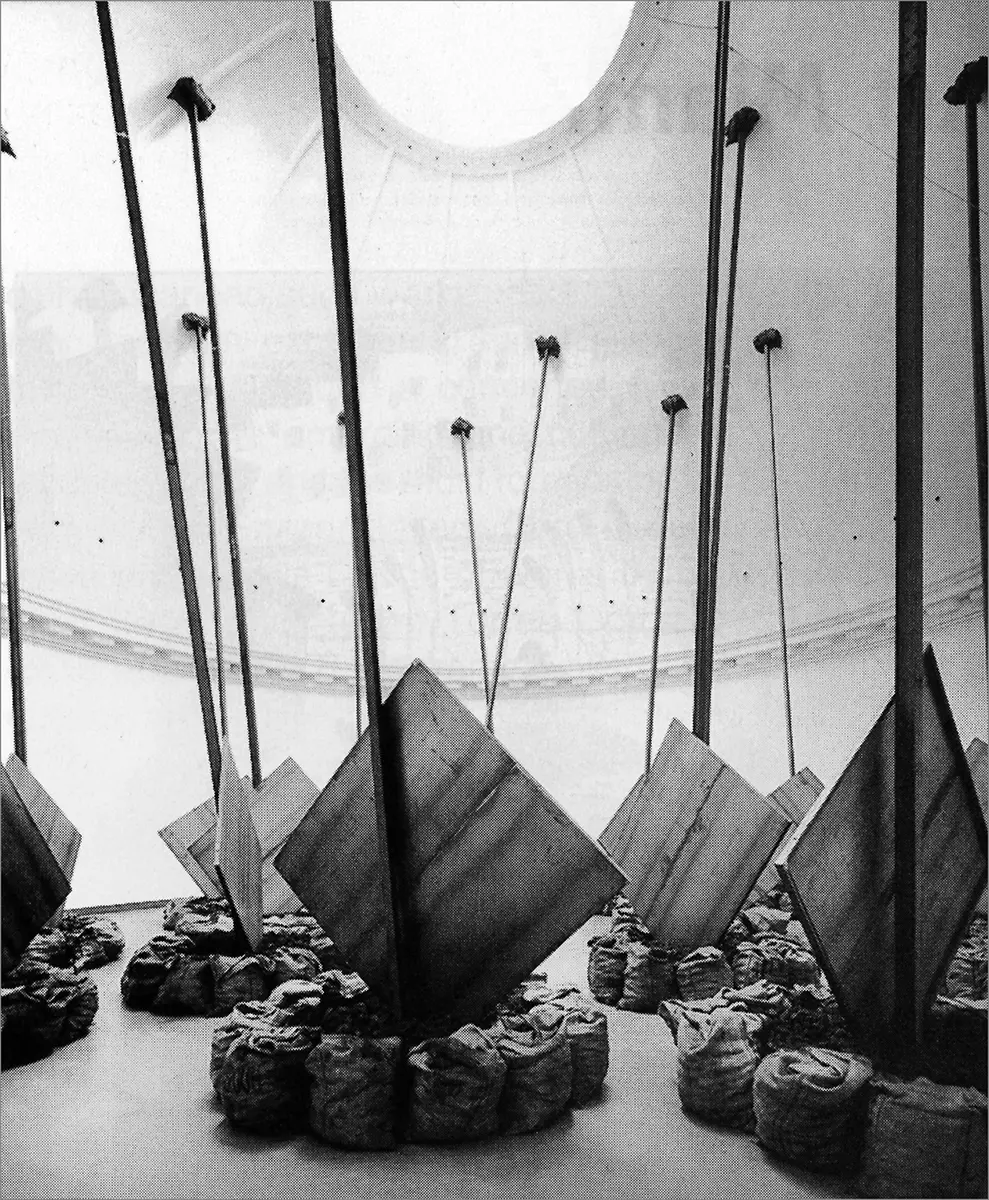
Finally, this letter would not be complete with a mention of the major exhibition of work by Jannis Kounellis, also at the Reina Sofía Museum. Using metal, sackcloth, fire, and illusion, Jannis Kounellis is one of the most refined and powerful scenographers of our epoch. Unfortunately, though, the show was poorly installed. There were too many pieces in the enormous rooms of the lower floor of the Museum, where the immense barrel vaults of the lower floors pose a tremendous challenge to any curator. I do not know whether the responsibility was that of the curator or the artist herself, but there was a failure on someone's part to limit the desire to show everything all at once in the same place. The result exhibition looked more like a chaotic emporium of products from overseas rather than a show in which the spectator could appreciate the extraordinary pieces by this truly exceptional artist.
CARLOS JIMÉNEZ
Art critic. Lives in Colombia.