
The Conceptual Trend involves a comparison between two disparate elements: an exhibition and a curatorial thesis. Most prominent is the exhibition of work by six artists living in Mexico City. The second, historiographic aim is represented in the thesis that narrates the historical moment for post —1950’s art in Mexico— that of los grupos in the late 1960s, a constellation of artist-collectives producing political activism in cultural and aesthetic terms. Ruben Gallo and Terence Gower's exhibition suggests a historical connection between the work of los grupos and the six artists on view, whose work is framed again by the stylistic term “conceptual” and a group identification with Mexico.
In the context of this exhibition, the use of the term “conceptual- is deeply problematic to a historical narrative of international conceptual art practice. Conceptual Art, a stylistic label most of its practitioners resisted, described a practice that turned away from the visual, rejecting the objective forms of painting and sculpture. Instead, forms of artmaking were conceived that engaged language, numerical and arbitrary systems, the body, experimental sculpture, and photography in order to interrogate the boundaries of the work of art and systems of knowledge —discursive, institutional, theoretical, and most importantly, political. This work aimed to reconsider art's basic irrelevance to an international political reality of confrontation including Vietnam, guerrilla movements, student uprisings, and the Civil Rights movement. American conceptual art failed to achieve any form of politics outside of a discursive one because its art discourse was dominated by formalism and was therefore irreparably cut off from political life. Artists in Europe and South America more successfully ravaged the boundary between art and life, a contested site for the original avant-garde.
The artists in The Conceptual Trend do not refuse fine art production and readily accept the homogenizing language of international art. Painting, video, and installation now all quietly sit within the white walls of the gallery. Any connection between los grupos and these artists on the grounds of "radical" practices speaks not about a challenge to the boundaries of the work of art but rather reflects on the stifling limitations of the Mexican art market and system. It is unclear whether the production of los grupos interrogated the discursive and institutional aspects of art sufficiently to allow for these practices to be best understood within the dominant historiographic model of conceptual art. The work may instead require description in local terms as one part of a larger constellation of reactions to the violent suppression in 1968 of student demonstrations in Mexico City, here fashioned in an explicitly cultural and aesthetic language. Possibly even then, and certainly by now, the use of the term "conceptual" deflects a consideration of this Mexican work within a historically specific terminology and methodology.
If my discussion of "conceptual" is stubbornly historical it is only to describe a precision and contingency for historiography. Perhaps an analogy will serve here: if Luis Camnitzer uses a discussion of the Uruguayan guerrilla Tupamaros to focus his history of Latin American conceptual art by pointing to an ideal of political activism, then Gallo and Gower are locating los grupos to emphasize ideology in some Mexican art history rather than describing contemporary art. The main difference between the two projects is the substantially diminished political stake for art production which is the reality of present-day culture, not just in Mexico.
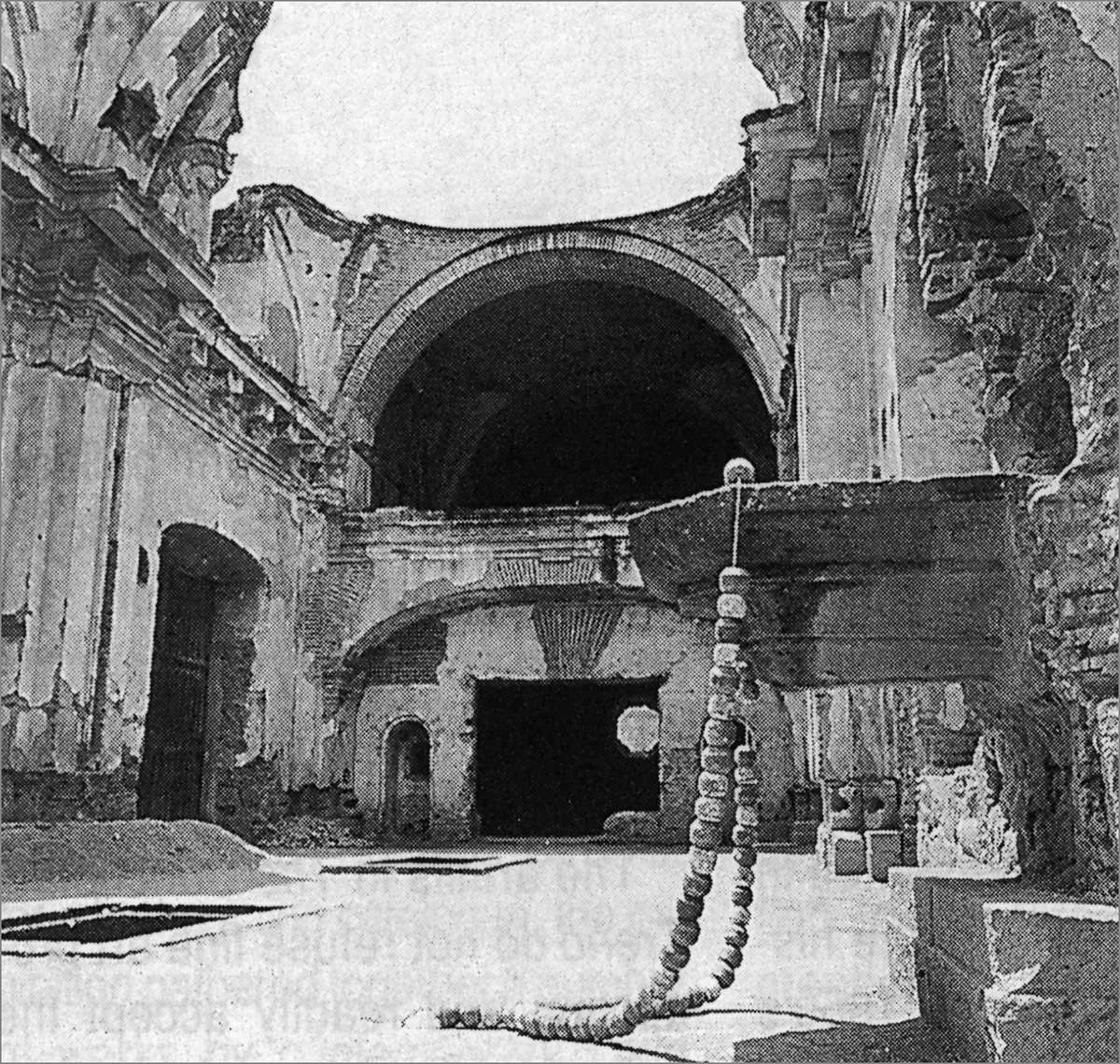
The following descriptions emphasize the heterogeneity and individuality in several of the artists' works. The burden of proof for the curators' thesis rests not on the artists but rather on the curators’ ability to fashion a frame that can contain the work as a constituent, but an utterly specific, unit. Emphasizing performative aspects, Silvia Gruner uses photography and video to "look at" Mexican identity in and of Mexican culture, producing an ethnographic and historical subject through the discourse of anthropology and the transgressive figure of the orifice. In the photographs Collar de Antigua, Gruner constructed a massive necklace of Mexican produced-soaps, strung onto rope-like beads, and used its circular aperture to frame elements in her large-scale views of the earthquake ruined city. In Situ shows a fetish figurine engaging in an oral act that is simultaneously eating, sucking, and symbolic consumption in psychoanalytic and Marxist terms.
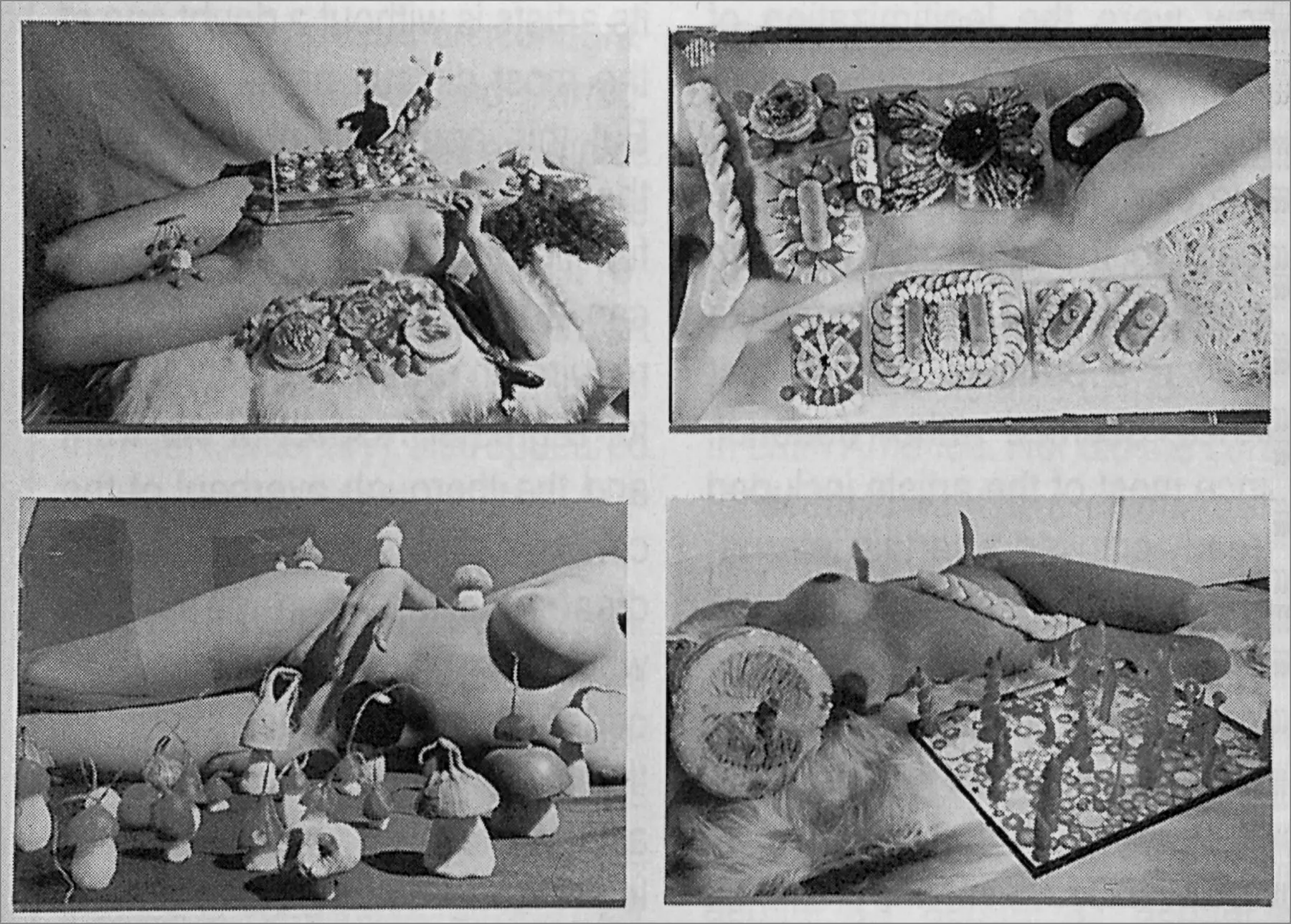
If the humor in Gruner’s work rescues it from didacticism, Daniela Rossell’s pornographic excess transforms a pseudo-sociological inquiry on visual conventions into a feminist ecstasy. Ten proselytizing cards pair picture-perfect botanical specimens and landscapes with religious cliches — the perfect backdrop for Rossell’s painted examples of recent —modern style Mexican architecture, reducing its formal absurdities to a vanity display. Eight photographs glazed in resin mock objectifying images of Mexican women taken by Manuel Álvarez Bravo by pairing pornographic nudes — tan lines revealed — with overly precious and repulsive displays of decorative food and trinkets. In Ricas y tamosas, Corbusier benches collide with poses from Victoria's Secret, cohering in a serial photographic portrait of the decorative habits of some Mexican women,
Melanie Smith’s work is characterized by restraint. One example is a display board from the expansive Orange Lush series that arranges orange plastic expendable goods in a loosely typological fashion to maximize visceral association. Taken together with the large snapshots, a crude polarity organizes the work: socio-economic versus aesthetic, Orange Crush meets Op art, or modernism goes slumming.
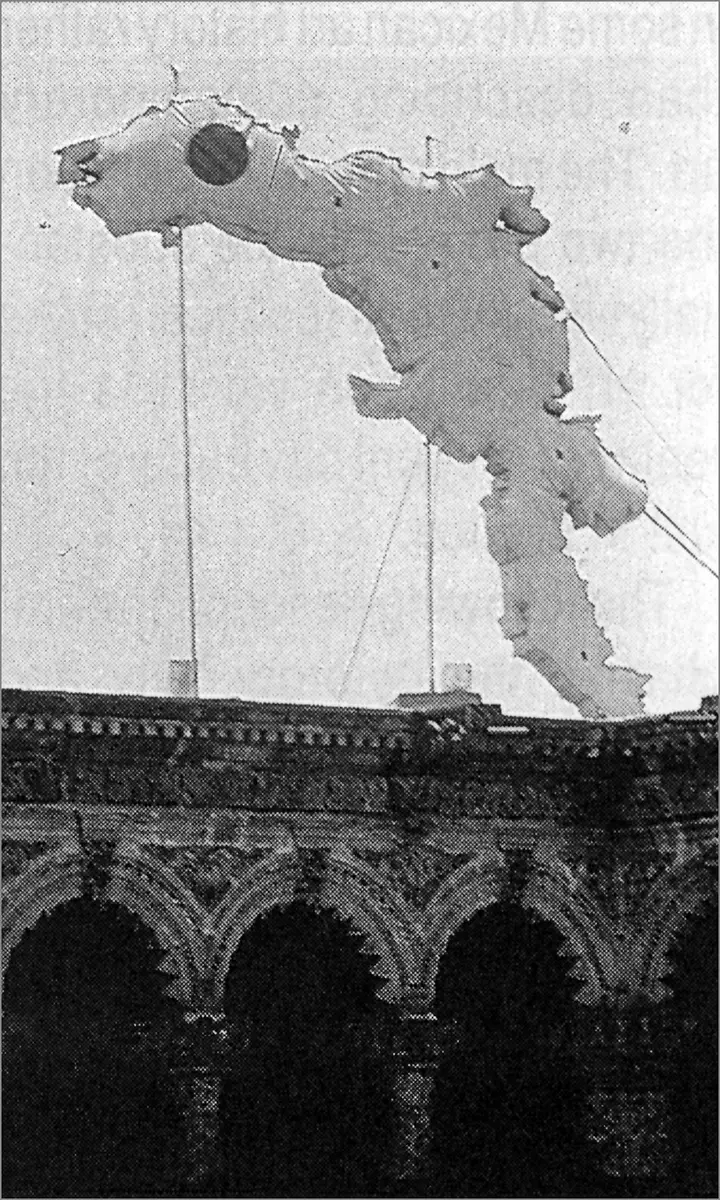
Pablo Vargas Lugo raises an inflatable sculpture of a map of Japan over the museum’s entrance thus displacing the Mexican orientation of the show by offering an alternative, arbitrary national symbol. Such gestures are crucial within a discourse about Latin American art about which Edward Sullivan recently contributed a massive volume that still takes recourse to the classically arrogant ethnographic use of the map. Vargas Lugo's sculptural practice engages language in titles and the use of iconic and conventional signs. It is best realized in the eight photograph and paper cut-outs that flicker in and out of legibility.
The painting of Yishai Jusidman and Marco Arce pales in comparison to the photographic and object work. It is substantially less clear how painting as history, language, and practice can operate within the —conceptual frame— of the show, though this is not the fault of the painters. Both attempt to diversify and fortify modernist abstracting languages with cultural references exterior to painting and a turn to language —narrative for Arce and discursive meta-painting for Jusidman. Utilizing the Japanese geisha in a surprisingly literal manner, Jusidman practices a —painting of seduction— by obfuscating the white-faced sign in the surface of a white monochrome, delivering a sexy referent to the viewer. Ontology and semiology notwithstanding, the painted flesh finds a reactionary metaphor in the exoticized female figure.
The work in The Conceptual Trend partakes of international and local vernacular practice thus demanding a criticism that is both multivalent and precise.
RHEA ANASTAS