
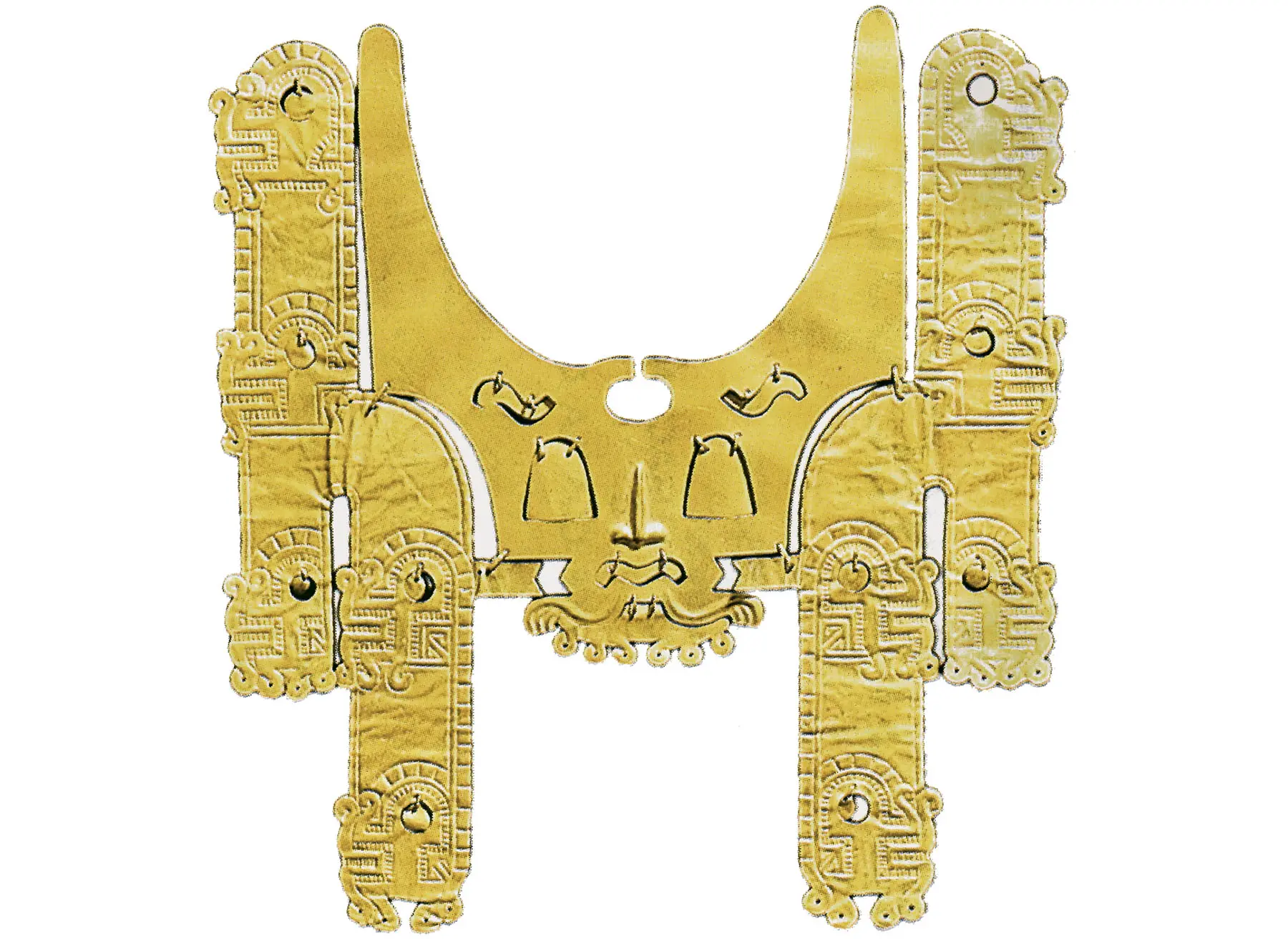
The Gold Museum in Bogota recently presented an exhibition of the archeological discoveries at Malagana, near the river Bolo in the municipality of Palmira in the Cauca Valley. According to the archeologists, this was another of the sub-Andean cacique-based settlements in the southwest of Colombia, dating back to between 70 and 140 A.D.
The typology of the objects discovered links them to the sequence of cultural manifestations known as the Calima culture, which extended over more than 500 years and assumed many different styles. But the Malagana finds have certain particularities in terms of theme, technique, and design which suggest that they are pieces with their own personality.
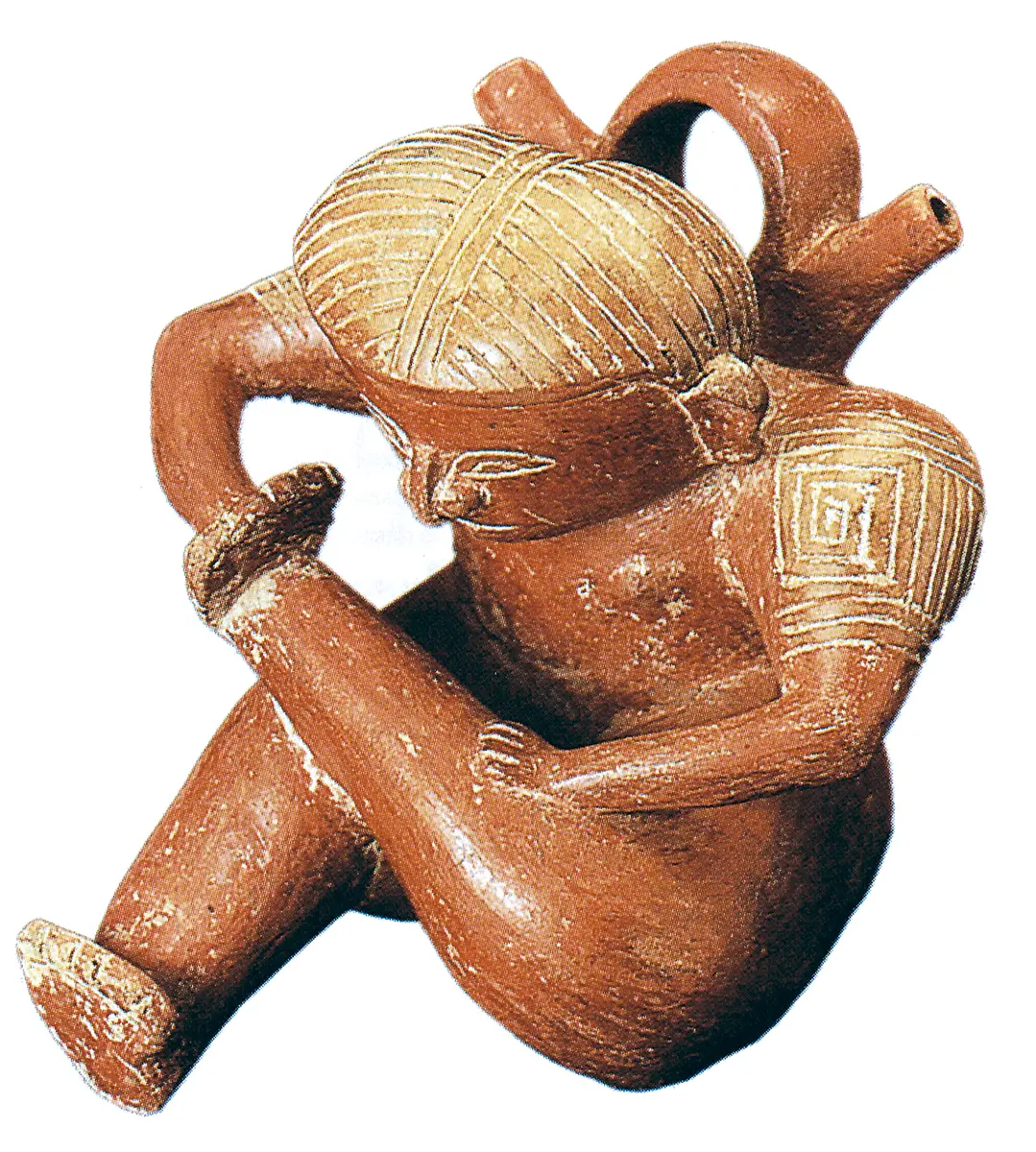
The researchers have used the term sub-Andean cacique settlements to refer to a series of changes in the settlement and world view of pre-Hispanic societies which began around 1,000 B.C. In fact, they consisted of small groups of houses or dwellings scattered on the slopes of the Andes. These were stratified cultures with a coherent set of beliefs and religious practices that provoked speculation and response to certain fundamental questions, such as the relationship between man and nature, sex, hallucination, and transformation.
All of these things were reflected in their art. The social stratification was expressed mainly in different kinds of burials, ranging from the most simple to the most sumptuous, with personal gold adornments laden with symbolism. The red and white ceramic work found in the tombs shows richly dressed figures seated in special boats, adorned with masks, or playing the drum, as in one of the most expressive whistling vessels of Malagana.
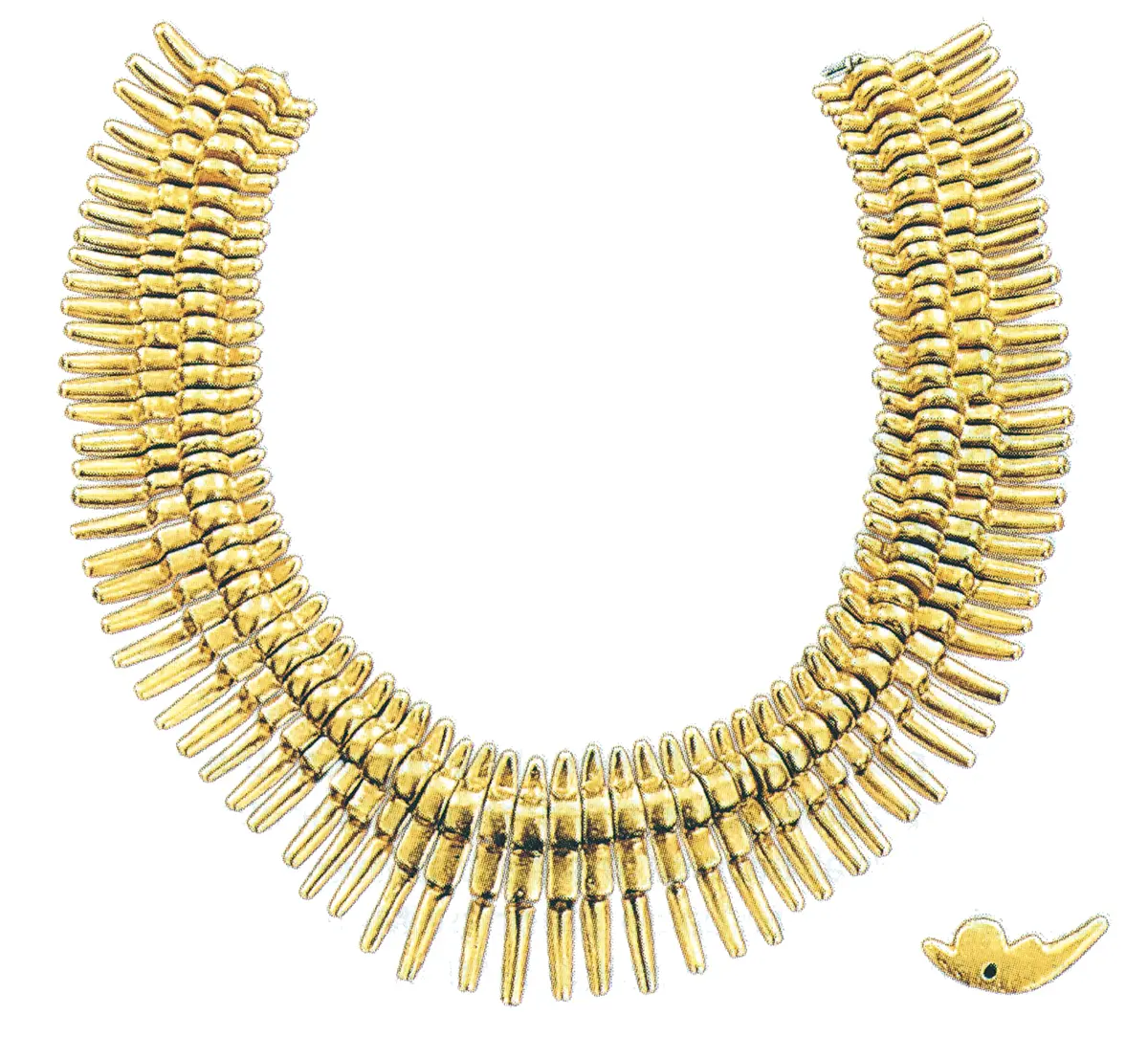
It should be noted that the gold objects found with the body of a high-ranking person were there to accompany the body on its journey - a process that required magic to understand the concept of metamorphosis and transformation. The native peoples, anthropologists have said, believed that the dead person continued his life in the tomb, at least for a certain period of time, and for this reason they were buried with all their accouterments. The dead person was seen as someone still present, and so his family members adorned him or her with bracelets, diadems, and necklaces.
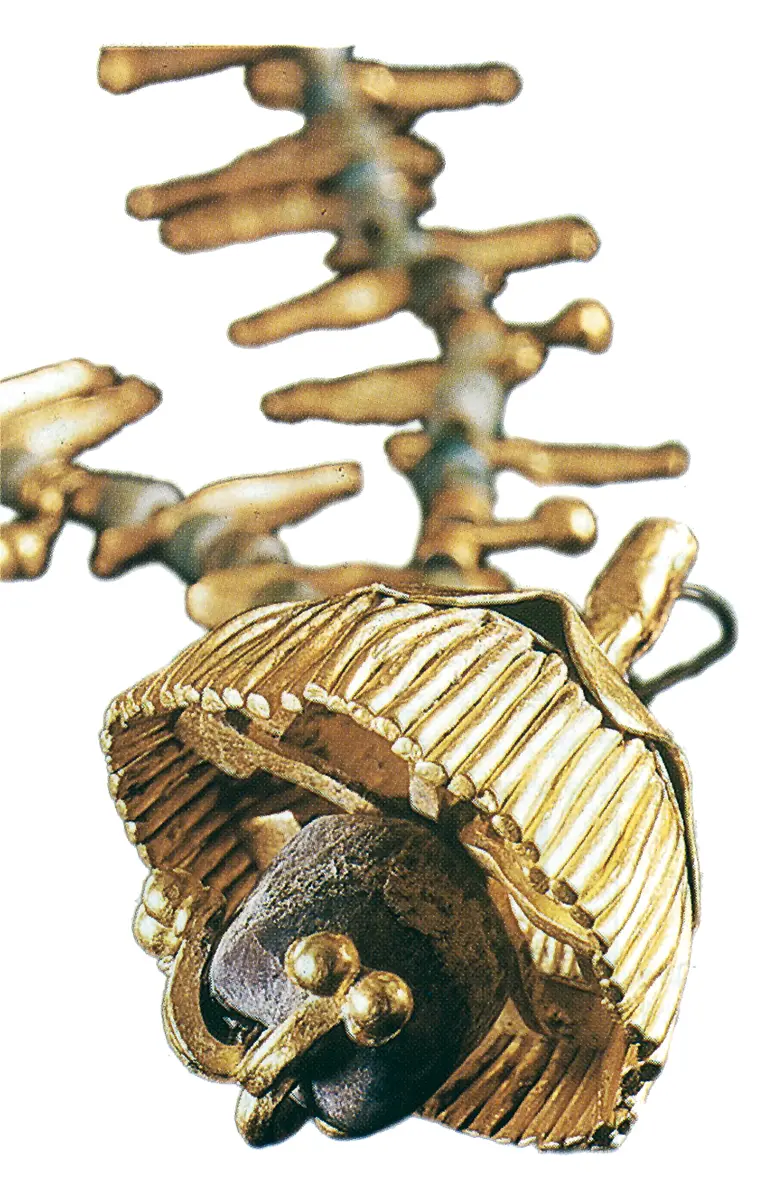
A careful examination of the perfect concept and finish of these pieces helps us to understand the importance attached to such a meaningful act as dressing a dead body with exquisite necklaces. This exhibition presented some outstanding examples of these pieces, including a necklace of bell-flowers and moving pistils, probably of a passionflower, with all its sexual organs separately worked in gold and complemented by grey and green stones. The careful representation of the vegetable kingdom is a characteristic feature of the Malagana find. This suggests that its inhabitants conceived of it in the mythical sense, perhaps related to the use of hallucinogenic substances to aid the transformation and change process - a form of assistance in the imaginary journey between life and death for the collective unconscious of these societies.
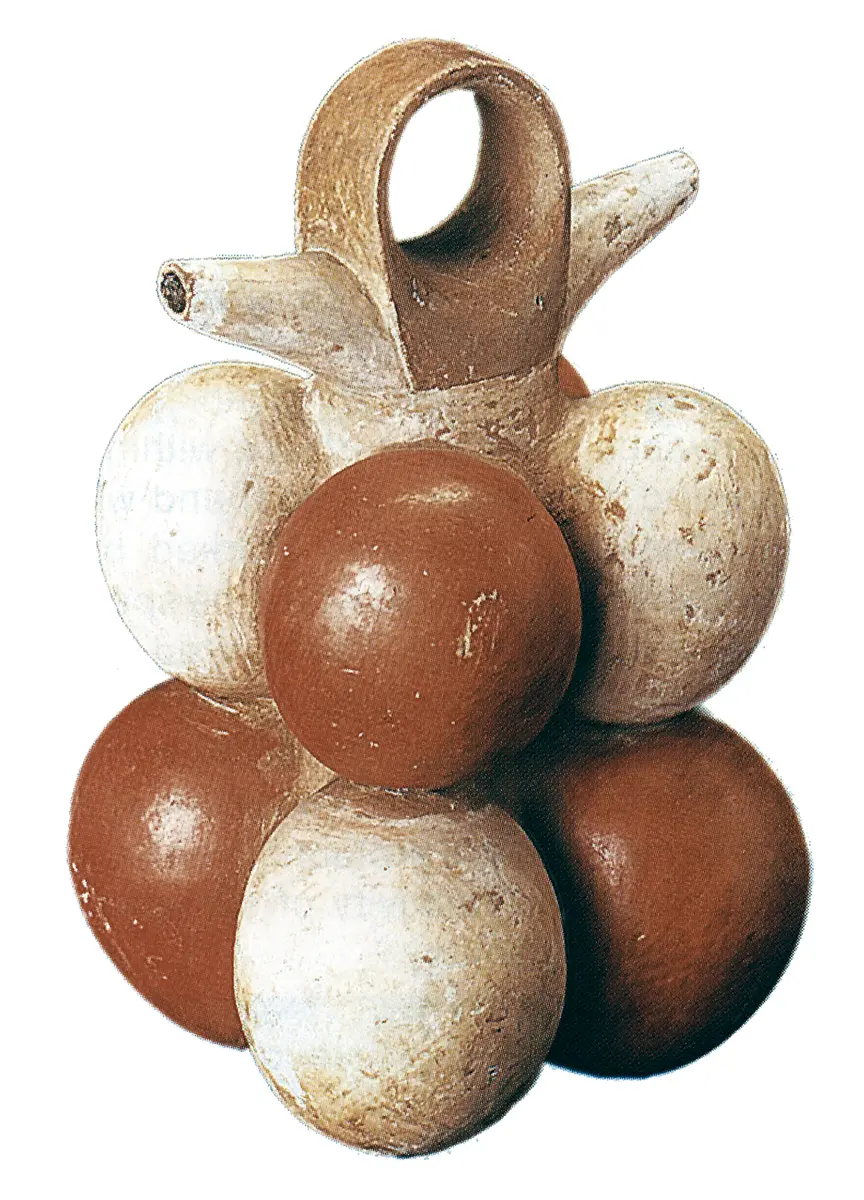
Reflection on the concept of transformation helps us to understand that pre-Columbian art is very far from consisting of emblematic, static signs with a singular meaning. On the contrary, these visual symbols indicate a search for meaning, that extends from the body itself, the movement of dance, and the rhythm of a song that formed part of rituals and everyday life, to an understanding of nature and the role which man played in it. In most of the pieces from this culture, we can see gestures whose rhythm evokes a sense of change, equilibrium, and weight, a perfect exercise in synthesis. Furthermore, the composition is well-conceived: the size of the mouth becomes smaller in order to highlight the cheeks, for example, or the eyes, nose, and mouth are strategically grouped together in the center of the face to make the latter seem bigger. For these reasons, the Malagana masks are full of life, with protruding eyes and expressive, feline, and singing mouths. There is, for example, a handsome faceless mask, which seems to symbolize the gradual transformation after death. Mention must also be made of the brooches, including one in the form of a palm tree or schematic plume, which despite its small size achieves an almost grandiose effect... The same can be said for the bracelets in the form of serpents biting their tails and the beads that schematically depict bats or plants.
Why the caciques of Malagana? Apparently, the cacique settlements were divided into territories, under the leadership of a chief, who exercised his authority with his knowledge of natural phenomena. The exhibition evoked the cacique embellished with his ceremonial masks, which are in fact enormous nose pendants that cover part of the body, and are made up of hanging laminas that shine with light and movement. We can imagine the caciques dancing beside the fire or in the sunlight, exercising an almost hypnotic effect over those who observed them, with the color and brilliance of the gold transmitting their fertile energy, full of splendor and cast shadows.
In his book on gold and silverwork and shamanism, Gerardo Reichel-Dolmatoff makes an observation that helps us to understand pre-Columbian gold work. In the ancient world, he says, the magic of an old jewel resides in its secret flashing, in the interplay of light and shadow, along with the brilliance of the precious stones. In Colombia, a violent sun reflected all the blinding luminosity of the gold outwards, over distance. Gold was associated with the sun by its splendor and radiance, thus acquiring a meaning which was seminal, vital, and evocative of even political power. The goldsmith was an artisan working with a sacred material, which in Malagana was given life as never before, with mastery in creating flat objects which were delicately embossed and worked in the cire perdue technique to create organic and complex forms and filigree work with all kinds of hanging elements.
This exhibition was a fine example of the determination shown by the Gold Museum in recent years to present carefully installed and didactic events which at the same time showcase the design of the pieces; the museum visit becomes a living experience which not only stimulates us as we look at these pieces of dead forms but brings to mind a host of other elements which help us understand the function of art in society.
*Photos: Courtesy of the Gold Museum. Bogota.
NATALIA GUTIÉRREZ
Chairman of the Art Faculty of the Jorge Tadeo Lozano University in Bogota.