
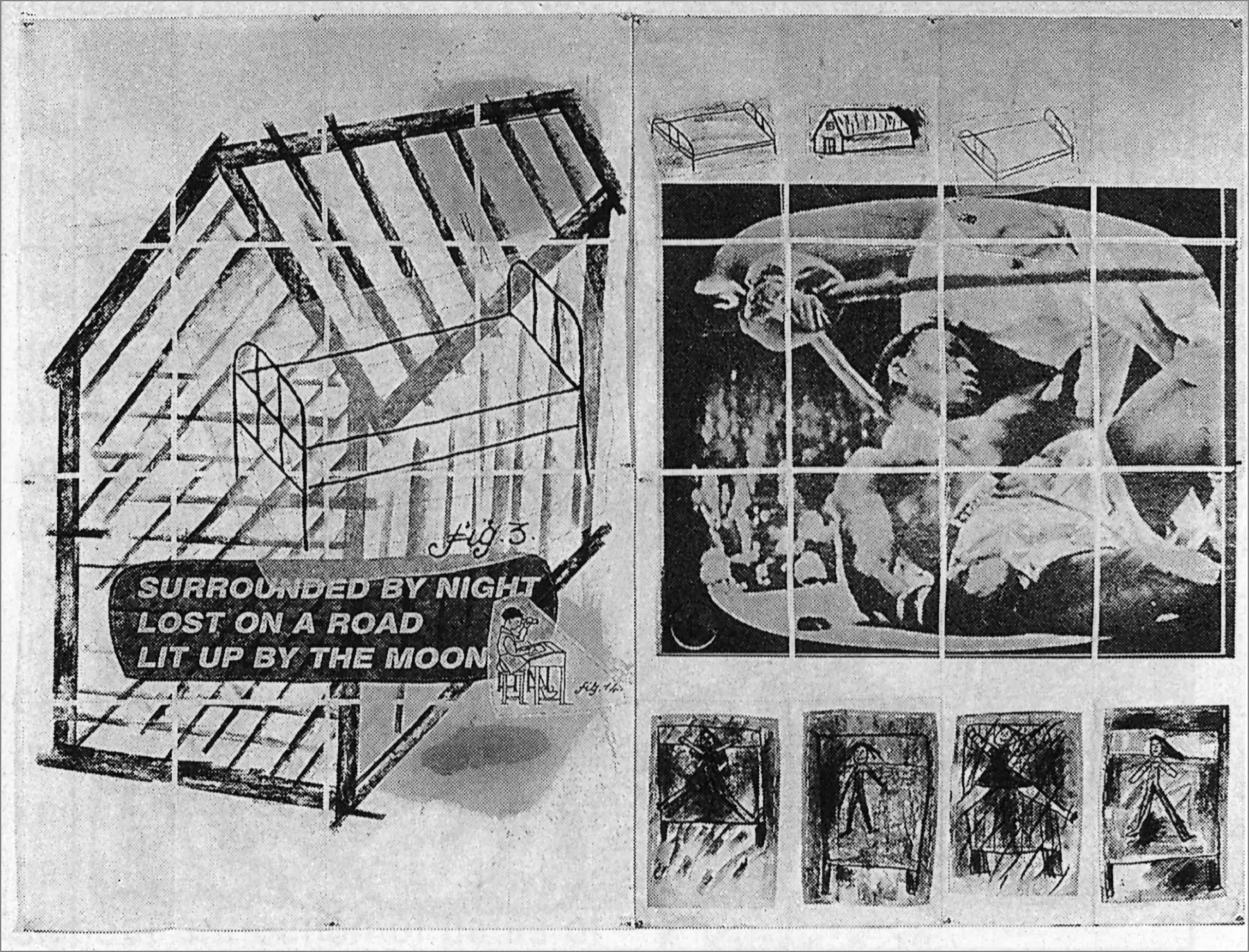
Without Frontiersms is one of the few really ambitious exhibitions held this year, an exception to the otherwise generally bombastic programming of the museums in Caracas. Curated by Miguel Miguel, with essays by him and Monica Amor for a forthcoming catalog, the exhibition gathered together a number of works by contemporary Latin American artists, most of which came from private collections.
From the outset, the curator explicitly accepted the contradictions raised by the title, “Paradoxically, our continent is united in and by its diversity," reads the beginning of Miguel's text. Indeed, the works in the show were made with all sorts of media, scales, techniques, themes, structures, concepts, etc., that artists have available to them today. While it might be said that most of the works seemed to be linked by the predominance of idea over the material, the show included artists who have addressed this relationship without establishing any preference for the one or the other, as is the case with Gabriel Orozco, Guillermo Kuitca and Meyer Vaisman (with the understanding that materiality is not an exclusive or inclusive feature of the pictorial or sculptural object).
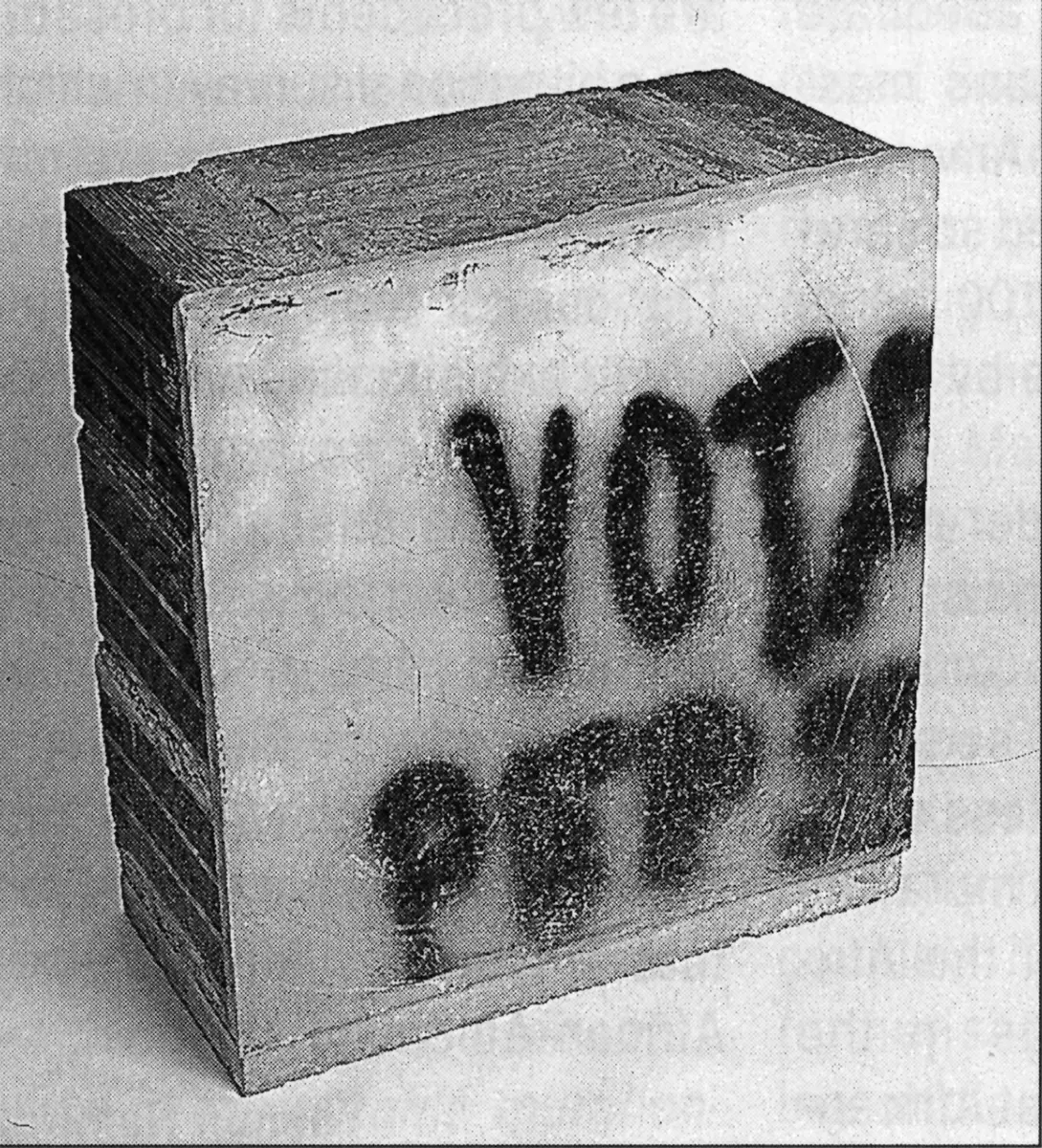
Many of the participating artists belonged to the privileged group that has acquired some degree of international recognition through the dissemination of their works through the international contemporary visual arts system. In addition to the three artists already mentioned, the show included works by Félix Gonzalez-Torres, José Antonio Hernández-Díez, Ana Mendieta, Tunga, Ernesto Neto, Aziz + Cucher, Doris Salcedo, Jac Leirner, Alfredo Jaar, Ray Smith, Arturo Duclos, Miguel Ángel Ríos, Andrés Serrano, Victor Grippo, Kcho, Fabián Marcaccio, and others. Although it is difficult to imagine that a show with this scope and objectives made up of more than 30 works exclusively from local collections could have been put together in any other country of Latin America, the exhibition was preceded in one of its objectives by a small but significant number of recent efforts by Latin American curators to re-interpret the cultural context of the reception of art produced in Latin America. Many of these projects have been centered, in contrast to Without Frontiers, on the discussion of representation among our artists, and in particular on those whose work is characterized by an emphasis on iconography. Before America and Cartographies were two recent examples which, in addition to sharing the objective of trying to recontextualize Latin American art (coinciding with the celebration of the Fifth Centenary), also appeared at the same museum that presented Without Frontiers.
More than the previous shows, this new exhibition seemed to be more focused on presenting artists in terms of their own merits and ability in order to generate interest beyond the borders of their own countries. Without Frontiers was above all a recognition of the achievement of these artists, whose production is difficult to pigeonhole within the schemas which have predominated in curatorial criteria currently used to review their work. The works did not place special emphasis on the principles of Latin American constructivism and its aspirations towards a certain kind of universalism, although the work of some of the participating artists, such as Jac Leirner, Kcho, and Marcaccio, did propose a revision, and even a recuperation of the postulates of modernity in Latin America. Nor did the curator seem to want to re-examine the hackneyed discussion of Latin American-ness, even though artists such as Miguel Ángel Ríos, Arturo Duclos, and Ana Mendieta have been at the center (though not exactly as standard-bearers) of this debate. (I say this even though the curatorial presentation emphasized the rejection by many of these artists of the stereotyped vision of production south of the Rio Grande as an expression of "a certain kind of magical realism, with surrealist or mythological connotations, or even folkloric or 'fantastic' features.") Thus the two major themes which seemed to emerge from this show were the legitimization of Latin American art at the international level and the almost inscrutable complexity of its identity.

In regard to the legitimacy of Latin American Art, the show seemed to propose a premise that, at first glance, seemed rather doubtful. Since most of the artists included already enjoyed a certain international reputation, it might be supposed that the curator was following a pattern already imposed by the circuit, i.e., the show was the product of approval by the centers of circulation. However, the presence of certain artists who reject the polarities predominant in Latin American art called this supposition into question. Felix Gonzalez-Torres, for example, always considered his work as a means of contaminating the systems of exclusion from within. Alfredo Jaar's well-known piece A Logo for America, a series of photographs documenting his intervention on a projection screen in New York’s Times Square, was a work that revised the idea that America is a country and not a continent, in the very place where such a perception was conceived.
This, and many other works in the show, raised the question of whether the international success achieved by these artists is a way of negating or affirming Latin American art. Could we have reached the point, absurd in itself, that a Latin American artist ceases, or will cease to be as such when his or her work attracts attention outside the artist's original frontiers? The answer is obvious, but the question is not. Yes, the relationship between the local and the international has been raised in these terms, and unfortunately many times. Without Frontiers provided a decisive response to those frequent expressions of levity which run the risk of invalidating some of the claims made against those who believe that Latin American art is made up of only a group of individuals without any common project or tradition.
Legitimizing Latin American art through the internationalization of its artists is without a doubt one of the most difficult paths to follow. But this approach presupposes that the structures which today function to circulate Latin American art are no longer valid and require an urgent revision. It calls for greater respect for the work and a thorough overhaul of the contexts. It also contributes to the dissemination of a patrimony whose destiny was far more uncertain than is the case today, as now exists the possibility of aspiring to become part of the legitimating structures. It serves as a call for all the actors to create a new use for the institution.
It may be that Without Frontiers did not so much generate a debate on the complexity of Latin American identity as assuming it as a given fact. But even so, the work of the artists on exhibit cannot be circumscribed by an aspiration towards universalism. The exhibition rooms at the Otero Museum offered the mythology of everyday life in works by Tunga, Mendieta, and Obregón. The tradition of anthropophagous modernity of the Brazilians was reflected in the contemporary reinterpretation given to it by Leirner, Neto, and Renno while the spirit of the Venezuelans who, although they did not follow the constructivist tradition (Vaisman, Hernandez-Diez, Cucher, Fernández, and Ramírez) has given continuity to their iconoclastic roots. The voiding of signs by the Chileans was perfectly represented in the works by Dittborn and Duclos. The Argentinians continued their eternal struggle with territoriality in the notable works by Kuitca, Dittborn, and Marcaccio (in this case, the territoriality of the material flux). One could continue enumerating each of the countries by country until some new stereotype was discovered that would allow us to make difference into a category that may be as valid as or more valid than that of sameness — something which the detractors of this exhibition wanted to invalidate.
JESÚS FUENMAYOR