
The Concurso de Arte E. León Jimenes lacks the strong international profile of other similar events, yet it is of great importance in the arena of Dominican art (which has been receiving a good deal more critical and scholarly attention lately). Virtually all of the most distinguished (and some undistinguished) Dominican artists submit paintings, sculptures, and drawings for consideration. This year, after a pre-selection from the original 800 works, approximately two hundred were presented for prizes in November.
The judging was done by a committee of distinguished Dominican art critics including Marianne de Tolentino. The jury consisted of Enrique García Gutiérrez from Puerto Rico, and myself. Gerardo Mosquera from Cuba was also invited as a member of the jury but was unable to participate. The exhibition was on view in Santiago de los Caballeros through January of 1997 and later opened in Santo Domingo.
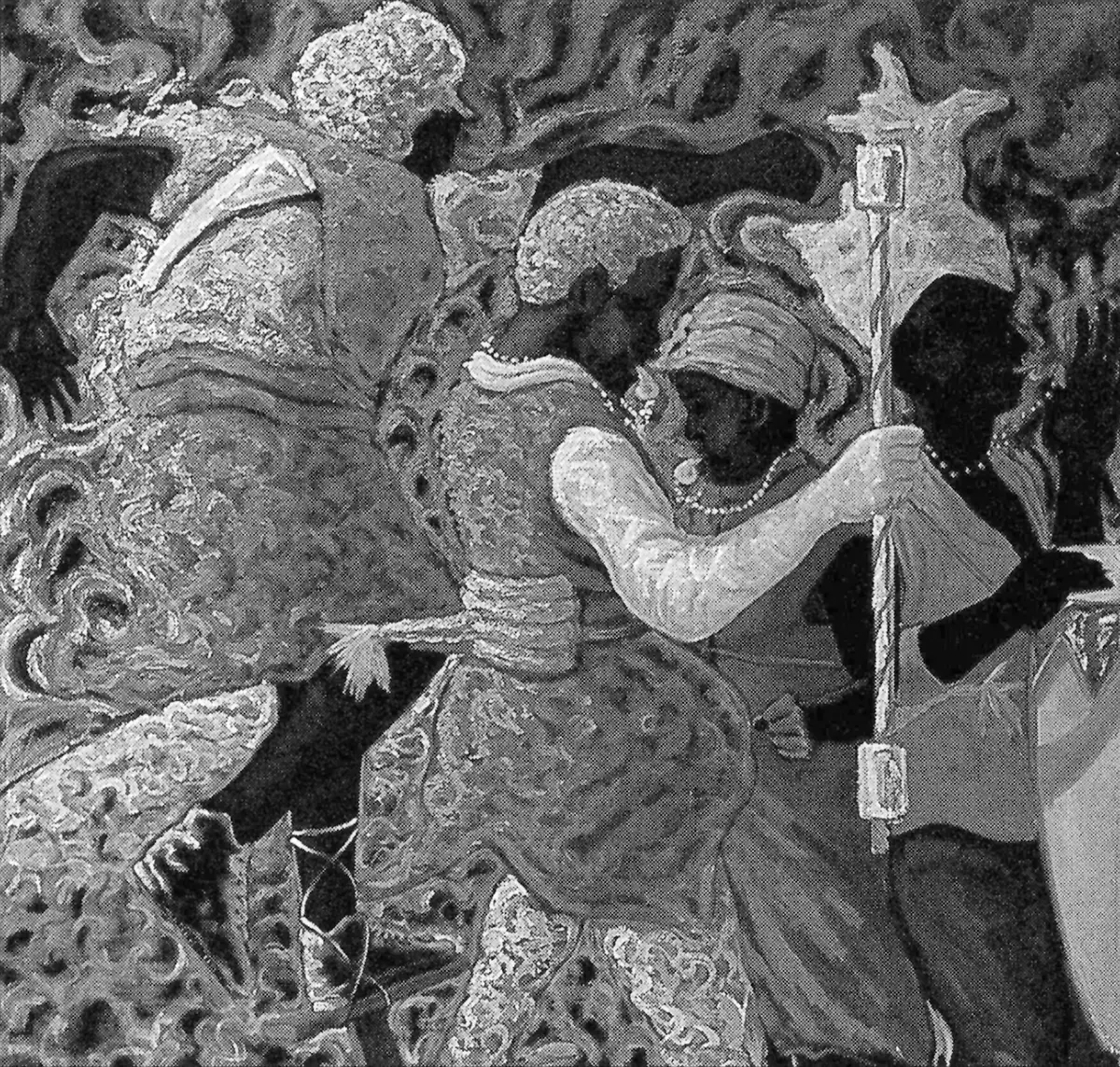
The most outstanding contributions were in the areas of painting and drawing. Although a wide variety of tendencies were observed, from geometric abstraction to images that addressed social issues, it was obvious that one of the main preoccupations of many Dominican painters (and, in many cases, their strength) was in the manipulation of intense and expressive color. This was true in the work of the artist who was awarded the first prize in painting, Ricardo Toribio, a native of Santiago. An artist of great promise and remarkable talent, Toribio has participated in a few large-scale shows organized in the country and has managed until now, to escape the watchful eye of many of the Dominican Republic’s most prominent critics. His first prize submission was a part of his series titled Juegos mayores - Danza para la vida. Toribio often depicts images taken from the rites of Gaga, a sect of Haitian origin near the border areas. While neither literal nor narrative, Toribio weaves the elements of movement and subtle manipulation of intense color into a convincing whole. Second prize winner Jesús Desangles impressed the audience with his use of primal forms underlined by vibrant color, while the third prize winner, José Sejo won the award for his large canvas of quasi-geometric, abstract forms that demonstrated his masterful manipulation of shapes in space.
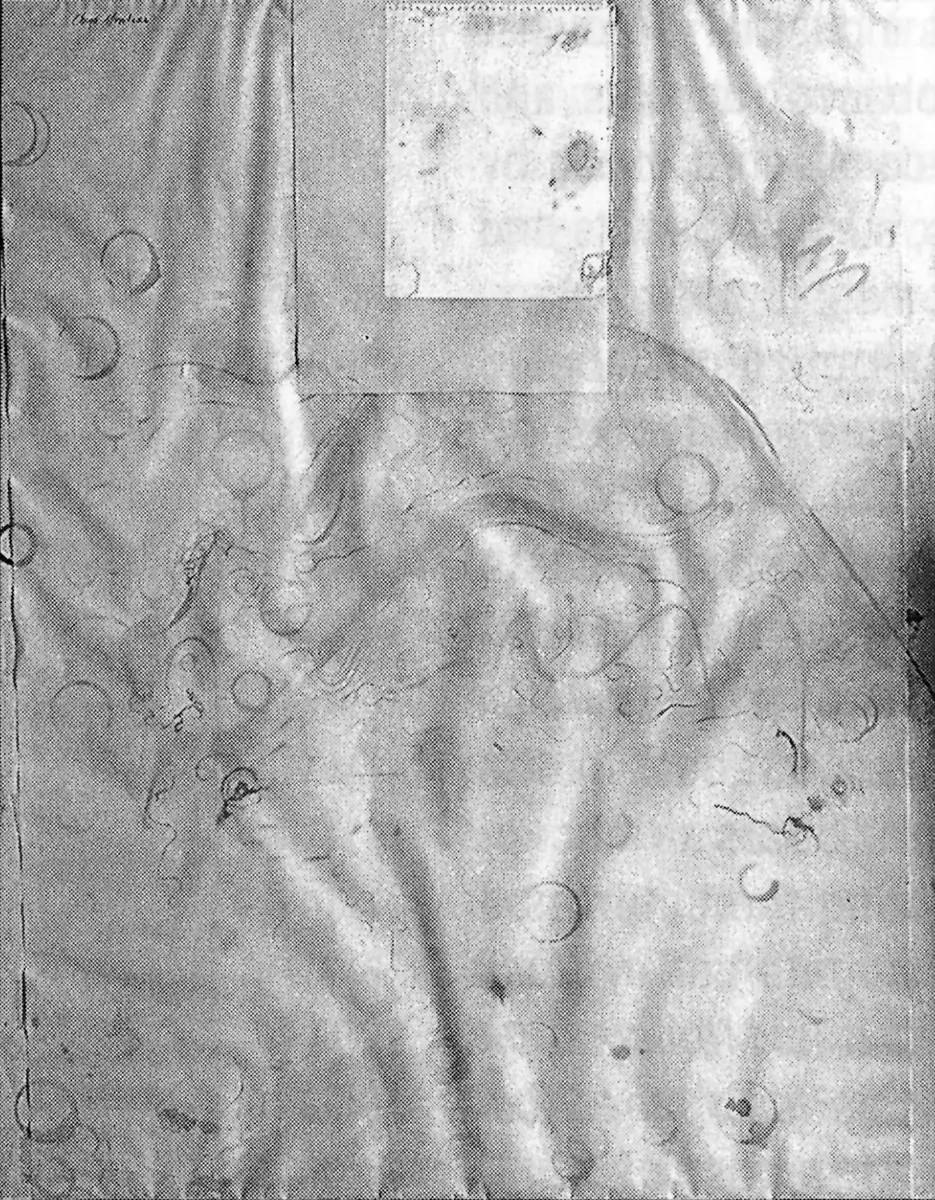
In the field of drawing many submissions were impressive. The most outstanding were the drawings of the first prize winner, Léo Nuñez Genao whose Misterio del Caribe went against the grain with its somber tones. His semi-abstract composition functioned also as a call for greater vigilance about the island's ecology. The drawings of Chiqui Mendoza and Dionisio de la Paz were also outstanding. Mendoza seems to have departed from his use of ritual of tribal objects, depicted with intense colors, to enter a more hermetic phase in his drawings suggestive of sacred spaces.
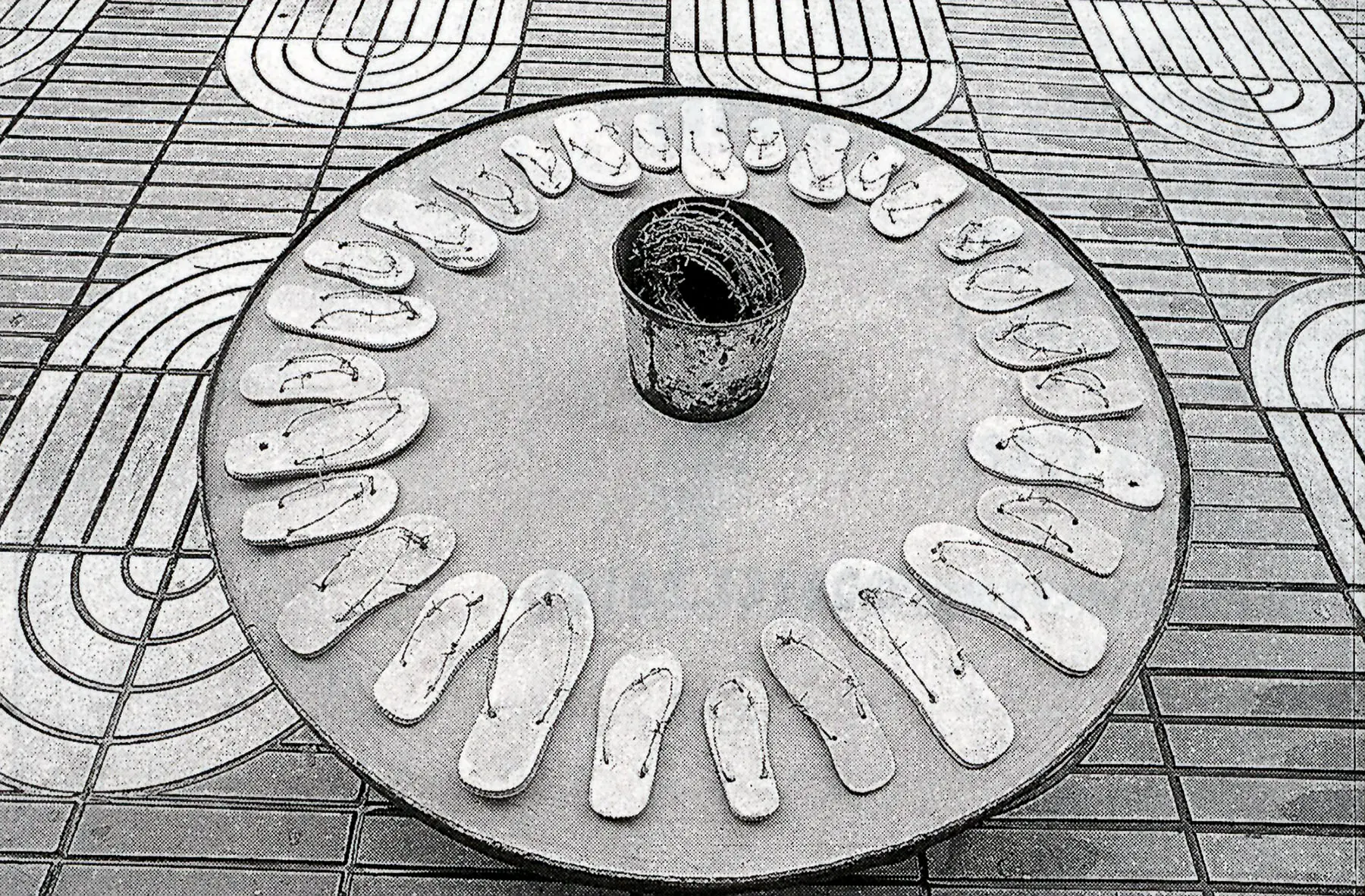
The entries in the sculpture category were more disappointing. Many of the artists seemed somewhat hesitant in their use of their respective media but certain pieces were very strong, like Tony Capellan’s sculpture/installation (the distinctions were rather blurred here) titled Vidas tercer mundo. Capellan, one of the country’s most well-known figures of the international scene, often suggests political oppression in his work and this piece, composed of sandals and barbed wire on a wooden platform, spoke eloquently of injustice and misery. Luis Alberto Checo Muñoz’s terra-cotta Altar para la fertilidad, suggested ancient rituals and occult practices in an eloquent form. It described his clear mastery of the ceramic medium.
All of the prize-winning works become the property of the E. León Jimenes collection. The biennial has been existence since 1964 so the collection now contains an outstanding array of modern art from the Dominican Republic. At present, the collection is installed in the offices of the sponsoring corporation. It is hoped that a museum will be constructed to give the public greater access to these works that, in the best of all possible situations, should be sent on an international tour as well.
EDWARD SULLIVAN