
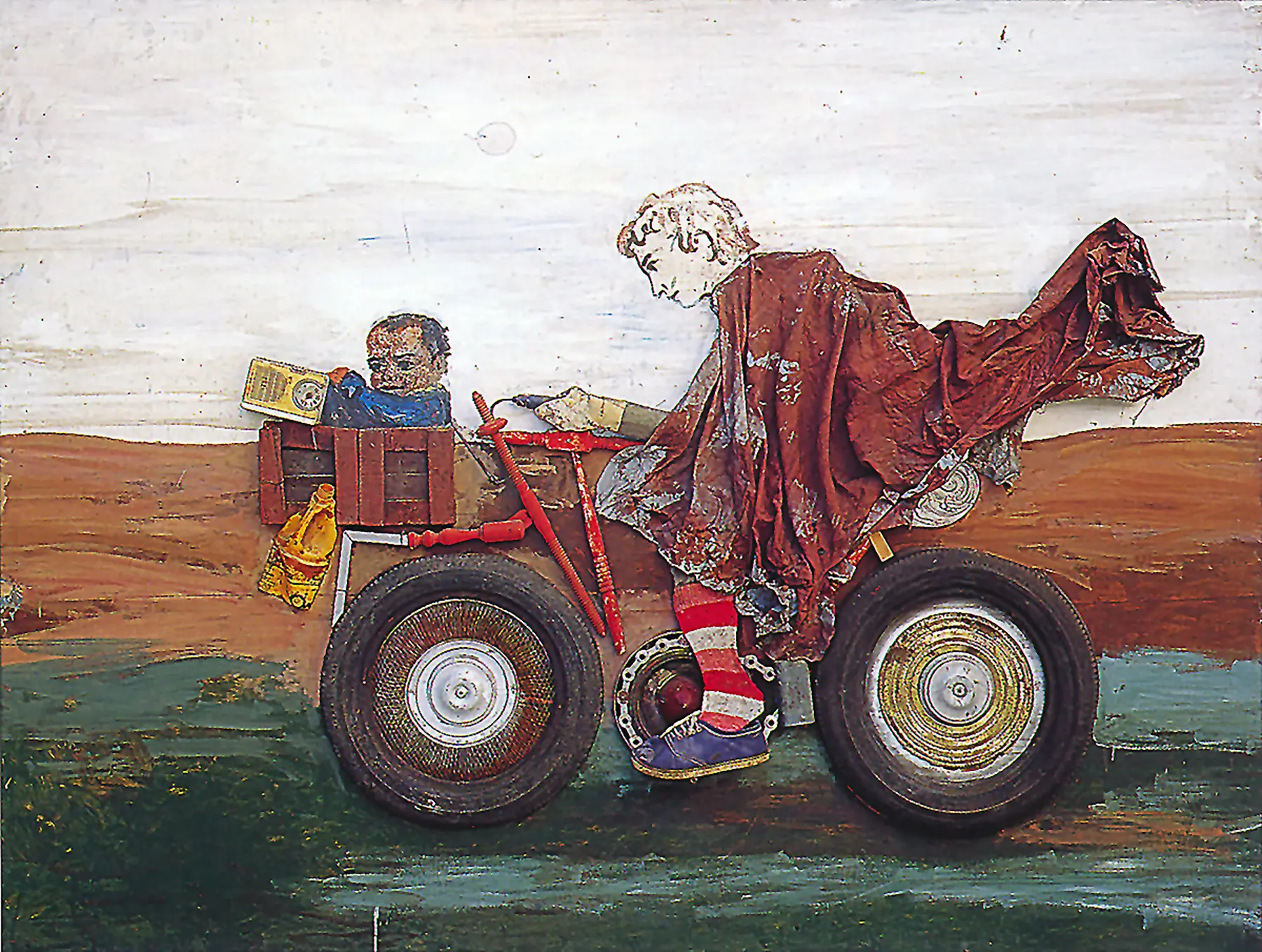
At the beginning of the "Letter to the Reader” signed by the director of the weekly publication Primera Plana, Buenos Aires, in the edition dated April 13, 1965, there appeared the following words:
"ln the depth of a house in the Caballito district in Buenos Aires, a man approaching the age of 60, but still retaining his inviolable youth, is bent on constructing monsters. He is not a scenographist or a madman: he is one of the most conspicuous Argentinean artists, not very well known or appreciated." However, through his vast creative work, rooted in reality but fired by his imagination, Antonio Berni has managed to create an image of the world in which everyday things —bottle tops, nails, roots, plastic folders, unused coils—become the keys to a higher and deeper kind of life. And he has managed, too, to open up the way towards new conceptions of art in his country. Within two months, this work will be crowded into the Berni retrospective that the Di Tella Institute is organizing: the monsters which the painter is now preparing for the triumphal exhibition are not only allegories of evil, they are also objects endowed with beauty, the peaks of an expressive vitality which has never lost sight of the human being as the sole motive for reflection."
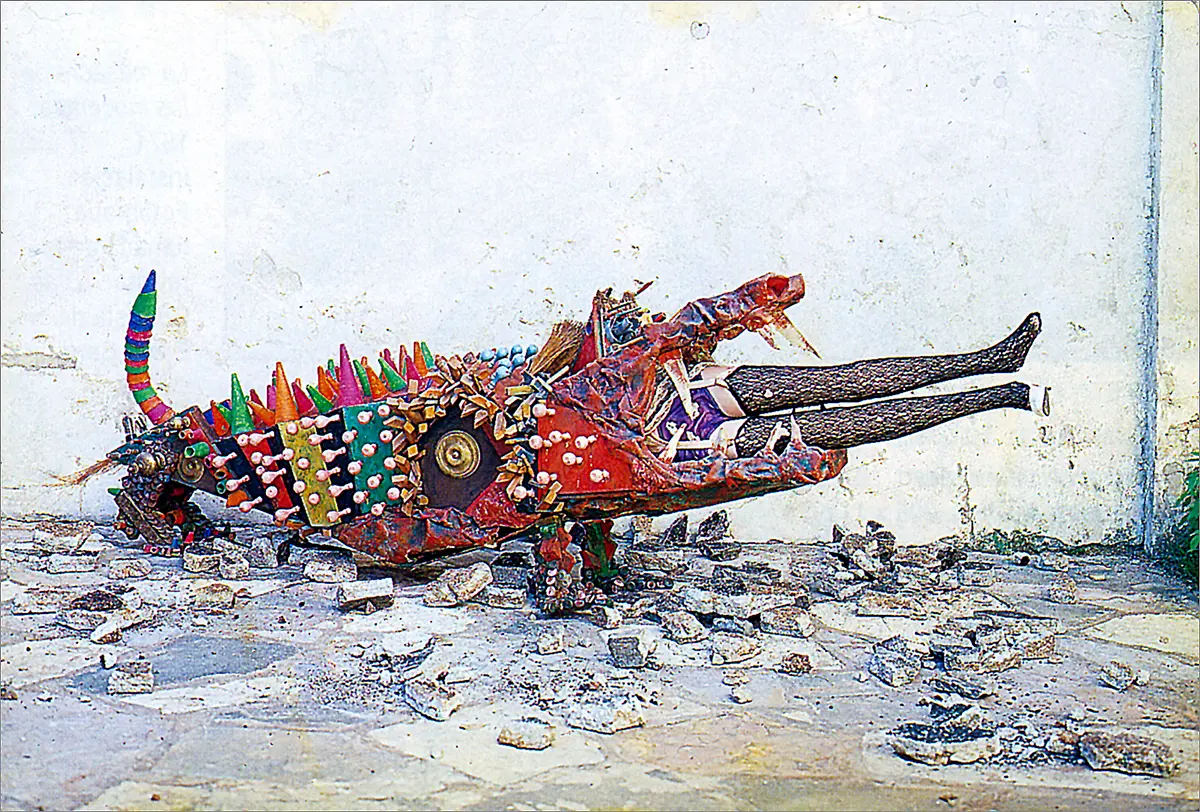
Antonio Berni is no longer "not very well known or appreciated," and has come to occupy an unparalleled place within Argentinean art, to which he has contributed not only "new conceptions," but international recognition. In the exhibition at the Center of Visual Arts of the Di Tella Institute that year, Berni presented a hundred works dating from 1922 onwards. The emphasis in the show was on the last four years, that is, from the birth of the saga of Juanito Laguna and Ramona Montiel —the two figures from the Buenos Aires suburbs created by the artist up to its culmination when, invaded real space, the monsters pursued and devoured Ramona.
The exhibition was reviewed at length in the newspaper La Nación, which commented on the "monsters" in the following terms: "These monsters made by Berni, with so much love and with the dignity of his craft, are true creations. They are, first of all, the creatures of an artist: no improvisation, nothing redundant. By using his imagination, Berni presents us with the figures of a fable for adults. It is, once again, the idea of storytelling."1
In the magazine Criterio, Basilio Uribe wrote, "In Berni, the political-social preaching of his early pictures, the denunciation of the wretchedness of Juanito Laguna and that of society which both exploits and despises Ramona Montiel, the satire of the cardinals of all confessions and the nightmare of the same ironic and distant generosity, defined in terms of the ideas suggested by the titles of the works but which, before bursting into flames and becoming consumed in his creations, gently warms each ingredient."2 The commentator of Confirmando wrote that the monsters were "too fantastic to inspire fear."3
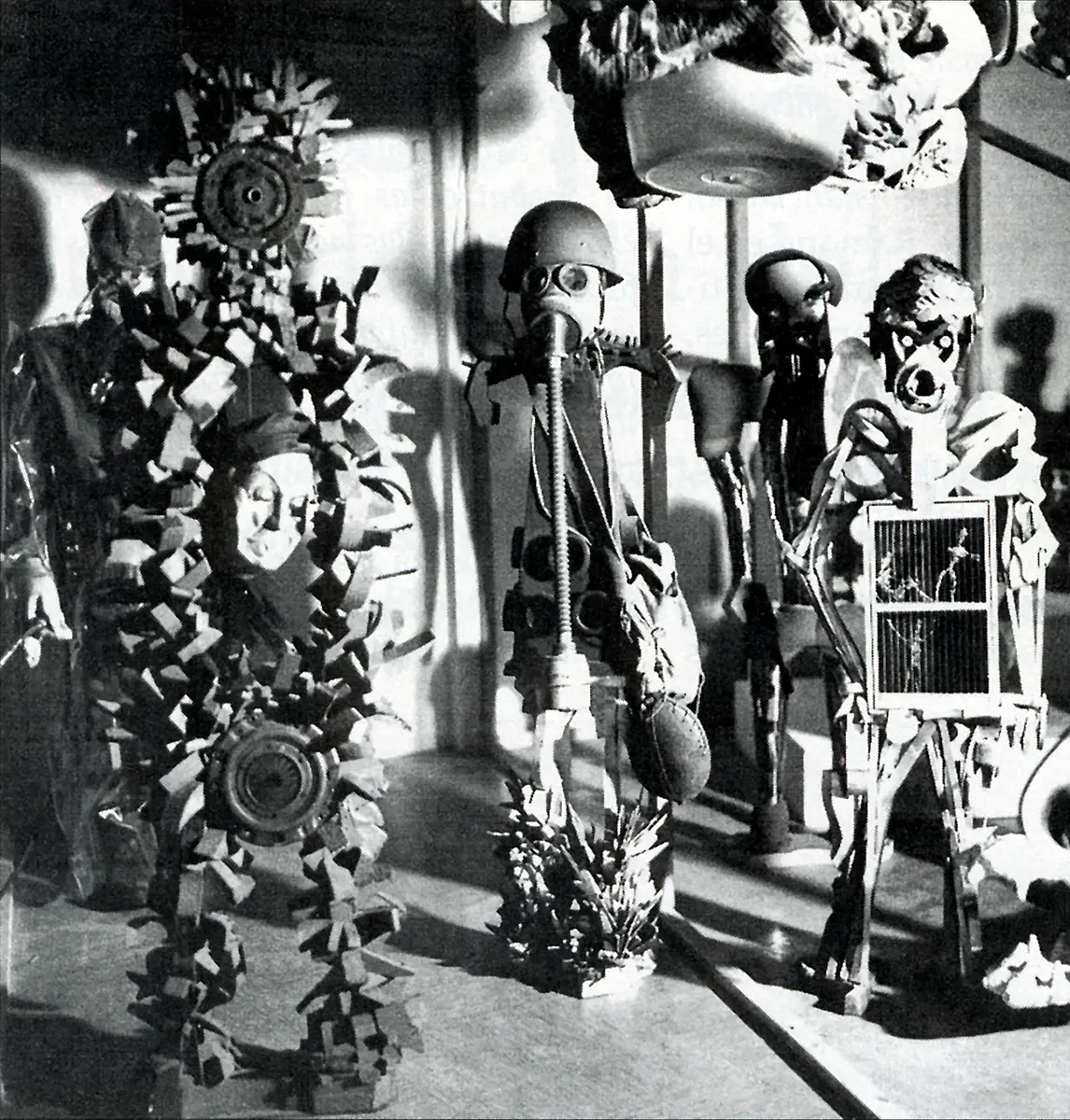
These famous monsters, which attracted so much of the public's attention at the exhibition, are three-dimensional polychrome constructions done with waste materials, mass-produced industrial products such as coils, bottle tops, buttons, nails, screws, as well as steering-wheels, buckets, dried twigs, roots, chair-legs, brush-handles, sackcloth, baskets, broken mirrors, bits of machinery and electronic equipment, coins and molds. They have names like The Threatening Bird, Interplanetary Conquerors Colonize the Inhabitants of the Earth, The Triumphant Worm, Sordidness, Hypocrisy, The Monsters of Hell fight over Ramona, and The Triumph of Death. Done in 1965, they are large in size: Sordidness is 2.30cm long; The Bird is 3 meters wide, and The Conquerors 2.40 cm. high. They reveal an extraordinary technical skill in their construction but only acquire their full impact in the context of the story of Ramona.
Juanito Laguna and Ramona Montiel are archetypal figures, reflecting a number of individual and social markers. As Berni himself has said, "there is not just one Ramona, but many. Like Juanito, Ramona is the archetype of a very common social phenomenon in the life of the large urban conglomerations. Anyone who goes to the factories, the places of amusement, the nightspots in Buenos Aires will find many like her. For this reason, there is not just one work that synthesizes the figure. I gradually discovered her through many works. In each of them, there is a fragment of Ramona's life, an instant which is not definitive but circumstantial."4 Like Juanito Laguna, Ramona is the nexus of union within the entire narrative sequence. And in all these narratives, both become enriched with each h new facet shown.
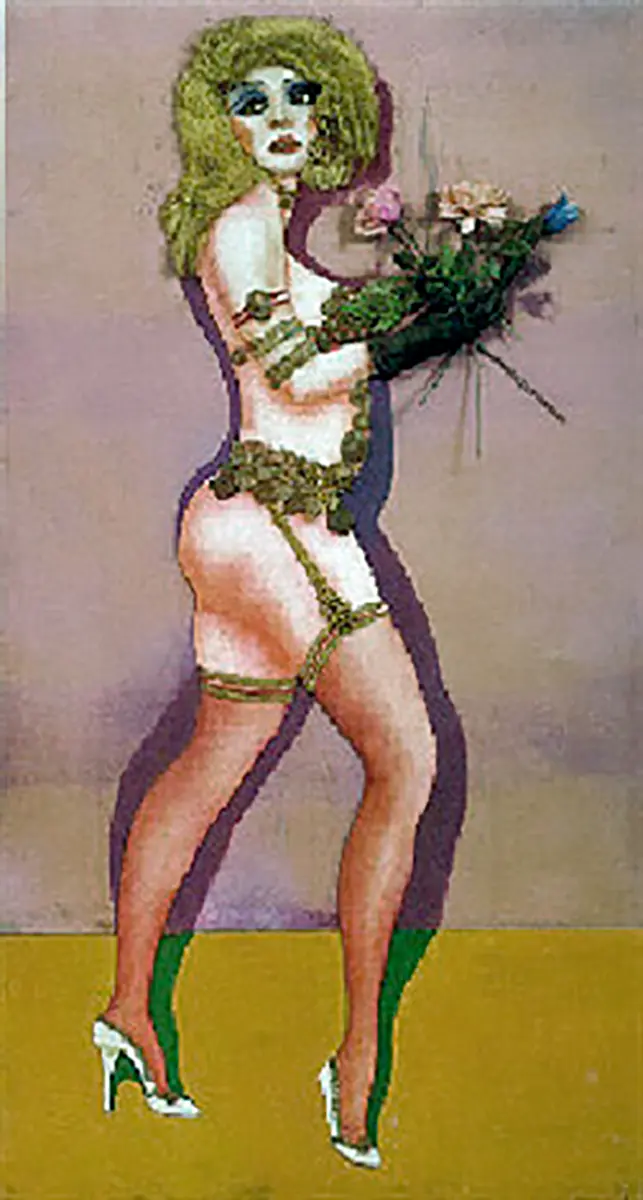
In the same way, the monsters, taken separately, could be seen as an artistic exploit, an overflowing of fantasy and mocking imagination. But as an allegory of all the fears and anguishes of Ramona, the threats and dangers posed by society, they take on a dimension that would have otherwise been denied them. "In the desolate solitude of the bedroom, Ramona' s guilty conscience fabricates hallucinatory and dreadful monsters and in the early morning her dreams turn into nightmares… my polychrome monsters... are only the materialization of these dramatic states of fear of Ramona ..."5
"The painter enters the intermediate worlds of imagination," explains Gérald Gassiot-Talabot. "He will search in the collective subconscious of the monsters with horrible faces which Cyrano, as he died, pierced with his sword. Berni gives them form and delivers to them his palpitating heroine. His creatures are much more terrible than the fleeting image - of male concupiscence and brutality. These monsters devour slowly, crush methodically, devour with voluptuousness their defenseless victim is condemned and delivered up by all social conventions. For his cast of monsters, Berni found the most extravagant baroque forms, the more formidable that could be created in the instantaneous hallucination of a nightmare. Ramona's universe breathes with the rhythm of an entire city, with its attractions and seductions and secret perversities."6
In the same way that they are the narrative culmination of his figure, the monsters also bear witness to the freedom with which Berni uses the means at his disposal. His idea is to find the material appropriate to each case. "The meaning of Ramona's world is different from that of Juanito's. To express Ramona's world, I use luxurious or simple fabrics, or I include in the collage sophisticated jewels and very fine stockings. On the other hand, the materials I use for the Juanito collages are leftovers: bits of zinc plate, bits of fruit boxes, pieces of darned cloth, bits of tarred cardboard. Different atmospheres, different materials. Since Ramona does not live and has not lived-yet-in squalor, and since I have placed her in the city, I do not use Ieft over materials. Ramona belongs rather to the world of tango."7
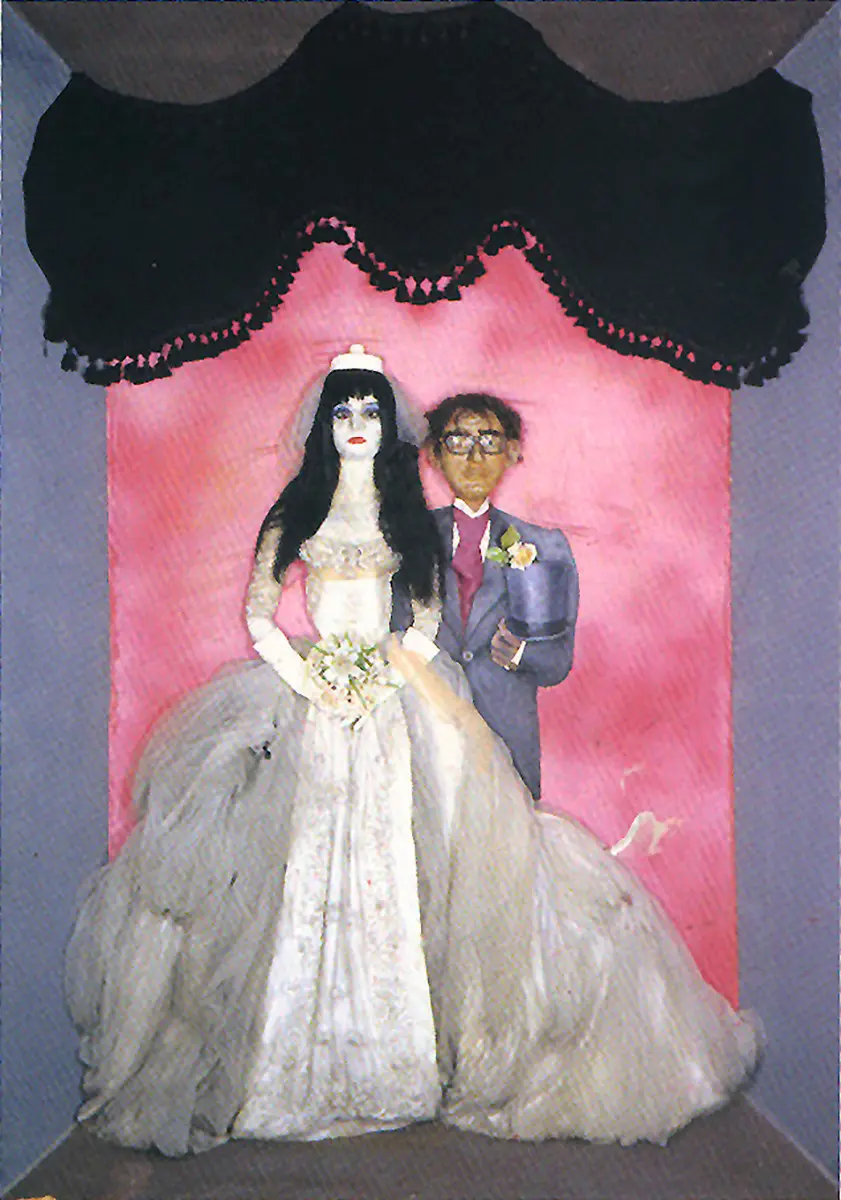
The use of cans and waste materials in the first case was "in the air" in informalist circles, whereas the brilliance of banality and triviality of the second case was being exalted by the pop movement-although we must, also recognize Berni's enormous originality in using these features within a narrative figuration rich in connotations. I say rich in connotations because, as Gasiot-Talabot has quite rightly pointed out, Berni feels intensely the relationship between objects and the society which has produced them. We can see that the move towards the three-dimensional object was in the works for some time. Berni notes: "One makes a break with the routine of expression when it no longer allows one to say what one wants to communicate." The relief of the prints and collages, the way the artist gradually extracted himself from two-dimensionality were marking the way towards these assemblages which creep along the floor, such as The Threatening Bird. "Berni avoids the "why-not techniques," the limits of the picture and modeling, and begins to develop a corporeal and complex language full of sinister essences."8
These three-dimensional figures marked an important stage in the unusual development of sculpture in Argentina dining the century. They are also a demonstration of thi1 fact that the expressive power of work may lie beyond any formal a priori element, any limit established by tradition. These "infernal" monsters may be terrifying in their unusual and threatening form but they are not frightening in their materials. Unlike the ease of Juanito, they do not bear the emblematic signs of deterioration, but on the contrary have, in an almost pop kind of way, the shine of the "new," the vulgarity and banality of consumer society taken to its limits. They are a version within the narrative fiction of the artist. This must be emphasized because their poor presentation in Buenos Aires in December of 1989 totally falsified Berni's intention as expressed in the Di Tella show in 1965.9 In that same year, 1965, Berni had participated in the exhibition titled Figuration narrative dans l’art contemporain organized by Gérald Grassiot-Talabot in Paris.
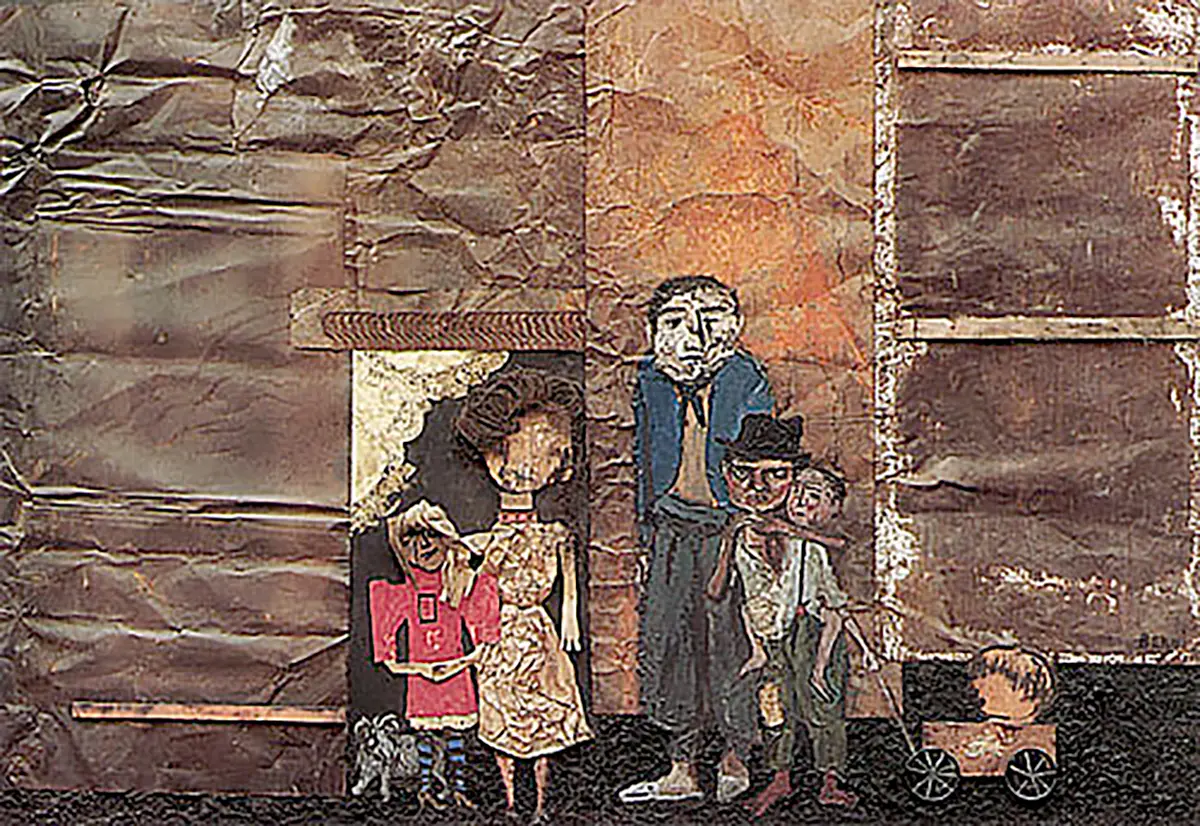
In July, a conversation between M. Troche and R. Moulin was published, in which the latter said, "I agree that Berni revealed a new and imaginary vision of our world. His assemblages seem to me to be much more virulent than the symbols of our everyday life which have been 'neutralized' by Télémaque or Alleyn, even naturalized as if they were butterflies."10
The move by the artist towards three-dimensional works was not limited to the "monsters" which he presented in the Di Tella Institute. In September 1967, in the Rubbers Gallery in Buenos Aires, there was a show titled Ramona in Berni's Cavern. It was what today would be called an installation, a tenebrous atmosphere bristling with disturbing prismatic stalactites, blacklight, fluorescent lighting, music, sounds, —the threats coming from the dark doors of the hell, the attributes of death everywhere. There were also monsters, one with a buffalo skull. There was also a spectacle, to which Berni refers in an interview11 presented by Jorge Glusberg and Graziela Luciani, which attempted to give an idea of the complex personality of Ramona. The latter was in a bed, surrounded by screens reflecting her nightmares. In the end, she danced as if a kind of exorcism. "At the back of the scene, there was also a theater with black light, with an enormous mannequin hanging, whose limbs separated and came together in a very slow manner. There was also a projection of Ramona's dream. At one point there appeared one of the monsters which I do, and the image of a bishop illuminated with violet lights, moving to slow and representing the remorse which constantly afflicted the character."12
Berni had moved from two to three dimensions; then he turned to sound, and finally, to the spectacle. In expansive waves, his expression increasingly required more space, different disciplines, and the incorporation of time. To complete the panorama of Berni's three-dimensional objects during this decade, mention must also be made of the object which appeared in a photograph in Confirmado, with the subtitle "The Monsters of the City Pursue Juanito". lt is the same which appears inverted in the Gassiot Talabot publication from 1966.13
In 1971, in the Museum of Modern Art of Paris, ARC section, Berni presented his first one-man show, at the invitation of the director Pierre Gaudivert. Here he presented another set of three-dimensional "monsters" called The Massacre of the innocent. Berni said: "My new collage is a compendium of polychrome structures: the bodily rendering of the images we see in war images, in the act of urban guerrilla warfare, in violent strikes. ln, these events there is passive participation of a world which is the victim of such dramatic, and at the time-tragic, situations. Because when a town is bombarded, attacked, most of the victims have nothing to do with the conflict itself. These innocent victims who do not participate directly in the conflict are the -up- ports of this climate of the massacre which my work transmits. In creating the work, I made use of certain materials: bits of automobiles, empty boxes, cans piling up on garbage dumps, bits of furniture...These leftovers from a technologized world, the excrement of the consumer society in which we are plunged, have been carefully selected. Since they were sought out in a condition of deliberate destruction, they acquire a new kind of meaning. Along with the collage of the figures in The Massacre of the Innocent, these objects make up a scene in which light and sound combine to create an appropriate atmosphere. The new work is in fact a continuation of the path undertaken with Juanito Laguna and Ramona Montiel."14 Like robots, these hallucinatory figures with their helmets, shields, ancient masks, bodies in cages, monstrous gullets, are meticulous constructions that change the code of the objects recovered by Berni from the flea market and other equally picturesque corners of Paris.
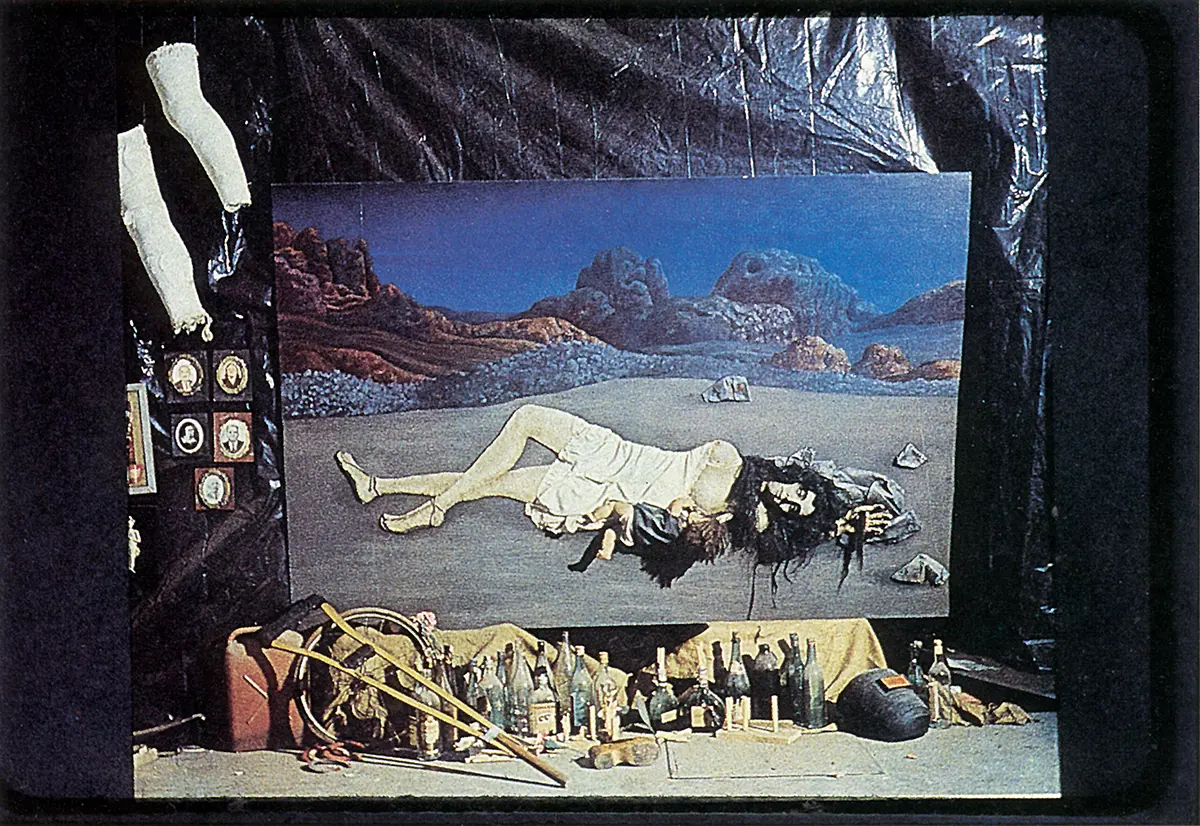
In the exhibition he held in 1978 in the Carmen Waugh Gallery, Buenos Aires, along with Federico Peralta Ramos, titled Beliefs and superstitions of All Times, Berni included an environment, titled La difunta Correa, with which the artist entered the sphere of myths and their presence in the atavistic unconscious of copies. "It is the drama of a woman who tries to recover her lost companion, who has been torn from her side by guerrillas. She sets off to look for him in the desert with her little child and dies of thirst, while the child survives by drinking the mother’s milk. Popular fantasy transformers fact into legend, into a cult object. Berni situates the scene in an inscrutable night setting, where the intense blue of the sky and a rarefied landscape are the mute counterparts of the tragic event which clearly stands out in the foreground. Along with the waxen silhouette of the prostrate mother, with her long hair looking like unraveled burlap, the vibrant dynamism of the pink doll suggests the gift of life received from death, thanks to the profound power and vitality of maternal love, and at the same time, the enigma and mystery of the human vis à vis the inanimate."15 In one of these frontal visions, full of theatricality, which Berni uses in this kind of work, he shows, along with the mythical figure, all the gifts of popular cults and acts of devotion: photographs, ex-votos, bottles with candles. Excessive, innovative, eloquent, transgressive, Berni stopped at nothing that would pose an obstacle or limit to what he wanted to say. If the theme provided the thread of coherence to his art, he made full use of his endless energy for work, his originality, and the profound resonance of his humanistic and Latin American vision.
In 1981, Berni's creations came to an end, before becoming renewed in the multiple readings of his spectators.
NOTES
1. E.R., La Nación, June 23, 1965, Buenos Aires.
2. Uribe, Basilio, Criterto, No. 1479, July 8, 1965, Buenos Aires.
3. Confirmado, June 25, 1965, Buenos Aires.
4. La Opinion Cultural, October 6, 1974.
5. Berni Archive (without page numbers) in the catalog Antonio Berni, Pictonal Work 1922-1981, National Museum of Fine Arts, Buenos Aires, June-July 1984.
6. Gassiot-Talabot, Gérald, in the catalogue Exposición Retrospectiva 1922-1965, Emilio Caraffa Provincial Museum, Directorate General of Culture, Cordoba, 1965.
7. Interview with Berni by Julio Ardiles Gray, in La Opinion Cultural, October 6, 1974.
8. Taverna Irigoyen, Jorge (ed), in Aproximación a la escultura argentina de este siglo, Colmegna, Santa Fe, Argentina.
9. In the Sivori Museum. I am grateful to the artist Pablo Suárez for indicating this to me.
10. "Definir l'art latino-americain. Un dialogue entre R. J. Moulin and M. Troche," Les Lettres Françaises, July 1, 1965, Paris.
11. For the interview, see note #7. We believe that this exhibition is possibly that which appears in the catalog of the National Museum of Fine Arts as El Mundo de Ramona, Expo show, p.95.
12. Ibid.
13.Confirmado, April 4, 1972, Buenos Aires. Troche, Michel-Gassito-Talabot, G. Gerni, Bibliopus, (eds.), Georges Fael, Paris, 1971.
14. Siete dias ilustrados, Buenos Aires, August 30, 1971.
15. Ravera, Rosa Maria, Berni en la Serie Pintores Argentinos del Siglo XX, CEAL, Buenos Aires, 1980.
NELLY PERAZZO
She is a critic, teacher, and contemporary art historian. Member of the National Academy of Fine Arts of Argentina. Curator of the Libero Badii Collection of the Banco de Crédito Argentino Foundation.