
One of the largest exhibitions devoted to the career of Mexican photographer Manuel Álvarez Bravo opened at The Museum of Modern in New York last February. The show was organized by Susan Kismaric, curator of the Department of Photography, and is a long overdue homage to one of the few living legends of modern photography. Indeed, if something can define this recent exhibition of Álvarez Bravo's images it is the inscription of his oeuvre within the modern canon of photography. Although past assessments of the artist's work have emphasized his concern with Mexican customs, rituals, landscape, and people, recent approaches, particularly MoMA's, try to underline Manuel Álvarez Bravo's engagement with the photographic avant-garde of his time. With Bravo, as with many Latin American artists, the privileging of the referential, the content, the story behind the image, has delayed his incorporation into the canon of modern photography.
More recent accounts, particularly Kismaric's essay in MoMA's catalog, study Álvarez Bravo's strong interaction with members of the European and North American avant-garde. However, what one misses from most writings on the work of the artist is a theorization of his photographic practice, one that would help to sort out, without relying only on the thematics of Mexican-ness, the particular modernity of his work, and its dialogue with Mexican context. What recent studies fail to emphasize is that Álvarez Bravo's contribution to modern photography is a way of seeing, or better yet, a way of picturing, that stands halfway between representation and meaning. This means that there is a lack of foreclosure in many of these images that, while formally and thematically related to Eugene Atget, Edward Weston, Tina Modotti, and Henri Cartier-Bresson, have to do with a sensibility particular to Mexican modernity.
Interested in photography from the time of his youth, Álvarez Bravo only embraced it as his sole occupation in the late 1920s after returning to Mexico City from Oaxaca, where he had been working for the Treasury Department. Within the progressive cultural atmosphere of the capital city, he and Lola Álvarez Bravo, then his wife, developed strong ties to the artistic and literary circles of the period. The particular position occupied by the couple within the intellectual milieu of Mexico City informs the peculiar modernity of their images. On the one hand, they were exposed to the revolutionary credo articulated by their friends José Clemente Orozco, David Alfaro Siqueiros, and Diego Rivera, and on the other, to the formalist aesthetic of Edward Weston and Tina Modotti, characterized by strong contrasts, smooth surfaces, and defined forms.
Moving away gradually from the pictorialist aesthetics so dear to nineteenth and early twentieth-century photography, Álvarez Bravo developed a sophisticated vision that clearly undermined the idea of genre and painterly effect. His most representative images do not conform to the classical pictorial tradition that divided the represented world into categories such as landscape, portraiture, and still life. Nor do they embrace the positivist project imposed upon photography to record the world as it is, and whose modem offspring is documentary photography. Instead, his images participate in a radically different paradigm. They do not obey the model of the archive that has haunted photography since its beginnings in order to conform to the utilitarian purposes of capitalism. Rather, Álvarez Bravo's images take full advantage of the camera's capacity to record that which the normatized eye tends to ignore. It is not a matter of capturing that which our optical organs cannot perceive-what Walter Benjamin implied when defining photography as our "optical unconscious."1 Instead, it is an interest in those sites of our perceivable world which disorganize preconceptions, expectations, and verisimilitudes, an interest in uneasy encounters between objects, places, and human beings.
In this sense, a large part of Manuel Álvarez Bravo obeys the economy of the trouvaille or found object. This immediately links Alvarez Bravo to André Bretón's notion of Objective Chance. In Surrealist discourse, Objective chance is marked by the "fortuitous" encounters with objects, events, and people that signal, through repetition, the recipient's desire. Curiously enough, one can say that Bretón's Objective Chance seeks to master chance and desire through repetition. Thus the transgressive, subversive, and libera tory project of Surrealism against a capitalist and rationalized society seems, at times, ambiguously systematized, somehow tamed.2 Bretón found in Mexico the Surrealist place par excellence and was moved by the movement's engagement with non-western cultures. The place may have certainly fulfilled his expectations given the irregularity of the urban texture of the Mexican landscape.
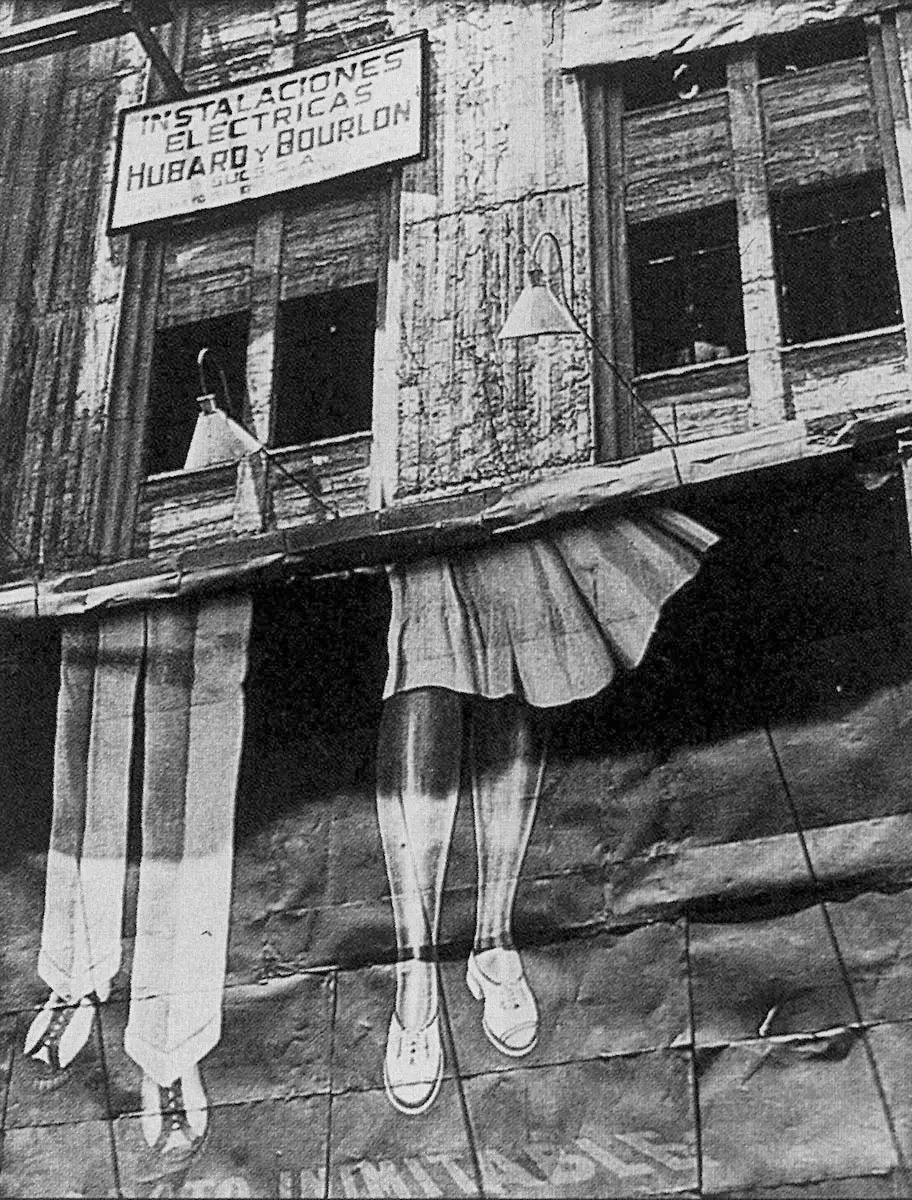
Two Pairs of Legs, a photograph by Álvarez Bravo from 1928-1929 fully conveys that uncanny effect characteristic of the encounter with the fragmented body so often explored in Surrealist aesthetics. The image has a graphic quality that is uninterested in creating any kind of illusion- ism. Instead, the male and female pairs of legs seem to be floating within the space of the poster pasted onto the wall of a building Cut off at hip-level by a rustic molding; the pair of legs each have above them a lamp and a window. The unexpected juxtaposition of the body of the building and the "bodies" of the headless figures acquires a certain coherence when we begin to look at the windows as heads, and more specifically, eyes, to the legs.
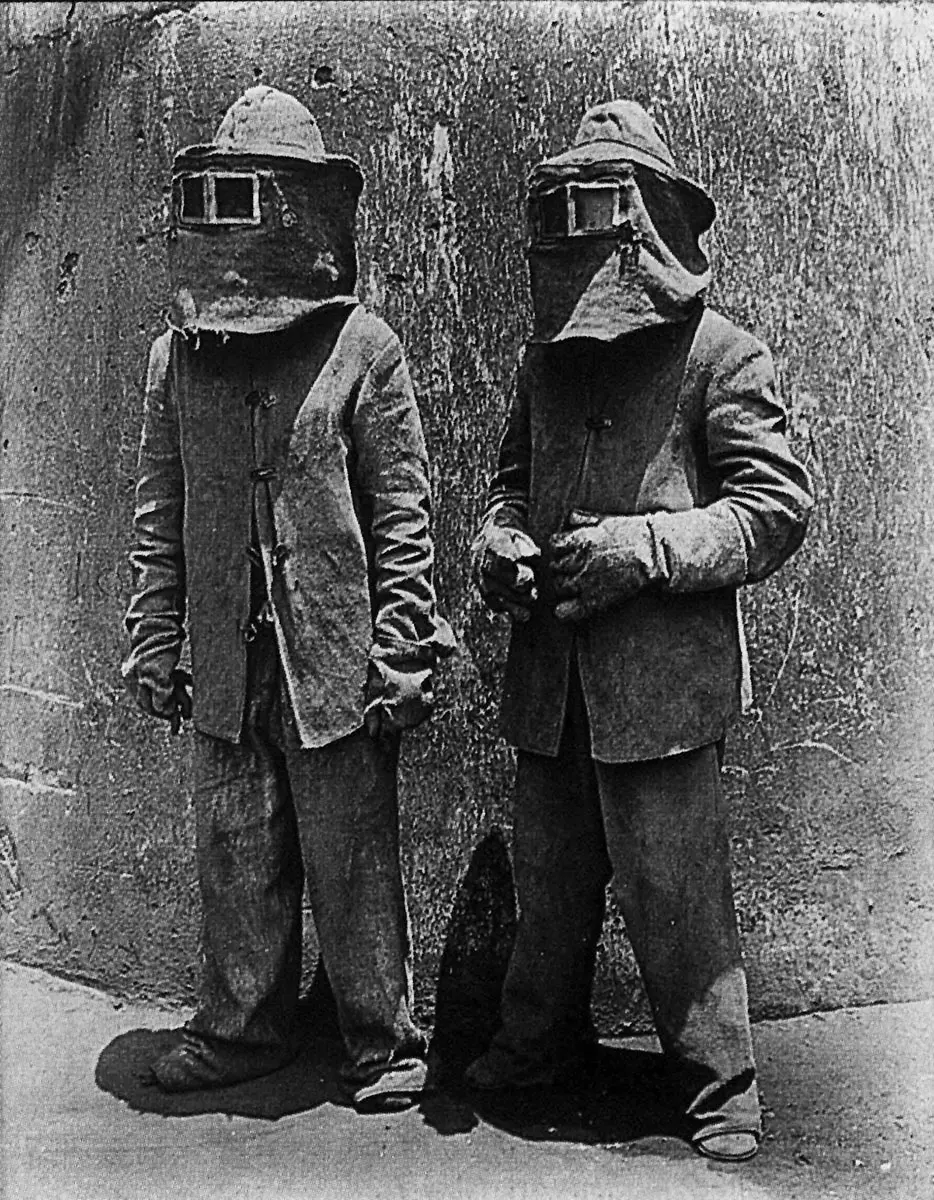
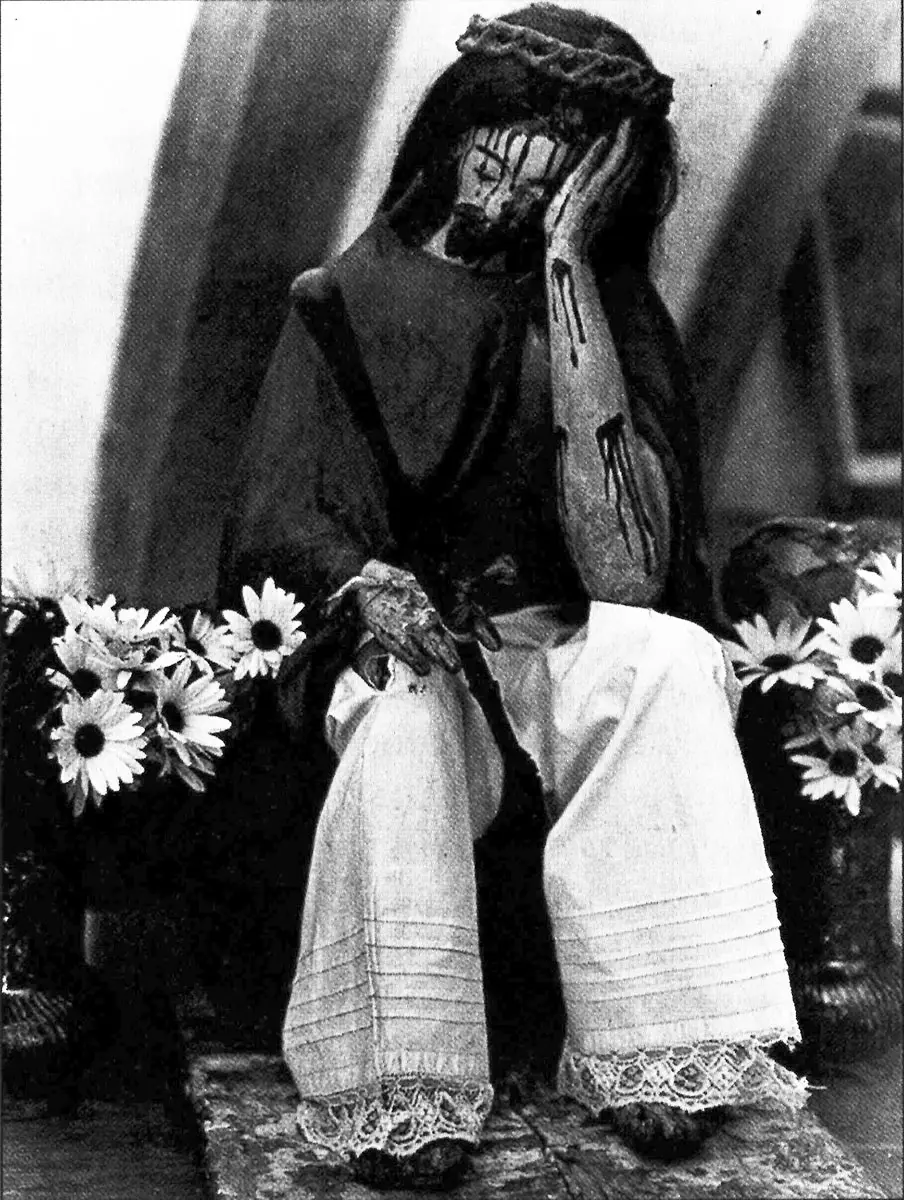
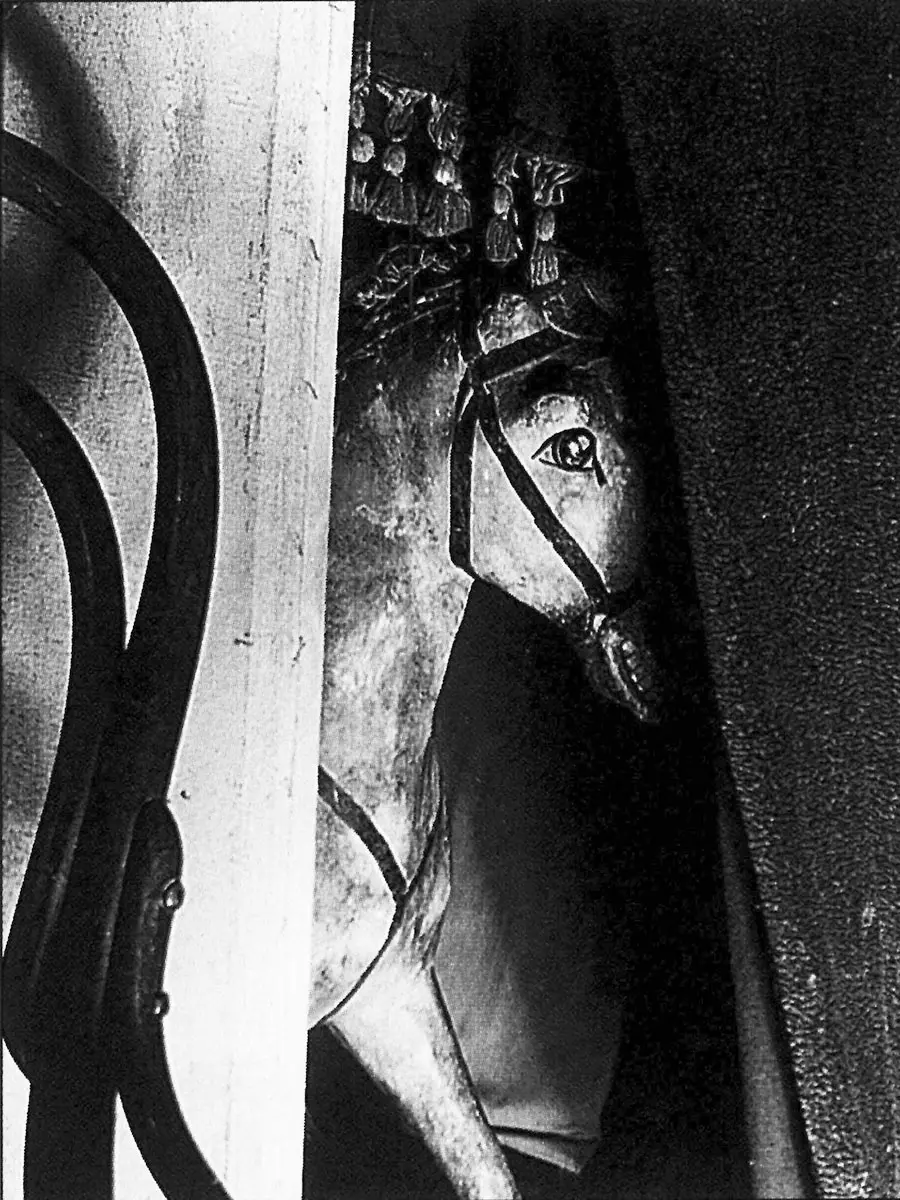
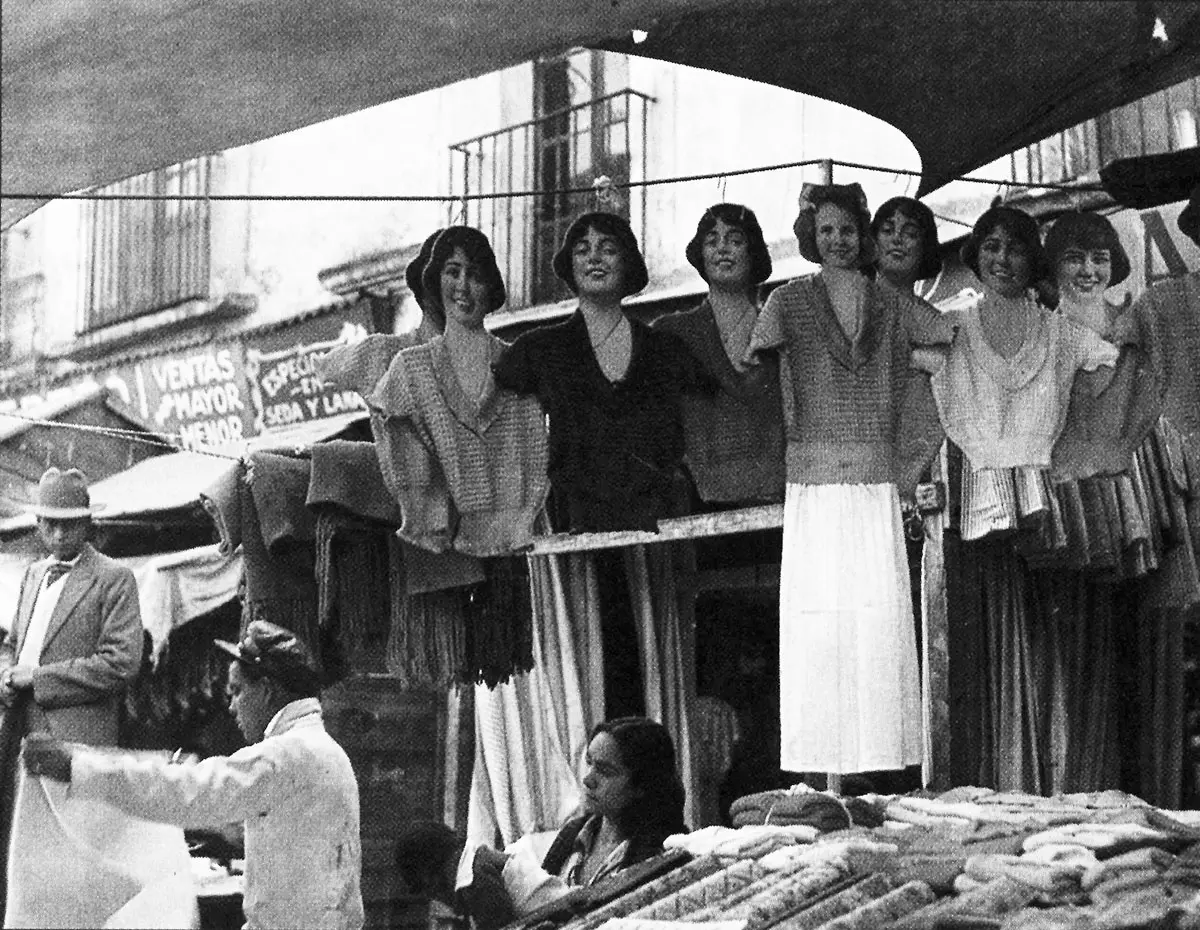
Other images by Álvarez Bravo include Crown of thorns (1935), where a plaster Christ rests his head on his left arm in gestural humanity; Wooden Horse (1928-1929) where a cropped image shows the smile of a wooden horse partially concealed behind a curtain, the light falling on its head mysteriously; and Laughing Mannequins (1930), where hanging mannequins engage the spectator with sarcastic smiles-these are images that explore the inconsistent effect of the real, and the lack of logic that reigns in photographic vision. In this way, the images operate according to a disorder inherent in the medium which, due to its attachment to the referent, is as unclassifiable as reality itself, or, put another way, arbitrarily classified. Thus, Fire Workers (1935), like the images mentioned above, shatters crucial binaries such as organic/inorganic, animate/inanimate, natural/artificial. The image is threatening and clumsy at the same time. This couple, covered from head to toe in the protective masks and uniforms characteristic of welders, set against a rugged wall, under a strong midday sun, project an uncanny effect due to their rigid poses: they are alive but look inanimate-no expression, only masks. Like the privileged figure of the automaton in Surrealist discourse, the photographic image of the welder underlines the status of the subject in photography: as it is captured by the camera, it becomes a pure sign, pure image, with no life to it.
Constant clashes between native and modern culture, between peasant and capitalist society, between ruin and technology, are present in Alvarez Bravo's images of the late twenties and thirties. His photographs though are not a programmatic recording of this contrast but an anti- systematic glance at his surrounding world. With this, I don't intend to bring Álvarez Bravo closer to the notion of the Decisive Moment, advocated by his contemporary Cartier-Bresson (with whom he shared the streets of Mexico with in the early thirties.) beyond the seizing of a "moment at which the elements in motion are in balance."3 Álvarez Bravo seems to be exploring the inconsistent dialogues between form and content, exploring the unstable meanings of the surface of things.
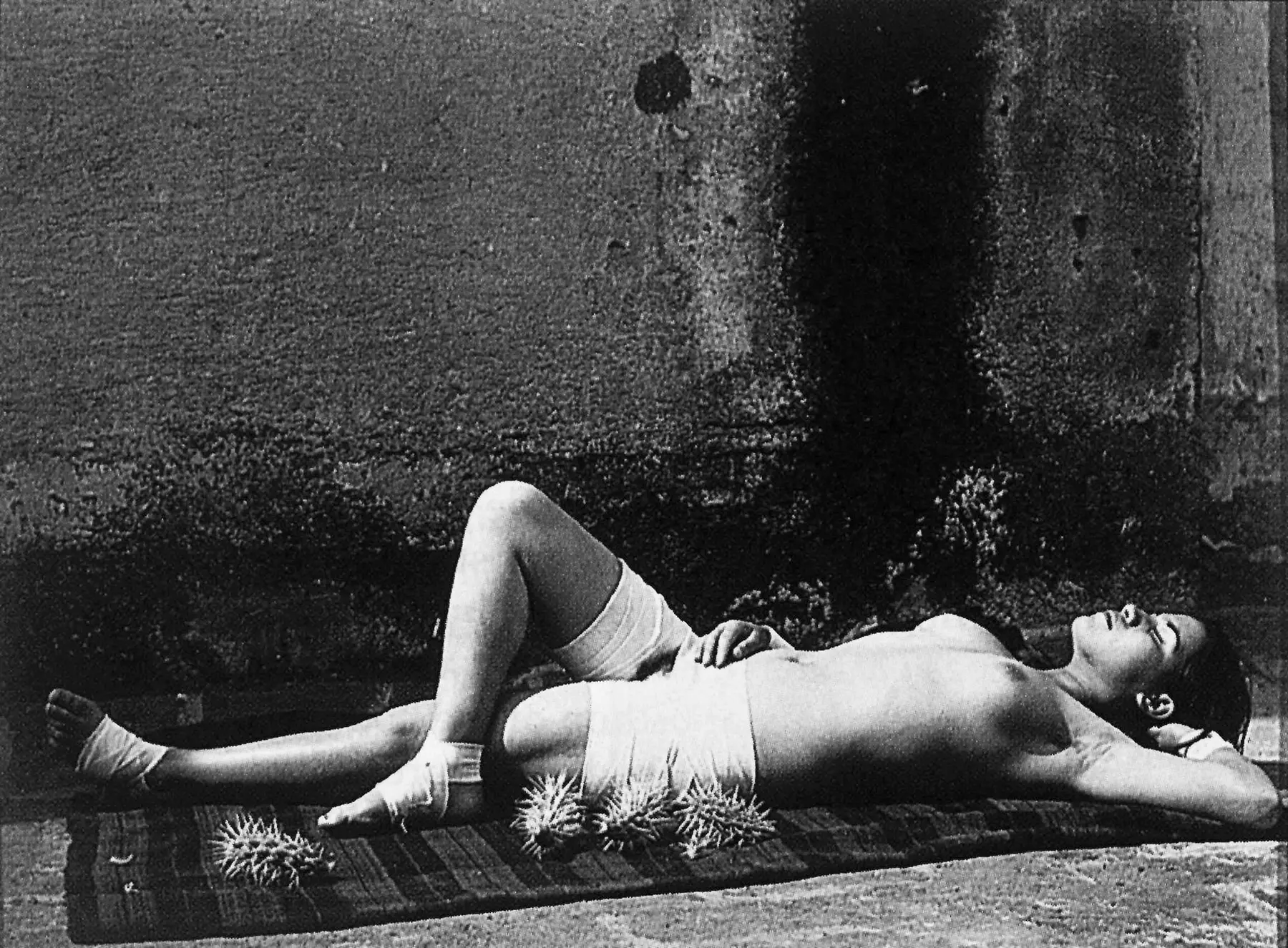
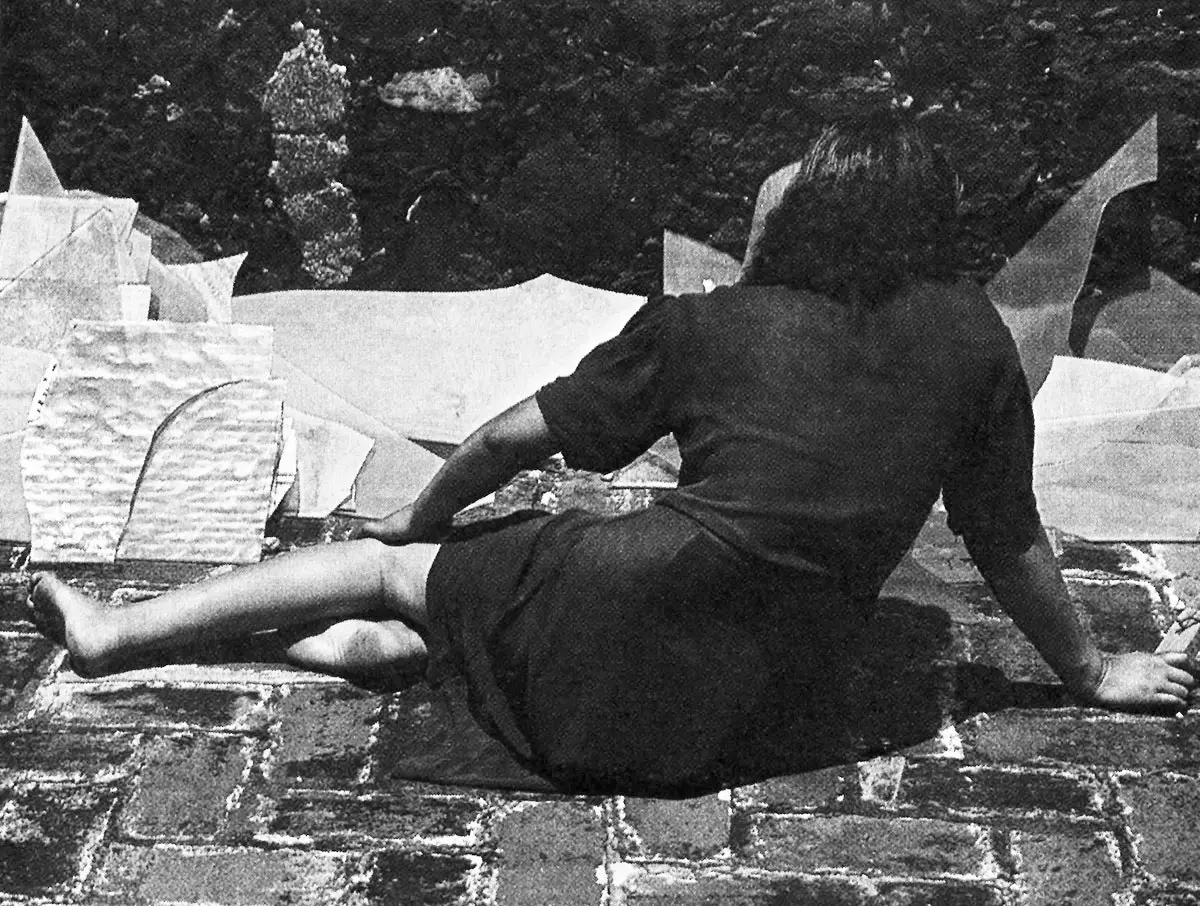
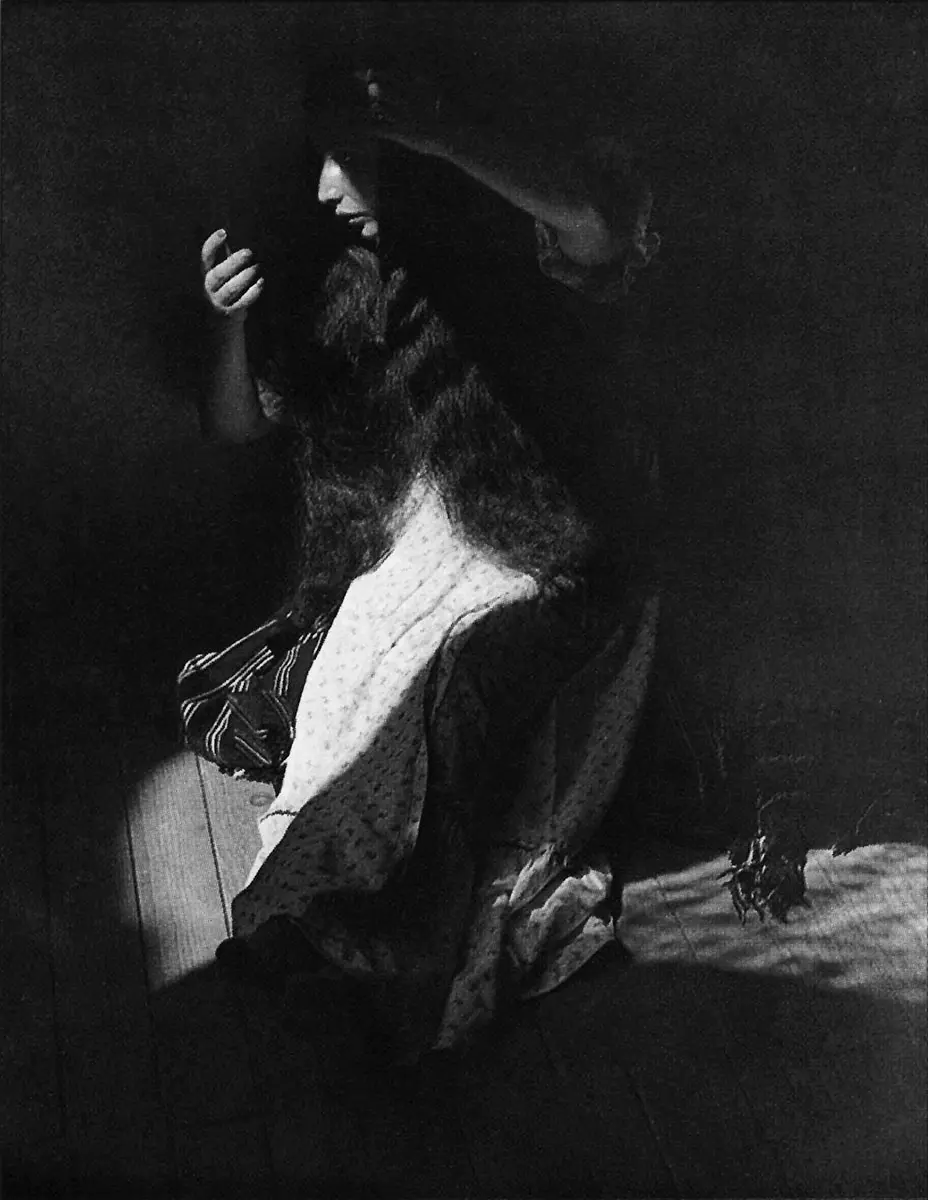
Few images establish direct dialogues between landscape and subject, Mexico and Mexicans, while many others play with the theatricality inherent in the real and the subtle border between reality and fiction. The Good Reputation Sleeping (1939), one of Manuel Álvarez Bravo's most famous photographs is exemplary.4 In it, we encounter a naked woman who seems to be sleeping but whose rather awkward pose-reclined, her right leg bent over her straightened left leg and her left arm bend behind her head-suggests a rather staged composition. Cloth bandages wrap her feet and hips but leave her public area exposed. Through surrounded by prickly and potentially harmful cacti, the woman's pose most closely approximates relaxation than fear. The strong contrast between the lit naked body and the dark background wall has a theatrical quality that undermines the hierarchies between the straight and the staged photograph. In Good Reputation Sleeping, as in Portrait of the Eternal (1935), where a partially illuminated woman looks at herself in a small mirror in the shadows, or as in Signals and Prognostications Number 3 (1938) where a woman, her back to us, faces a wall and a display of broken pieces of glass, the world becomes a stage. It is a state between consciousness and unconsciousness, where categories lose their boundaries, which is signified by this half-asleep horizontal figure.
There is no doubt that the photographic practice of Manuel Álvarez Bravo makes an important contribution to the history of modern photography. As with many other Latin American artists, his modernity resides not in the complete assimilation of a stylistic language, but in the deployment of a visual language in tandem with the epistemological paradigm that shapes Mexican modernity. Future studies on Álvarez Bravo's work will need to address specific issues, images, and aspects of his relationship to the avantgarde of his time. He looked at Atget, but his body of work does not obey the archival model that Atget's work represents. He was in dialogue with Weston but did not embrace the formalist aesthetic of sharp lines, strong close-ups, and smooth textures that Weston developed. Very few of his formal experiments were done in the studio, and most of his early images delight in the ambiguities of the real. He shared a friendship with Tina Modotti, but not her fondness for a sort of aestheticized politico-anthropological record. And he of course took in Mexico City's streets with Cartier- Bresson but his method is not about the result of a "geometrically correct interplay of proportions" captured at a glance. His work lacks the integrity of vision so cherished by Cartier-Bresson, and in this sense, it may lack a system, a logic, while it oscillates between document and art, between reality and fiction, between record and representation, between the animate and the inanimate.
These contradictions are not perceived as such in the work of Manuel Álvarez Bravo. His images are always negotiating between two paradigms: the traditional and the modern. In this sense, Manuel Álvarez Bravo's greatest contribution has been the ability to problematize both, without romanticizing the former or idealizing the latter. The seriousness and the poetics of these images may have coincided with a Surrealist ethos but their real dialogue is with the irregular texture of the Mexican landscape. What Breton sought programatically, Manuel Álvarez recreated casually. Breton's second Surrealist manifesto states: "Everything tends to make us believe that there exists a certain point of the mind at which life and death, the real and the imagined, past and future, the communicable and the incommunicable, high and low, cease to be perceived as contradictions. Now, search as one may, one will never find any other motivating force in the activities of the Surrealists than the hope of finding and fixing this point."5
If Breton found this point in Mexico, it was not the product of a search nor was it something to be fixed. It was not the result of a solved contradiction. It was the result of irregular socio-cultural formations, of an absence of a gridded space predetermined by technology and "progress,» of skepticism towards the systematic rhythm of mass production and the archival model that categorizes the real. And it was through the unconventional possibilities of the photographic apparatus-ironically, the positivist medium par excellence-that allows Álvarez Bravo to unveil the complex reality below the superficiality of the archive.
NOTES
* Fragments of this text have been taken from my essay, "The impossibility of the Archive" in Five Generations of Mexican Photography, (New York: Throckmorton Gallery, 1997)
1. Walter Benjamin, “A Short History of Photography” in Alan Trachtenberg (ed.), Classic Essays on Photography (New Heaven, Conn.: Leete's Island Books, 1980)
2. See Hal Foster "Compulsive Beauty,” in Compulsive Beauty (Cambridge, MA and London, England: The MIT Press, 1993)
3. Goldberg. Vicki, "Henri Cartier-Bresson, The Decisive Moment," in Photography in Print (Albuquerque: University of New Mexico Press, 1981), p.
4. Commissioned by Andre Breton for the catalog cover of the International Surrealist Exhibition in Mexico City. January 1940.
5. André Breton, Second manifesto du Surréalism, "La Revolution Surrealiste 12" (December 16, 1929) Translated by Richard Seaver and Helen R. Lane in Manifestos of Surrealism (Ann Arbor, 1972) pp. 123-124.
MÓNICA AMOR
She is a Ph.D. Candidate in Art History at the Graduate Center of the City University of New York. She is also Editorial Advisor for ArtNexus in the United States.