
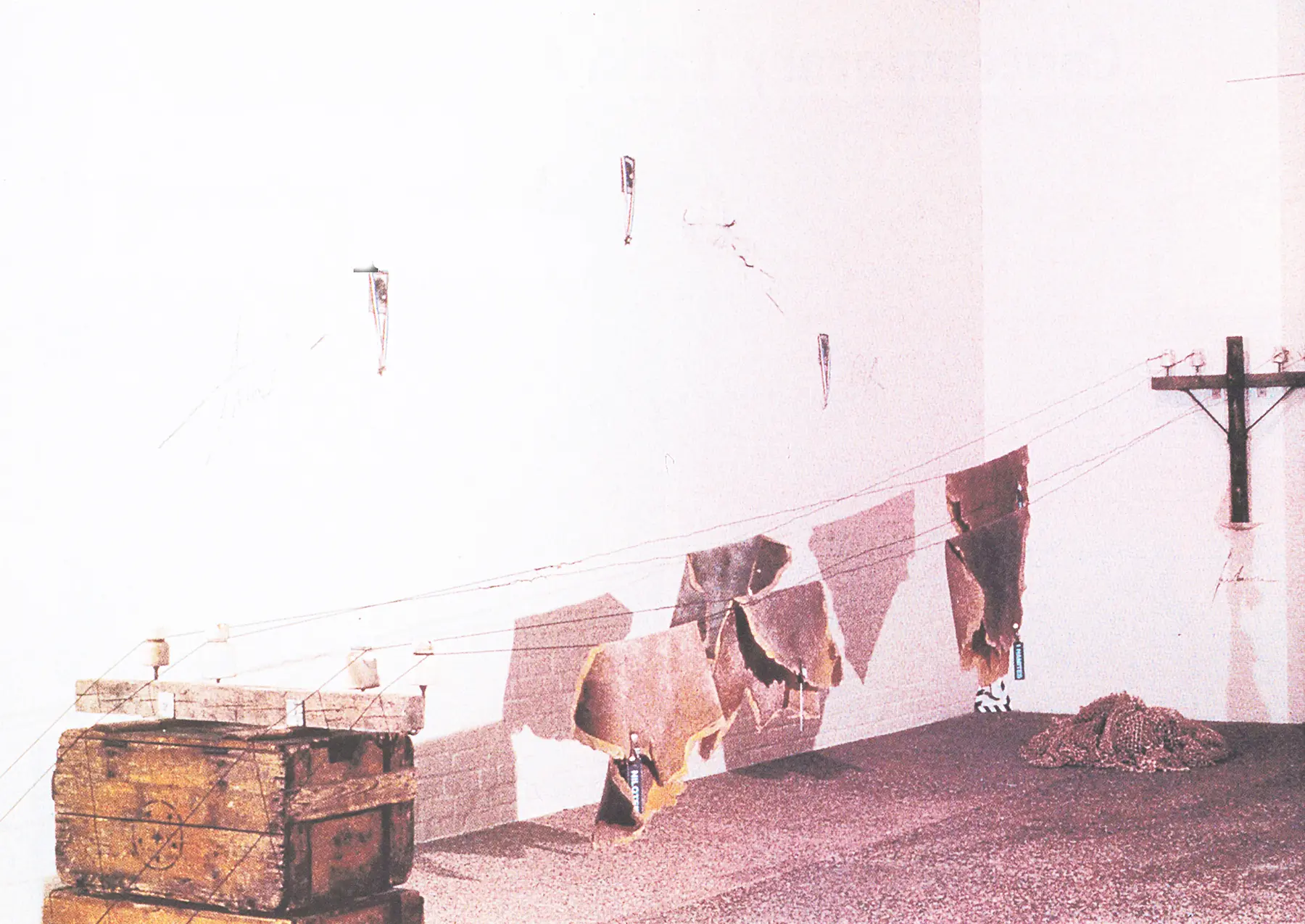
"E subito riprende il viaggio come dopo il naufragio un superstite lupo di maroe."
Ungaretti.
Marcos Lora Read (Santo Domingo, 1969) has just seen the culmination of his five years of work in Europe with a retrospective show at the Van Reekum Museum in Apeldoorn (Netherlands). The show, titled My House is Your House, My Friend, includes some of his more important pieces done in different parts of Europe since 1992. The title of the exhibition was curious since this traveling artist has become very familiar with "houses" in the plural. Five years ago he saw himself as a Dominican artist living and working in the Dominican Republic. This identification is not so clearly marked today, and although the artist needs the inspiration provided by his country, he now sees himself in terms of both his native island and Europe. Europe, in general, that is because although he has spent long periods in the Netherlands and Spain, he has also spent quite a lot of time in Germany, France, and Italy.
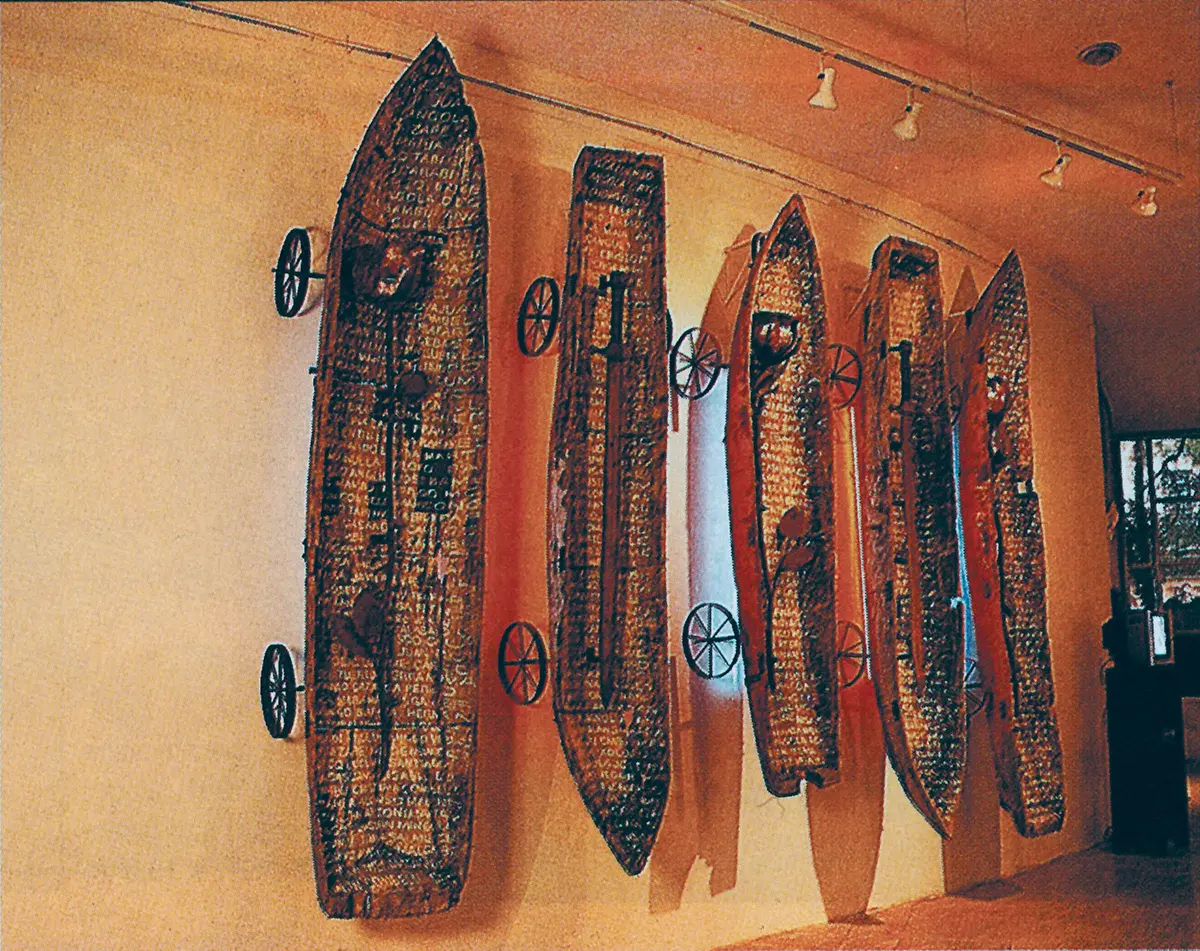
The expression "My House is Your House, My Friend" is an invitation to rest and repose; it opens up the door of hospitality and evokes sentiments of intimacy and privacy. At first glance, it might seem strange to use such a title— which suggests domestic life and the protection afforded by the home-for a show by an artist whose life has been constantly identified with travel. But although it is true that a large part of Lora Read's work focuses on the idea of travel in the sense of the constant movement of individuals and ideas, one of his recurrent themes concerns the idea of protection in the broad sense of the term. Lora Read has made his life into a voluntary and continuous journey, and it is here that doubts inevitably arise. Is it really his work that makes him travel constantly? Or is the work merely an excuse for him to experience in the flesh the feeling of a nomad? These five years in Europe have been the chronicle of a continuous process of being, without any fixed direction or geographical destination. Does it really matter where and when one arrives? Or is it only the journey that matters? This journey is a long path with stops on the way, in the houses of friends who have offered a place to spend a night or even longer. This exhibition paid tribute to all those anonymous friends who, each in his or her own way, helped the artist on his way, offering not only the roof of their house but above all the warmth of their homes, making the journey more bearable.
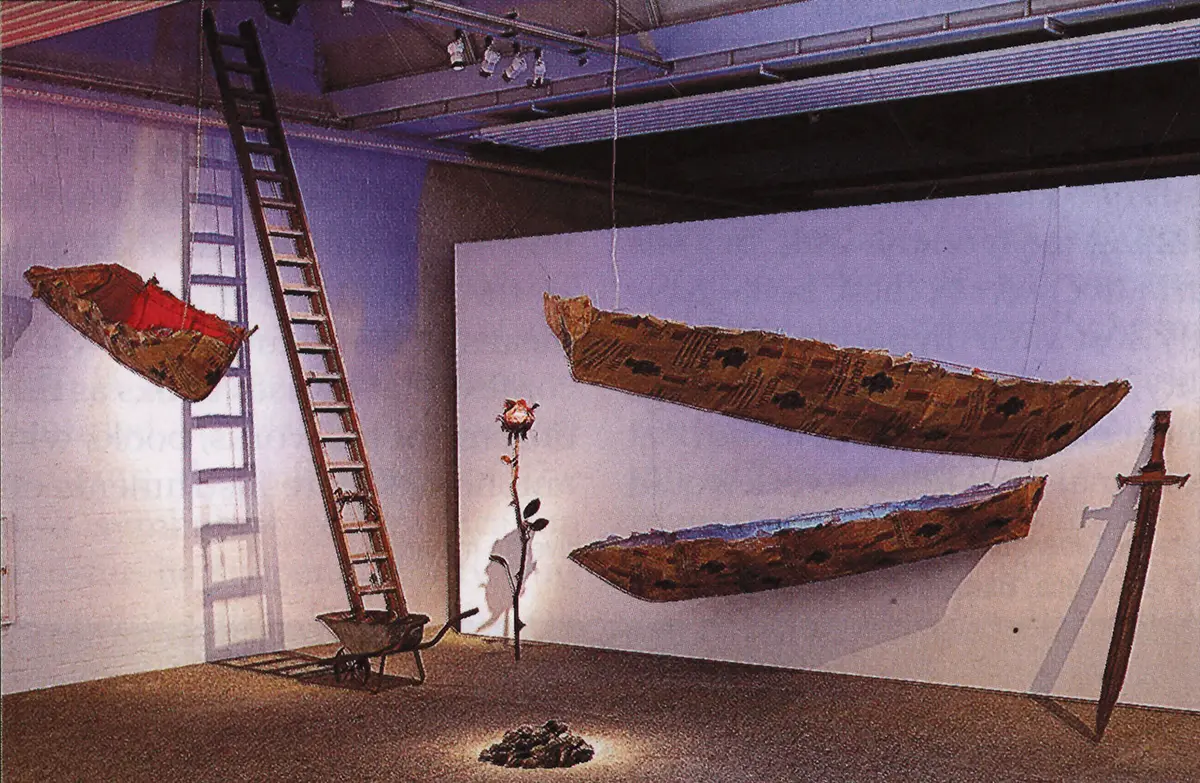
The beginning of this long journey through Europe goes back to 1992 when on the occasion of the Fifth Centenary of the Discovery of the Americas, Marcos Lora Read went to Seville to consult the records and archives in connection with research for his work titled The Branding-Iron, a project which he was invited to present at the Fifth Havana Biennial. The study of history, and in particular the repercussions of the discovery of the New World on his own country, was one of his central research themes during these early years. Five Carriages for History (1991), a work exhibited at the Fourth Havana Biennial, is perhaps one of the most emblematic pieces from this period. The large-format work shows five boats hanging from the wall, three pointing upwards and two pointing downwards. Occupying the entire structure in the boats pointing upwards is an enormous iron rose. An equally large sword, also in iron, appears in the boats, pointing downwards. The use of the rose pointing up to the sky and of the inert sword in the boats pointing downwards provides a counterpoint to-the harshness of the work, creating an optimistic message. The number five refers to the five voyages which made up the discovery and conquest of the Americas by Indians from the Orinoco, Columbus, pirates, slaves, and boat people. Inside the five boats, we can read names that have been forgotten by history, the names of slaves forcefully taken from their African homeland and transported to an alien America. From the Earth to Concrete (1992), which was also included in this exhibition, follows the same line of thought as the previous work; its poetical antecedents can be found in the on-site works titled The East (1989) and The Valley of the Caravels (1991).
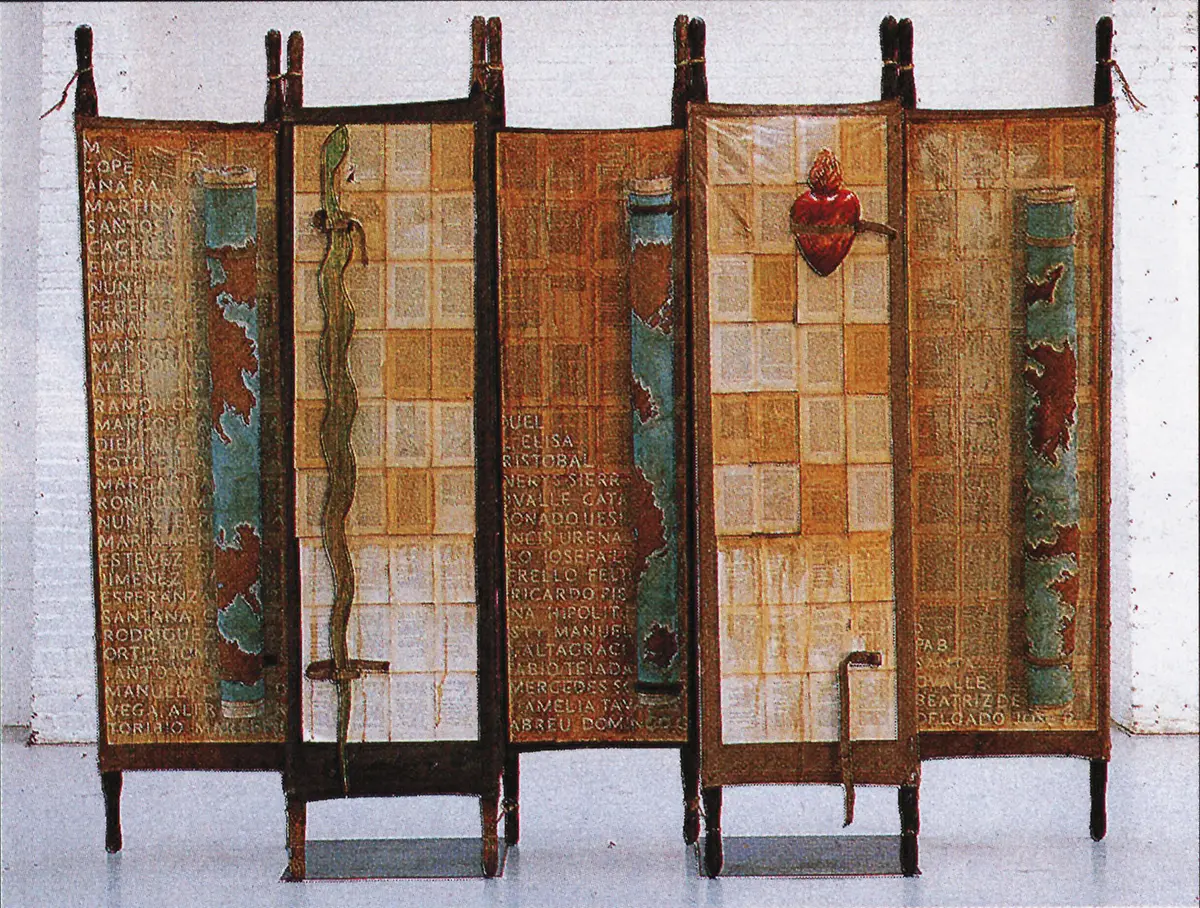
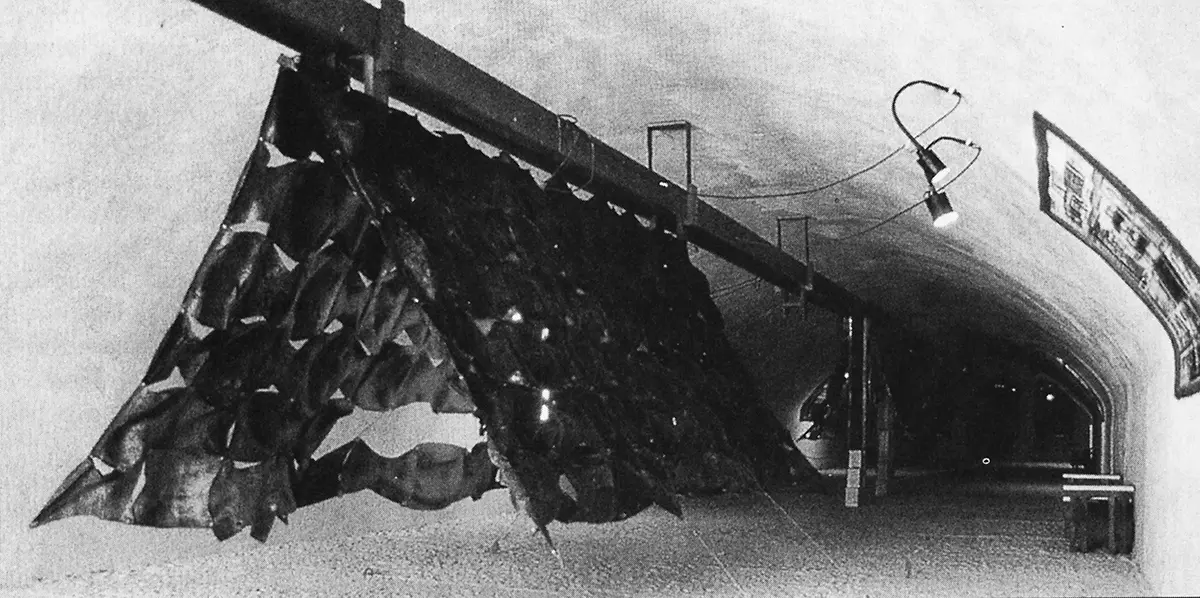
Lora Read's exploration of this theme should not be seen as a consequence of his voluntary exile, since it was already present in his first work. At the time when he was still living in Santo Domingo, he moved to the eastern part of the island, where people are still to be found who know the ancestral techniques of constructing the boats known as cayucos, and who taught them to the artist. He began by building boats according to this tradition, although only in formal terms since he modified their original function (as a means of transport) by incorporating wooden mounds or constructions at the top, or by hanging them on the wall. In From the Earth to Concrete, these boats have already lost their hypothetical functionality, since they are made with bags of cement and the reference to the boat is only formal. Lora Read's work would gradually distance itself from this physical dimension and begin to explore the concept, just as the traveler learns to discard the superfluous and retain only what is fundamental.
But the artist's concept of the journey should not be seen only as of the pure transmission of bodies or identities but as the transfer of information and a means of communication. It is in this context that he uses books as the basis of some of his works, books which by antonomasia are instruments of communication and inter-relation between cultures. In 1989, when he was still studying at the School of Art in Altos de Chavon, Lora Read began his work with books, and his project titled The Library of Babel now includes more than one hundred pieces. In his continuous travels, Lora Read has collected books and notebooks, the result of which is a number of very suggestive, albeit disconcerting pieces which do honor their Babelian origin. The "L" Family, a recent work included in this exhibition, refers back to this project, which it amplifies. In formal terms, it is part of the same family, but the book which serves as the base has been replaced by a piece of stone, perhaps found in one of his houses, and with insertions that suggest novel relations between its elements. Is this a further turn of the screw in the re-reading of history? The book as a study of history has been replaced by the stone which itself constitutes history.
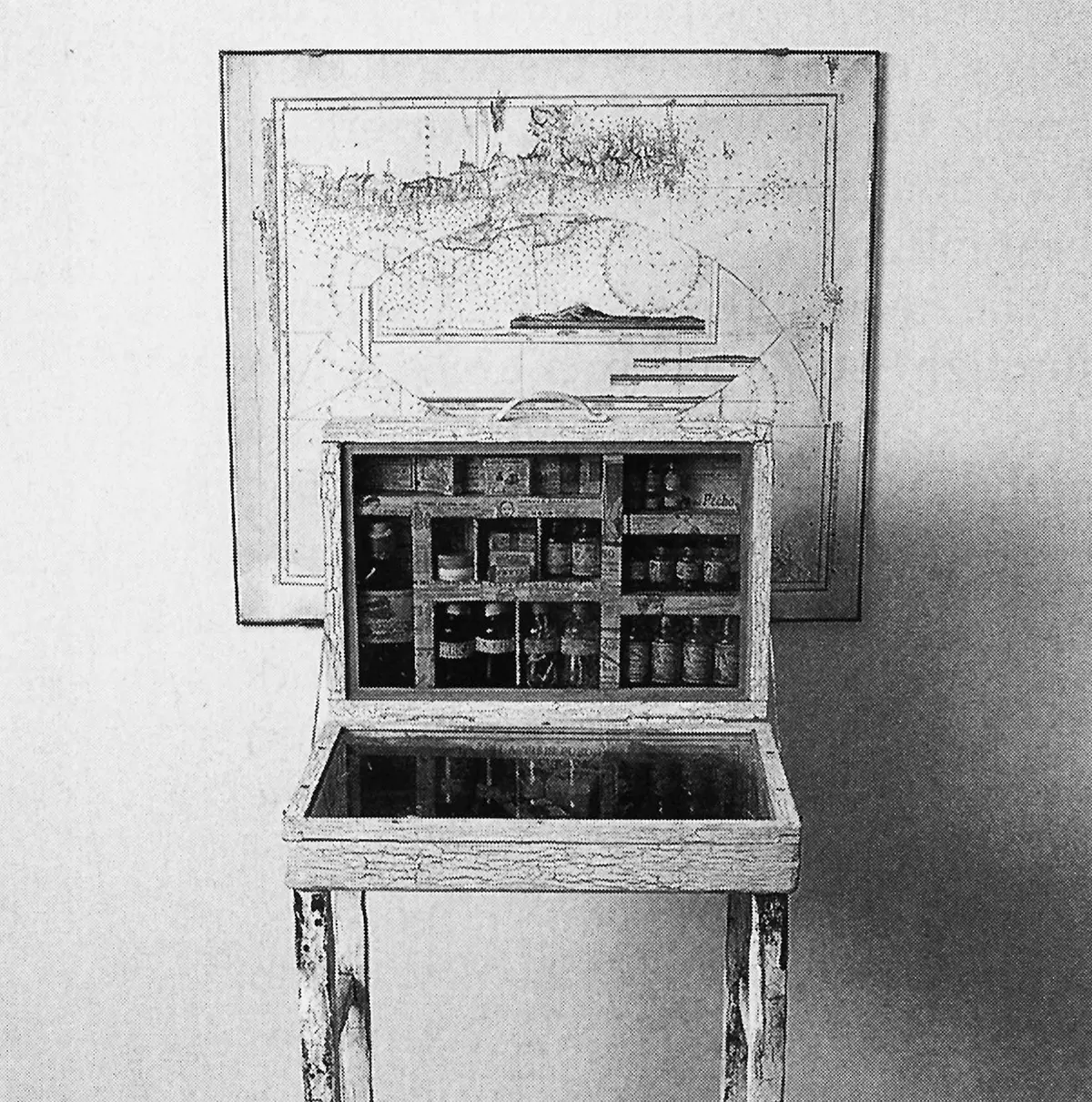
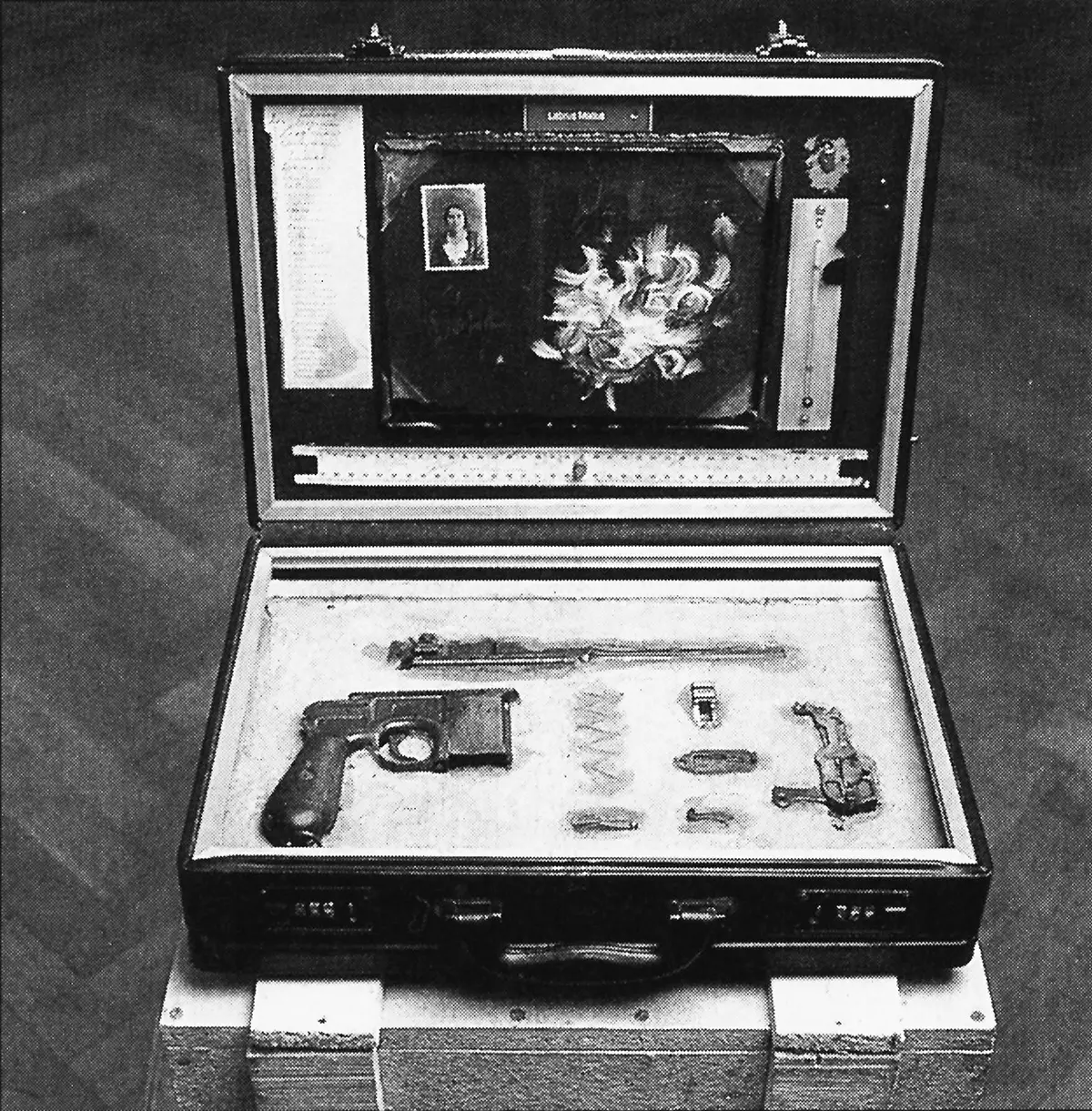
If we follow the development of Lora Read's work, we can see that he has frequently used the theme of protection, seen from very different and sometimes contrasting perspectives. The theme can perhaps be traced back to the works presented in his one-man show entitled Vision for a People at the Museum of Modern Art in Santo Domingo in 1990. That exhibition included a series of show windows directly inspired by food containers, a minimalist expression of the popular fish restaurants of his native land, with the contents being altered. What is significant is the appropriation of the container as a means of protecting and preserving the foodstuffs. The protection of food leads to the idea of the protection of health, protection as a means of prevention and cure, with the visual repertory extending to beds, mattresses, litters, and finally, medicine chests. The Apeldoorn show included several works which explored this theme, from Epitome (1993), which incorporates litter used during the Second World War, to Protective Medicine Chest (1995), where the aseptic exterior of the bandaged book contrasts with its disturbing interior filled with syringes and a scorpion. It is not just another unclassifiable book but a totally bandaged book, a book that is sick but still poisonous. And there is more. Danger lurks not only in the nature of the scorpion, snake, or tiger, but in the artifice of the syringe, sword, and finally the gun. The gun was used in the homage to the Dominican woman assassinated in Madrid just because she was a Dominican woman in Madrid [To Lucrecia (1993-96)], but also in the first version of The Trail (1996).
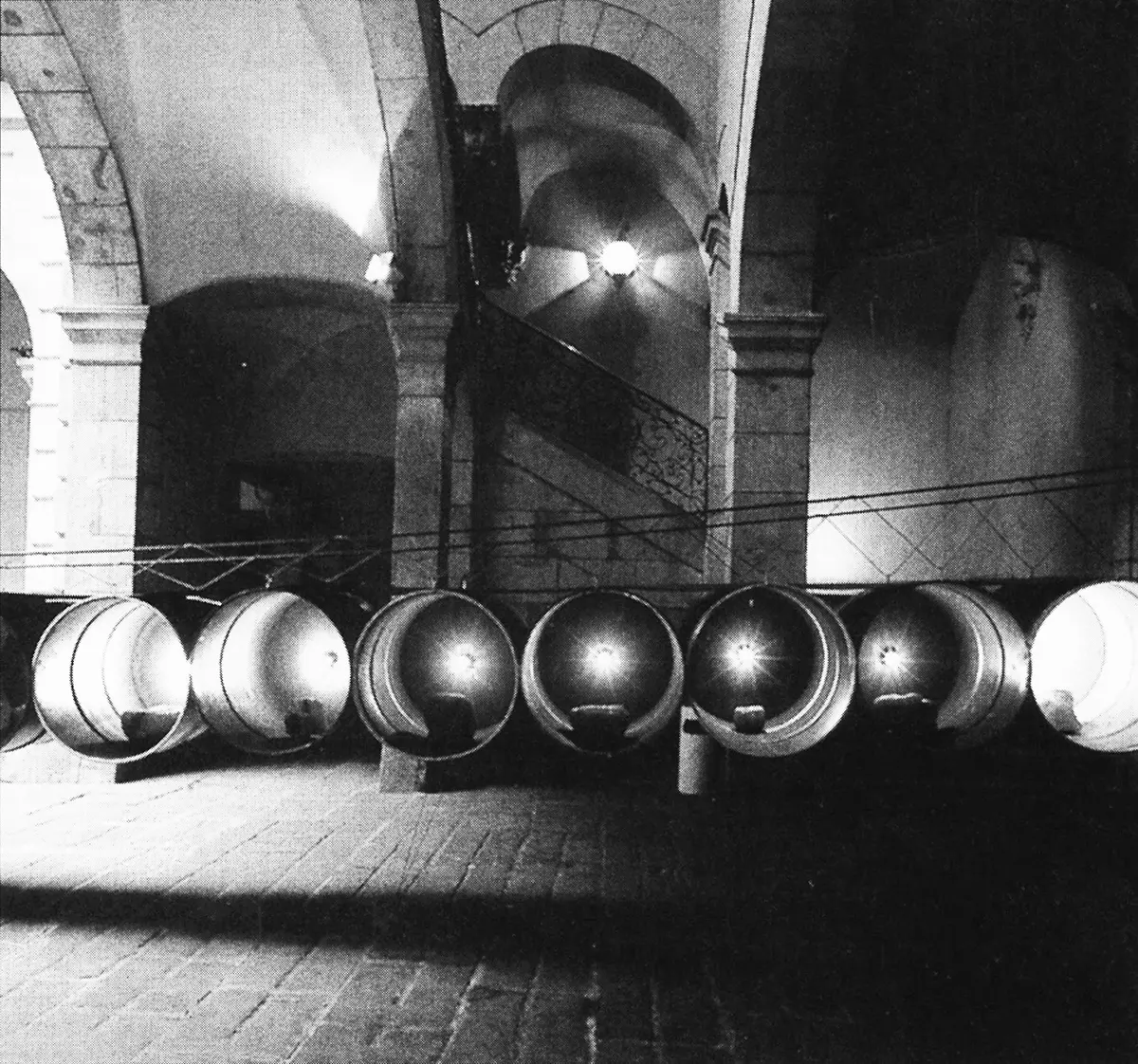
The work of Marcos Lora Read has never ignored the social and political reality that the artist himself has experienced. His early years were characterized by his reflection on the history of his country in particular and the Caribbean in general. In conjunction with the re-reading of history on the occasion of the Fifth Centenary of the Discovery of the Americas, Lora Read focused his research on this difficult period of history, questioning not only the colonization process five centuries ago but the Caribbean attitude toward the commemoration of the event. But Lora Read's reactions also concern more recent events, as in his work titled Brain Drain, presented at the National Biennial in Santo Domingo in 1990, in which he denounced the forced exile of intellectuals from his country due to the political situation at the time. In another work shown at the Palau de la Virreina in Barcelona in 1995, titled 40 Meters of Schengen Space, using the metaphor of the bridge-a symbol of communication and transfer-lie suspended fifty cans in the central patio, linking the entrance with the exit. Each was painted in the colors of fictitious flags, with the interior of each tank containing a sculpture in saltpeter. Each can was thus separate and isolated from the others and the work as a whole. The reference to the current political situation in Europe is clear.
After a long period during which he concentrated on his work with space, both in terms of the object and installation, Marcos Lora Read has recently returned to painting. These are pictures that, although necessarily two-dimensional, reflect his interest in assemblage, the addition, and the mixing of different techniques. With the roof on fire (1995) is a reflection on nomadism, the central axis of his discourse. The realism of the large shell which occupies the lower part of the painting contrasts with the upper part, filled with blurred images of sketched roofs and a difficult-to-read text by Octavio Paz: "I renounce my ration card, my identity card, certificate of survival, membership card, passport, key number, countermark, credential, safe-conduct, insignia, tattoo and identifying marks."
Lora Read's communication with these words in total, both as an individual and as an artist. His work on his own identity, using his identity card, passport, and entry and exit permits, and in particular, the applications refused and which meant the closure of frontiers, is a good example of this. However, to try and classify his work would be a complex task, given the variety of expressive means used in his art-from the wood of the cayucos to the Diary of a scribe (1995) on the Internet, from the modeling of his saltpeter sculptures to the engineering of his bridges, as well as the casting of his bronze works, his paintings, and watercolors. Throughout all his production, his prime objective has been to reflect on the complex reality in which he has lived, summed up in his own words as follows: "I am nothing more than a chronicler of my time, a time which I face in a spirit of contemporaneity and with all due responsibility."
ANTONIA MARIA CERDA I RIPOLL
She is an Art Historian, currently working at the Museu d'Art Contemporani de Barcelona Educational Service.