
The third edition of the Monterrey Biennial, on view since April 24th at the Museo de Monterrey, concluded with a showing of 163 works by 137 artists. These corresponded to a previous selection of 1,273 works submitted through an open convocation to Mexican and foreign artists with a minimum of five years of residency in Mexico. On this occasion the panel was constituted by Augustín Arteaga (Mexico), Osvaldo Sánchez (Cuba), Raquel Tibol (Mexico-Argentina), Nelly Perazzo (Argentina), and Liliana Porter (Argentina). The winners were Francisco Larios (Sonora, Mexico, 1960) in the category of painting, María José de la Macorra (Mexico City, 1964) in sculpture, and Claudia Fernández (Mexico City, 1965) in installation.
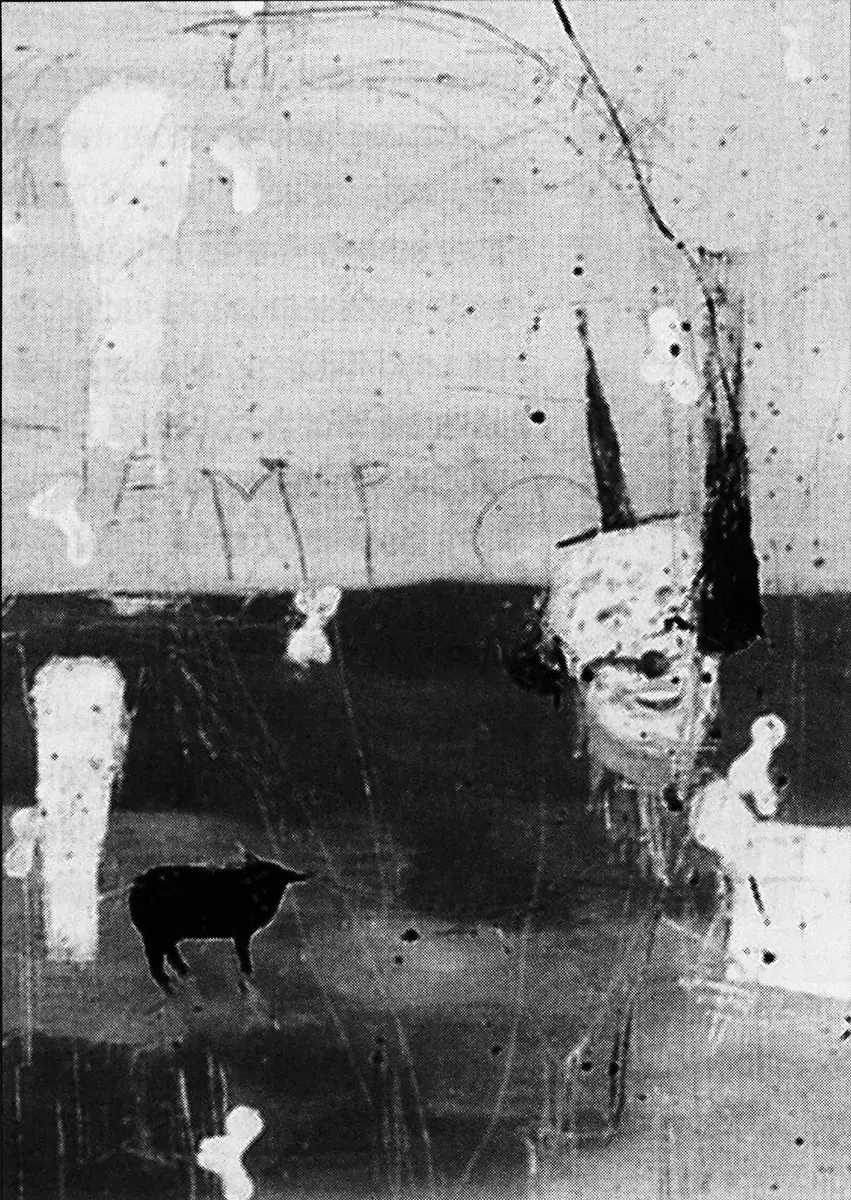
The work by Larios (a resident artist in this city since 1986), titled The Width of a Circle (mixed media on canvas 70" x 54"), represents a landscape in warm tones with the floating faces of a clown and a bull. Within the green and yellow landscape, the artist includes graphic marks and smudges that culminate with the word "time" in contrasting reds. The desolate group is illuminated with greens and yellows, while the clown is transformed into a happy figure in what can be called "conscious surrealism" that has been well resolved with a clear and direct message. According to official sources, the selection in this category received a unanimous vote. There remained, however, a number of moderately strong works in the competition, such as the 18 fractioned rectangles of Manuel Marín, two neo-expressionist paintings of Manuela Generali, José Castro Leñero’s dynamic abstractions, and two well-resolved pieces by Renato Esquivel inspired on Shakespearean themes.
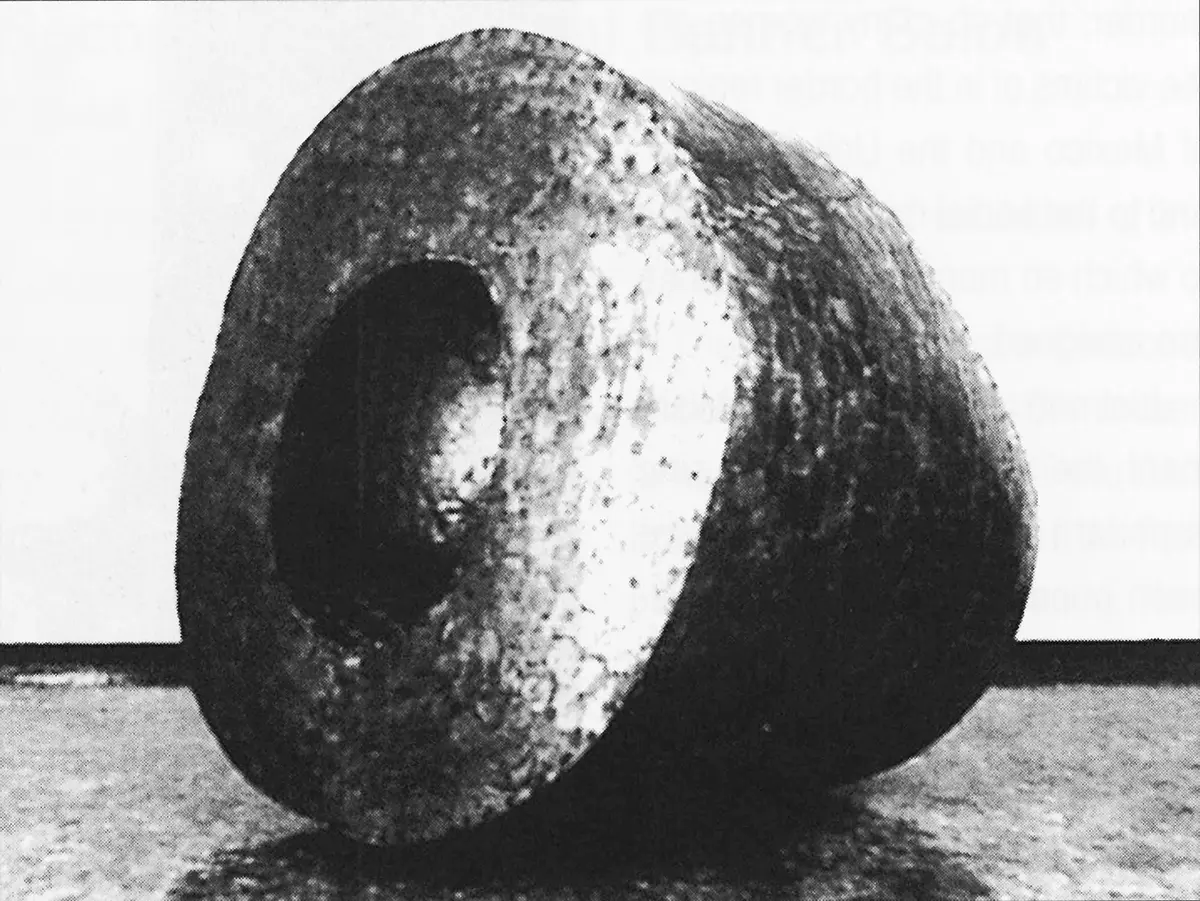
Amongst the 117 paintings, those of Alma Beatriz Gómez, Gil Garea, Xavier Muniain, Franco Aceves, the Cuban Segundo Paines, and Álvaro Santiago stood out as the most successful in an unequal group of works, all of which offered intense readings and were well-resolved aesthetically. These features also applied to Magaly Lara’s entries. The rest of the painting selection, in the best of cases, was surprising due to the level of raw artistic talent evident in the competitors. The sculpture category gathered 22 works and the choice of María José de la Macorra's Hexagonal sensibilia (185 x 190 x 180 cm/ 74" x 76" x 72") was really accurate. Frankly, on the contemporary cutting-edge, her egg-shaped piece was constituted by welded irregular hexagons in natural steel (each approximately 5 sq. cm /2 sq. in.).
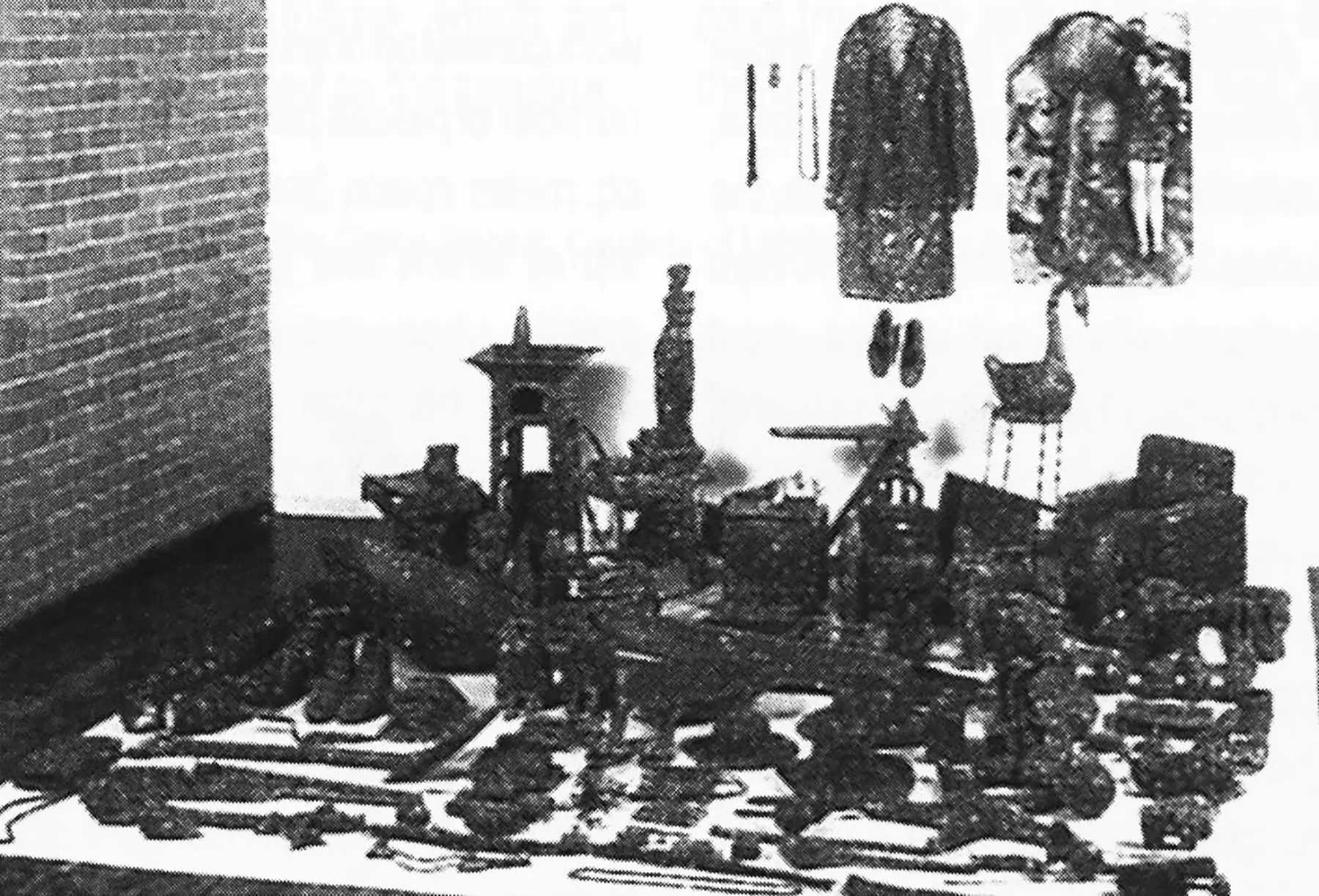
In this category, Maribel Portela stood out with a group of twenty pumice stone torsos inserted in rods slightly over one yard high. Great composition in true pre-hispanic spirit. In the Installation medium, Claudia Fernández was elected with her El alimento (The nourishment). This work consisted of an incredibly large number of pieces piled up in a three sq. meter space (ten sq. ft.), at the top of which she placed a silver gelatin photo-mural. The latter showed the artist dressed up in pewter tones, a common material found in the kitchens of the Mexican working-class. The artist also presented at the MARCO Award exhibition, in this same city, an installation of equal proportions and themes in acrylic painting. The latter, however, was better resolved in terms of its individual components. In the case of the Biennial installation, the concept was not achieved in a coherent way. The message became lost in the profusion of fragments that make up the piece and this fact, in turn, impeded a clear reading of the work.
This category had the same number of pieces as sculpture. Yet, here some proposals that were perhaps more eloquent in terms of concepts and aesthetic solutions were, nevertheless, less successful. This was the case of the American flag made up of rusty sheets of steel titled Stripes and Fences Forever (a tribute to Jasper Johns). Its author, Marcos Ramírez Pimienta Erre, exposes in this way the border situation lived today by illegal Mexican immigrants to the United States, a stance coherent with his Baja Californian origin. The latter being one of the border Mexican states in turmoil.
With the title La Cena (The Supper), Juan Caballero presented an ironic installation with limited materials. The work consists of 12 steel screws with plastic cardinal hats supported by chains. Each screw is different: the one corresponding to Christ is bent and that of Judas appears with a cardinal’s hat which is off-place. Concept, solution, and whatever is necessary to be taken into account, were ingeniously displayed on the assigned museographic space of the stairs.
An enormous "trap for rats" was shown by Lupina Flores. As a complement, there was a notebook on a rustic desk, which served as a cathartic resource for the visitors. They have written messages of a political tone calling for the need to hunt down "the big rats" (Mexican slang for the "petty thieves") of the previous Administration.
In sum, this third Biennial, which carries acquisition awards of 75,000 pesos ($9,300 US) for paintings and sculpture, and 30,000 pesos ($3,700 US) for installation, was characterized by the uneven quality of its participants. Perhaps unwillingly, the museography focused on separating quality by media on different floors. This left the veteran artists, in the sense of those already well-known professionally and with well-consolidated careers in the Mexican market, on the third floor. From the first to the third floors of the Museo de Monterrey, the quality increased. The awards granted by a heterogenous panel of different nationalities and perspectives arrived at a selection that eliminated some historically reputed names. This third Biennial will be on exhibit until June at the Museo de Monterrey.
NORMA GARZA