
The Whitney Biennial in New York has traditionally been a shrine of consecration for United States artists. Over the years, the Biennial has embarked on a number of increasingly ambitious approaches which have tried to guide not only the national taste and market but to exert influence internationally. Given the economic power of this market, even though the exhibition presents only North American art, a sense of expectation is felt at the international level.
But it is not only the central and mercantile visibility of the event that has drawn non-American eyes to the show: there has also been a certain (and relatively recent) trend towards experimentalism in the organization of this kind of exhibition. Two biennials ago, the experiment consisted of using what was politically correct as an organizational guide (see the note by Rachel Weiss in ArtNexus, No. 10), resulting in an adventure that was noteworthy yet disastrous. The 1995 version was, on the other hand, devoted to the individual taste of a single curator. Though prestigious, his exhibition lacked the stimulus of an overall vision or organized inquiry, so the final result was one of mediocrity.
The organizational process of these recent biennials has revealed a tiny crack in the nationalist monolith. In line with the spirit of NAFTA, some Mexican and Canadian artists were included. The broadening in scope is perhaps one of the most significant features of the 1997 show, and it is interesting to note that the exhibition was financed by Beck’s, the German beer company. German business seems recently to have taken great interest in the financing of North American art, filling an economic void in the cultural sphere created largely by the Republican majority in Congress. (Another example was the creation of the Hugo Boss Prize at the Guggenheim Museum by the company of the same name.)
The Whitney show was not strictly limited to North American art, or even to American art. Whitney curator, Lisa Phillips invited as her co-curator someone "from outside"— Louise Neri, an Australian and editor of the Swiss journal Parkett. The artists included the Russian Ilya Kabakov, the Italian Francesco Clemente, the Pakistani Shahzia Sikander, the Mexican Gabriel Orozco, and the Chilean Cecilia Vicuña—all maintain some kind of residence in the United States. While their presence will not convert the Biennial into an international event like Documenta, at least it will take it away from the traditional provincialism that tended to overwhelm so many previous biennials. However, these changes do not signal any total kind of opening up. According to the catalog (which at no point mentions the words "internationalization" or "multiculturalization"), Neri was invited to bring an outsider's perspective to North American art, and one of the (valid) ambitions of the Biennial was to examine the role of the North American artist in a time of change heralded by the coming of a new millennium.
This year’s exhibition was not very well received in the United States. It was accused of being conservative, of reflecting gallery tastes, and of including many flawed works. However, the show, which filled all the floors of the Museum with around 200 works by 70 artists, did acquire a certain kind of electricity which it has not had for a long time. This was curious because the energy did not really come from the high quality of the individual works. There was a sort of general chemistry, precisely the chemistry which was missing from earlier versions, which made visitors go around with a sense of expectation and interest.

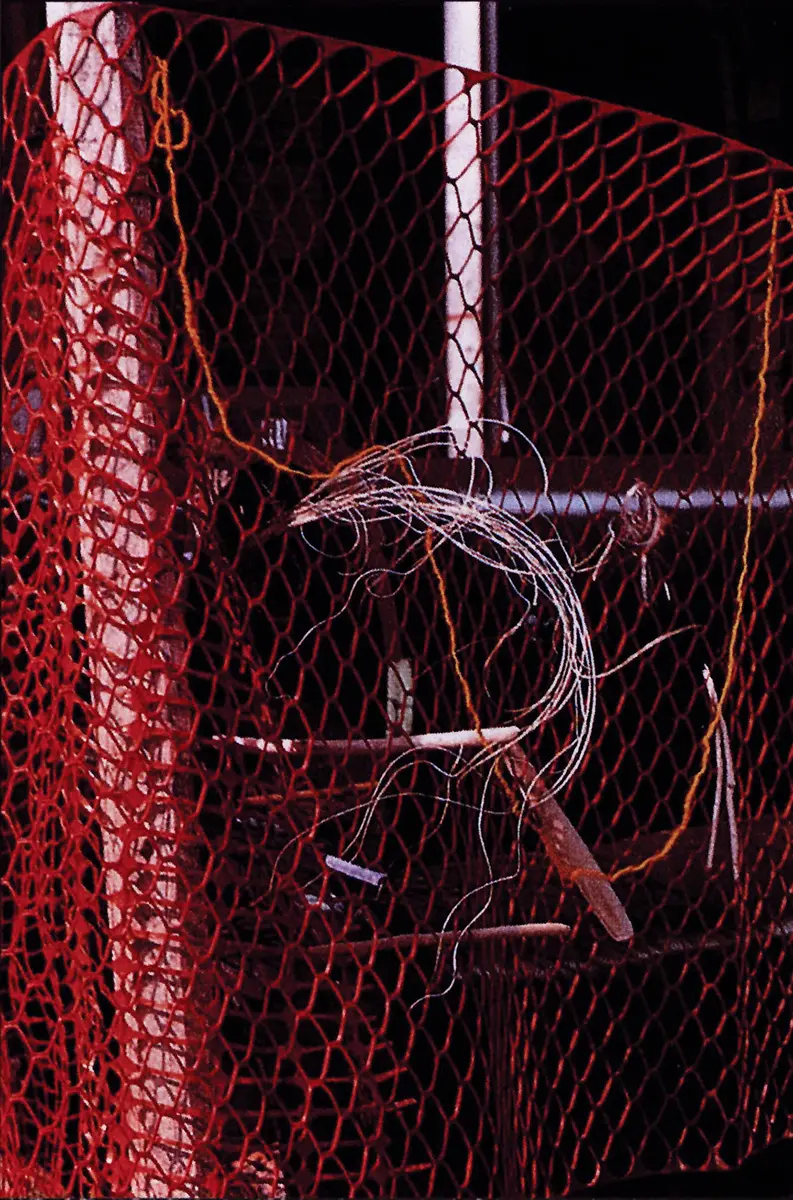
But the essence of the show did not reside in the so-called answer to the question about the role of the artist at the dawn of a new millennium. If there was a common denominator, it would seem to be the word “spectacular." The word in this case is not a positive value judgment, but an almost objective description of what was on display. The space allocated to artists was extremely generous and the works were conceived or presented as spectacle. This helped the Biennial overall, though it did not necessarily help the individual artists. Cecilia Vicuña, for example, generally reveals her strength in mini-installations—intimate works as part of an aesthetics whose mystery is based on a fragility at the blurred frontiers of presence and disappearance. Here she was obliged to try and master a large space, without really managing to do so. A black woolen net hanging from the ceiling and two small objects in a corner put the guard in the gallery in the awkward position of having to say repeatedly: "they are part of the same work, they have to be taken together." Ruscha, on the other hand, merely presented a few new paintings—reworkings of earlier pieces—that did not seem to fit into the space allotted or into the exhibition as a whole. The general impression was one of moving from one spectacle to another, with some pieces more spectacular than others.
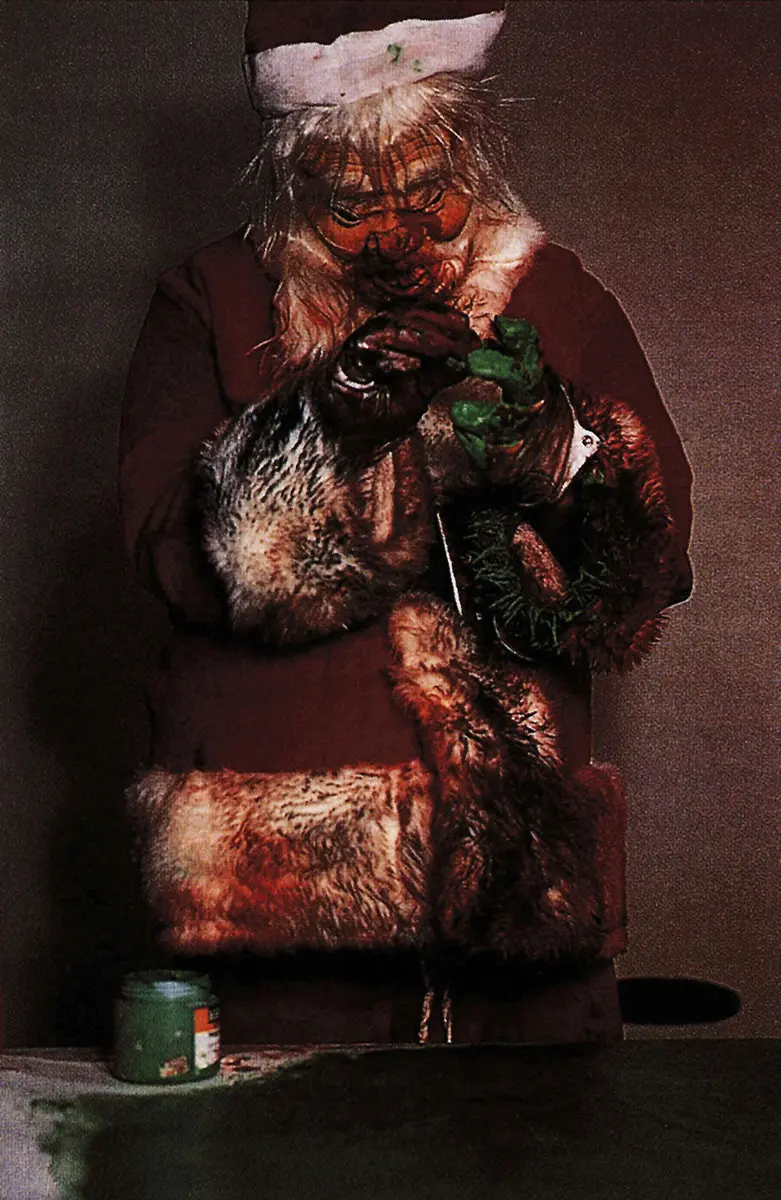
The first major work in the projection room was by Paul McCarthy. At first sight, it recreates a kind of domestic chocolate factory, crazy and amusing, with videos of Santa Claus and his elves. For those with the patience to keep watching, the videos degenerated into a series of sexual encounters which were boring for both spectator and participants—obvious scatological images referring to the manufacture of chocolate. Kabakov, in another ambitious construction, created a “Saratov clinic" where senility is cured by refreshing the memory with projected family album photographs. In various little hospital rooms with iron beds, faded white and black slides were projected on walls painted in the inevitable institutional green. An accompanying soundtrack described the pictures in a flat, banal tone. The result was both literal and rather facile. Clemente essentially organized a small one-person show of his own work, with images that made erotic concessions to the public—these were probably the most traditional presentation at the Biennial. Chris Burden created a city on the scale of a toy railroad but did so in an exaggerated way that poked fun at the megalopolis. His Pizza City, which promised the richness of a delirious kind of variety, lost its attraction on close inspection that revealed that the artist had not given his work due attention. Entire districts were extracted from the same box of toys, thus negating any purpose in the accumulation and its possible richness. This was a pity, because Burden, whose work is always eccentric is one of the North American artists from the 1970s who continually manages to achieve a sense of renewal and explore the unexpected.
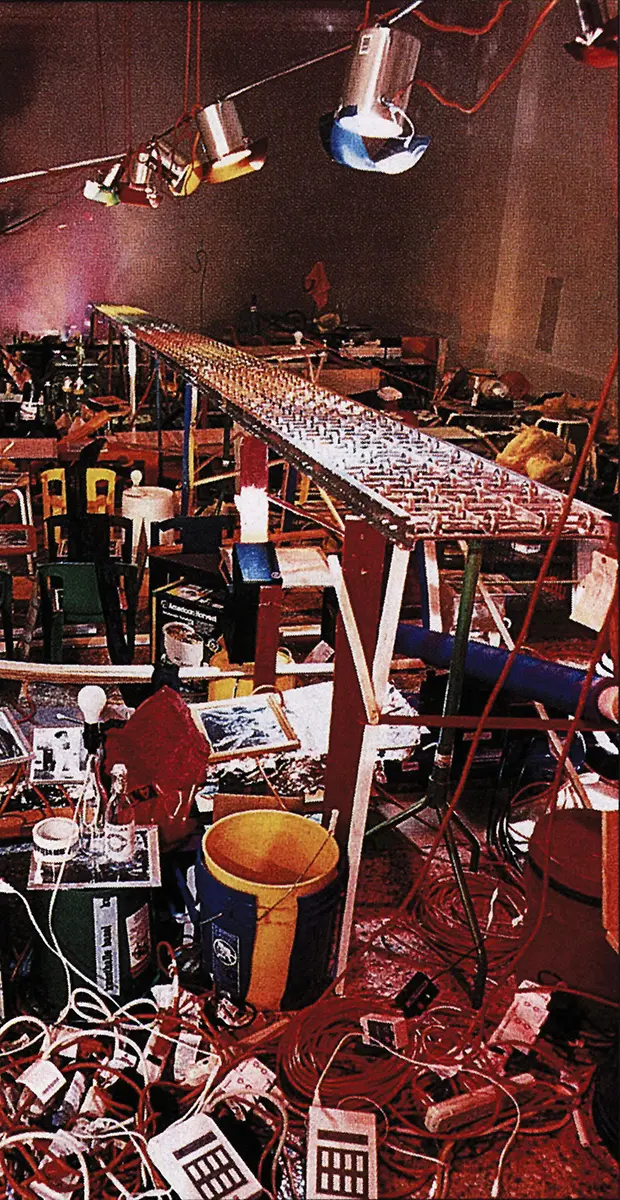
The touch that Burden failed to come up with was present in the work of Jason Rhoades. In what appeared to be the inventory of an enormous and disorganized hardware store, Rhoades amassed all kinds of objects, including some created by the artist. There was no apparent order, criteria, or message—one was limited only by one's imagination. The work offered an almost mystical meditation on an arbitrary and overflowing sort of consumption. The work was in sharp contrast to a more formal (and less abundant) presentation of objects by Gabriel Orozco, who tried to create a kind of spectacle of modesty by emphasizing the poetic charm of fleeting elements. The real object is to be found perhaps mid-way between the two projects. Orozco’s presentation represented an excessive attempt to capture everyday reality, one that sometimes mistook art for ingenuity. Rhoades on the other hand, who seemed to simultaneously promote and criticize consumption, ended up choking on his own exuberance.
The work by Jennifer Pastor was almost ascetic, despite being executed in aesthetics of triteness. The Four Seasons reproduced symbolically the effects of the same: a model of a snow-filled pine grove, a series of shells, a corn plant—all done realistically but as though for a shop window and using the techniques employed for presentation models. Everything seemed to build up to Spring, a perfect butterfly in 1:1 scale, placed in isolation on the gallery wall. It was as if the installation was rotating around itself to emphasize the insect, on which the essence of the entire room was concentrated.
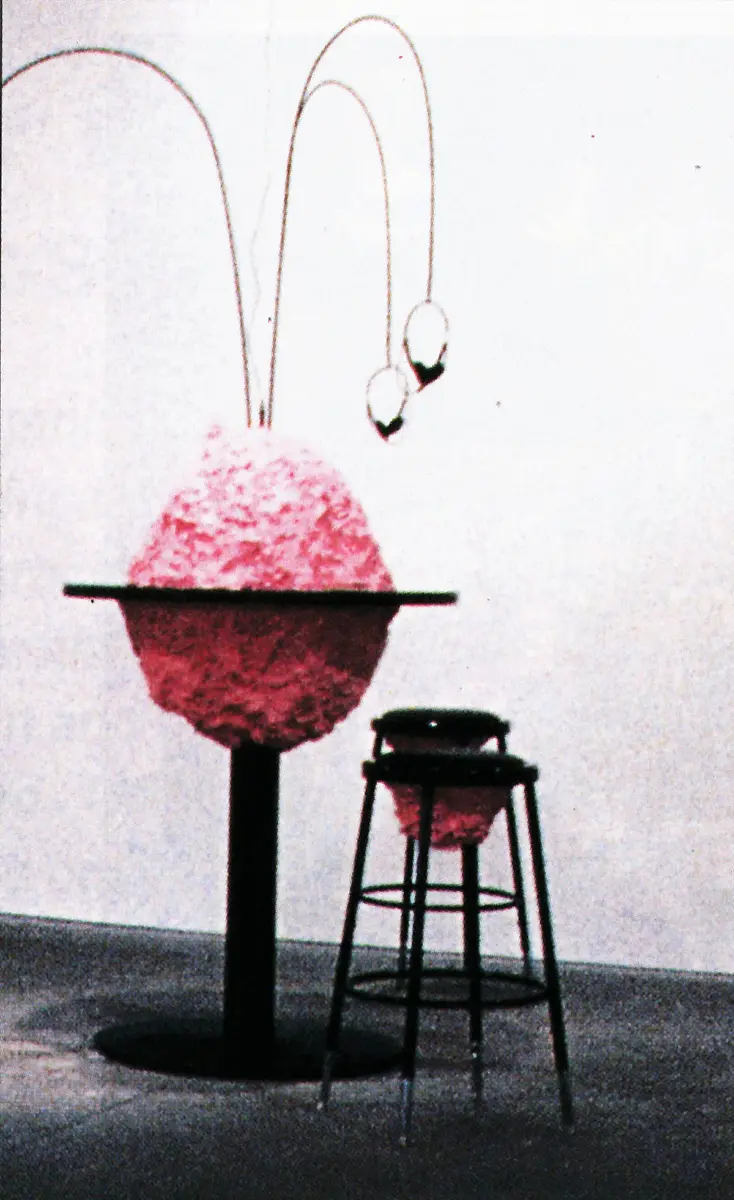
Dan Graham presented an installation consisting of a series of spaces done in his traditional mode of glass pavilions with transparent and mirrored walls. They were set up as cubicles for which visitors watched videos. Some of the videos were Graham's own, but many were by other artists. The work was installed next to the museum restaurant so that the viewing public seemed to be performing for those who were eating. This use of the public as part of the spectacle was repeated in a work by Charles Long. A large ball, one meter in diameter and made of pink plasticine, which looked like chewing gum (alluded to in the title of the work) could be "sculpted" by visitors to the museum. The ball support provided earphones with music and the "sculptors" had to wear them while they worked on the surface of the sphere. In this way the participants seemed to be connected to the work, as if they were recycling the energy given off by the piece itself, creating a continuous and self-sufficient movement.
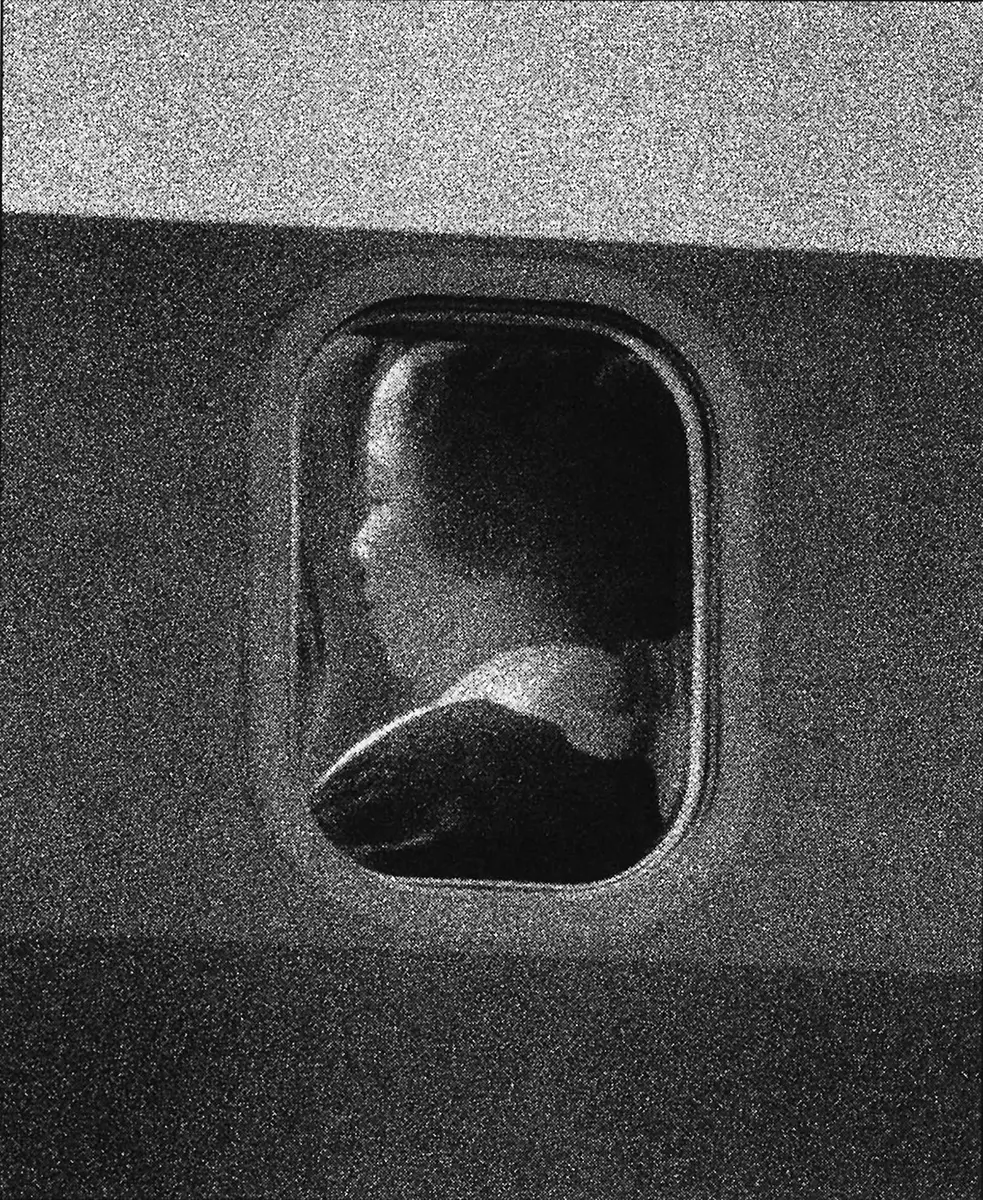
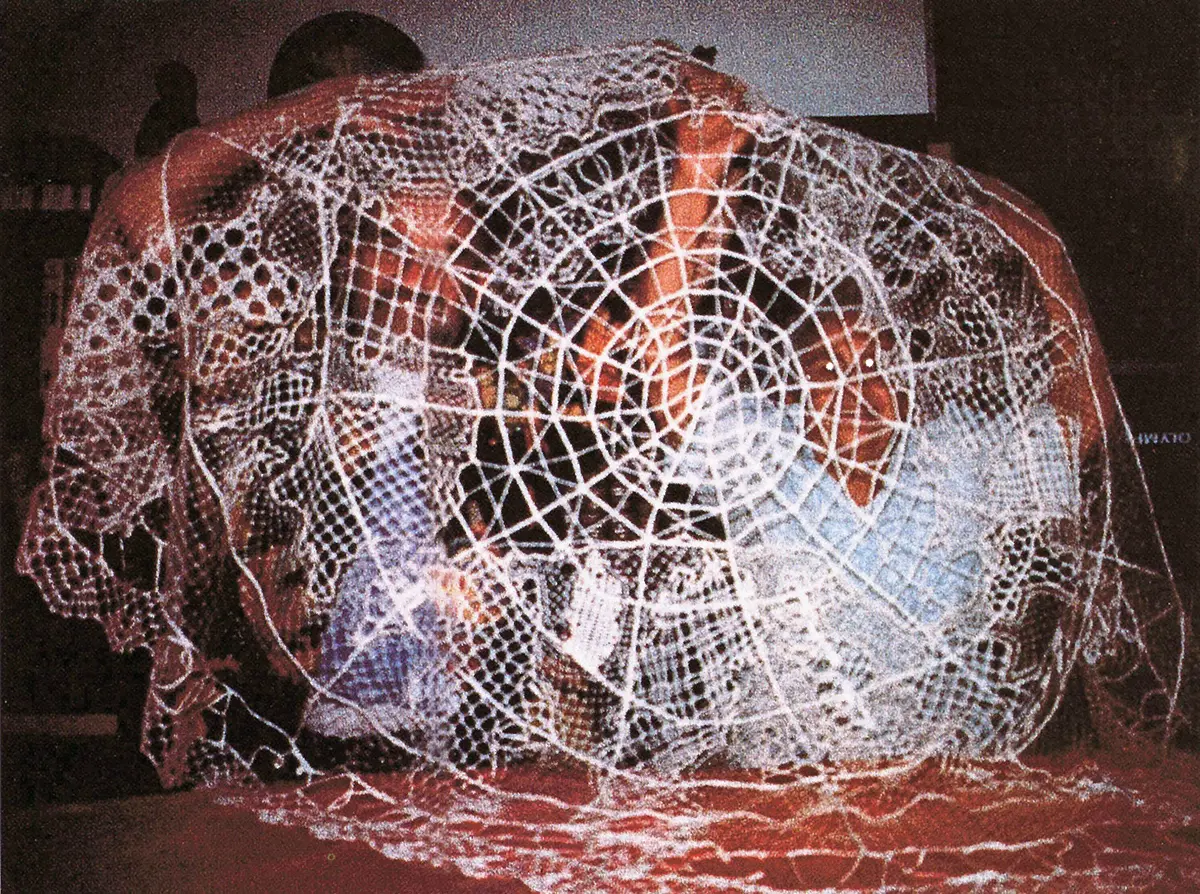
The sense of spectacle was thus handled in various ways. It was a pity that it was not used as a central theme for these "large installations", "small exhibitions", “participating works" and "major works." If only presentation criteria are used, then almost nothing is mediocre—and this is perhaps the most precise answer to the curators' question about the role of the artist at the end of the millennium. North American artists at the moment appear to be brilliant presenters even when the created works themselves seem to be flawed. However, it would be unjust to accuse all the artists of being obsessed with the presentation. Not all the works were based on the sense of spectacle, and some of these were among the most interesting at the Biennial (at least in the more traditional artistic sense.) Unexpectedly, one was surprising in its beauty—a word I generally use with caution, but which here is something positive. The group of photographs by Sharon Lockhart, large works in color, showed models carefully placed in informal but melancholic poses, in contexts where each detail became a subtle key to some undescribed sadness. John Schabel, in another series of photographs, presented portraits of travelers on a departing plane. Taken just before departure, the photographs focused on one airplane window at a time. The window acted as a frame for each face which expressed either concern or indifference to the act of departing. The grain produced by the enormous enlargement of detail gave a kind of pencil drawing quality to the pictures. The images were evocative of Flemish portraits. Another outstanding work that avoided recourse to the spectacular was that of the Puerto Rican artist Antonio Martorell. Composed of pieces of lace that the artist had commissioned which featured maps of Europe and the Caribbean woven in white thread, the tracery work evoked the arduous and loving labor by anonymous hands that are still capable of maintaining a tenuous and precarious balance in the world. In an act of handicraft conceptualism, Martorell opened Whitney’s doors to craftsmen (the Borinquen Lacers) who interpreted the artist’s idea. The artist simply provided a political commentary with the word-play contained in the work's title, Mundillo desencajado.
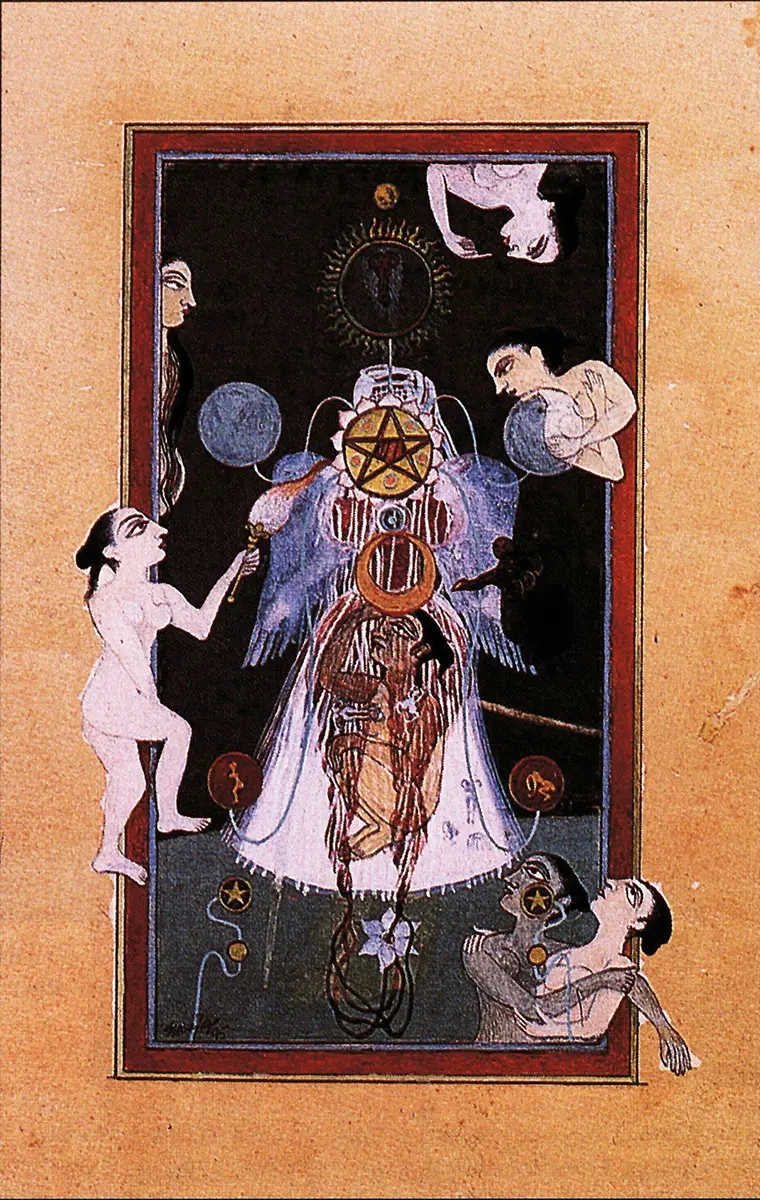
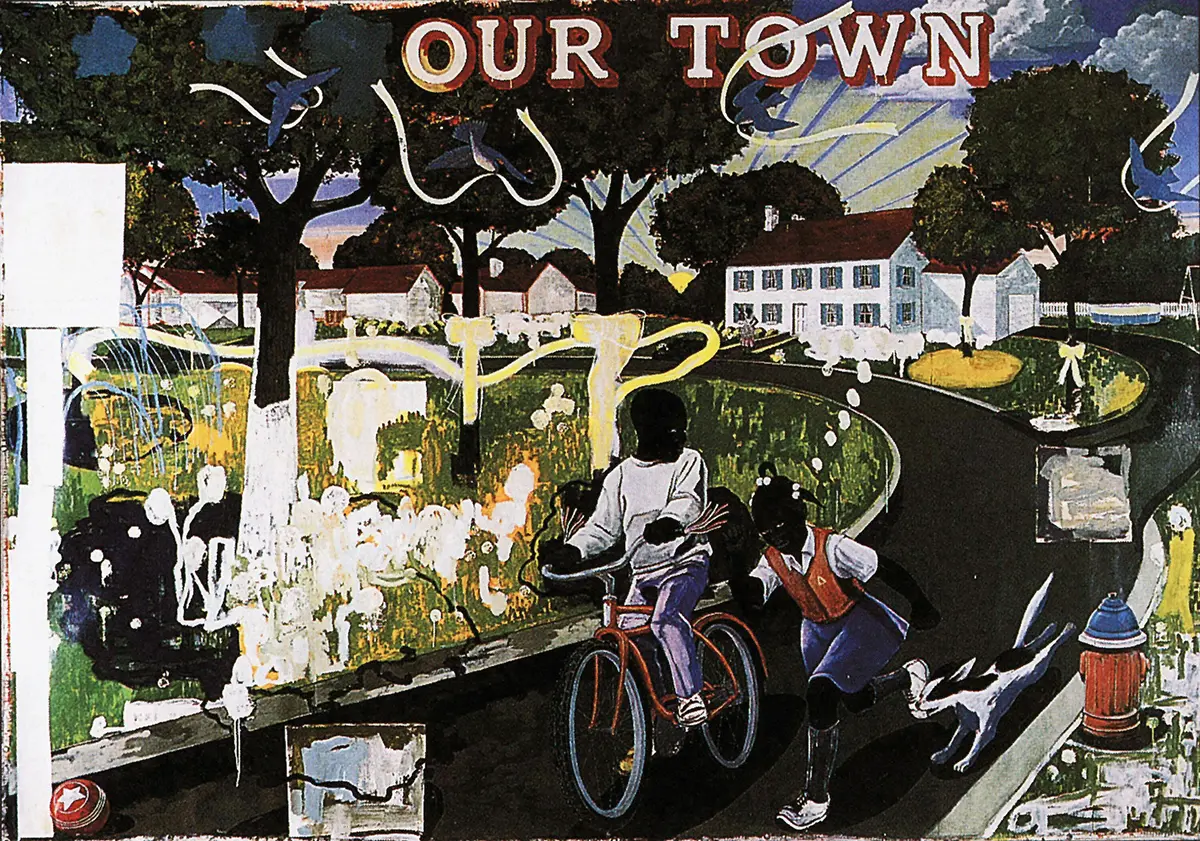
Given the stormy relationship the Whitney has had with the concept of multiculturalism in recent decades—from the protests about the exclusion of women and minorities, to the accusation four years ago of a forced kind of inclusiveness—this recent biennial found an elegant solution to the problem. Anyone aware of the tensions which exist in United States society could see that the show was made up of work by artists of all backgrounds. Kerry James Marshall and Kara Walker are two black artists who vividly embrace their ethnicity but do not use such an affirmation to replace quality. In large-format pictures, Marshall paints scenes of urban housing projects populated with a majority, which generally include the word "garden" in the name of the complex. These are not accusatory scenes full of political overtones. Rather they represent very localized memories reproduced with affection or a sense of idealism, with a technique influenced by naive or “outsider” art. In this sense, they exemplified the few complex works in the show which managed to avoid a sense of immediate and superficial consumption. Kara Walker presented an impressive mural (the first thing the visitor saw when the elevator door of the Museum opened) composed of black silhouettes made of cut paper. The images described allegorical situations from the lives of slaves in a sarcastically deferential manner—that is framed the way a white racist spectator would like to see the situation. Shahzia Sikander, an artist of Pakistani origin, also utilized her ethnic tradition to create a series of images that, faithfully observing the aesthetic code of Persian miniaturists, attacked the problems of power and women’s repression. At the same time, Sikander also de-stabilized the very aesthetics that she uses, through the inclusion of visual resources taken from contemporary Western art.
Many, if not most, of the works in this show required additional information for complete interpretation. The lack of such information obliged the spectator to react in a relatively simple way to the spectacle instead of establishing a deeper dialogue with the work. Some pieces did manage to survive or reveal their own complexity (Martorell); others escaped through excess (Rhoades), some collapsed immediately (Burden), and yet others were unjustly overlooked. The catalog, which could have partially solved the problem, did not offer much help. The text consists of a dialogue between the curators in a visible attempt to mention the largest number of artists possible (though it fails to mention them all) without really explaining anything. Thus the Biennial became, and remained, a great unifying spectacle, a kind of mega-event that provided superficial satisfaction, but little substance.
LUIS CAMNITZER
Uruguayan artist. Professor in the Department of Visual Arts, New York State University, College at Old Westbury.