
During March and April, the Diners Gallery presented recent works by three young Colombian women artists: Lina Espinosa, Nancy Friedemann, and Cristina Llano. The thematic basis in their work was provided by the condition of women in its different aspects, made up of concerns, memories, impressions, images, and dramas that affected their lives. Various aesthetics were confronted with differing interests.
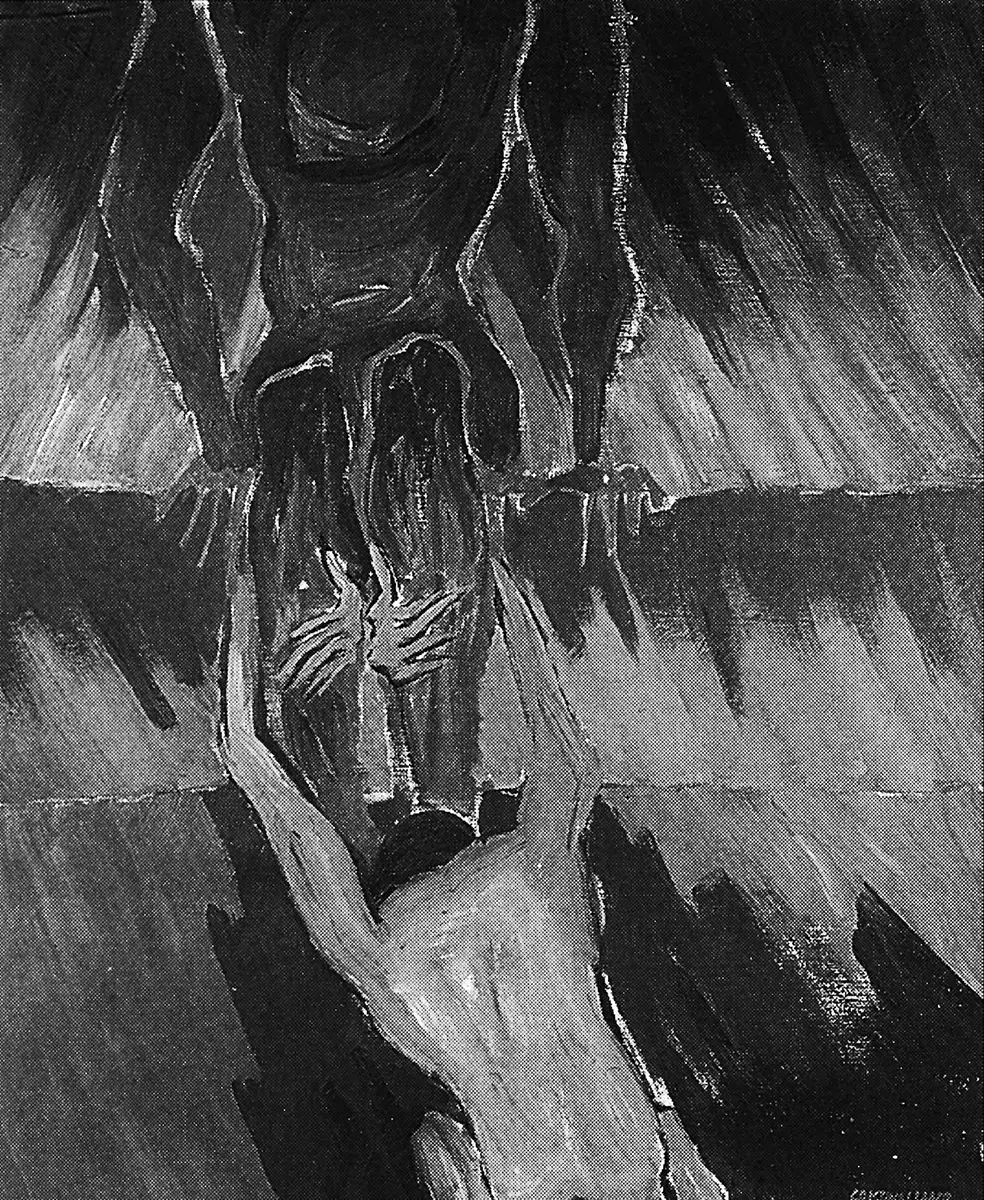
Cristina Llano, a painter in the more traditional sense, analyzes the situation of love between two people by highlighting dramatic settings. This distortion of place is part of the emphasis, giving a tragic meaning to the scene that maintains the passion of love without allowing for moments of tenderness and affection. These scenes are dominated by mistreatment, anguish, and the supplication involved in a violent sexual act.
Friedemann and Espinosa used intimate languages to explore new relationships and forms of artistic interplay. Although they follow different paths, they both use eclectic means and sharpness to explore the female sensibility. The interpretation of metaphorical images and their duality are projects involving the intervention and combination of memories-memory in terms of evaluating or questioning the value of the image, decontextualizing it in an attempt to identify it and to discover its essence.
The selected works by Nancy Friedemann established a broad encounter between the spectator and the works through a kind of mini-retrospective, representing three years of work in an advanced language in the creation of a system of artistic understanding. She explores tactile values through textile materials and techniques without reference to any totalizing structures. The exploration of memory, the idea of the passing of time, and the construction of memories in crochet forms are transformed into large-format monochrome paintings, where the compositional center is displaced so that symmetry ceases to be the regulatory axis of the work. In the first room, there was a predominance of paintings—large crochet pieces with points of explosion, eclipse, and vertigo. The titles, such as Kaleidoscopic Games, Artificial Games, and Eclipse are based on reminiscences and transgressions of time and space.
Crochet is thus viewed as a mental and emotional expression of considerable richness; it is complemented by aesthetic elements that transgress the pictorial tradition, and it is here that the great risk of the show appears. This work is done with latex materials, plasticine, charcoal, and written texts that organizational structures in which to create other constructive elements. Only an artist with a mastery achieved through long practice would undertake the task of scrutinizing every detail in an attempt to understand the essence of the constituent parts of a new language linked to history, language, and moments of being.
Literary passages from García Márquez's Pilgrim Tales and Voltaire's Candide become the framework for fragmented works in which the protagonists strive to discover the ideal of life, but have someone in their memory trying to hold them back. The crochet thread becomes a phrase made up of legible or illegible works to acquire its full meaning within the concept of the installation. In Pilgrim Tales, the surfaces of the pages of the book are protected by a thick layer of latex, and in Candide, the thread of the spiral history borders the circumference of the external format of the work.
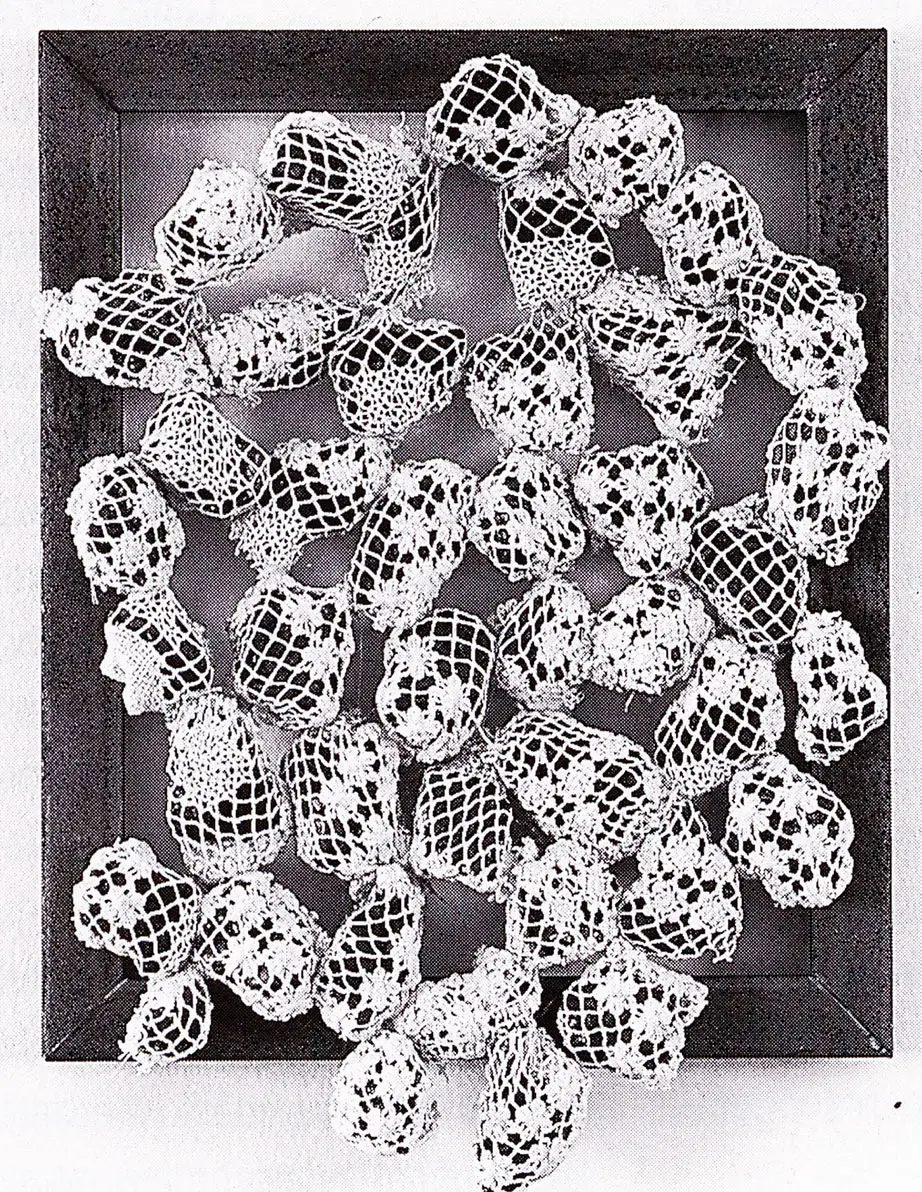
In Friedemann the words hold the work back, lash it, leaving it suspended in shreds of effective memory. Some of these pieces are done in latex, a sensitive material, rich in tactile qualities and reminiscent of skin-and express a desire to codify through fragments and create new tensions in the reconstruction of memory. In Mutants and Salon, both from 1996, the crochet is presented in real terms and not as an illusory concept as in the earlier work. It goes beyond the limits in Beginnings (1997), where the crochet is physically deconstructed into small three-dimensional stitches worked with plasticine. They are classified and cataloged as if in a museum and become the history of the artist's feelings, the journey of her life. Using linguistic games, she places and superimposes them in an orderly fashion on a reticle to validate transparency in relationships and evoke the nostalgic and valuable secret of intimate affections and feelings.
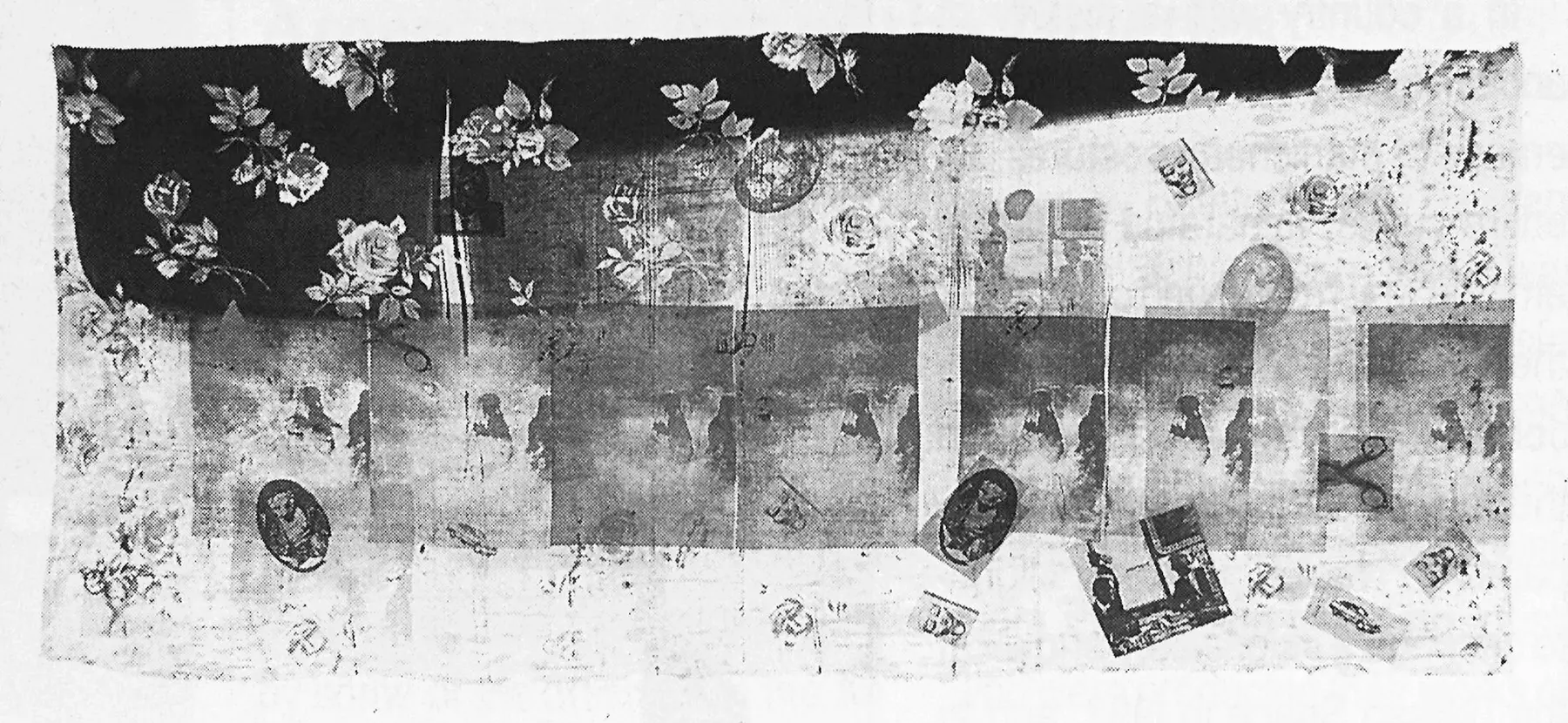
Lina Espinosa resolves her work through two dimensions. She paints and uses mechanically reproduced images, applying photographs to the surface of the canvas through a transfer- process. These are solitary images, always plunged in an atmosphere of intimacy, photographic images repeated with tiny bits of information. The intention is to saturate the paper or industrial textile support. The work thus acquires a density of meaning, with multiple foci of attention replacing any single vision.
Espinosa combines images from various sources in a visual interplay of collage and photographs, with the transparency of the materials and use of repetitions maintaining the spectator's interest through a back and forth movement of the eye over the work, which therefore never becomes singular or monolithic. The use of non-traditional media transgresses the pictorial treatment, faithful to the interplay of the mind and memory. The radical intention of the work is to enrich painting and transmit different movements and times in the picture.
Ambiguity, the polyfacetic interplay of everyday life, the reflection of the image, the search for identity, and the arrangement of the free-form or geometrical patterns are some of the continuous processes which Lina Espinosa uses to find solutions to a new approach to painting.
These three artists, Llanos, Espinosa, and Friedemann, are concerned about integrating life and artistic creation; they are deeply involved in the problems of women’s feelings and sensibilities and propose impressive solutions and artistic expressions which take their work beyond the frontiers of traditional parameters.
MARIA TERESA GUERRERO