
It is not very often that we go to a gallery and see a one-person show in which the selection and quality of the works would warrant their presentation in a museum. This was the case with the recent one-man show by Armando Morales at the Gary Nader Gallery. For the first time in Miami, there was a kind of mini-retrospective by this artist, including a selection of the themes, techniques, and styles which he has used throughout his career.
The earliest work in the show was Granada Landscape (1953), a real jewel of a coastal landscape with palm trees, inspired by Lake Nicaragua, along which Granada, the artist's hometown, is located. This was followed chronologically by several pictures from the abstract period of the 1950s, including Untitled (1957) and Metamorphosis (1957) - which reveal the use of layers of color and scratching, a technique which eventually became the basis for the artist’s characteristic texture and color.
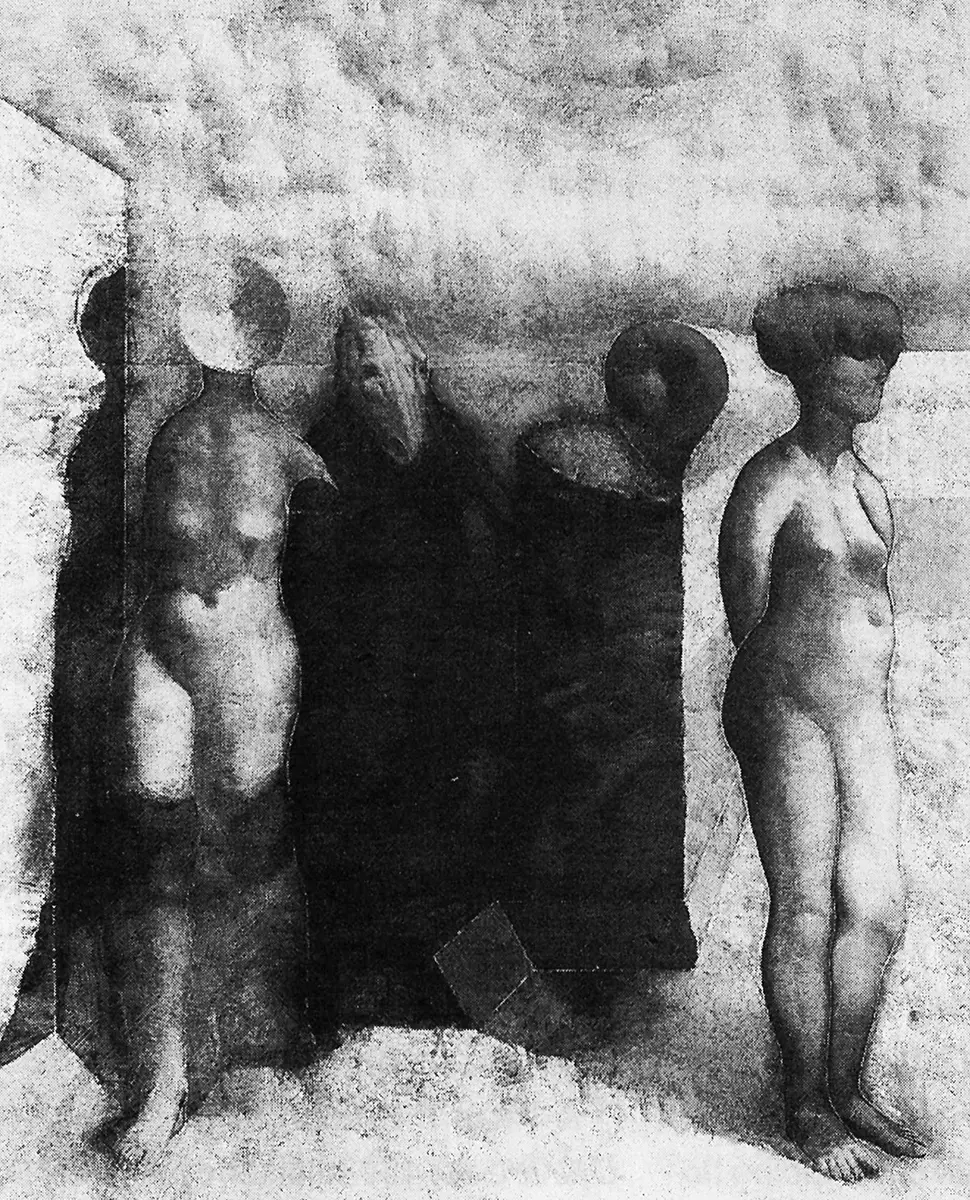
Several pictures from the 1970s showed a more realistic style. There was a Nude in front of a gramophone (1973), a composition with a faceless female body, whose hair repeats the image of the object, and Ordeal (1975), a large-format picture including two female figures and a horse’s head within an imaginary architectonic space. One of the most handsome pictures in the show was Two Bathers (1978), within the foreground a woman bending down washing some white fabric on the shore, and in the background, the torso of a woman standing in the water up to her knees. The dark tones suggest that it is a night scene. However, this kind of coloring is used in Morales' work to reflect an atmospheric situation rather than the time of the scene. The theme of the bathers and the realistic treatment of the nude bodies are consolidated in the works from the 1980s. In Nude with apple (1981) and Woman entering in the mirror (1982), the women are depicted like volumes integrated into the composition of the pictures.
Other themes which occur periodically include still lifes and forests. The former was represented by Apples (1973) and Papayas and box (1985) - the latter exemplifying a series of compositions characterized by their handsome coloring and unmistakable use of light and prisms. Two forest scenes, Jungle (1991) and Tropical Forest (1992) can be considered as the two best works in the show. They also reflected the artist’s fascination with nature and the richness of space and verticalities.
The exhibition also included sketches in oil on paper, mounted on canvas, the initial version of works eventually done in large formats: Three nudes (1971), Venice landscape (1988), and Women entering a mirror (1985). Finally, mention must be made of the work The Circus (1992), a pastel which recreates many of the elements noted above, both in its themes (nudes and horse) and its formal aspects (greyish tones, handling of color and light, prisms) and which manages to capture, in a different technique, the richness of the oil paintings.
NOTE
The exhibition will be shortly presented at the Pedro de Osma Museum in Lima, Peru, and the Tomas Andreu Gallery, in Santiago de Chile.
FRANCINE BIRBRAGHER