
If the sales of Art 1996 Chicago are any indication —a phenomenal $25 million-plus—this year's international exposition of contemporary art at Chicago’s Navy Pier should continue to set records, with the number of exhibitors reaching more than 200, representation of 2100 artists from 23 countries, and an increase of over 25 percent in the number of attendees resulting in a projected 40 million in sales, up from the phenomenal $25 million of Art Chicago 1996. As the four-day event in early May drew to a close, gallerists seemed glassy-eyed, not only because of the exhausting nervous stimulation of milling crowds under the merciless glare of neon but also from sales that continue to smash projections. Gallery booths filled every available inch of the 165,000 square foot Navy Pier Pavilion to the noticeable shrinkage of previous years’ grand central aisles, and the relocation of food services to ancillary areas. For the second consecutive year, the fair included an independently curated exhibition of video and installation by international and Chicago artists. There were new additions of scheduled lectures by both local and imported experts, and an independently curated mile-long "Pier Walk" of contemporary sculpture.
Art Chicago returned to a revamped Navy Pier in 1995 that has since come to feel more and more like an amusement park, complete with a giant Ferris wheel that blasts an endless promotional loop by its sponsor, McDonald’s. Although the Midway feeling is threatened by the precipitous fall into the lake at the pier's edge, the current representation of Navy Pier definitely resonates for Chicago-of its World’s Fair of 1893 and 1933, for example, and its history of extensive urban planning executed with an eye to securing the city's place on the world stage.
For an event that only a few years ago was considered to be over-the-top, too commercial, too international, too pretentious, and too pandering to buyers, the blue skies and sparkling turquoise of Lake Michigan must seem to reflect Art Chicago’s status as the most successful international art fair held in the United States. Art 1997 attracted a significant international contingent, with France as the largest participant represented by 22 galleries, followed by Great Britain with 19. Because of the Chicago fair’s particular caché and prestige, it has become a must for American galleries, attracting 50 from New York alone and others from over 20 American cities. Many galleries fore go other fairs in order to conserve their resources for Chicago. International dealers, collectors, and curators all stroll down Navy Pier to shop.
With the carnival atmosphere creeping indoors, the most spectacle-friendly works become favorites. Last year, it was the painted cars by Hiro Yamagata; this year it was a giant mole by Mark Dion, and Paul McCarthy’s human-size skunks playing with themselves. All-in-all the quality of work seemed to reflect that galleries find less need for the dumbing-down of contemporary work in order to sell it. Skeptics, many of the critics and artists, still make the accusation that the representation of artists who are established, no matter how recently, is market-safe but, perhaps reflecting the high standards set by Thomas Blackman Associates (TBA), the Chicago Fair organizers, a lot of the exhibited work had both edge and difficulty. Perhaps an audience sophisticated enough to want to buy contemporary art is impossible to offend, and in the age of spectacle, no matter what its political foundations, art becomes a commodity at a head-spinning rate.
Mexico and South America were represented at Art 1997 Chicago by nine galleries exhibiting artists from the most commercially established, like Fernando Botero and Aurora Cañero at Galería El Museo Bogotá, to both the established and emerging avant-garde. These galleries make a distinct contribution at such a gathering, with a sophistication that is at once both cosmopolitan and exotic; the vitality of their acknowledged hybridity creates a strong impact that eludes with surprising twists and turns Euro-American notions of established "movements."
The OMR Gallery of Mexico City showed a variety of artists including Marina Nuñez, Manuel Ocampo, and the considerable range of works by Xawery Wolski. Francis Alÿs was represented by two collaborations: one with a Mexico City sign painter, Emilio Rivero, and one with both Rivero and Juan García. Alÿs finds indigenous Mexican commercial painters and requests that they incorporate their own interpretations in painting into an enlarged version of one of his small panel paintings. Alÿs images are painted straightforwardly in shapes of flat color. In the case of Catálogo no. 4, from 1996, depicting the upper torso of a man with a leg and foot intruding from the upper right corner of the painting to kick him in the head, Alÿs was so affected by Rivero’s misreading of an inadvertent blip in the contour of the sock as the shoe falling off the foot, that he repainted his original panel to march it. In the two interpretations of Hombre con peluca (tríptico) by Rivero and García from 1995-1996, a suited man seen from behind is locked in an amorous kiss with the inside of a woman’s wig. With their hard edges, naive drawing, and expansive grounds that isolate the small figures, these images are reminiscent of Rene Magritte’s paintings. These capricious exercises in appropriation combine Surrealism's repetition with the mixture of high and low art.
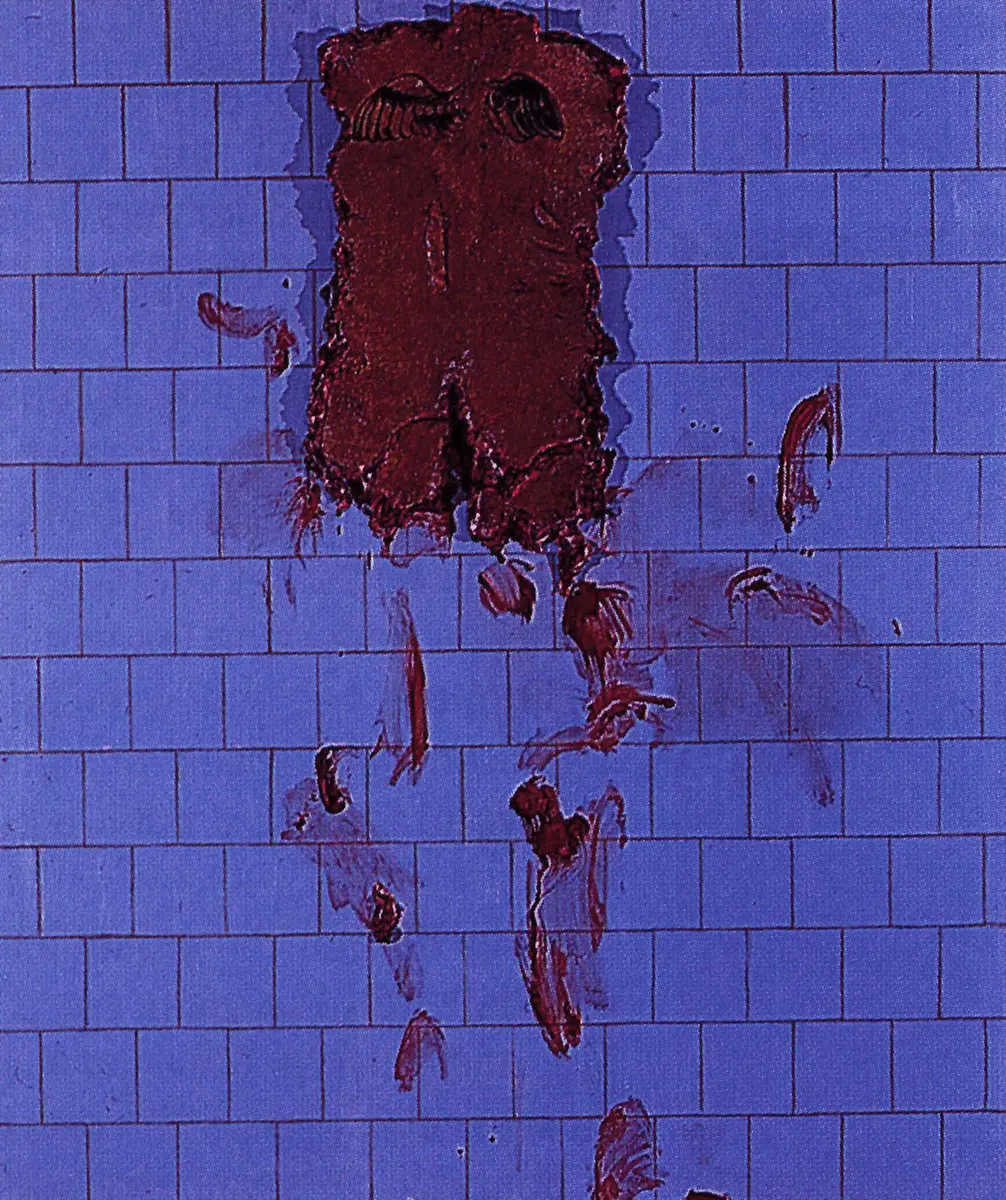
Brazil was represented by two galleries with distinctly different emphases. From São Paulo, Camargo Vilaça Gallery, showing works by a variety of artists that included two new business card pieces by Jac Leirner, and Diálogo com amaú, a suite of the hauntingly beautiful and disturbing Cibachromes of Miguel Rio Branco. The floor was occupied by Ernesto Neto's canopied architectural piece supported by three copper rods and nets full of sand. A painting on canvas by the emerging artist, Adriana Varejão appeared to be constructed of tiles. The squares dexterously painted in blue recalled Delftware. Images of a Japanese girl and a European hunter standing on their respective bridges were repeated as miniatures, and then in versions of magnified details that filled the tiles' lunettes. With whimsy, this work references colonization through reciprocal appropriation and proliferation of what may seem to be the most innocuous of commodities.
An entirely different aesthetic was represented by the work on display at Joel Edelstein, Arte Contemporánea from Rio. The work included the Constructivist metal sculptures of Waltercio Caldas and the moving nativist photographs of Mario Cravo Neto. Also featured was the conceptual work of Cildo Meireles, whose retrospective exhibition recently completed a tour of European and American cities. Immense, Meireles’s wood sculpture of chair forms was prominently featured.
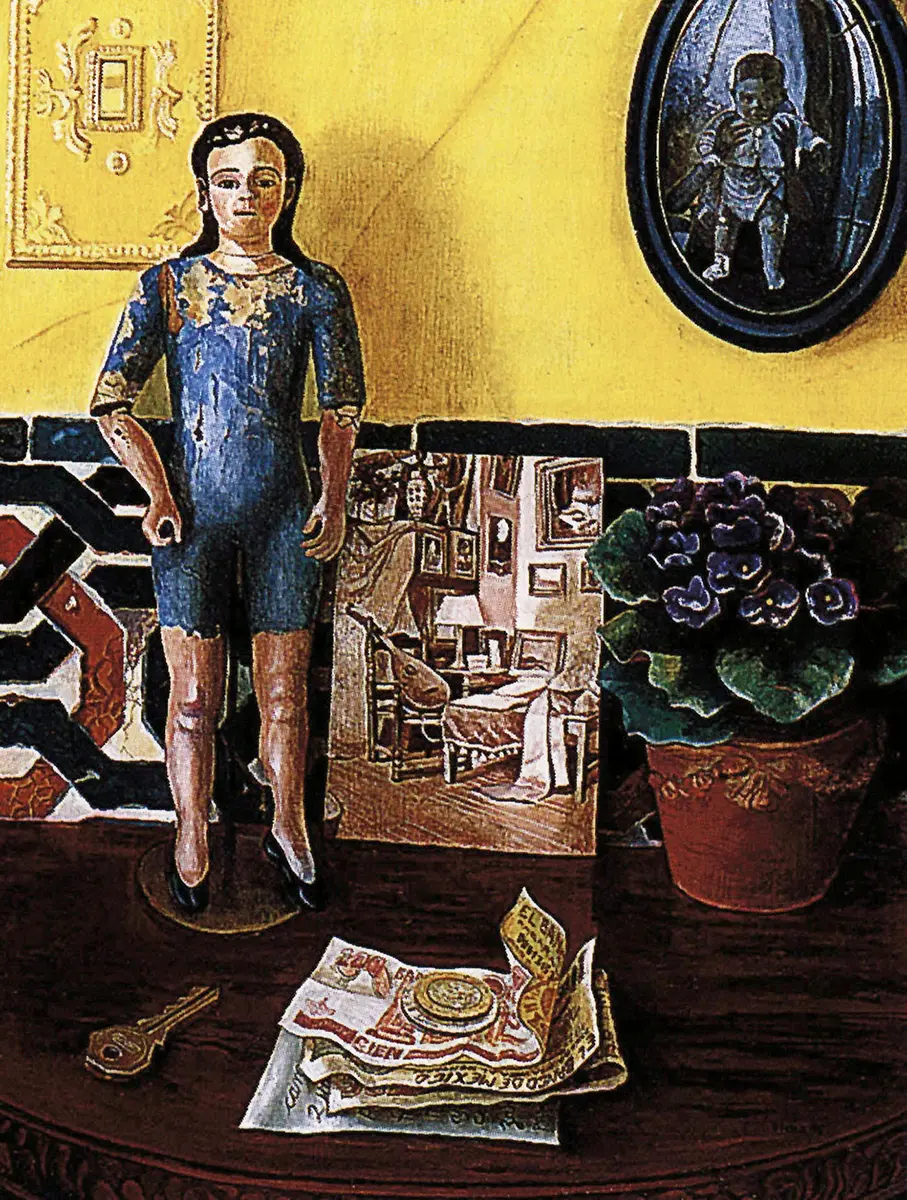
Mary-Anne Martin Fine Art of New York exhibited paintings by Elena Climent, an artist who lives in New York (but was raised in Mexico City.) The vibrant, unadulterated color of her still lifes engender the feeling of that megalopolis. Climent is self-taught, her artist-father having discouraged formal art education. The resultant tinge of naïveté in the drawing of her cluttered compositions also suggests her Mexican heritage. In Climent’s paintings, issues of identity have a seemingly subliminal presence. The still lifes, painted in a hard-edge style, are heavy with observed incidental detail of objects arranged to suggest, almost involuntarily, votive offerings.
Ramis Barquet from Mexico City showed works by Latin American and international artists such as Louise Bourgeois, Sandro Chia, Willem de Kooning, Nam June Paik, with his small robots made up of TV sets, along with Latin American artists as Ray Smith, Guillermo Kuitca, and José Bedia. Bedia’s work was also displayed at various booths including Fleisher/Ollman (Philadelphia), Poligrafas (Barcelona), and the impeccable show at Der Brücke from Buenos Aires displaying remarkable works by Hernán Dompé, Carlos Gallardo, Eduardo Medici, and Eduardo Hoffman.
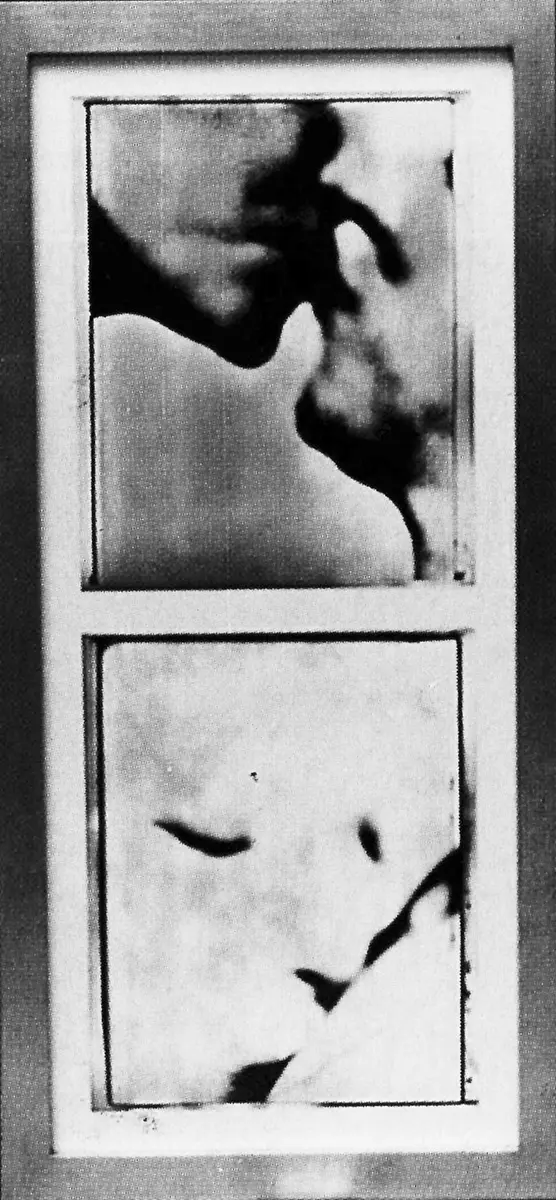
Galería Nina Menocal, also of Mexico City, displayed photographic works of gallery artist Arturo Cuenca and paintings by Boris Viskin. The minimalist wood sculptures of Carlos Aguirre were displayed along the wall, the tensions of material-becoming structure made clearly visible in his treatment of wood bent by woodworking apparatuses to shapes interacting with the wall surface. Edgar Ladron de Guevara played with the instability of what we know, and the unreliability of representation in his series The Essential Kiss. An initial image of two faces joined in a kiss becomes more distorted in successive panels until it completely disappears.
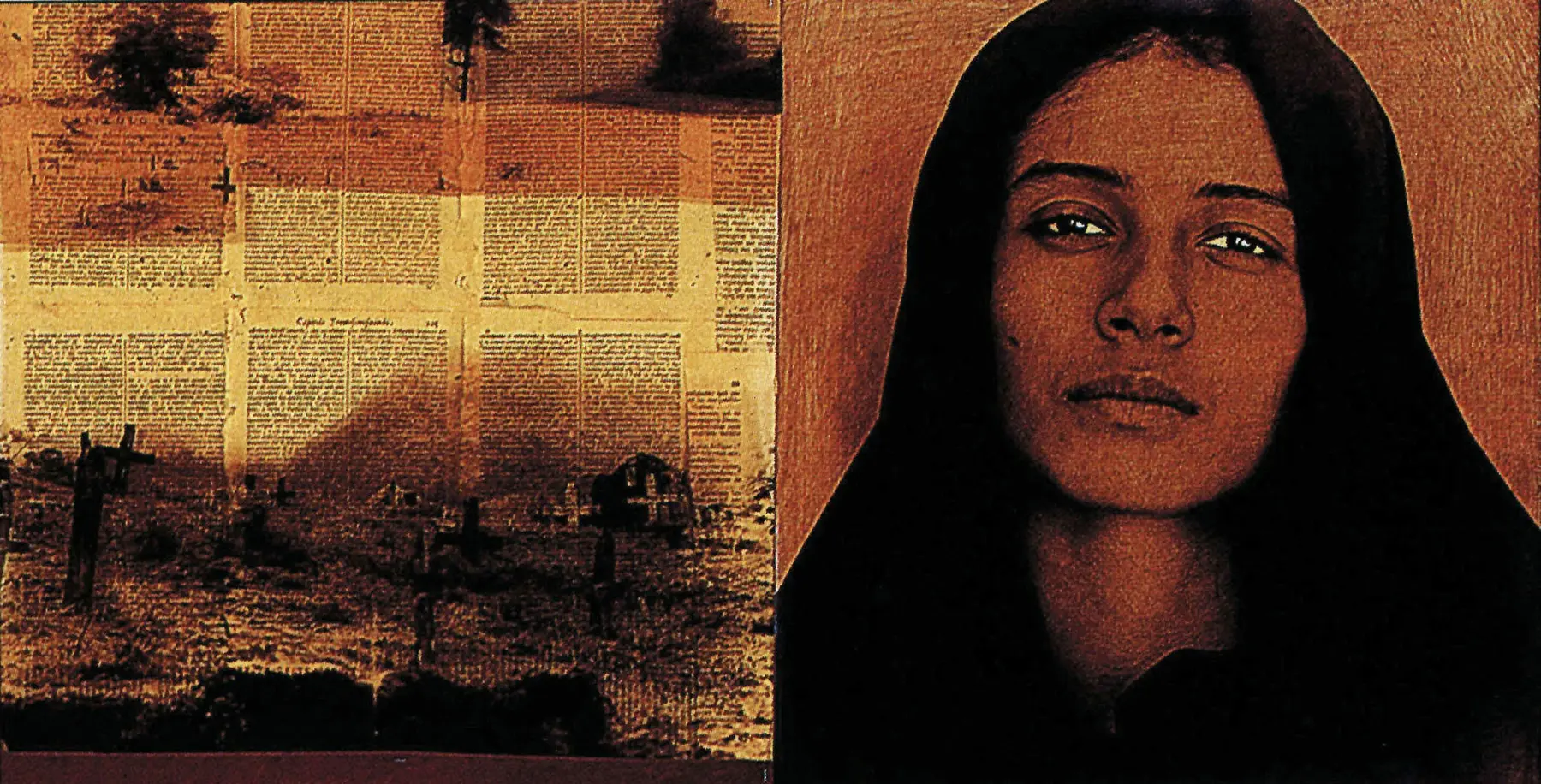
Work by Latin American photographers, such as Martina López and María Magdalena Campos-Pons, was on display at Chicago’s Schneider Gallery. The hand-painted silver and gelatin prints of Luis González Palma were especially notable, combining iconic images, often of women, with mixtures on indigenous content to generate a patina of time, memory, and loss. Maria Schneider of the Schneider Gallery offered interesting observations on contemporary Latin American artists and their current discovery-transgressing long-standing taboos-that they are shaped by forces in addition to Catholicism.
The recent European and North American positive evaluation of Latin American art as reflected, for example, in the Latin American focus at ARCO in Madrid, might come dangerously close to ghettoizing art from below North America as somehow monolithic and susceptible to generalization. But the re-conception of schools and movements with Euro-American origins through the multiple lenses of a diversity of cultures creates, like a kaleidoscope, new meaning in movements and places that might in other places have already begun to seem old.
JANET CAVALLERO