
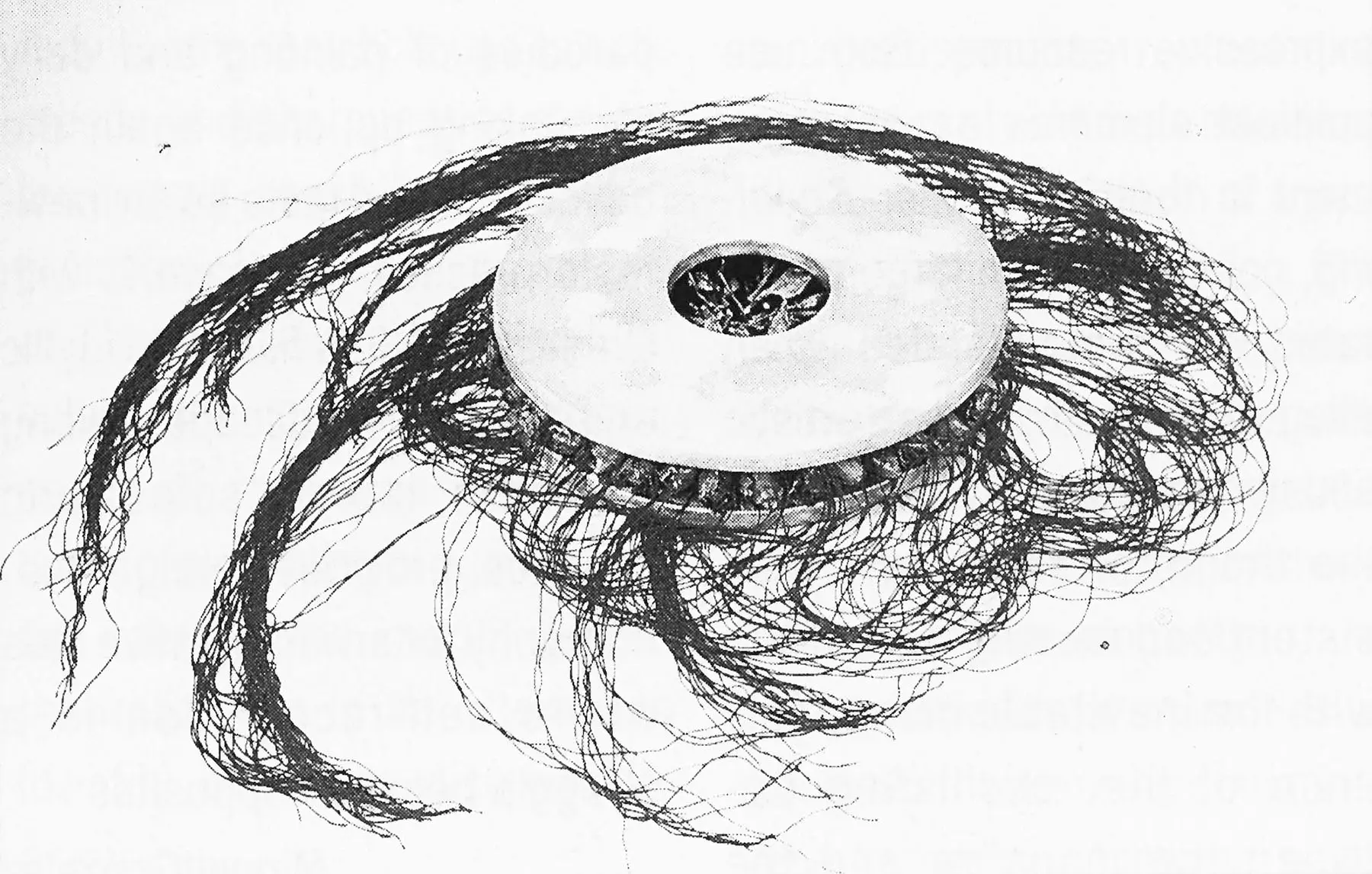
In the spacious rooms of the Museo de Arte Moderno La Tertulia (Collection Room and Itinerant Exhibition Room), a show titled Imagination and Fantasy was recently presented which included work by ten younger artists who explore various symbolic problems through installations and different visual media.
There were works by Óscar Muñoz, who plays with the themes of representation, illusionism, and desire of the spectator to activate images; four works by Alicia Barney, who establishes relationships between color, various and contrasting materials, and objects to explore anthropological aspects in emotional and lyrical works which recall myth and tribal legends; and Nadín Ospina, who presents his fictional world through the autonomous and elegant ingredients of memory, history, and humor to demystify recognizable icons through an interplay of recognition and tension.
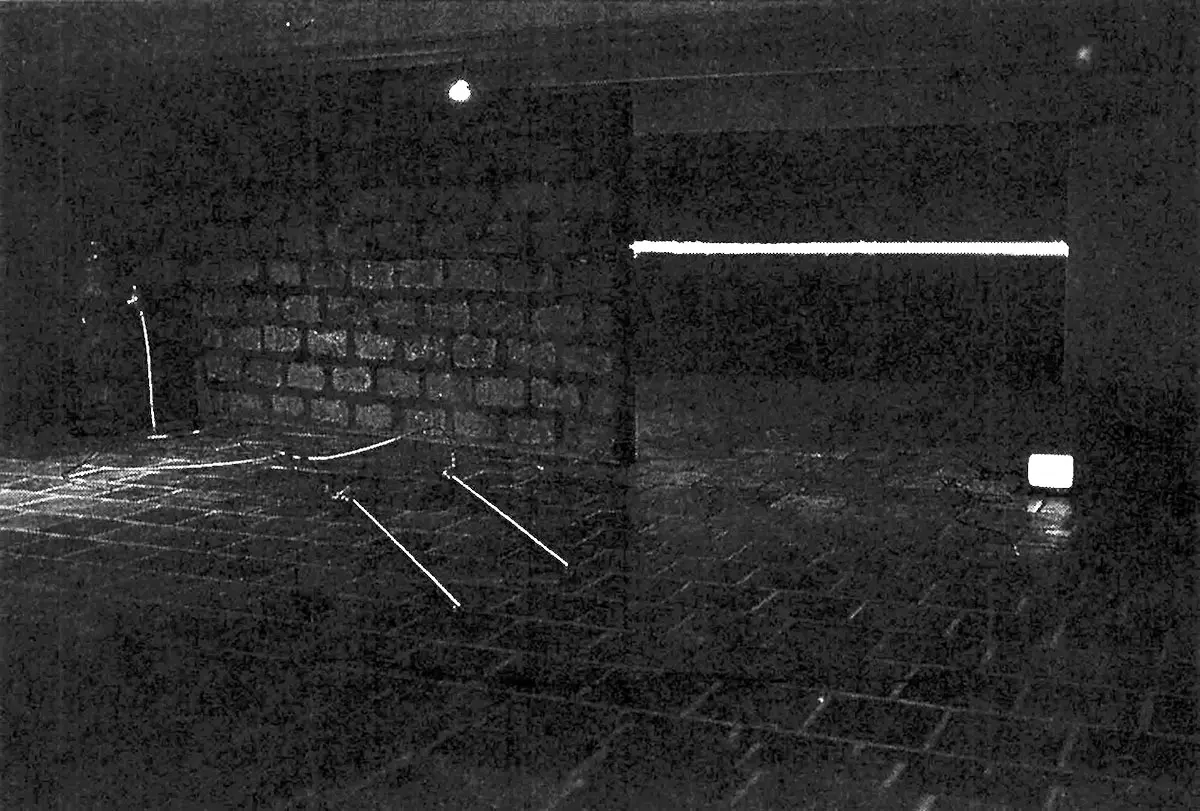
Elias Heim presented one of his recent machines dealing with the ambiguity of nature and engineering. The museum space as allegory and a place of truth and contradictions inspire his arguments which make use of real action, and automatic and repetitive elements. His interests are indicated by his references to the animal world and to the myth of Narcissus. Mario Opazo and Leonel Galeano are two artists who use video as a dramatic and expressive resource. Both use political elements as an argument in their solutions. Shooting, composed of a large perforated wall, was intended as an allegory of death, and an artistic allusion to Goya. Galeano used the theme of death as a persistent and moving argument, with the inevitable disappearance of life, oscillating between the macabre and the poetic, reflected in hospital beds.
Luis Roldán used recycled elements to create murals whose suggestive constellation-like appearance allowed for a number of readings. His work creates an interplay of appearance, space, preciousness, and found objects—exercises in illusion, nothingness, and everything, appearance, and truth—where the relative is recognized as a problem.
Lucas Ospina stressed the irony of fashion, its changing nature, and the place it occupies in the collective consciousness. By means of his customary caricatures and the use of sheets, he creates a humorous space that is both attractive and deprecatory.
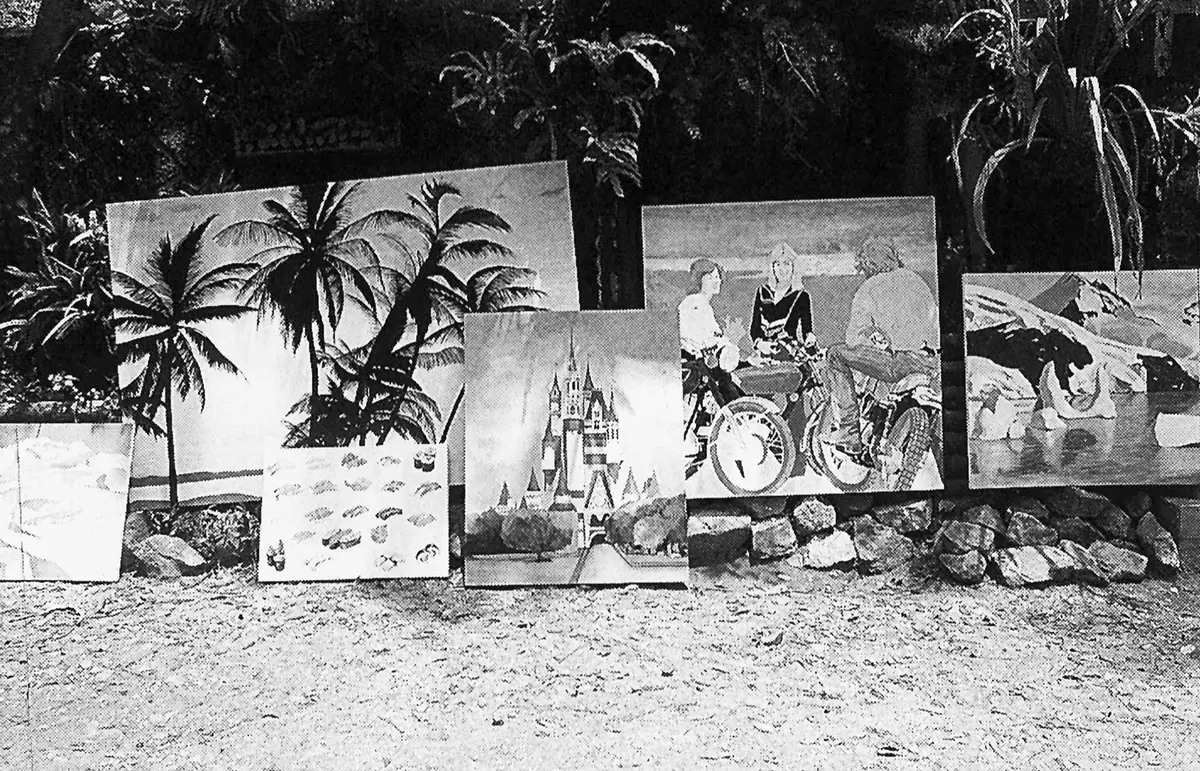
Wilson Díaz and Juan Mejía combined their ideas to create parodies of painting and daily life, taking up once again the odyssey of bad taste as an inevitable practice. Their work, with Chinese fish in a fish tank, idyllic and touristy landscapes along with fake tables, sofas, and canapes, provides a vulgar iconography for an imaginative idea where self-recognition is a struggle between opposites.
MIGUEL GONZÁLEZ