
During my many years in Long Island,1 I was guilty of the common habit of ignoring things close at hand and I never visited the Nassau County Museum of Art. Located in an old millionaire’s mansion and surrounded by a sumptuous park with major sculptures by Botero, Marino Marini, Red Grooms, etc., the Museum is one of the few venues attempting to promote the plastic arts in Nassau County. The idea that I could go there at any time caused me to miss a series of ambitious exhibitions including Surrealism, Soviet Avant-garde Art, and Czech Art in the Velvet Revolution. It was only when St. Frida in glorious color began to peer down at me from the enormous posters posted in local business, announcing a show titled Latin Viewpoints, that I began to feel really guilty.
The exhibition was made up of a hundred works on loan from major institutions, including the Hirschorn Museum, the Philadelphia Museum of Art, and Chicago’s Institute of Contemporary Art, as well as from a number of prestigious galleries and private collections. With a 100-page full-color catalog, this was an ambitious affair that began with the question: Does Latin American art exist? The question, posed by the Museum’s director and its main curator appeared on a panel at the entrance to the show and promised the clarification we have all been seeking for a number of decades. A show which dared to face up to this theme was bound to be interesting.
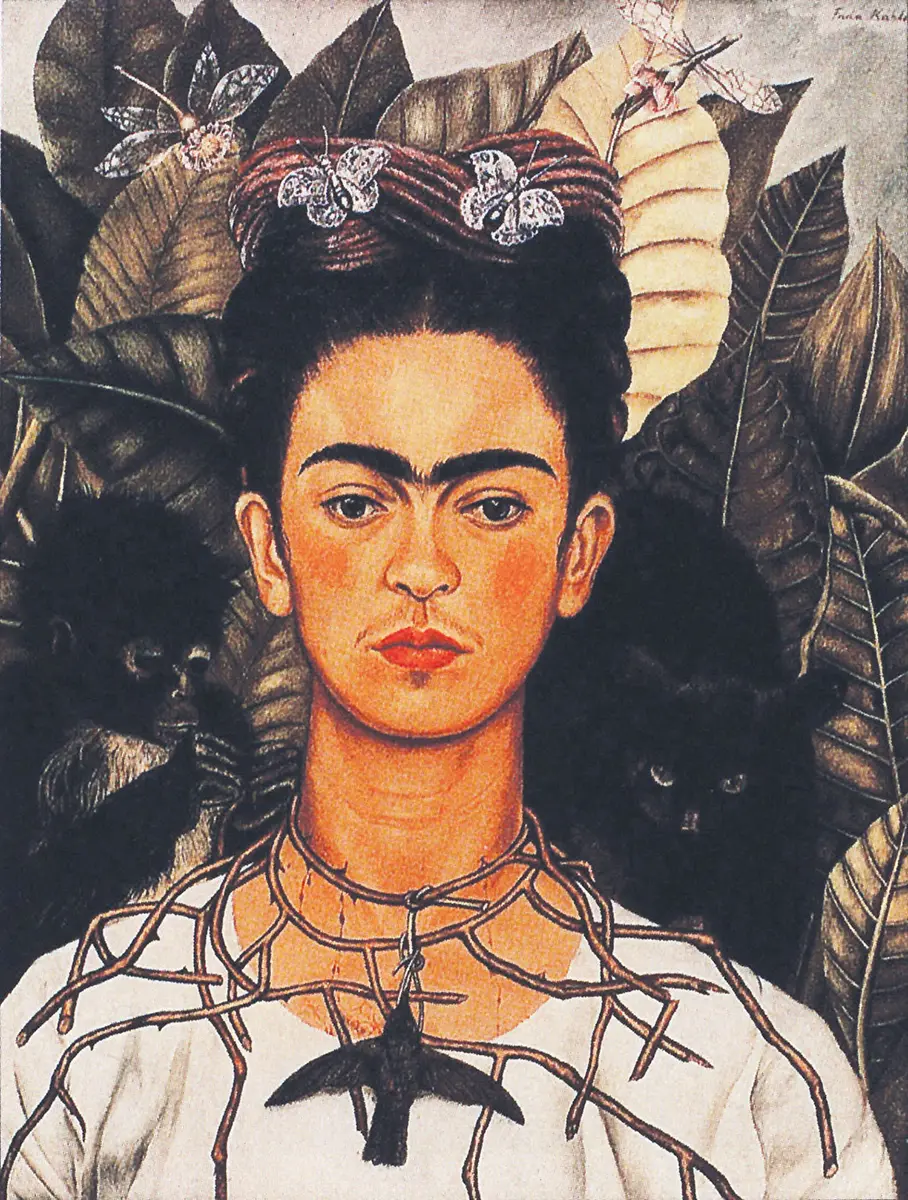
The first room, devoted to Mexico, included six works by Rivera, one by Orozco, one by Siqueiros, two by Kahlo, three by Tamayo, and three abstract works by Gerzso, all painted between 1958 and 1964. Curiously, there was also a small label marked "Spain" referring to a picture dated 1996 by the Spanish painter Manolo Valdés, titled Picasso as a Pretext IV. An explanatory panel mentioned the influence of Picasso on Latin American art and indeed, the adjoining picture was a cubist work by Rivera (Two Women, 1914). Works by Mexican artists including Elena Climent and Julio Galán, from the mid-1900s to the present were exhibited in the next room. In all, Mexico was represented by 42 works. Some were good: The Cry (1931) by Siqueiros looked better than expected, while the Kahlos were representative of that artist’s oeuvre. The cubist picture by Rivera was complemented by a more typical lithograph, Dream (1932), and Copalli (1937), a very interesting landscape. The other works were rather academic. The exhibition (bearing in mind that this is not a major metropolitan museum) was promising though the idea of dividing the theme of Latin American identity into countries was rather strange.
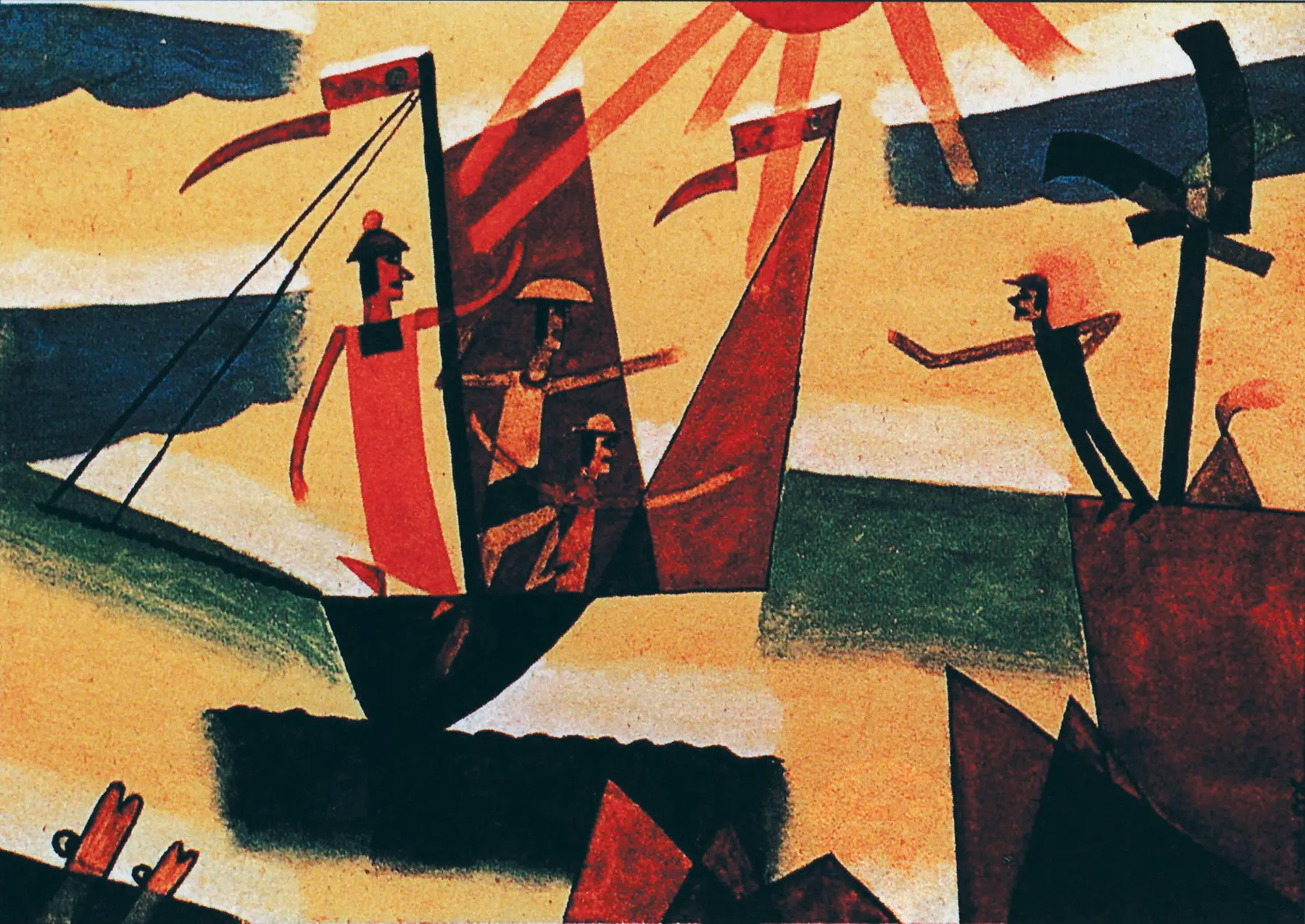
After two rooms devoted to one country, my interest continued, although I did not yet realize that show was already half over. With so much Mexican representation and the organization by nations, I was fully prepared for an equally full account of Argentinian and Brazilian art. But here the results were rather meager. Argentina was represented by four works (three by Xul Solar and one by Juan Bay, an artist of the Madi group), but there was nothing at all from Brazil. There were only four works from Venezuela—by Marisol, Feliciano Caravallo, Jacobo Borges, and Héctor Poleo—just one more than El Salvador, which had only three works (two by Benjamín Cañas and one by Luis Avilés) Colombia was represented by three artists: Obregón (one work), Botero (eight works—the "winner" in terms of numbers), and Ana Mercedes Hoyos (two works).
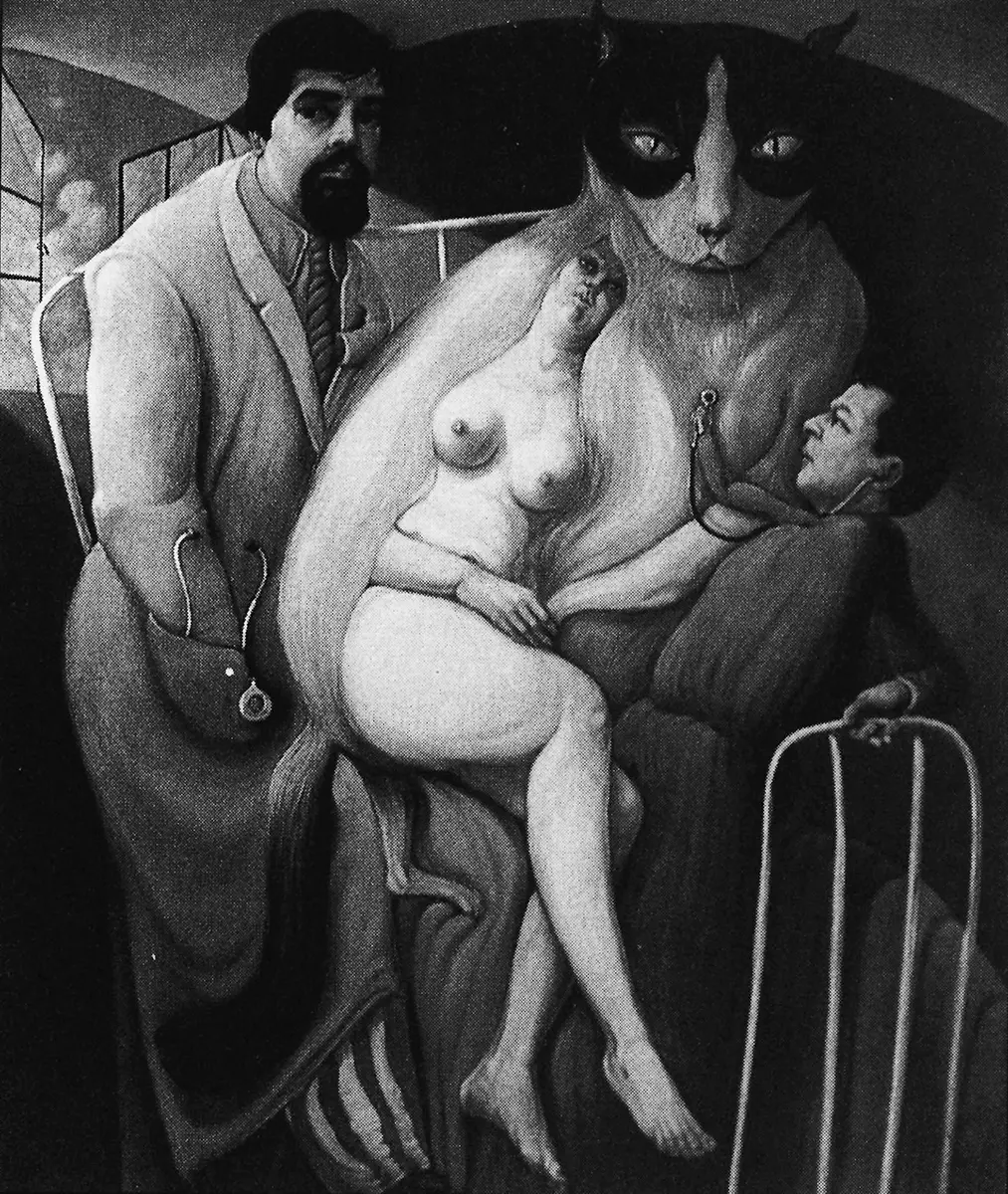
The surprise created by these distortions was matched only by the abrupt discovery that the show did not continue up onto the third floor. I expected this confusion to be clarified in the catalog but it was not. The publication contains three essays: one long text by Constance Schwarz, the curator of the exhibition; a shorter piece by Franklin Hill Perrell, co-curator, that offers a more concise and readable version of the first text; and a short analysis by Salomon Grimberg, that discusses the surrealist qualities of three works by Kahlo, Carrington, and Gerzso, that were in fact, not included in the show.
All three essays mention André Breton’s characterization of Mexico, upon his arrival in the country, as a surrealist place. We are led to wonder how Breton would have described this show and catalog. Valdés’ picture had been the first premonition of all this,2 and Brazil’s absence the second. But other information in the catalog enriched this strange vision. In Figari’s picture Candombe, "the gauchos of the pampas participate in the rituals of candombe," the pictures of Ana Mercedes Hoyos are supposedly influenced by Botero, and "in Latin America, the two greatest influences are the tides—representing the Indian influence—and the spirits (representing) the African element."3 A 3/4-page text devoted to Torres-García tries to explain his work by quoting Alejandro Obregón on the influence of climate, race, and blood in connection with Obregón’s own The Wake (1956), and then continues talking about Torres-García. As regards the initial question about whether there is such a thing as Latin American art, Constance Schwarz concludes after 23 pages that, "it is only the spectator who can answer this question."
Normally, one might ignore an exhibition such as this one. But there are various reasons for not doing so in this case. First of all, the Nassau County Museum serves a population of more than a million and a half inhabitants in a cultural desert where, in terms of art, the only other alternative is to go to New York. The museum is located in an area with the prestige and money necessary to borrow first-rate works and, of course, with the intellectual authority to endorse the quality of what it shows. Thus the uninformed spectator accepts what he or she finds in the Museum as relatively objective and academically rigorous information. Second, the exhibition was for many people in the region their first experience with Latin American art. The show claimed to provide a balanced overview, with the support of a catalog that sought to compete with other similar publications. Third, the show did manage to present some works of first-rate quality, which, for the uninitiated, validated a curatorial framework that was nothing of the sort. Toledo and Galán were well represented; a picture by Lam from 1942 was excellent; and the works by Matta, Torres-García, and two of the three pieces by Xul Solar were all worthy of their creators, and so on. But it is the fact of using Latin American art to propose such a deluxe kind of injustice that was so offensive.
It is no secret that the exhibition was beginning to irritate me. I am writing this note the day after visiting it, in an attempt to quell my anger. But over and above any private relationship which might exist between the show and my own feelings, there is the general interpretation that may be acquired by an undertaking of this kind. The interpretation that an exhibition is a text with an overall meaning independent of the individual meaning of each work is nothing new. An accumulation of good works might result in a disastrous exhibition. A recent and more illustrative example was the show Africa: Art of a Continent at the Guggenheim Museum in New York. The works exhibited there were all exquisite, but given the curatorial criteria based on the simplistic geographical distribution (compounded by the museum’s architecture), the visitor became a kind of artistic tourist. Thus the vision which serves as the basis for organizing an exhibition may trivialize the show and may even become a sort of denial of the works presented.
Oddly enough, we are conditioned into believing that virtue and talent always win out in the end. We believe that good work will inevitably assert itself and emerge from the contaminated and contaminating flow around us. The museum or gallery context, depending on the quality and prestige of the venue, will help in the presentation, rather like a frame does for a picture. Institutions are a kind of hyper-frame and as such, they enhance the meaning and luster of a work. An unattractive or poorly assembled frame supposedly detracts from this luster, although it could not destroy a good work. Such a position is, however, formalist and reductive. It views the work in a vacuum, with independent values which presumably can only be decoded through the taste of the spectator. This is a position which does not allow the work to be seen as a symptom of a collective discourse and culture, as a link (well or poorly wrought) in a contextual chain carefully defined by the culture which generates it—a link which, in this precise position, endeavors to expand the knowledge both of that culture and the spectator.
The danger with extra-cultural exhibitions is that they often become anthropological exhibitions. Out of the context and cultural environment in which they are produced, such artifacts become naked, appearing as nothing more than their formal attributes. Without an appropriate theoretical framework —as in any decent anthropological exhibition—the spectator is thus required to use his or her own taste to communicate with the works. Since taste, in such circumstances, is the result of a culture that is alien to those works (globalization, in this case, is still a utopia), communication fails.
The organizers of the show at the Nassau County Museum were confident that the "quality" of the works themselves would confirm the validity of the exhibition, in terms of both presentation and reception, i.e., the lack of a rigorously developed theoretical framework and the show’s acceptance by the spectator. If they had had a vague intuition of the nature of the problem, they would have limited themselves to presenting an eclectic selection of individual pictures.
There was not only an amateurish and botched attempt to establish a theoretical framework but stereotypes and prejudices were used of the type not seen since Art of the Fantastic: Latin America, 1920-1987, the paradigmatic exhibition presented by the Indianapolis Museum in 1987.4 According to this rarified Northern vision, Latin American art oscillates between socialist realism and expressionism, with a few decorative surrealist touches. This was more or less the message not only of this show but of its catalog (which mercifully does not use the terms "magical realism" or "fantastic realism.") It is this preconceived distortion that explains the absence of Soto, Le Parc, and Oiticica, to mention just three names, although it does not tell us why there was nothing included by Tarsila do Amaral or Antonio Berni if we accept the thesis of the show. The quality of the works did not save the exhibition or all the works themselves. Juan Bay5 was an artist with the only totally abstract work in the show, and his piece gave a further turn to the screw of surrealism rampant in the Museum.
The constructive moral to be drawn from all this is that artists today can no longer rely on their works alone to establish communication with the public. Participation in an exhibition requires an understanding of the underlying curatorial criteria used in order to ensure that the works are read correctly. This contextual reading is almost as important as the reading of individual work. The curator, in essence, creates with the works of artists. The spectator is thus confronted with two creative processes which necessarily must complement each other. Until now the responsibility for ensuring coherence between both processes was seen as exclusively that of the curator. Once it is accepted that the two processes are inseparable, it is inevitable that the artist will have to take a serious interest in the interpretations of the curator and how they will affect the work. The possibility of refusing to participate in a poorly conceived or presented exhibition, and the redefinition of the specialized tasks of the curator/artist seen as a continuous and interdisciplinary field, are just two of the consequences which clearly emerge from a show that was, in the end, a further example of misguided and misleading pseudo-didacticism.
NOTES
1. Long Island is an island adjacent to New York which includes part of the city (Brooklyn and Queens), but also the suburbs of Nassau and Suffolk Counties.
2. Schwarz justified the inclusion as a symbol of the “Spanish sub-context" which she believes underlies all Latin American artistic production.
3. Connie Schwartz, “Introduction to the exhibition,” Latin Viewpoints, Nassau County Museum, Roslyn Harbor, N.Y., 1996.
4. Art of the Fantastic: Latin America, 1920-1987, Indianapolis Museum of Art.
5. Bay (1892-1978) studied as a young man in Italy and participated in the Italian Futurist exhibition in Milan in 1911. He returned to Argentina in 1949 and joined the Madi group.
LUIS CAMNITZER
Uruguayan artist. Professor in the Department of Visual Arts, New York State University, College at Old Westbury.