
Historical reality has shown in the end that Manuel Felguérez was right. Even before, however, reality had been on his side, except that the circumstances had not been so propitious as now for allowing this artist’s correctness to be recognized. His informalist proposals of the 1960s, which were full of expressiveness (showing that rare sense of potential which never goes unnoticed), pairs of oppositions reconciled in his work (roughness and delicacy, drama and sensuality); cultural rebellion (precisely by remaining faithful to his artistic convictions), stylistic autonomy (not letting others decide for him); and finally, his audacity (so necessary, but so rare in art). All of these qualities are present in his recent canvases and sculptures, but they have now been enhanced. There has been an updating of his projects in recent years (from 1988-89), simultaneous with the evolution of thought and the arts so that when he decided to recuperate and order the lexicons which he had used in earlier periods of his career, the approach coincided with the postmodern eclecticism so fashionable at the time.
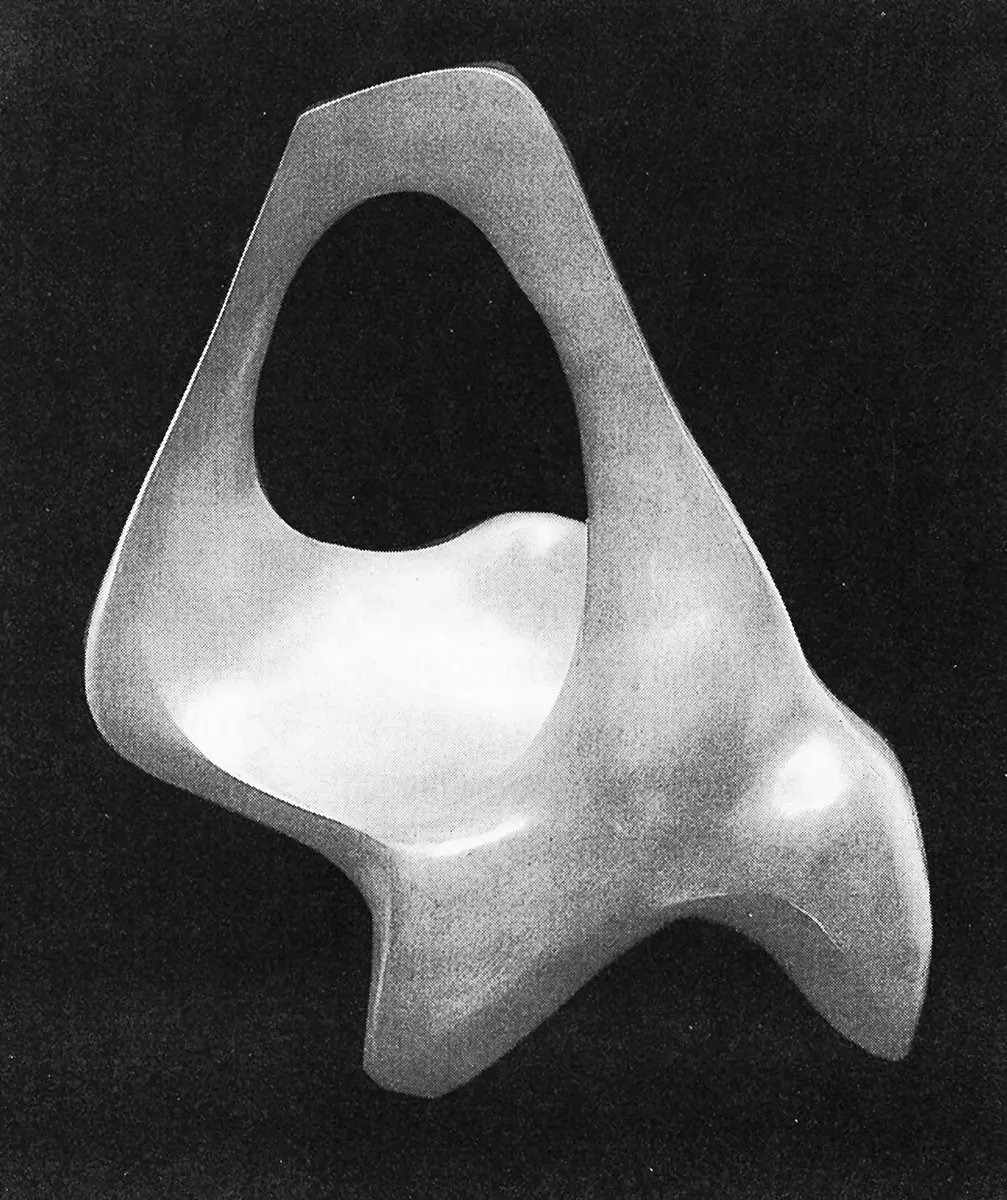
Even so, even though the sense of congruence in his proposals was evident, they did not seem to fully escape certain advanced normality. They were interpreted by his colleagues and specialists as confirmation that the posmo phenomena could occur at the individual, and not only the collective level. And although this is true and worth noting, the works which Felguerz recently gathered together in his one-man show titled The limit of a sequence (Museo de Arte Contemporáneo de Monterrey (MARCO), January-June), do in fact constitute an exploration of the relativity of any limits when applied to real art, genuine individual vocabulary, or professional sincerity.
While Felguérez has insisted on the validity of his proposals from the 1960s, avoiding the repetition of solutions that at other times had proved useful (even though in self-quotation), and rejecting the temptations to participate in passing fashions (which never prevented him from being up to date about the "isms" of his time), the validity of his lexicon has in fact increased. To put the matter in other words: the fact that he was from the sixties, has increased the importance of his works to the point that at a time in which we are seeing a revaluation of cutting edge art, here he is, along with his latest production, confirming any hypothesis in this connection. It is undeniable that he now does "what he wants." Indeed, in some of the sculptures presented at the MARCO, there would seem to be not only remembrances of a full past, but the resolution of certain things pending. As if in the passage from the "organic" informalism of the 1960s towards a radical neo-constructivism (Mexican goemetrism) in 1970, he had left unapplied certain formal solutions which were not appropriate to his geometric period, but which now seem valid. This is something for which we have to be grateful, without a doubt.
CARLOS-BLAS GALINDO