
A few meters from Caminito, a traditional tourist area in the La Boca district, the Fundación Proa opened its doors in November for its first exhibition by Rufino Tamayo, which lasted until the end of January. The second exhibition was devoted to the Argentinean sculptor Sesostri Vitullo (1899-1953), considered to be one of the precursors of modern sculpture in Argentina.
Vitullo was trained in Buenos Aires in the old Academy. He went to Paris in 1925 to study with Bourdelle. Due to a shortage of funds, he had to work as a model, as well as accept all kinds of other jobs in order to survive in the French capital where he stayed until his death. He became well known after the Second World War, the result of the esteem showed by French artists and expressed in the major retrospective of his work at the Museum of Modern Art in Paris at the end of 1952, just before his death. Further recognition after death came with the show titled Fifty Years of Modem Art in Brussels in 1958, where his work was shown along with that of Brancusi, Calder, Moore, and Manzù, among others. He also had retrospective exhibitions in Amsterdam, and at the National Museum of Fine Arts in Buenos Aires.
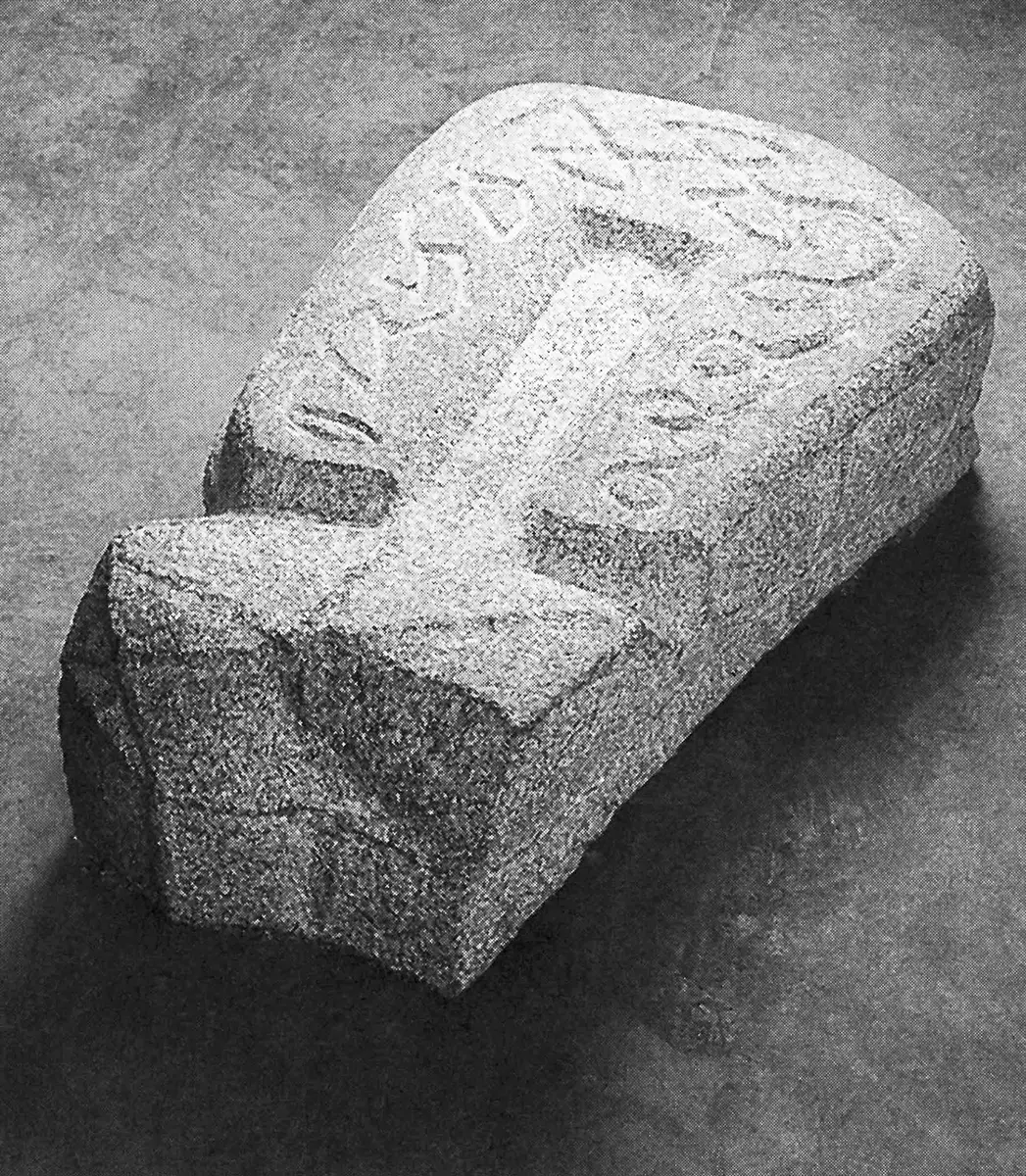
Although he spent half of his life in France, where he did the most important part of his artistic work, he was known by all the Argentinean artists who came to Paris. Thus, his fame and influence led to his estimation by the critics as one of the precursors of modern sculpture in Argentina. It is interesting to note that although Vitullo considered Rodin and Bourdelle as his masters, and that French culture had shaped his aesthetic concerns, almost all his work refers in its themes to Argentinean culture. Indeed, a study on the artist describes his artistic projects in terms of a “poetics of homesickness”—an attitude fairly common among Latin Americans living abroad, and Argentineans in particular.
The eight works by Vitullo in this show were done in wood, marble, and stone, and dated between 1936 and 1952. All came from the permanent collection of the Torcuato Di Telia University. The selected pieces illustrated the two tendencies evident in the artist’s projects-images dominated by verticals or horizontals.
The former include St. John the Baptist, a work in marble from 1940, and Mestizo Woman, in pear wood, from 1952. In the first piece, the different parts of the work are woven into an arabesque giving it a certain surrealist kind of figuration, half sensual and half disturbing. The second is an abstract work, and the image of the woman is achieved conceptually through volume, without reference to anecdote.
An intermediate step towards horizontality is Lust, work in stone from 1946, in which the form of the cube disappears through the vigorous interweaving of forms. Another example is Eva Peron, Symbolic Archetype, in stone (1952), considered to be his last work. Two good examples of horizontal works are provided by the figurative piece titled Siren, in pink stone (1943), and The Moon, in grey granite, (1952) where there is an admirable synthesis, rich in ascetic suggestion. In this way, the treatment of planimetric volume and the symbolic character of the representation link Vitullo with pre-Columbian art.
ALBERTO COLLAZO