
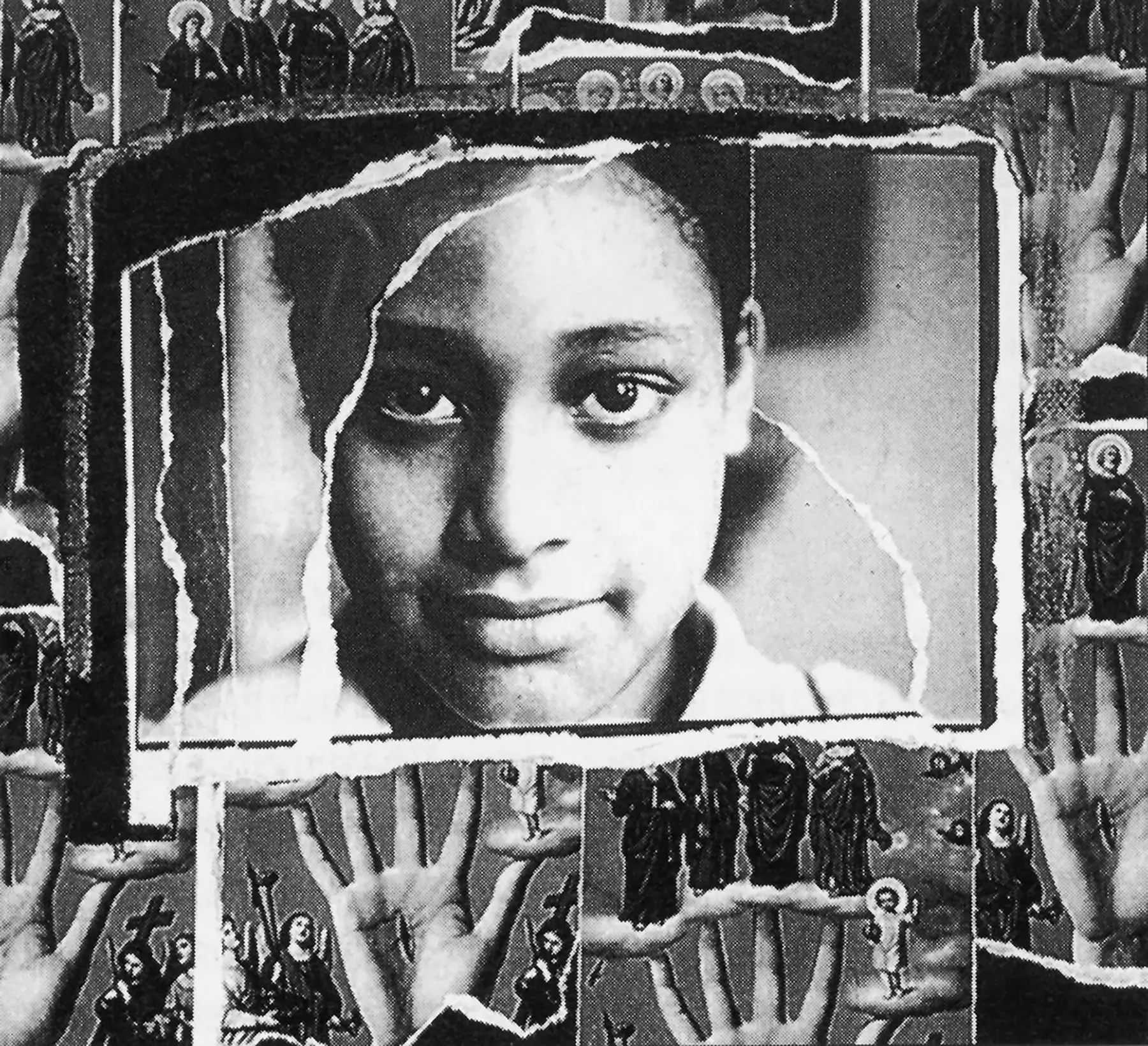
American Voices at the Smithsonian Institution addresses its audience on many different levels. For the Smithsonian, it is an overt political statement about its supposed commitment to Latin American issues and audiences, a commitment that has been sporadic and superficial at best. Each of the show's three sections, dedicated to photographers of Mexican, Puerto Rican, and Cuban descent, speaks to distinct political and aesthetic concerns. Yet, with few exceptions, these same political and aesthetic concerns are driving forces within contemporary American photography regardless of the ethnicity of the creator.
Current preferences for large format documentary portraits are readily apparent. Mexican Max Aguilera-Hellweg, whose black and white Polaroids turn unremarkable subjects like a boy with an inner tube into iconic figures, is the most successful of this group. Sophie Rivera's flash-lit portraits of her Puerto Rican compatriots are also intriguing, while Cuban Tony Mendoza’s work injects a dash of humor into the mix.
A revival of interest in hand-painted photographs is also the environment. Pablo Cambó of Puerto Rico contributed a lovely group of fruits and vegetables from his Los comestibles series (Edible Food), but it is the Cuban photographers who dominate this category. Gory’s portraits, created from appropriated images of pop-culture icons like Marilyn Monroe and James Dean, are both nostalgic and ironic, emphasizing the socially constructed nature of these personas. Silvia Lizama’s Construcción de la 1-95 11 (1-95 Construction 11), takes a different approach, transforming a modern highway into a Minoan ruin through selective application of color.
The latest developments are also here, including the obligatory selection of digital photographs. Computer-assisted photography offers great possibilities but only a tiny minority of photographers have been able to realize its potential. Martina López sets antique family photographs in bizarre color landscapes in moderately interesting works. Other computerized works are less successful. Puerto Rican Juan Sánchez’s Bella cara y la mano del gran poder (Beautiful Face and All-Powerful Hand), which inexplicably serves as the exhibit’s signature image, neither reproduces well nor demonstrates any great inventiveness.
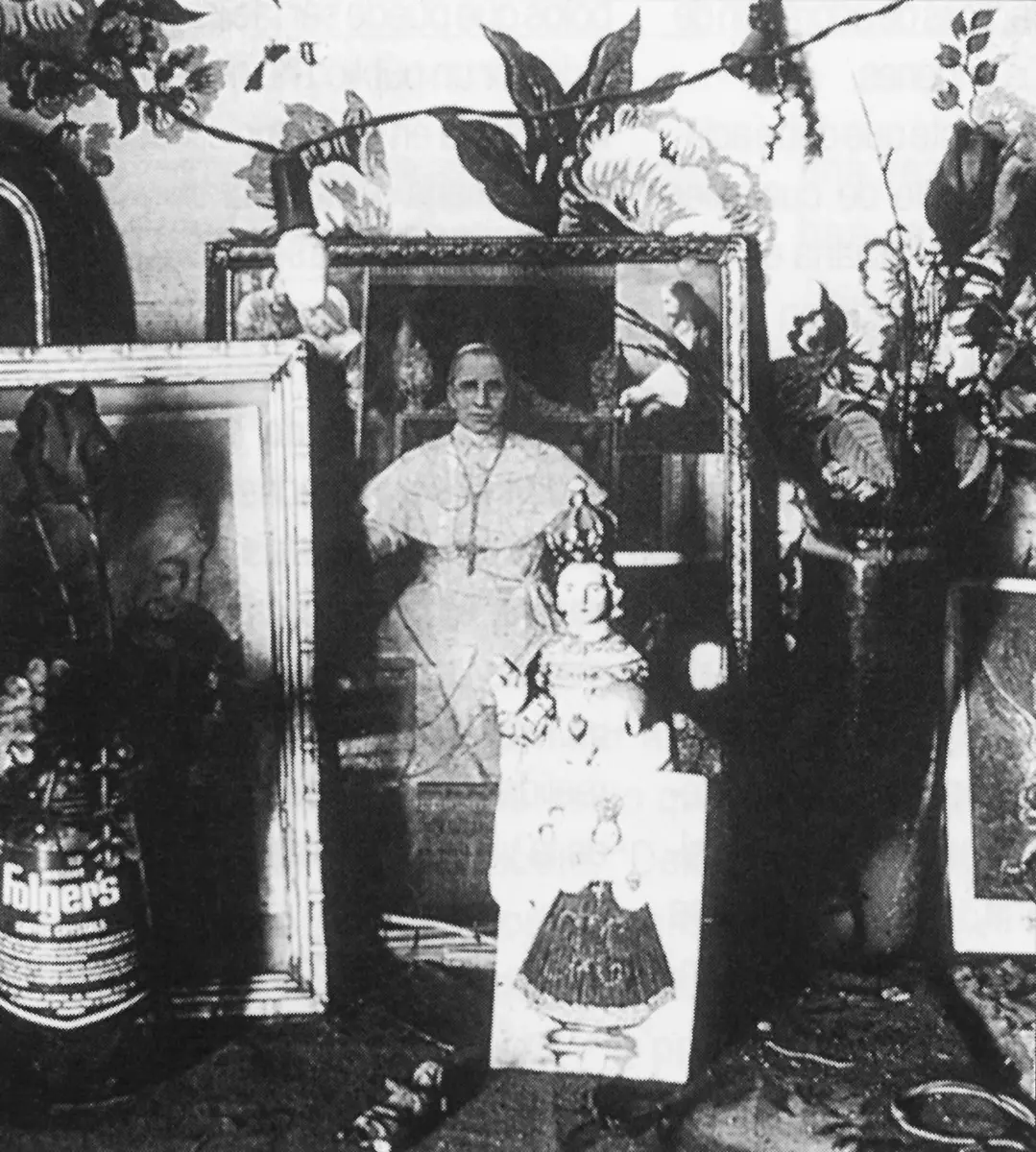
Despite the similarities connecting work in the show, each section offered its own coherent vision. The Mexican segment focused on cultural identity and the stereotypes that often accompany encounters with Anglo-Americans. Annie Loóez used snapshot-quality images of men in sombreros and housewives printed in cyanotype, one of the oldest photographic mediums, to express the outdated nature of cultural stereotypes. A second artist, Celia Álvarez Muñoz, combined text, and images in a pair of room-sized photo murals. In the Limit, she combined family stories of border-crossings by train, bits of traditional lore, and photographs of trains made from abandoned cans, sticks, and dirt. The toys and the text reflect the realities of poverty enriched by tremendous creativity.
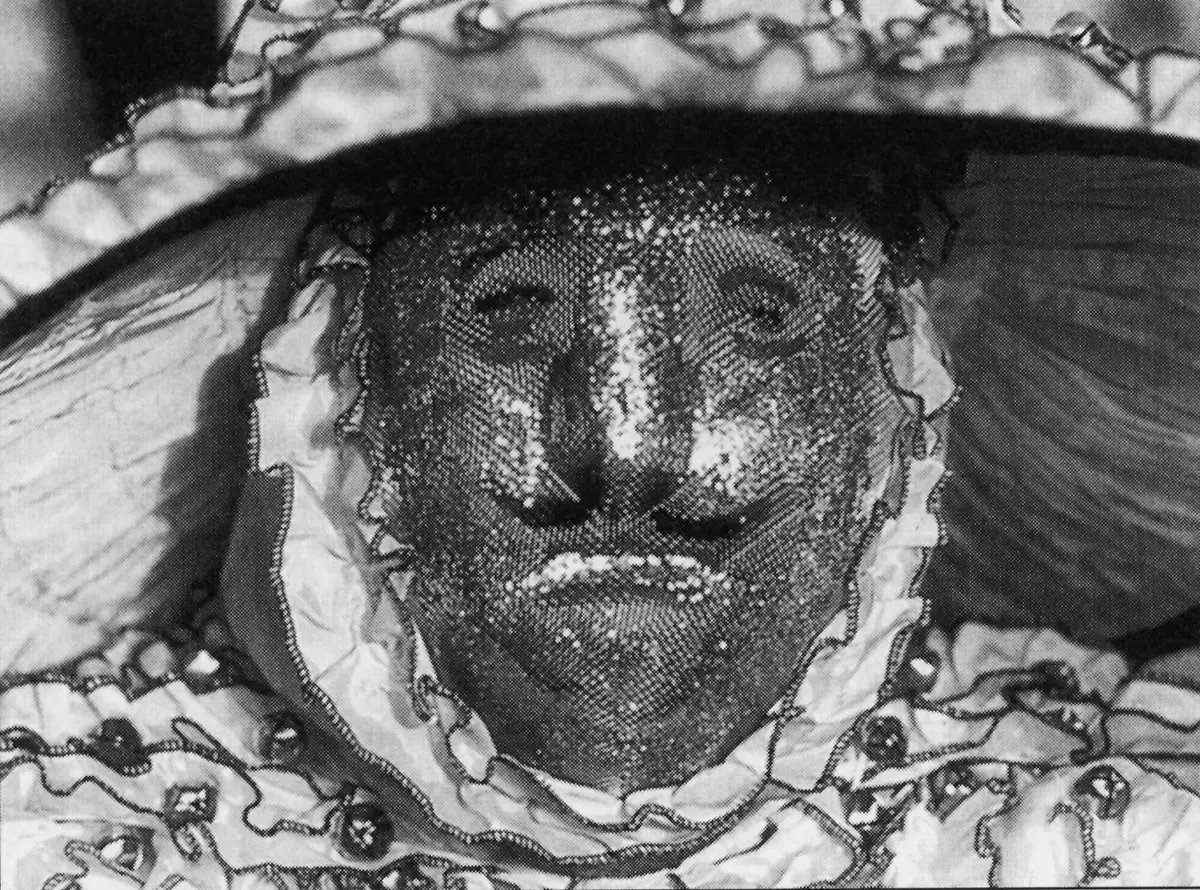
The Puerto Rican section centered around the island's strong links to the New York art scene and mainland culture. The segment opens with works from 1941 by Jack Delano, whose work is just as defining, and as hauntingly beautiful, like that of any of the era's socially committed photographers. Delano's presence here also emphasizes the difficulty in drawing neat definitions around ethnicity. This challenge sometimes produces tremendous results. The conceptual work of Adal, for example, may date from the mid- 1970s, but still appears fresh and vibrant. Puerto Rico also produced the show’s strongest color photographers. Rafael Ramírez is represented by a group of street scenes capturing the subtle interplay of pastel architecture and tropical foliage. The dramatic costumes and masks of popular Caribbean festivals in Héctor Méndez-Caratini’s Mascaradas (Masquerade) series provide a startling contrast. He sets the colors of the festival against equally strong backgrounds—vivid blue skies, peeling white walls—to maximize the fully saturated reds, greens, and yellows of the costumed revelers.
Curator Ricardo Viera took a much broader and more adventurous definition of photography in developing the Cuba section. María Martínez-Cañas took considerable liberties with purist approaches in her geometric abstractions based on 15 Sellos Cubanos (15 Cuban Stamps). Most daring of all were the works by Arturo Curra, who uses photography as a point of departure for his installations like Luz, Fuego, Camino (Light, Fire, Way). Photography has clearly influenced the way he approaches his art, but the works he creates are not photographs. They reflect a different role for photography in its often-stormy interchanges with the traditional arts.
Still, the show’s most memorable work sprung directly from the photographic imperatives. Mexican American Don Gregorio Antón used multi-layered negatives in works like Dígame (Tell Me), which merged a man's profile with a dark wall of ancient petroglyphs, to produce a being that, for all its earthly qualities, is more spirit, than the body. The blurred circle of light that covers the figure in Fase de la luna (Phase of the Moon) may have come from fire, from paint, or from darkroom manipulation. However, it was created, Antón's contemporary reference to traditional healing ceremonies transcends ethnicity to beat witness to the tremendous spiritual and physical consequences of the twentieth century’s loss of faith. Though based firmly on photographic principles, Antón’s work reminds the viewer that the medium is not necessarily the message. The vision of the messenger remains central to the success or failure of expression in any medium.
K. MITCHELL SNOW