
The major retrospective exhibition of work by Antonio Berni (1905-1981) held at the Museo Nacional de Bellas Artes achieved an impact that went well beyond the expectations of its organizers, exceeding even that of the mythical exhibition From Cezanne to Miró of the 1960s or the more recent Chagall exhibition in 1989. The more than seven thousand visitors per day provided ample food for thought about this rather unusual kind of event in the world of the plastic arts in general, and for an Argentinean artist in particular.
To attribute this success to only the publicity campaign and the fact that the show was highlighted on the front page of the country’s largest-circulation newspaper is not enough. There was also the attention generated by news of the $800,000 price paid for the picture titled Unemployed (1934), as well as the success of the exhibition, held two years ago in Madrid, and the praise bestowed on Berni’s work in the traveling show of Latin American Artists of the 20th Century, organized by Waldo Rasmussen.
But even these precedents cannot adequately explain why so many people of such different ages and from very different social backgrounds felt compelled to comment on these unconventional works that transgress academic language.
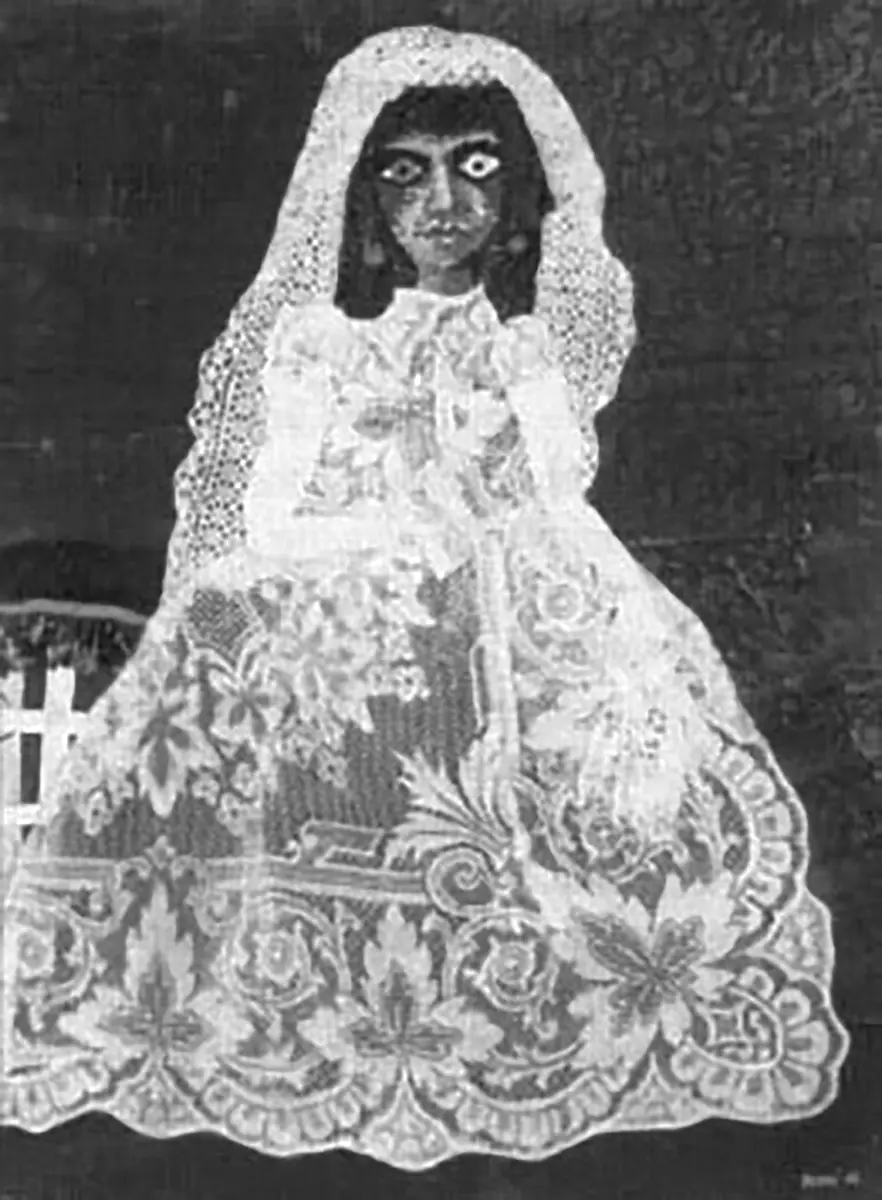
Ten years ago, when Berni’s works from the 1960s, collages or relief prints, were exhibited, the artist had little commercial success, as he himself recounted some twenty years later. It is worth looking into this change in taste by the public and, by collectors. It is a subject that is more a matter of psychological analysis than aesthetic-formal speculation.
What is undeniable is the fact that the ideological unity of Berni's artistic development can provide a basis for examining the different levels of analysis that have resulted in a coming together of the collective imagination and the artistic world created by Antonio Berni.
The show was made up of around 140 works, including oils, prints, sculptural objects, and installation, and a tapestry piece, ranging from a 1921 oil work, The Shed, to Berni's last pieces before his death in 1981.
The works from different periods through six decades of artistic production have to be set within a context that includes not only references to contemporary aesthetic and artistic movements but to political and social events at the national and international levels since Berni was a broad-based humanist who was fully committed to his time. Perhaps this is one of the factors that has contributed to his rediscovery by the public. It is this vital, and at the same time, ethical commitment that he has integrated into his artistic discourse to create an image that makes him representative of the art of Argentina and Latin America.
Of the works from his early years and formative period, mention should be made of his impressionistic landscapes, such as Álamos, an oil from 1922, or The Yellow Tablecloth (1927), a work done during his residence in Paris that brings together different proposals inspired by Cézanne. The next stage was dominated by a group of I3 surrealist works, of which two, Susanna and the Old Man (a collage from 1931) and Death waits on every corner (1932), was particularly interesting. 1928 was the year of Breton's Surrealism in Painting and Bunuel and Dalí's Perro Andaluz. Berni participated actively in the group. This was also the time of the major De Chirico retrospective in the City of Light which was to have a great influence on Berni's work.
The arrival in Buenos Aires of David A. Siqueiros in 1933, coupled with the growth of new realism and its fight against national socialism led to transformations in Berni’s projects, as can be seen from Demonstration and Unemployed, two large-format works done in tempera on sackcloth (1934). These works marked the incorporation of everyday elements seen from a political standpoint which would become a constant feature in his most important work. But although Berni abandoned oneiric figuration, his artistic production continued to include surrealist elements, as seen in The Siesta, an oil from 1943, or The Promised World of Juanito, a mixed media and collage work from 1962, as well as The Dead Correa, an oil and collage work from 1971.
In a separate space, the show presented the large ink works and woodcuts that earned Berni his prize at the 1962 Venice Biennial, a tapestry work reproducing one of his well-known prints from the early 1960s, and a good selection of his relief collages. These latter works are good examples of his capacity for innovation as they abandon the traditional orthodox practice of printmaking. The Reading, a relief from 1977, comprises two levels of narrative and breaks up the traditional representational space into other characteristics.
Perhaps one of the works that attracted the most attention among young visitors was the installation/environment entitled The Dead Correa, made and originally exhibited in 1976 as part of the show, Beliefs and Superstitions of All Time at the Carmen Waugh Gallery.
In conclusion, this retrospective of work by Antonio Berni not only reaffirmed his artistic qualities, which have always been appreciated by specialists but revealed the now popular nature of his name and style.
ALBERTO COLLAZO