
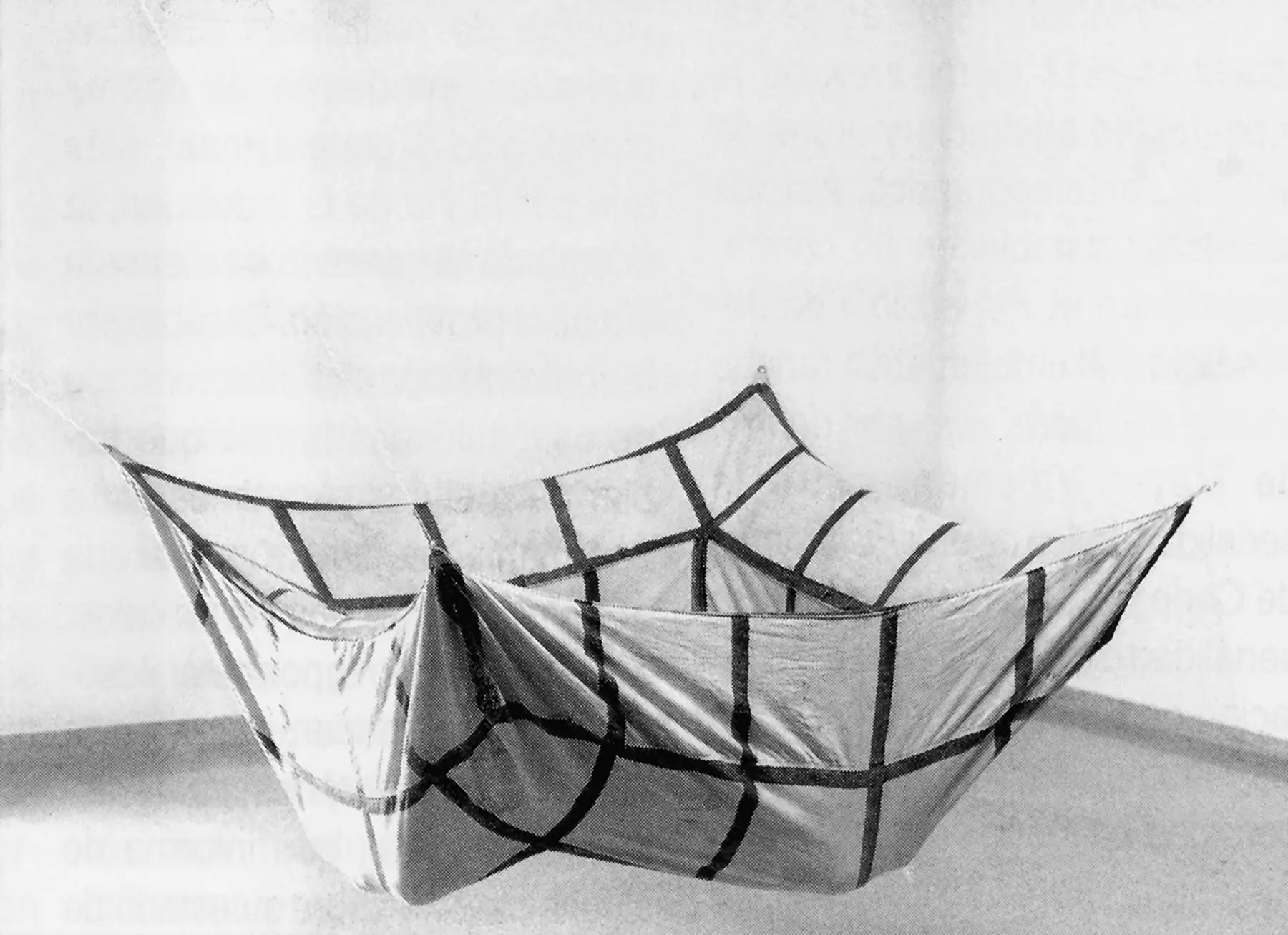
Between the months of April and August of this year, the Galería de Arte Nacional presented an exhibition titled The Invention of Continuity, which offered an approach to the history of artistic contemporaneity in Venezuela. The curatorial proposal, by Luis Enrique Pérez Oramas and Ariel Jiménez, filled all the exhibition space of the institution. The selection included works by some of the artists of the School of Caracas and champions of modernity, seen as parameters of transgression or as fundamental references for the re-elaboration of certain invariable which have persisted in some of the subsequent developments of contemporary Venezuelan art.
The historical approximations to this segment of art are generally problematic since as Pérez Oramas himself points out, too much closeness in time makes it difficult to obtain a sufficiently dispassionate perspective on events. Given the vast range of objects of study, the curators opted for a selected version of such totality and reality, focusing on some of the threads which were woven into the fabric of this show and the subsequent hypotheses presented in the various rooms. The construction of meaning requires a relentless selection, making it necessary to eliminate works and events (including decades of production) to avoid possible digressions in meaning or opaque signals revealing the limitations of the hypothesis. The museographical strategy, the support of which is of capital importance and an essential component of contemporary art, endeavored to neutralize the differential coefficient between the resulting works and reduce any possible context —an operation that restores the materials to a kind of continuity in time. Pérez Oramas, the author of the text in the publication which accompanied the exhibition, pointed out: "Our vision is not encyclopedic, and neither is it pluralistic. It is selective. It is hypothetical. It is conjectural and based on conviction." It was also a fiction, "a constructed truth", which was structured into three major moments: I) Contemporary paths; 2) The invention of continuity; and 3) Crosscurrents and perspectives.
Contemporary paths
Contemporaneity, a critical and endemically mobile period, lacks any precise frontiers for obvious reasons. However, Pérez Oramas and Jiminez locate it —tentatively— around the initial limits of the 1970s. This first “moment" of the exhibition was presented in the first four rooms.
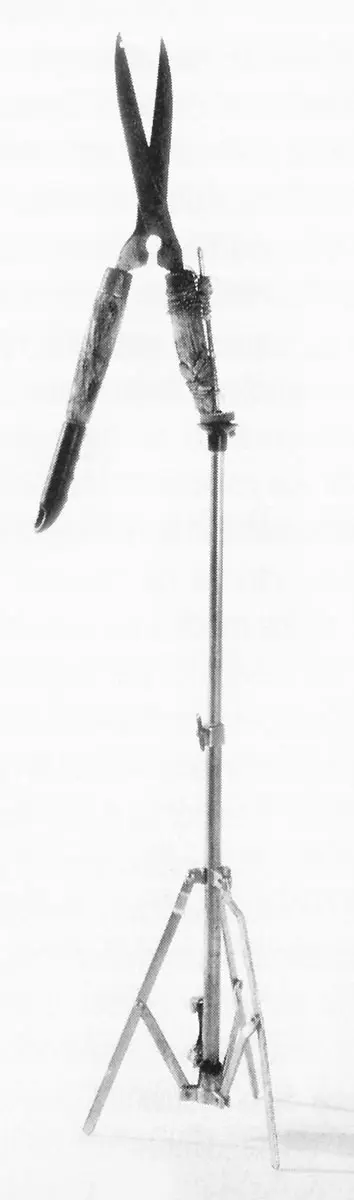
Works by Eugenio Espinoza, Víctor Lucena, Antonieta Sosa, Claudio Perna, Héctor Fuenmayor, Diego Barboza, Sigfredo Chacón and Roland Peña establish a break with the hegemony of kineticism. Although most of these artists come from the constructivist current, and abstraction continues to be the mode through which they develop their respective works, they establish a deliberate and intense distance vis-a-vis the projects of kineticism, in the work of Espinoza, whose development has since that time substantially enriched Venezuelan art. The international influence of minimalism and conceptualism is in this respect fundamental and generates a climate of reflection on the very principles of art. The precious and finished structures of kineticism are countered by works that range from the deformation of structure to the understanding of a work as a process, the very development of which is in some cases as important as or more important than the work itself. This revolt is also directed against the places which serve as the setting for the ritual of art. Either the urban context with its industrial aesthetics invades the museums and galleries, or art destroys the jetties separating it from the outside world so that it flows, like a process, into the street, and through the landscape. The works of Claudio Perna, which also reflect this atmosphere of liberating euphoria, have a more heterodox genealogy. Haute Couture, an ironic surrealistic assemblage done by Perna around 1969, acquired a prophetic dimension since for this group of artists kineticism had become merely an art of dressmaking, a decadent exercise in the tailor’s trade. But the rebellion was permanent within the confines of art. On the other hand, the stupendous allegories of Roland Peña included in the show reveal a sarcastic link with the social reality of the country, more in keeping with the conceptual strategies of contemporary art.
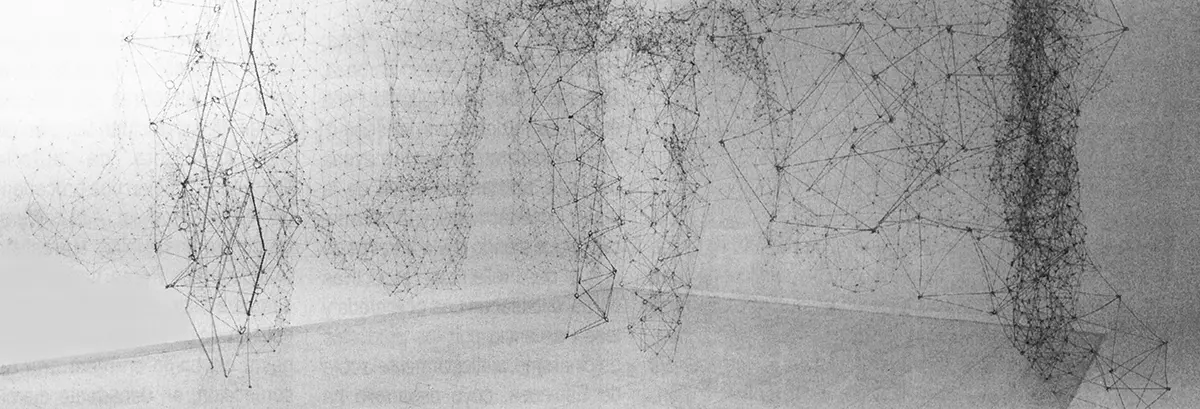
The two following rooms paid a well-deserved homage to the extraordinary work of Gego, who became a link between generations of artists, between the constructivist tradition and the new developments in art. The enveloping organic warmth of her structures and the stark simplicity of her final works constructed with recycled waste materials distinguish them diametrically from the cold and sumptuous beauty of the kinetic works. Her production has been a source that in one way or another has benefited several generations.
The invention of continuity
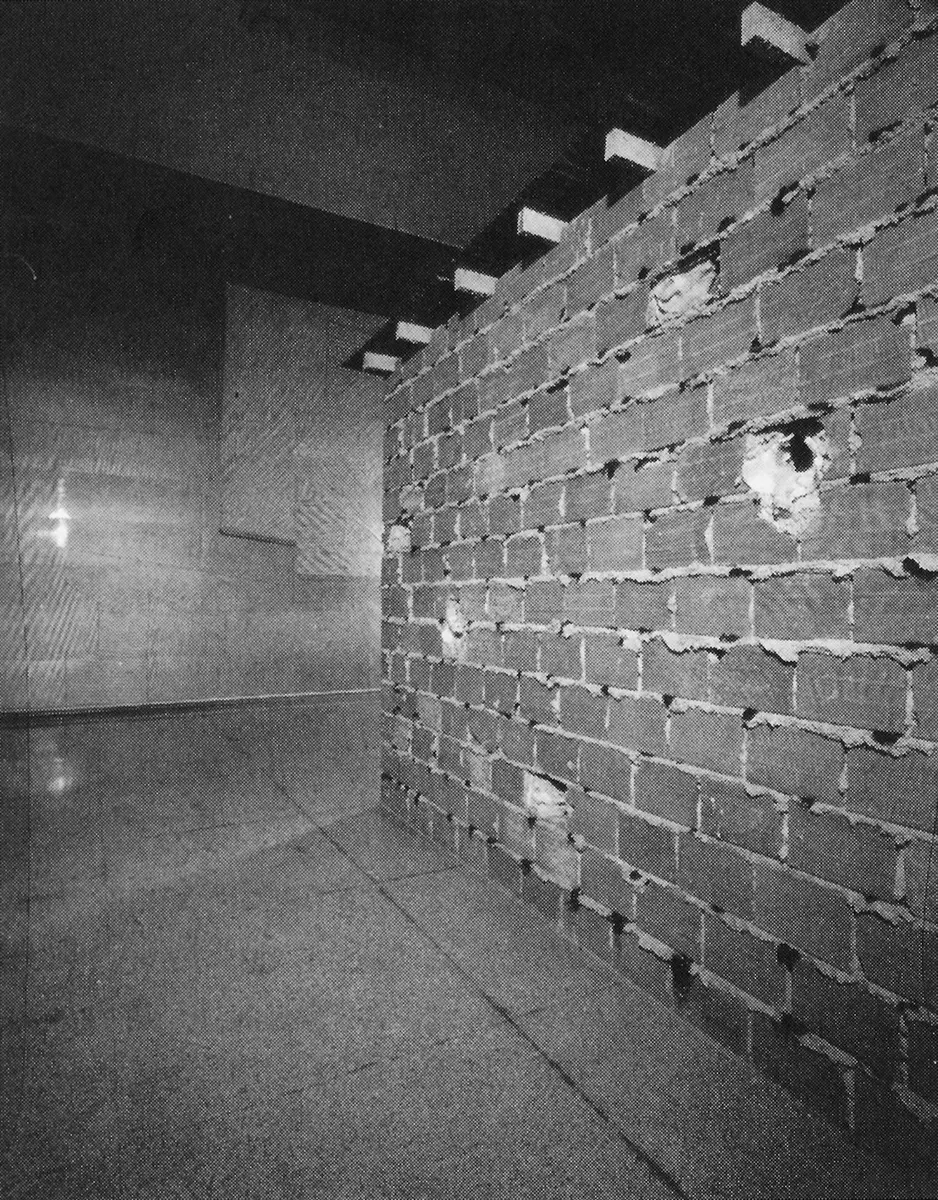
The "discourse" of this second "moment" in the show was based, firstly, on the confrontation of works by the most exemplary masters of abstract modernity and works by contemporary artists. Thus the curators established a counterpoint between the Penetrable of Jesús Soto and the emblematic hut of Meyer Vaisman Green on the outside, red on the inside, between the optical seriality of one of Carlos Cruz-Díez’s Fisicrormias and the funeral seriality of Sick Rose, an installation by Roberto Obregón; between the first works of Venezuelan pictorial modernity by Alejandro Otero, such as Skull (from his paradigmatic series titled Coffee pots) and Colored Lines, with paintings by Juan Iribarren. The aim of the curators was to reveal meaning through a sense of shock and the almost violent juxtaposition of different aesthetic realities, through the breaking up of chronology and generations. Rather than through induction, the search for meaning was undertaken through provocation. Except for the pictorial confrontation, it would be more apt to speak of rupture than continuity. There was thus a Manichean mise en scene which allegorized the two Venezuelas: that which reflects the illusory modern project and the other, the contemporary version, apparently more real, which in a sense informs us about its state of decomposition. In each case, the formal strategies seemed to be organized around this polarized model: the former as utopic totalities, perfect, brilliant, and distant, and the latter, through fragmentation, impure juxtaposition, hybridity. In the former, the reality is exiled (or absolutely invented), in the latter, it is nurtured by its own waste products.
However, this version which shows the kinetic artists as the "bad guys" since they refused to see the reality of the country, is rather debatable. In both cases, the works are a response to various time-related conditions, as well as to major, and very varied, foreign influences. This aspect, therefore, requires a much more profound analysis, not only of the individual poetics but of the social and political structures through which the artistic production is materialized. Despite its supposed social vocation and its anthropological character, contemporary art has become a favorite amongst collectors and now dominates the main and selective showcases of museums and galleries, as well as the mass media and in the market. The supposed communities to whom it alludes remain permanently outside its circuit. Contemporary art, an exercise in representation through the problematic (and sometimes frivolous) formal combination of "fragments of reality" (social, cultural, etc.) has become, through the logic of the cultural industry, an icon of difference and otherness: it is, therefore, the star of the moment. Of course, it is as hegemonic as kinetic art was in its own time. At all events, everyone makes use of the specific conditions to which they have been subjecting, and thus reap their benefits, as well as their calamities. Without any doubt, some of the kinetic production has significantly enriched our history.
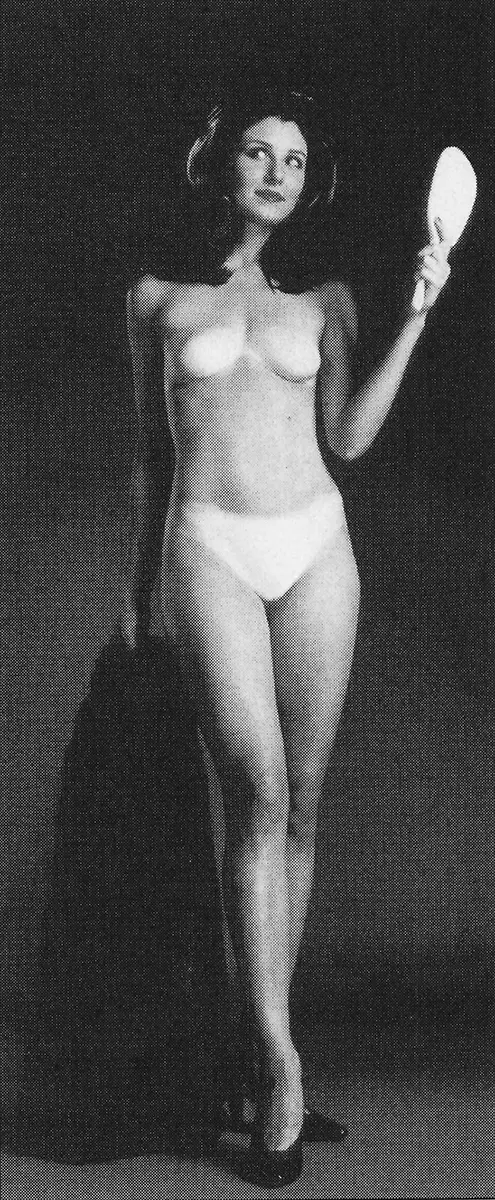
Through very few works, The Invention of Continuity then proposed a hypothetical review of certain approaches in Venezuelan art to the theme of the human being as an object (and subject) of representation. Thus Armando Reverón, Alfredo Boulton, Jose Gabriel Fernandez, Óscar Machado and Antonio Aziz + Sammy Cucher were represented in room No. 7. However, the small number of examples and the lack of resonance and echo between the works on the show made the selection seem a random exercise. In this case, it was clear that the works of the artists were being used as "support forces" for the construction of an installation, a curatorial version of the body. And of course, this representation must be adjusted to the conventional parameters of international contemporary art. Otherwise, we could not explain, for example, the exclusion of important pictorial and photographic works in this section. Is it that an anthropological kind of' art opposed to a supposed formalist aesthetic is being summoned up by an even more formalist, more purist gaze? Whatever the case may be, the established concepts of the grotesque, monstrous, deformed, mutant, hybrid, even the ritual, are making up a stereotyped gaze that does not allow the anatomy of this human body to be traced out.
Finally, The Invention of Continuity examined the theme of landscape and its history of a constant presence in Venezuelan art. From the formal landscape art of Pedro Ángel González, with works from the period 1939-1957, and whose forced museographical montage transformed the comfortable and subdued vision of Ávila, his gaze, into a serial sequence, to the expression of landscape not in terms of achromatic and natural spectacle unfolding before the eyes, but as the process of a fragmented, urban experience, in the diapositive based installation (1965-1999) by Antionieta Sosa: a heart-rending journey in time through the viscera of the constructed and destructed space of the city. First Chronicle of a Landscape, a sequence of black and white photographic contacts (1975), by Roberto Obregón, appears to be a synthesis of both approaches. The landscape is no longer a monumental icon, but a minuscule sequential image, not a sentimental projection, but an objective and scientific annotation, the successive temporal register of the phenomenological accidents of landscape, not an immutable truth, but a changing process.
Cross-currents and perspectives
This was the final segment of the show, which focused on the works of younger artists: Dulce Gomez, Luis Romero, Diana López, Alí González, Juan Araújo, Magdalena Fernández, Luis Molina-Pantin, Franco Contreras, Mauricio Lupini, Myleen Gutiérrez and Alessandro Balteo. It was a tight and at the same time atomized body of proposals which offered a diffuse view of such aspects as the survival of formal problems linked to modernity and the changing condition of the artist seen almost as an anthropologist or social scientist, analyzing the conditions of art in its collective expressions.
As a project and experiment, The Invention of Continuity offered a new and, in the context of Venezuelan museology, daring opening. Far from the hackneyed genealogical or thematic reconstructions used for presenting history, the show dismembered it, broke it up into pieces, and reconstructed the fragments into a meaning, inventing a continuity through a bare juxtaposition of works and periods. We are witnessing the dominion of the constructed truth of the museum, but in no way is this a construction closed in upon itself. From the perspective of The Invention of Continuity, contemporary Venezuelan art is an island that hypothetically thrives on its own products, its own waste materials. However, we should not forget that the international art circuits and their strategies, the traffic of successive fashions and influences, are constantly redrawing local maps. And in this sense, The Invention of Continuity was a castle made of cards. We understand that for the purposes of the analysis and for the construction of consideration of contemporary Venezuelan art, the elimination of such a context, or its tacit consideration, obliges the analyst to adopt a more frontal approach to the subject under study, without the risk of losing focus through the genealogical construction of possible outside influences. But we should also note here the potential fear that such a confrontation might result in the restructuring of the project, that the subject under study might be devoured by the paradigms of international contemporary art, with its status barely achieving the value of some residual Western culture.
The selection process is always biased and problematic. It is subjective, but it must also be rigorously backed up by my argument. What happened to all the paintings produced in the 1980s and at the beginning of the 1990s? What has happened to photography in this process? How has each function in the light of the hypotheses? Why was this question seems not raised in the exhibition rooms? What conceptual guidelines led to its exclusion? Are these works too not part of our contemporary art?
ELÍSEO SIERRA