
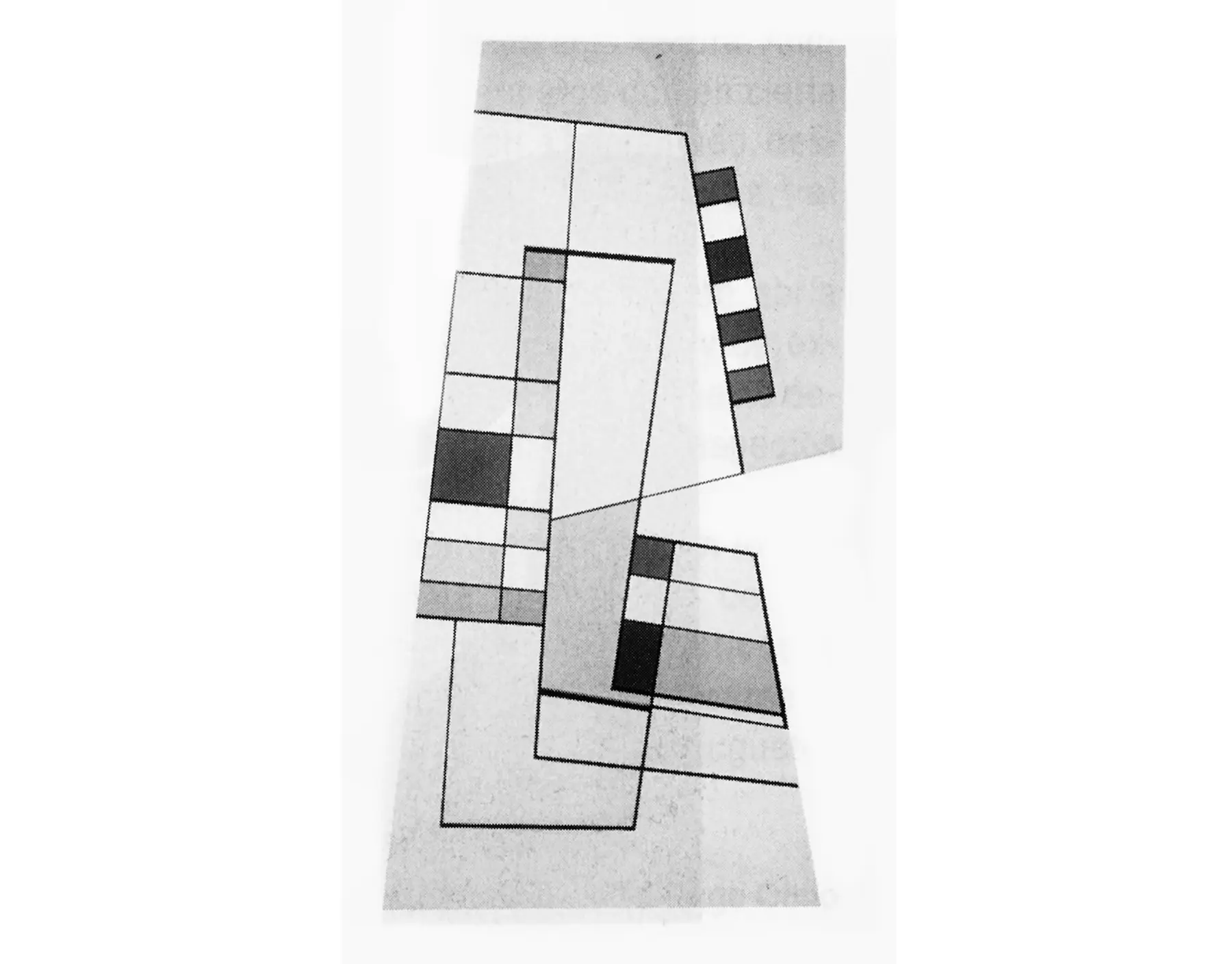
Fifty years after the birth of Madí Art as an artistic movement, the Museo Nacional Centro de Arte Reina Sofía in Madrid recently presented a wide-ranging exhibition on the subject, with Maria Lluïsa Borràs as commissary, which will subsequently travel on to the Museo Extremeño e Iberoamericano in Badajoz, Spain.
The show seems to have set itself the objective of constructing as complete a map as possible of the historical development of a movement that was never linear, and which was often characterized by the difficulties and complexities of a labyrinth. This was highlighted in the catalog, which gathers a large amount of documentation, reproducing the theoretical texts and various manifestoes which were a constant feature of the artistic production. In this sense, the work carried out has the merit of being a solid attempt to systematize a history marked by confusion and polemic between its founding members.
The show is divided into three main sections: the first part examines the origins of Madí, offering a historical overview of the turbulent beginnings of the movement throughout the 1940s in Buenos Aires; the second section provides a broad panorama of the subsequent development of the different groups which were established and which emerged in various countries of the Americas (Southern Cone and the Caribbean) and in Paris; the third section gives a general picture of the international topicality of Madí principles, including the works produced throughout this half-century which reveal the individual developments of the various artists making up each of its groups.
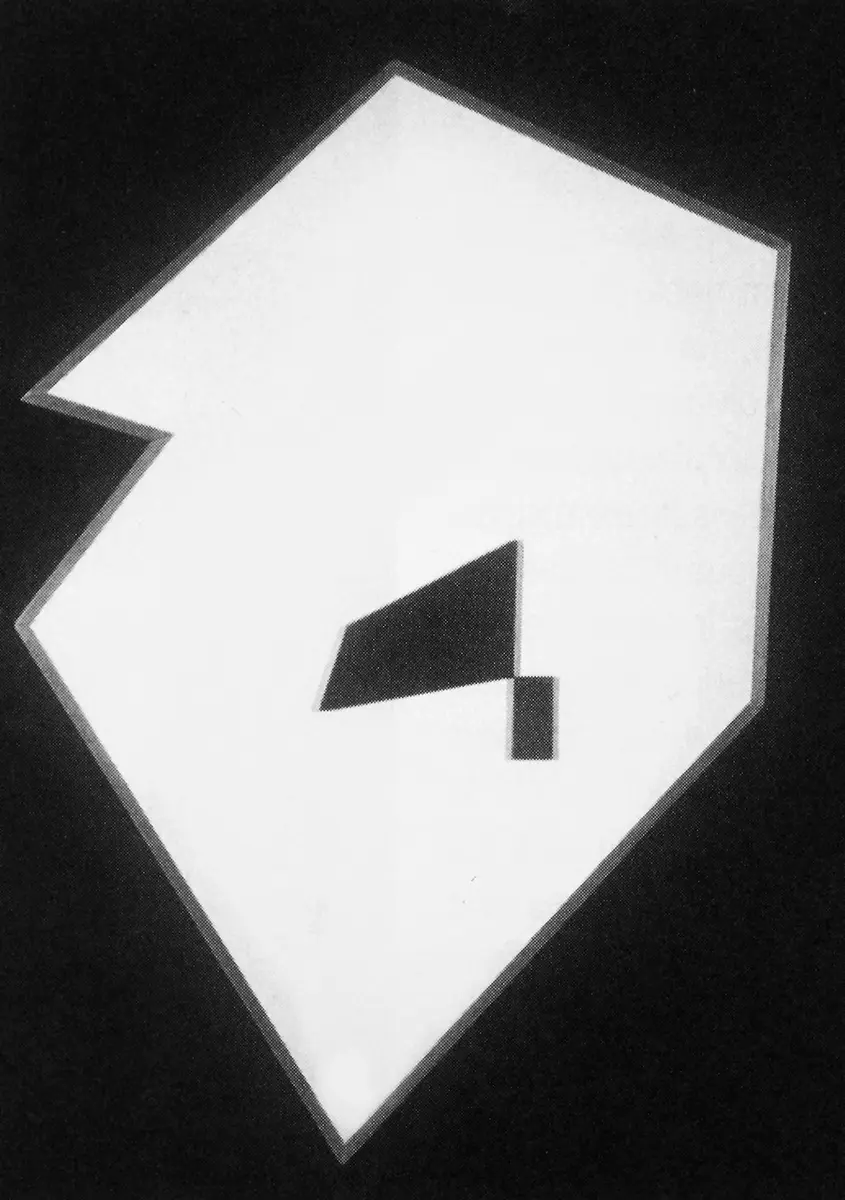
It is without a doubt this section that raises doubts as we review the current relevance of Madí. While on the one hand, it would be logical to exhibit recent works from the main artists concerned in the founding and development of the movement, it is difficult to accept the inclusion in this section of artists who only from the standpoint of vague formal criteria would appear to comply with the Madí principles. However, such a situation seems to have been encouraged by the expansive history of the group itself (in which there was something of the apostolic spirit of conversion, as well as a tendency towards syncretic integration, almost like that Fluxus towards the end), ever ready to perpetuate itself beyond the historical framework appropriate for a group with these characteristics.
It should be noted that almost simultaneously, the Charpa Gallery in Valencia inaugurated an exhibition titled Madí which included work by some of its most relevant artists, such as Carmelo Arden Quin, Bolívar, Joel Froment, Sato Satoru, and André Stenpfel, and last spring the Arte y Tecnologia Foundation in Madrid held an individual show of work by Carmelo Arden Quin.
These exhibitions are a source of systematic knowledge and provide a critical perspective for the movement and for one of its main proponents, Arden Quin.
Madí emerged in Buenos Aires under the influence, on the one hand, of the young Uruguayan artists Carmelo Arden Quin and Rothfuss and the theoretical legacy of Torres-García, who returned to Uruguay in 1934 from Europe as one of the prestigious figures of the European avant-garde, and on the other, the beginnings of the geometrical abstraction movement which was converging in Paris around the group of the Abstraction Creation magazine, under the impetus of Van Doesburg, and in which Vantongerloo, Herbin, Kupka, and Arp, amongst others, participated very actively.
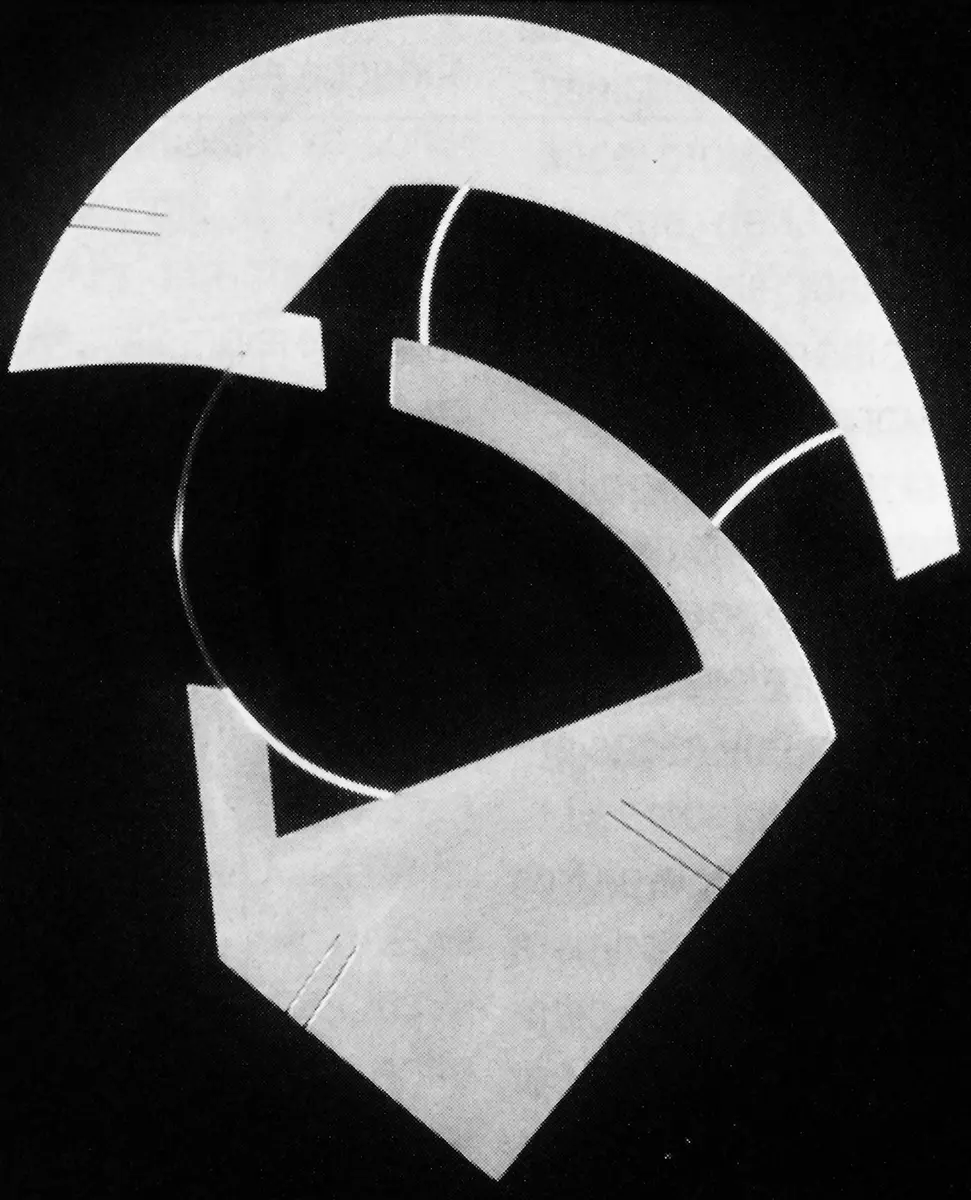
Arden Quin and Roth fuss established contact with Gyula Kosice, the poet Edgar Bayle and his brother Tomas Maldonado, and published a single issue of the magazine Arturo in 1944, a project to which they wished to associate leading figures of the Latin American avant-garde, including Vicente Huidobro, the Brazilian Murilo Mendes, Vieira da Silva from Portugal, who had settled in Brazil, and Torres-García himself.
In 1945, the first exhibition of the Arte Concreto Invención movement was held in the house of the psychoanalyst Enrique Pichon Riviere, followed a few months later by a second exhibition in the house of the photographer Grete Stern.
This was to be the embryo of what would in 1946 become Madí, organized around Arden Quin, Kosice, and Rothfuss. From an artistic point of view, the main formal problem to be addressed was the form of the frame and how the painting could be extended over space by the adoption in each specific case of an individualized and specific form: this resulted in the liquidation of the orthogonal picture and the proposal of a cut-out frame a random and aleatory frame which would be able to configure a form and constantly different edges, according to the geometrical intentions of the painting itself.
Tomás Maldonado moved away from the group, even before being a member, since they did not consider this problem relevant and felt closer to the ideas being developed in Europe by concrete art, rather than to Torres-García. The magazine Arte Concreto which he promoted, and which gathered together the members of the Arte Concreto Invención, published in its first issue of 1946 the Inventionist Manifesto of Arden Quin of the same year. Tomás Maldonado left Argentina and settled in Germany in 1948, where he was to work with Max Bill in Ulm, and eventually became director of the Hochschule für Gestaltung, which continued the work of the Bauhaus and became the driving force of concrete art.
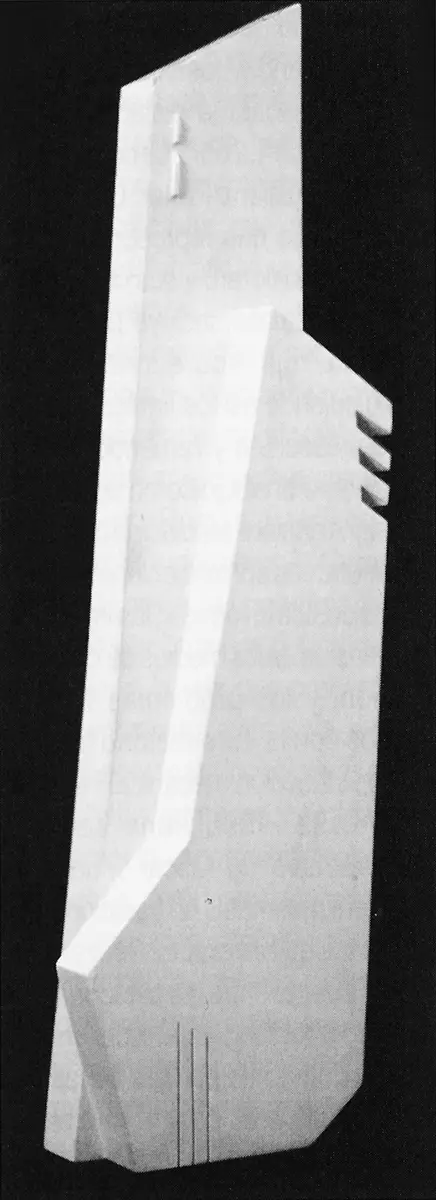
In 1947, the magazine Art Madí appeared, of which eight issues were published up to 1954, but in that same year, Lozza left the group and established “Perceptism”, with its own publication of the same name. In the same way, Arden Quin and Martin Blaszko broke with Gyula Kosice and Rothfuss.
In 1948 Kosice spearheaded the participation of Madí in the Salon des Realtiés Nouvelles in Paris, the successor of the Association Abstraction Création, and which showcased the most novel proposals in abstraction at the international level. The impact of Madí was extraordinary, especially its freshness and the formal renovation that it brought. Arden Quin settled in Paris that same year and from then on promoted the Madí proposals in France, from a collective studio in the rue Rondeaux which housed several different activities, exhibitions, debates, and conferences, generating a considerable influence which has rarely been acknowledged. Madí thus began to expand and take on the characteristics of associated and inter-related national groups, but also very syncretic sectarian tones of fidelity to relatively strict principles, but which were sometimes so vague that almost anyone who came close to the foundation postulates could join. In 1992 Arden Quin established the International Madí Association.
What is important about Madí is the avant-garde and modern break which is meant for the artistic climate in the River Plate area, renovating and going well beyond (perhaps in another more imaginative and less academic direction, distant from indigenous mand the more orthodox constructive proposals) the legacy of Torres-García. Madí inaugurated experimentalism and constituted an authentic and specifically Latin American avant-garde creative adventure, rather like an original interpretation of the modern from the geometric. But its influence was not limited to a relatively local area between Buenos Aires and Uruguay (Montevideo and Colonia); apart from the work developed in Cuba by Sandú Darié Laver, it represented anticipation which to some extent prepared the ground for the development of the Brazilian concrete movement in the 1950s, and with its experimental- isms facilitated the emergence of geometrical, optical, and kinetic proposals in Venezuela in the 1960s. Neither should we forget the renovation implicit in the sculptures of Kosice which in the line of Moholy-Nagy, proposed rotation and articulation, or luminous elements through the use of neon gas tubes, as well as the principles of hydrokinetics.
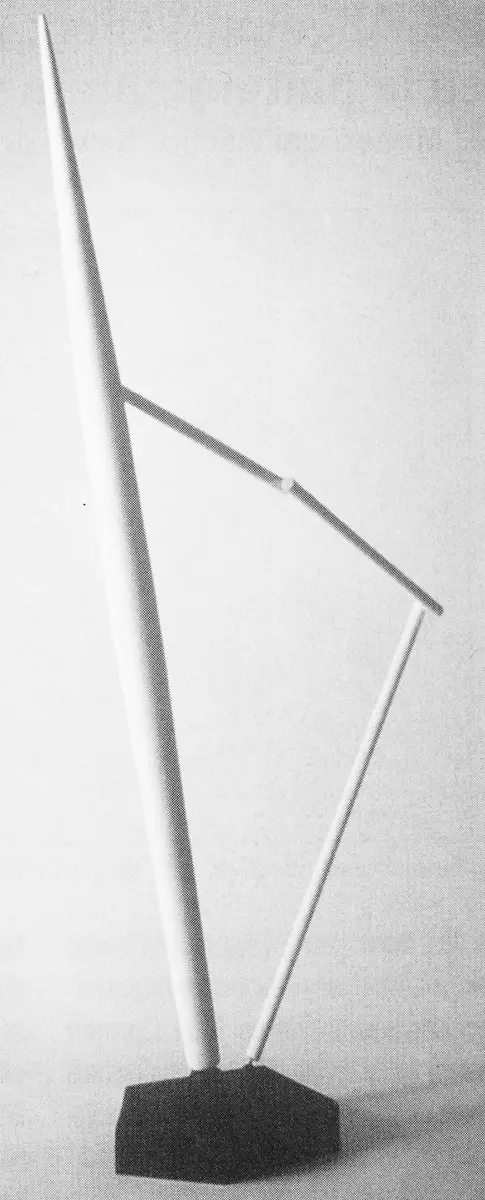
In addition, the ideas implicitly proposed by Madí concerning a change in perception and sensibility which geometrical abstraction was to contribute to the development of the idea of modernity and progress, including at the social level, were to appear even more energetically in the Brazilian concrete movement, within a more favorable economic, political and social context, without a doubt under the impetus of the revolutionary and transformational effects of modern architecture of the Le Corbusier kind and the impact of the legacy of the Bauhaus directly due to Max Bill in Brazil.
A reconsideration of Madí Art, independently of its subsequent evolution in the 1960s, which suffered the consequences of developments which if not academic in the strict sense of the term were epigonal and even bordered on decorative repetition, should lead to a re-reading of the recent history of the avant-garde movements in the Americas. Critics have already taken up this line of thought, such as the Brazilian Federico Morais, director of the forthcoming First Mercosul Biennial in Porto Alegre, whose expositional intentions seem to follow this direction, or Maria Luïsa Borràs herself, the commissary of this Madí exhibition.
Madí —and this is also true of the Brazilian concrete movement— is not just a peripheral epigone of the European avant-garde adventure, characterized by manifestoes, magazines, and fragmented groups, but an original movement which had a renovating effect at the local level and acted as a forerunner of international developments. Let us remember that what the North American critics called the shaped canvas in speaking of the work of Frank Stella in the 1950s, had already been defined in Buenos Aires by the Madí artists one decade before as the "cut out the frame", and that the use of the hard edge was in fact a continuation of the articulated planes of color ("coplanes") of Madí, which were an interpretation and re-reading of neoplasticism and concrete straight edges. Evidently, the break in the scale of the easel and the drawing-room picture constitutes in terms of its precedents the contribution of North American painting as regards mise en scene, through the introduction in painting of a dimension of perceptive corporeality, along with excellence in the finish. Although this was something which in a sense had already been anticipated, from other perspectives, by Mexican muralism.
Madí Art also brought freedom of color and rationalist expression which did not wish to renounce the use of ludic elements. It is precisely in this ludic aspect where it once again moves away from its neoplasticism and concrete precedents, drawing closer to Torres-García and his wooden toys.
SANTIAGO B. OLMO