
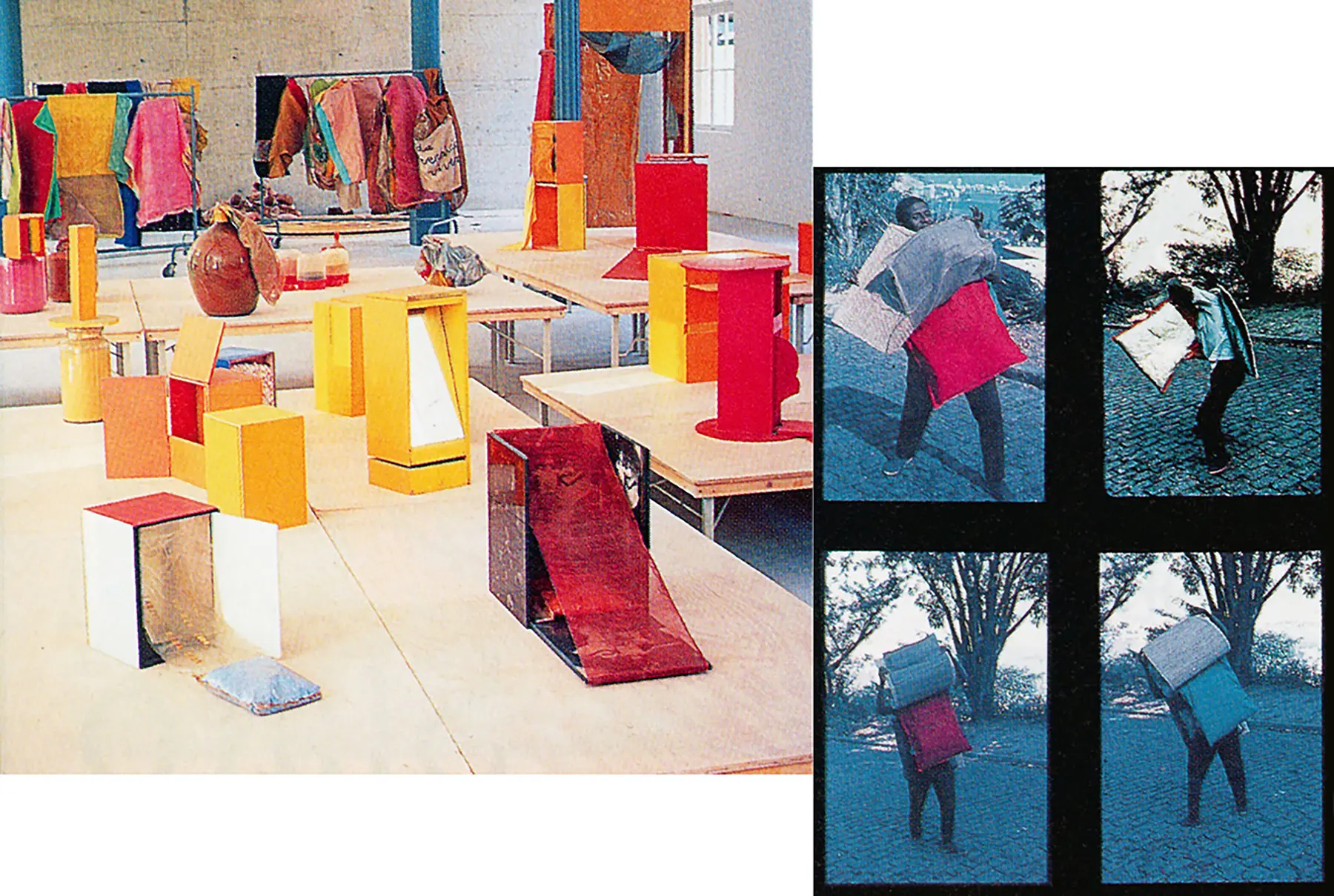
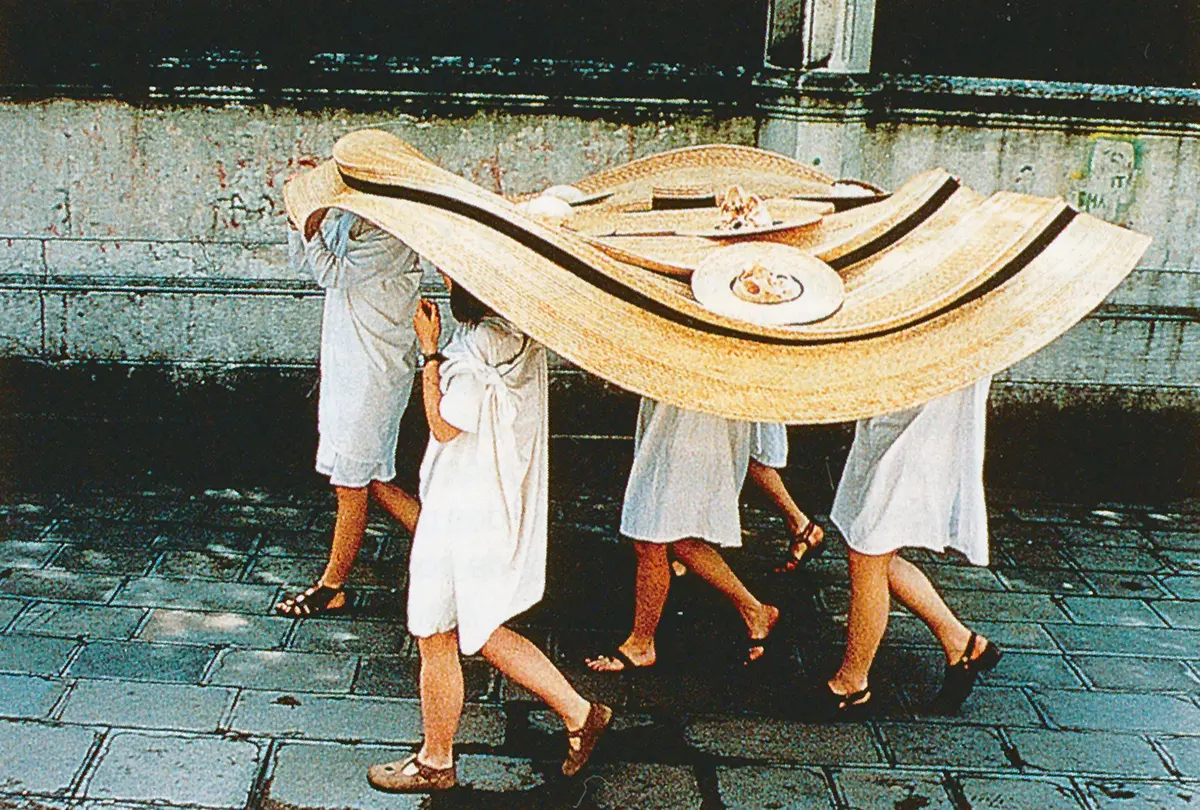
Much has been said about the spectacularization of the arts and their smooth convergence with the culture industry. Indeed, the marketing strategies that they share and their claim to comprehensiveness, accessibility, and variety are some of the factors that have been argued against the structure of the mega-show. It is in opposition to the latter that Documenta X posited itself. Thus, more than a survey of contemporary art, Documenta discursively constituted itself as a "cultural event" imbued with the political aspirations that characterized postwar neo- avantgarde practices. Indeed, sixties art became a focal point in the exhibition. It was paradigmatically present in the three buildings that housed most of the work (also scattered along the Parcours that linked the buildings). Thus, the old station, Kulturbahnhof, housed the work of Brazilian artist Hélio Oiticica whose investigations into the perception of form and color led him to create participative objects that were based on a ludic and festive dimension resulted in a practice of political and social implications. His Bolides, boxes of different colors filled with various elements, meant for the spectator to manipulate, and his Parangolés, capes which the spectator could wear, or "hoist" looked like nostalgic objects emblematic of an impossible social practice within a culture of the display. The second floor of the station presented the work of Italian artist Michelangelo Pistoletto. His pieces were scattered throughout the room enticing one to move among them.

The work of Brazilian artist Lygia Clark, also one of the key sixty’s figures in Documenta X, was presented in the Ottoneum, originally a theater built-in 1605. With the help of photographs, quoted text, and a video, the spectator could envision the participatory practice of Clark, one predicated on bodily interactions with materials, and with the world and the other through devices like masks with mirrors. In the Museum Fridericianum, the main exhibition space, one could encounter the work of the strongest paradigms of the show: Gerhard Richter’s Atlas (1962- 1996), Marcel Broodthaers’ Section Publicité du Musée d'Art Moderne, Département des Aigles (1972), Hans Haacke’s Shapolsky et al. Manhattan Real Estate Holdings, A Real-Time Social System as of May 1, 1971 (1971), and Gordon Matta-Clark’s Reality Properties-Fake Estates: Block 3398, Lot 116 (1973) and Window Blow-Out (1976).
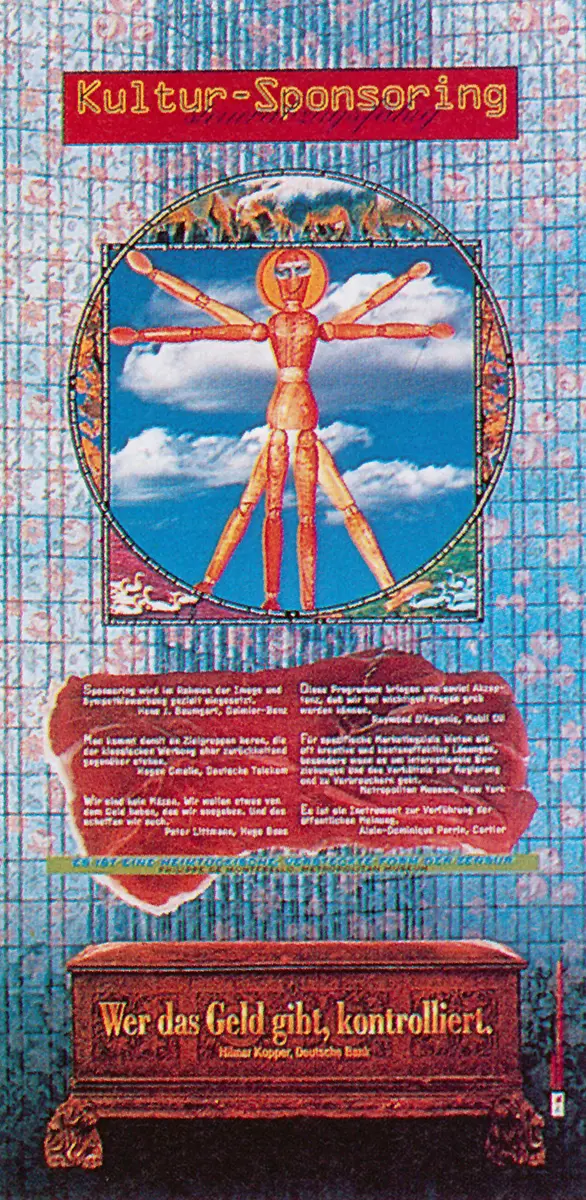
Another crucial matrix of the show seemed to be a commitment to photographic practices. A photographic parcours initiated by documentary photographer Ed van der Elsken was followed by the more destabilizing (of the documentary tradition) photographic works of Walker Evans and Helen Levitt and the New Documents photographer Garry Winogrand. Robert Adams' work followed on the heels of the latter with numerous images that almost constituted an incomprehensible mini-retrospective that did not contribute much to the show. It is this tradition of the document, associated with its denunciatory role, its archival dimension, and the portrayal of the reality that is taken up by artists like Hans Haacke on the one hand and Gerhard Richter on the other. The latter set apart for his problematization of the photographic image: its association with the real, and its possibility of reconstructing historical memory.
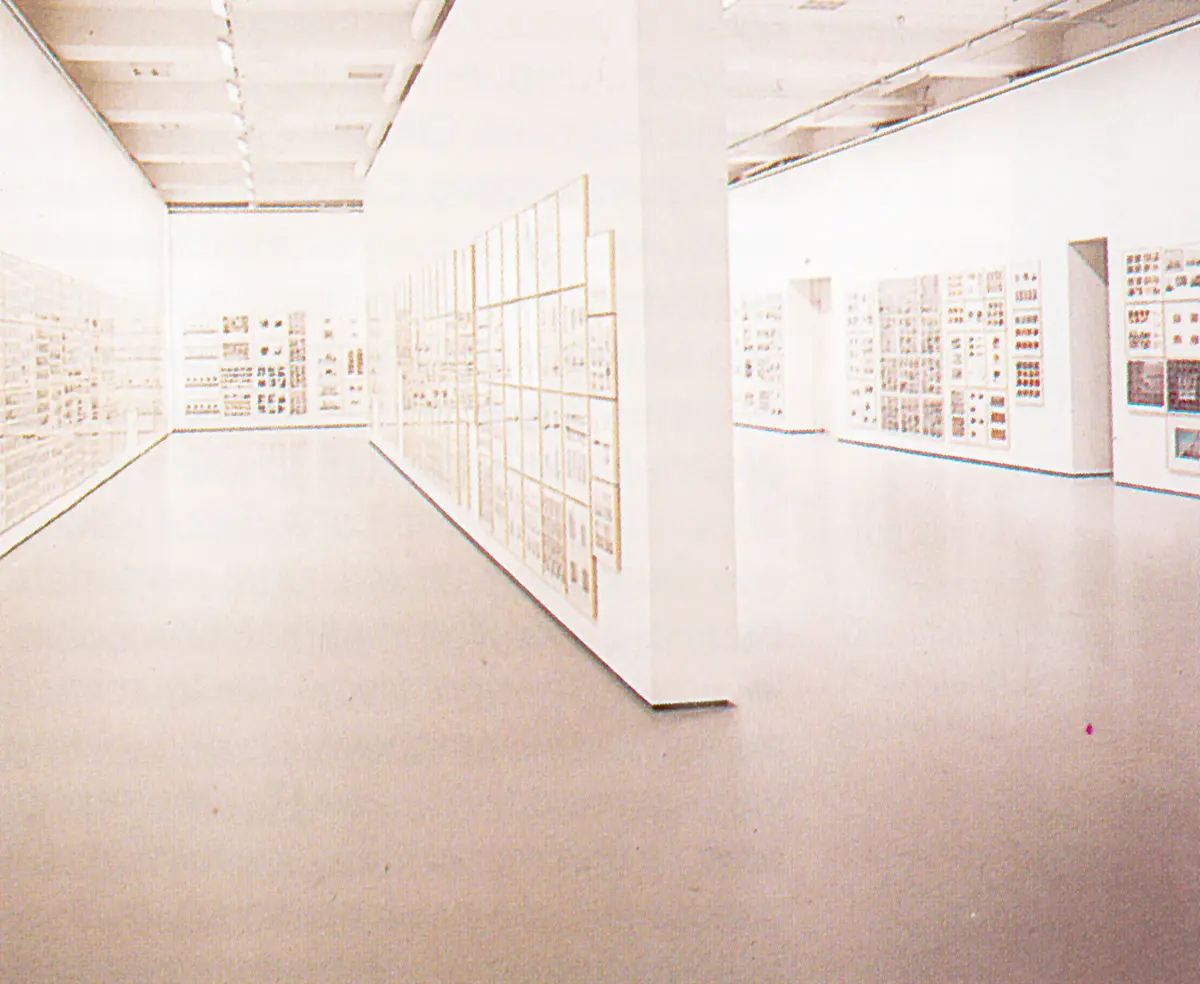
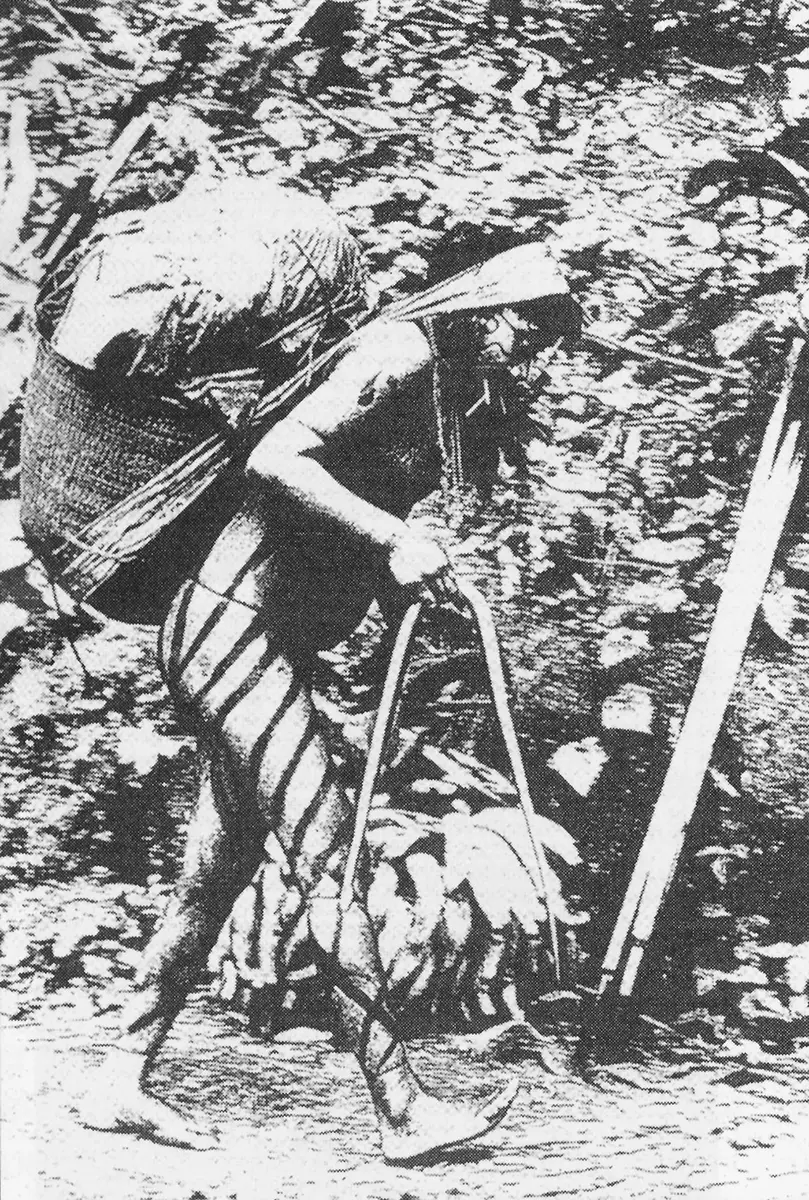
The documentary tradition and its anthropological implications as record and index of the real found two different manifestations in the work of Lothar Baumgarten. On this occasion, Baumgarten exhibited two pieces in the Kulturbanhof: Manipulierte Realitat, 1968,1969, 1970,1971,1972 and Vakuum, 1978, 1979, 1980. The first consisted of a series of color photographs which were carefully organized on a large illuminated table located in the center of the room. The images were the result of minimal interventions that altered the conventional archival function of the photograph. They juxtaposed bugs with plastic toys, confused snakes with fallen branches, and altered insignificant natural corners of the Amazon to create desublimatory spaces, and an array of unexpected images that pointed to the impossibility of portraying, through the camera, a reality that remains fictional. It is to the inherent manipulation of the real by the dynamics of the photographic that these images attest. The relevance of this gesture has to do with the fact that Baumgarten produced a crucial number of these pieces on several trips to the Venezuelan jungle in which he spent over a year with the Yanomami Indians. Thus, Manipulierte Realitat can be read as a critical and poetical gesture against the anthropological gaze that constructs the other as an object of study. This gesture is contradicted though by Vakuum, an installation of black and white photographs scattered on the wall, that tried to undermine the seriality of the anthropological archive but falls into the trap of the unquestioned photographic apparatus. These images portray the Yanomami in their daily activities, and Documenta presents them as witnesses to "Baumgar- ten’s familiarity with the Indians and to his manner of sharing their everyday experience."1 The transparency of the apparatus is unproblematically assumed, and the position of the artist as a shaper of meaning is not acknowledged like a situation of power.
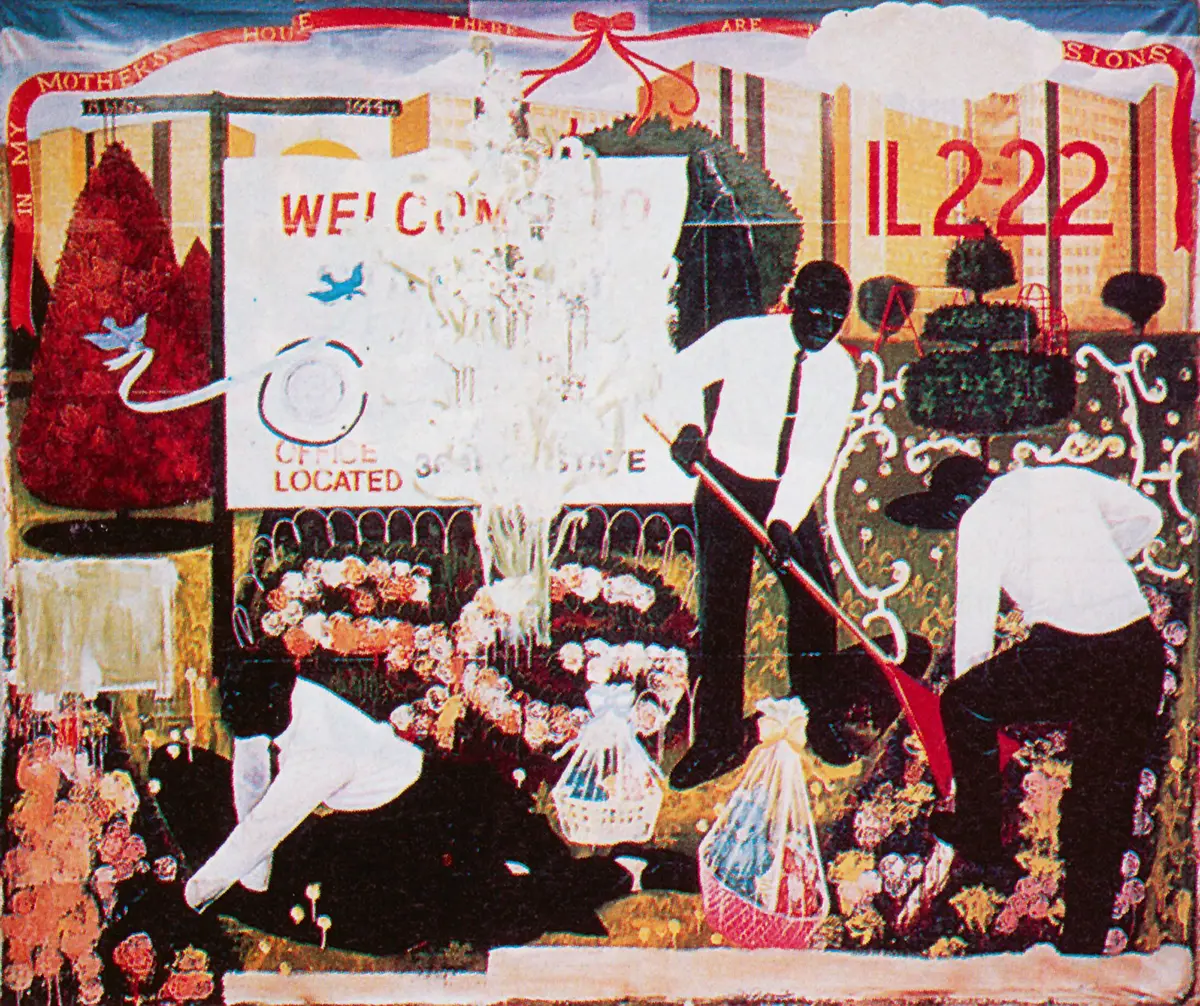
Two important approaches towards the real emerge from Baumgarten’s artistic practice. The first implies a poetics that points to the limits of representation and demands made upon it by rationalist discourses; a poetics that also tends to question the structures of enunciation and to underline the contingency of representational strategies. The second tends to assume the subject’s access to the real, through artistic practices (i.e. documentary photography) which become problematic as soon as we consider their structures of production, circulation, and reception. Because of its strong connection with the reality effect produced by the documentary image, this tendency which may encompass painting, drawing, text, and often a sort of narrative, is understood as politically committed. That this is one of Documenta’s emphases, is clearly understood given the great number of artists that use the documentary tradition, sometimes claiming a subjective (intimate) approach that is as problematic as an objective one: Marc Pataut, Feng Mengbo, Collective (la ciutatde la gent), David Reeb, and Oladelé Ajiboyé Bamgboyé being some of the most evident examples.
That a certain politics is at the core of Documenta’s project, is also evident by the publication of the authoritative Documenta. The Book is the key to understanding David's aspirations. The book bears on its cover the title Politics upon which is imposed (between the L and the i) a capital E that allows one to read Poetics. The book claims on its back cover to "indicate a political context for the interpretation of artistic activities at the close of the twentieth century, through a montage of images and documents from the immediate postwar period to the present." It focuses on texts by philosophers, writers, and cultural critics who address historical events and social, political, and cultural issues that involve war, urban space, (national) identity and its crisis, (Post and Neo) colonialism, and globalization. A long interview in two parts, titled "The Political Potential of Art," is the only text that addresses postwar artistic practices. It took place among cultural critic Jean Frangois Chevrier, art historian Benjamin Buchloh and Documenta’s Artistic Director Catherine David. The interview is an illuminating document about the situation of artists and intellectuals in a post-industrial era which requires analysis beyond the scope of this article. It is important to underline though that David’s interest in Third World countries, peripheral cultures, and the cultural implications of globalization notwithstanding, the discussion focuses almost exclusively on Franco-German cultural issues and the ambiguous relationship, marked by fascination and criticality, of those countries towards American culture.
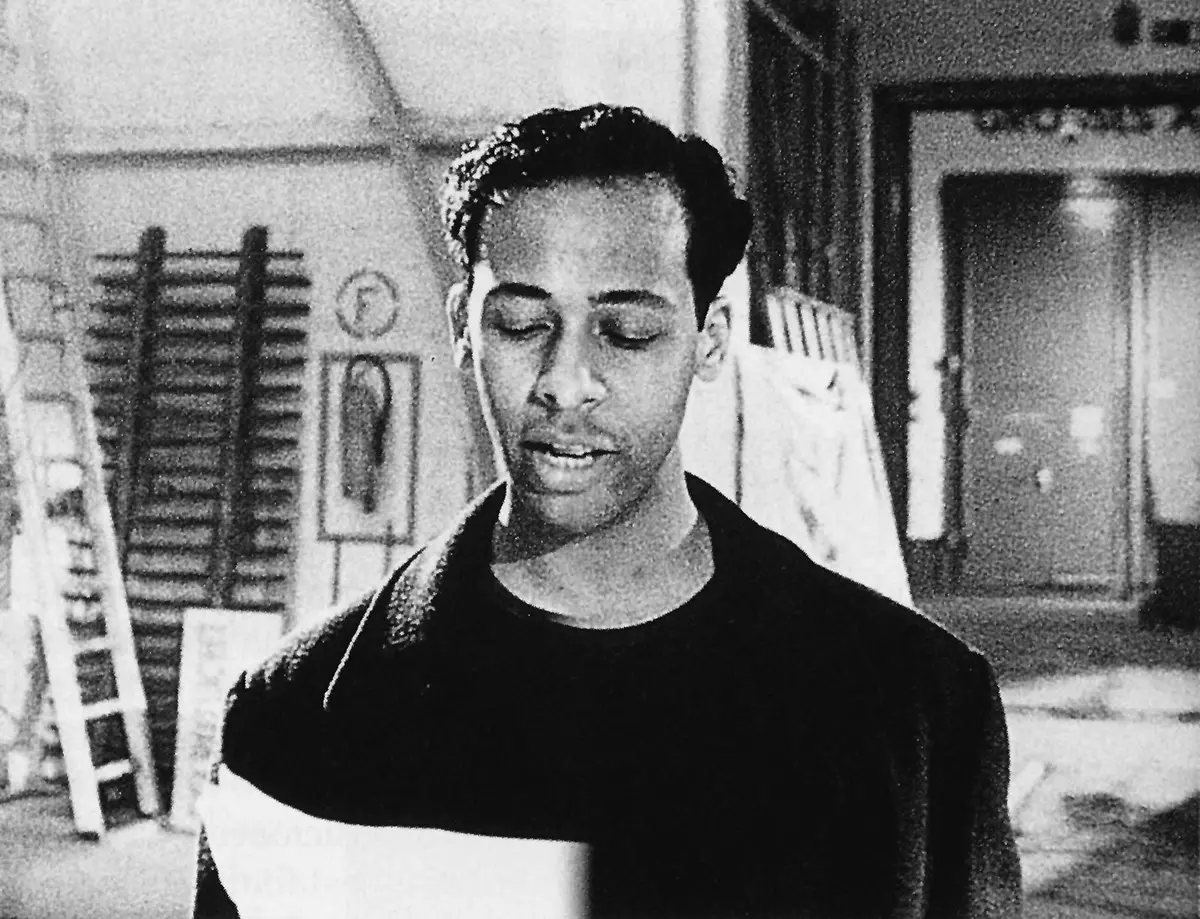
While one of the assets of this Docu- menta is a partial expansion of the sixty’s canon with the incorporation of artists like Lygia Clark and Hélio Oiticica, the participation of some contemporary Third World artists can be read simplistically in the context of Documenta. Indeed, while David has avoided the trendiness of "multiculturalism" so dear to the United States, some of her non-Euroamerican selections occupy a contradictory position in the show. A case in point is the work of Nigerian artist Oladelé Ajiboyé Bamgboyé whose videos, which participate in an amateur aesthetic, claim to "destroy antiquated views of Africa (and to challenge) those seen in the mass media, a strategy that I believe necessary for the normalizing of African representation." Ajiboye Bamgboyé’s videos that seek to restore a truthful (normalizing) representation through a visual extension of his authentic gaze, are encountered just before Richter's Atlas which articulates "a multiplicity of gazes"2 that make it impossible to restore historical memory and national identity through the (always anchored by the institution) structure of the archive. Needless to say, the juxtaposition undermines Ajiboye Bamgnoye's work, whose videos seem to assume as unproblematic the structures of representation.
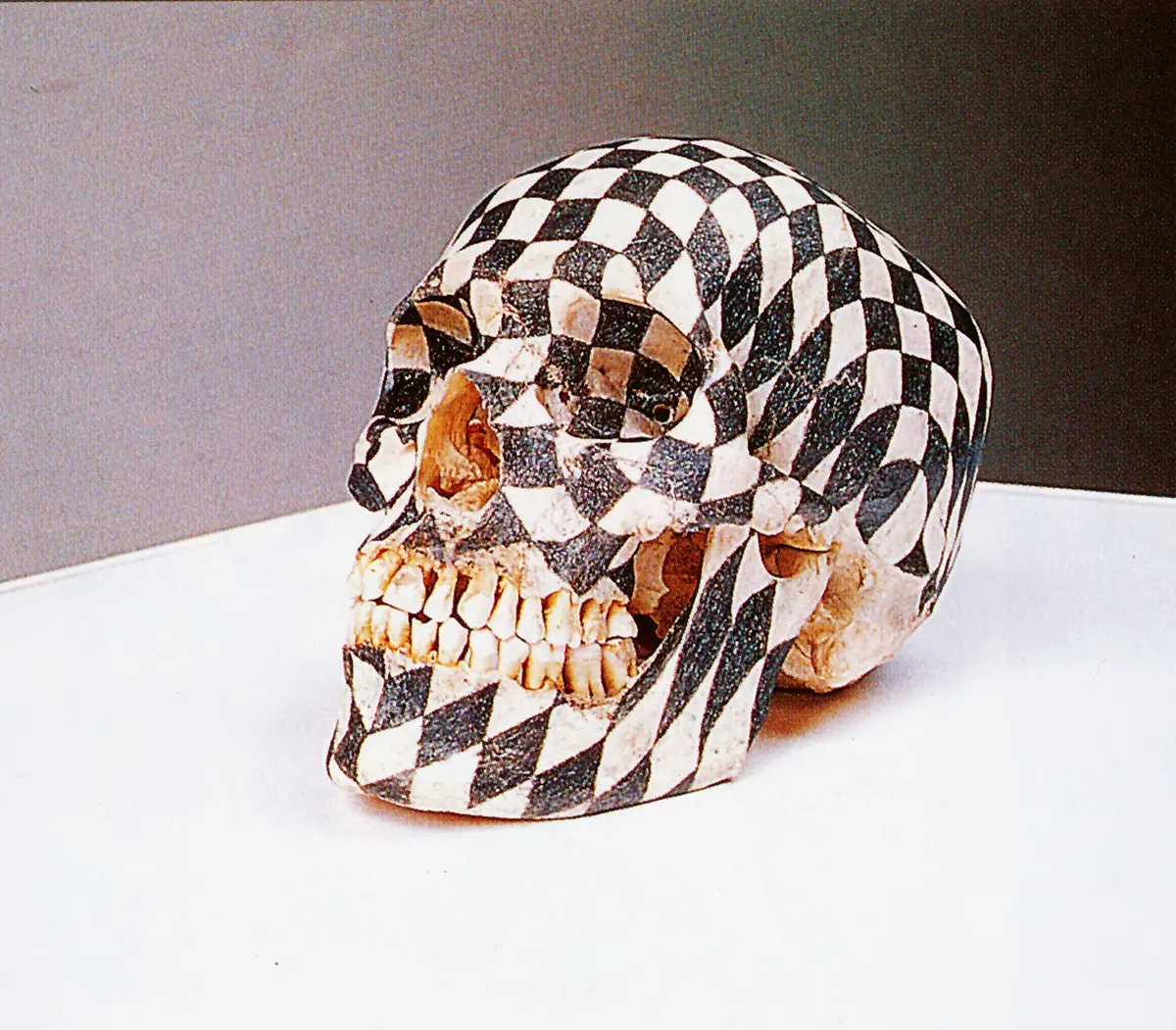
His South and Central American participation are signaled by the Brazilian presence, a scene with which Mrs. David has been involved for a long time, and which includes the performative pieces of Tunga and Cabelo. Besides, it is the Mexican Gabriel Orozco, which has become some sort of unavoidable presence in large surveys of contemporary art and magazine covers (a cultural phenomenon which requires an urgent examination) who participates in the show with a rather uninteresting piece which consisted of a skull upon which a chess grid had been drawn. The 100 days-100 guests lecture program, which is undoubtedly one of the most dynamic and participatory activities of Documenta X counted on the participation of Argentinian curator Carlos Basualdo, Brazilian art critic Paulo Herkenhoff, Brazilian architect Paulo Mendes da Rocha, Mexican writer Carlos Monsivais, Brazilian psychoanalyst Suely Rolnik, Chilean film director Raoul Ruiz, Brazilian architecture historian Sophia Telles, and Brazilian artist Lilian Zaremba. It is a bit disappointing though, knowing Mrs. David's awareness, one can almost say knowledge, of South American art, that it did not have a stronger presence in the show; particularly when one considers politically and poetically committed artists like Cildo Meireles, Víctor Gripo, Félix González-Torres, Alfredo Jaar, Eugenio Dittborn and José Antonio Hernández Díez.
Other artists, further problematizing the photographic image, a gesture signaled by Richter’s complex and disconcerting Atlas, imbued their work with a poetics that had little to do with content, and more with the structures of meaning and representation. Canadian artists Stan Douglas and Jeff Wall and British artist Steve McQueen are among the ones who deploy an experimental practice that undermines the conventionality of representation.
If one had to define Documenta X’s main achievement, it would be its interdisciplinarity. Apart from its commitment to practices that work in the expanded field of culture, the exhibition tried to engage the city. It sponsored the realization of seven films and invited theater people to create pieces inspired by Documenta. It developed an ambitious lecture program, 100 days-100 guests, (another asset of the show) that allowed David to expand the Euroamerican classical canon of Documenta. Finally, it made a commitment to new technologies and the internet. This all reflected the aspiration to make Documenta more than an exhibition a "cultural event." And one has to acknowledge that the show partially succeeded. The strategy allowed the spectator to experience the exhibition on different levels and it forced him/ her to think through the connections between the various layers which constituted the conceptual and formal parcour. This prompts me to relate Documenta X to the alliances of art to Cultural Studies, which not only takes culture as its object of study but tries to redefine it, to broaden its scope. One must not however take any meaning of culture for granted but rather try to survey the discursive structure in which the term is inscribed. While Documenta manifests an interest in different artistic practices and their political dimension, it cannot bypass completely, as David sometimes claims, certain spectacularization inherent to the institutional site within which the event is inscribed (the latter loomed over some projects that utilized new technologies to claim a participatory dimension posited unproblematically). Moreover, a Cultural Studies approach tends to, particularly under the umbrella of globalization and the structure of the text, homogenize artistic practices and dismiss the subversiveness of form and/or the materiality of the object; a risk that the best work in Documenta takes without losses.
If at times the historical look at the post-war conceptual neo-avantgarde and the emphasis on political signifiers seemed to coincide with nostalgia for the radicality of past times (something that impels one to remember that the "site of political transformation" is not always the "site of artistic transformation"3) at times also Documenta X captures not only the explicitly political, but also the poetical dimension on which the different cultural imaginaries invoked are grounded.
NOTES
1. All non-numbered quotes are taken from Paul Stztulman et al., Short guide / Kurzführer, (Germany:
Documenta und Museum Fridericianum Veranstaltungs, 1997).
2. Gayatry Splvak, lecture at Documenta’s 100 days-100 guests, July 23, 1997.
3. Hal Foster, The Return of the Real, Cambridge, Mass-London, England: MIT Press, 1996) 173.
MONICA AMOR
She is a candidate for the Ph.D. Program in Art History at the Graduate Center of the City University of New York. She is Editorial Advisor for ArtNexus in the United States.