
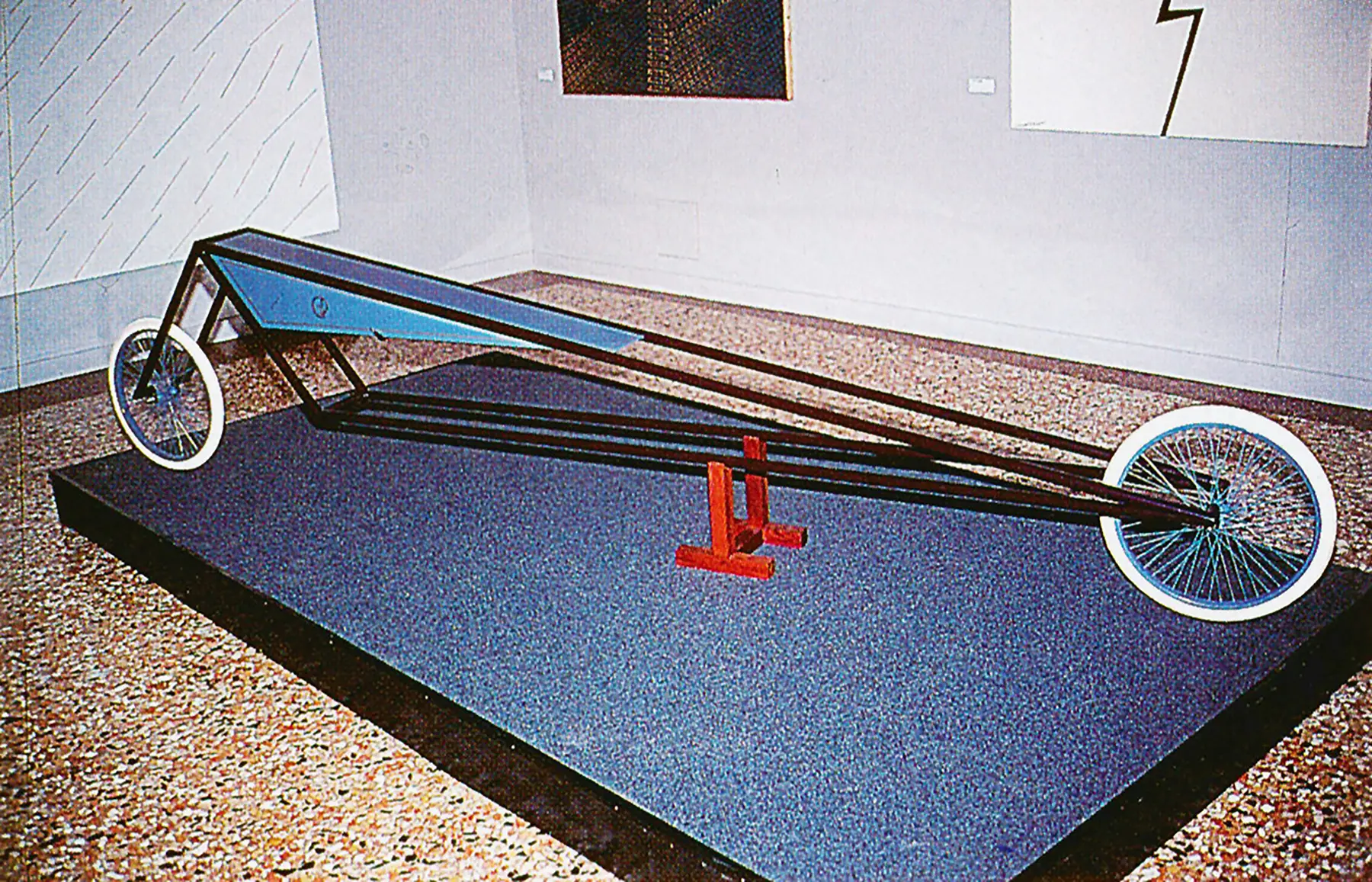
One of the subtexts of this year's Biennial of Venice was the rivalry (actual or invented) between Germano Celant and Achille Bonito Oliva. The latter appeared to be the candidate favored to direct the Biennial but, at the last moment, was replaced by Celant. Oliva applied his considerable energy to organize his own show, Minimalia, sponsored by the Italian State Postal Service. The exhibit covers Italian minimalism from Giacomo Balla to the present day,1 with particular emphasis placed on the seventies, on arte povera, which is generally associated with Celant (who gave the movement its name.) One of the recriminations made against Celant in his organizing of Past, Present, and Future, the principal exhibit of this year's Biennial of Venice, was that of not having given sufficient space to Italian artists and of having produced an excessively internationalist show (and given in to the interests of the strong galleries in the market.) Oliva's exhibition was rumored to be a kind of "counter-biennial" in which Italy would receive its due recognition. In fact, this exhibition, together with the exhibit on Flemish and Dutch art in the Palazzo Grassi,2 balances the globalist tendency of the Biennial and keeps the polemic of regionalism vs. internationalism alive and kicking. Both shows also help to justify (or do justify) a trip to Venice on the Biennial.
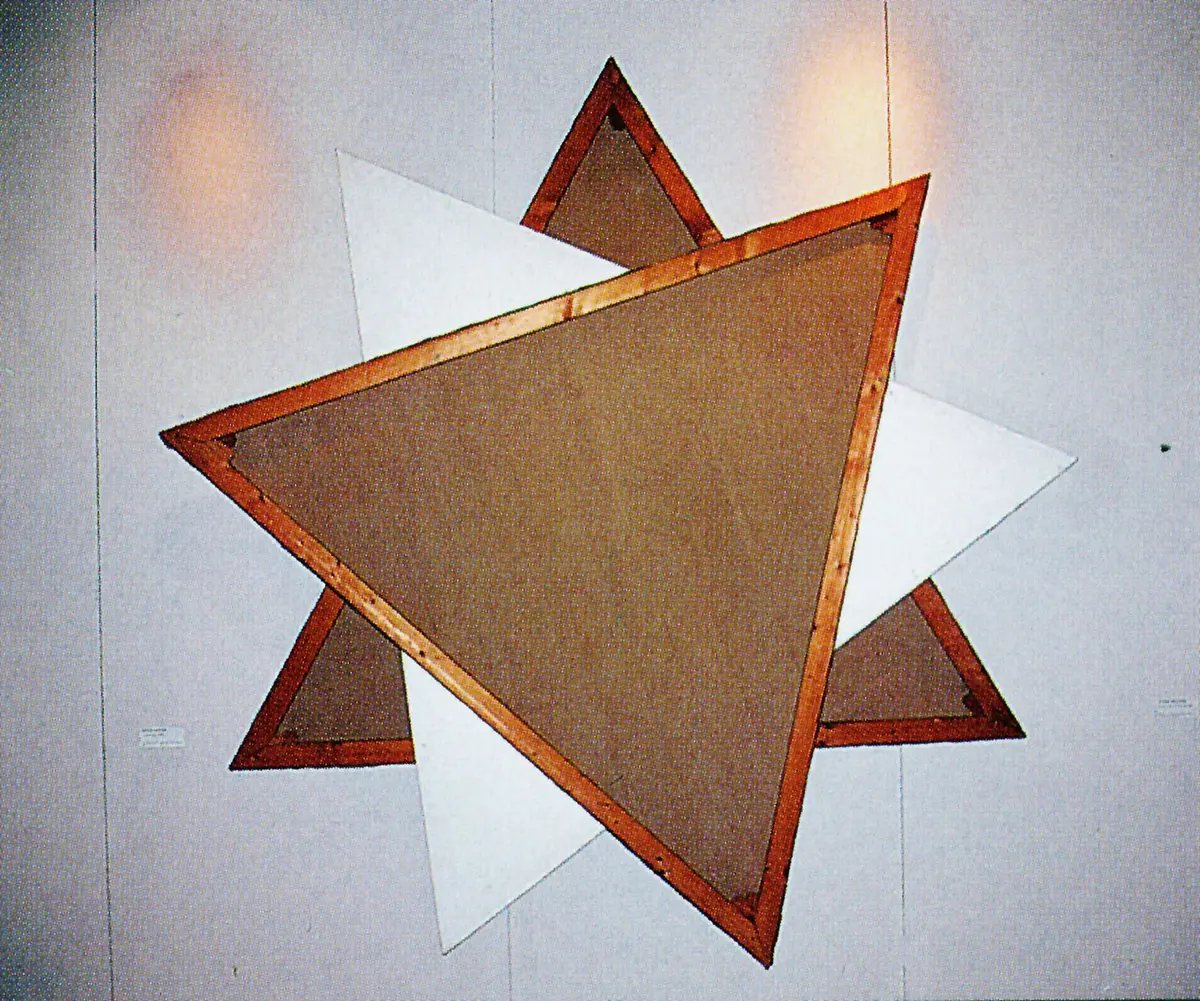
Given this competitive atmosphere, Oliva's show is surprisingly modest and self-reflective and promises several aspects against the focus of the exhibition. Located in the Palazzo Qerini Dubois, relatively outside the circuit of exhibits in Venice, the unaccustomed visitor has trouble finding the building. Once he has arrived, the architecture does not seem appropriate for presenting exhibitions and the first impression, as one begins to go through the exhibit, is that it is a minor show. Still worse is the presence of the Italian conceptualist artists within the minimalist category, which seems to confirm the traditional and simplistic outline that locates conceptualism because of the minimalist art of the end of the sixties.
But the show is neither minor nor inclined toward outlines. It is, instead, a rigorous exhibit with carefully selected works and its own thesis (the discussion of a sort of mentalism present in Italian art from Paolo Uccello and Leonardo to the present.) The most debatable aspect of the exhibition is the prominent inclusion of the work of Balla, minimal in the sense that any abstraction might be, which, in abstracting, minimalizes. Oliva explains this in his own fashion: "One could say that there exists no complicity between Balla and the material in the process of the sublimation of dark drives, "3 highlighting a dematerializing intent on Balla's part. Between the works exhibited by Balla (1912-1915) and the pieces that follow chronologically, (Fausto Melotti, in 1935) are 20 unfilled years that place importance on Balla but don't prove the existence of any tradition. In the same way, the work of Melotti—influential at first and in later years more playful— seems isolated until the fifties. That is when Lucio Fontana and Bruno Munari appear, who will influence those who might be categorized as designer artists, and Piero Manzoni, who will place his mark on the conceptualists. Oliva avoids the temptation to trace Balla's influence in later art. With this decision, he keeps from falling into literal superficiality. There is a piece by Mario Schifano (Remembering Balla, s.f.) which correctly represents Schifano more than it does Balla, and there are works by Gianni Piacentino, who is an heir, more than of Balla, of the mechanistic and necrophiliac fascination of fascist futurism. But that is where the possible references end.
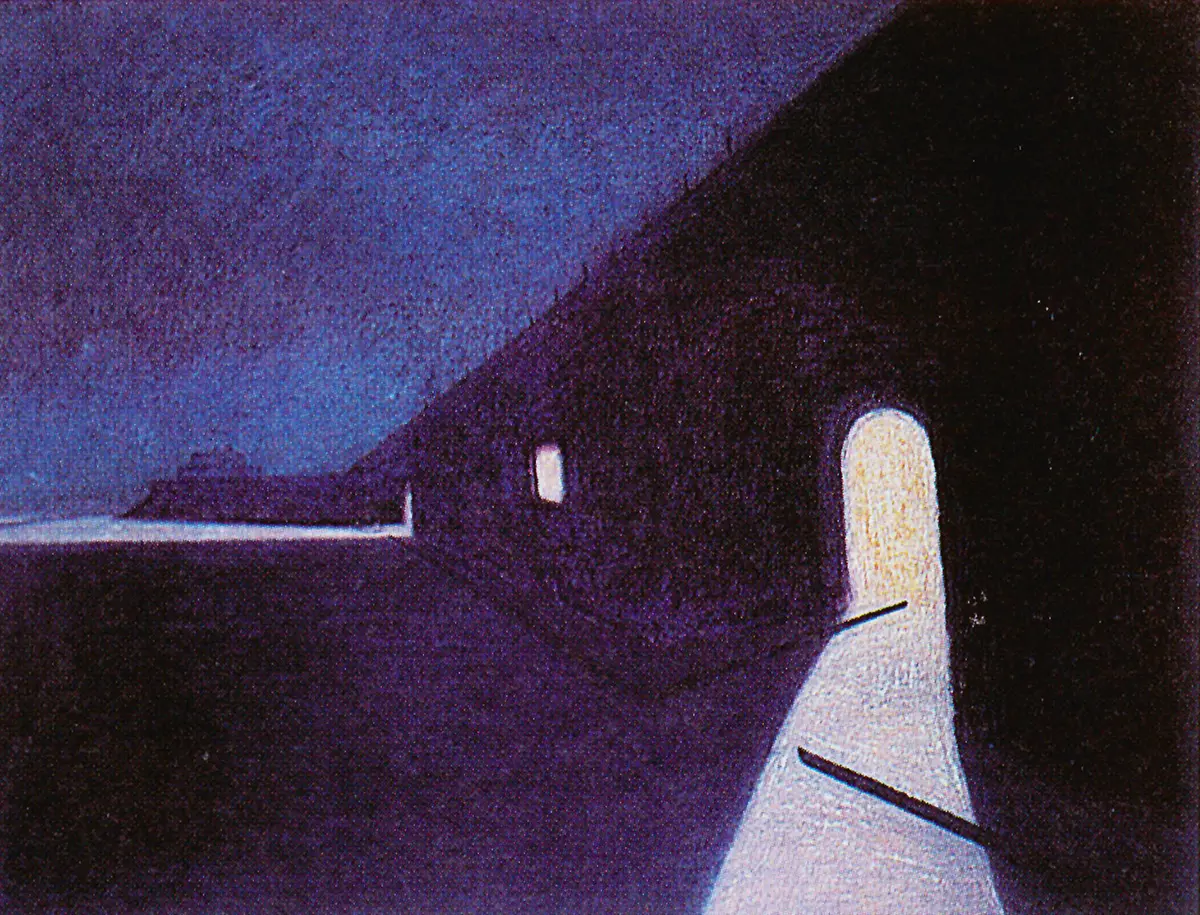
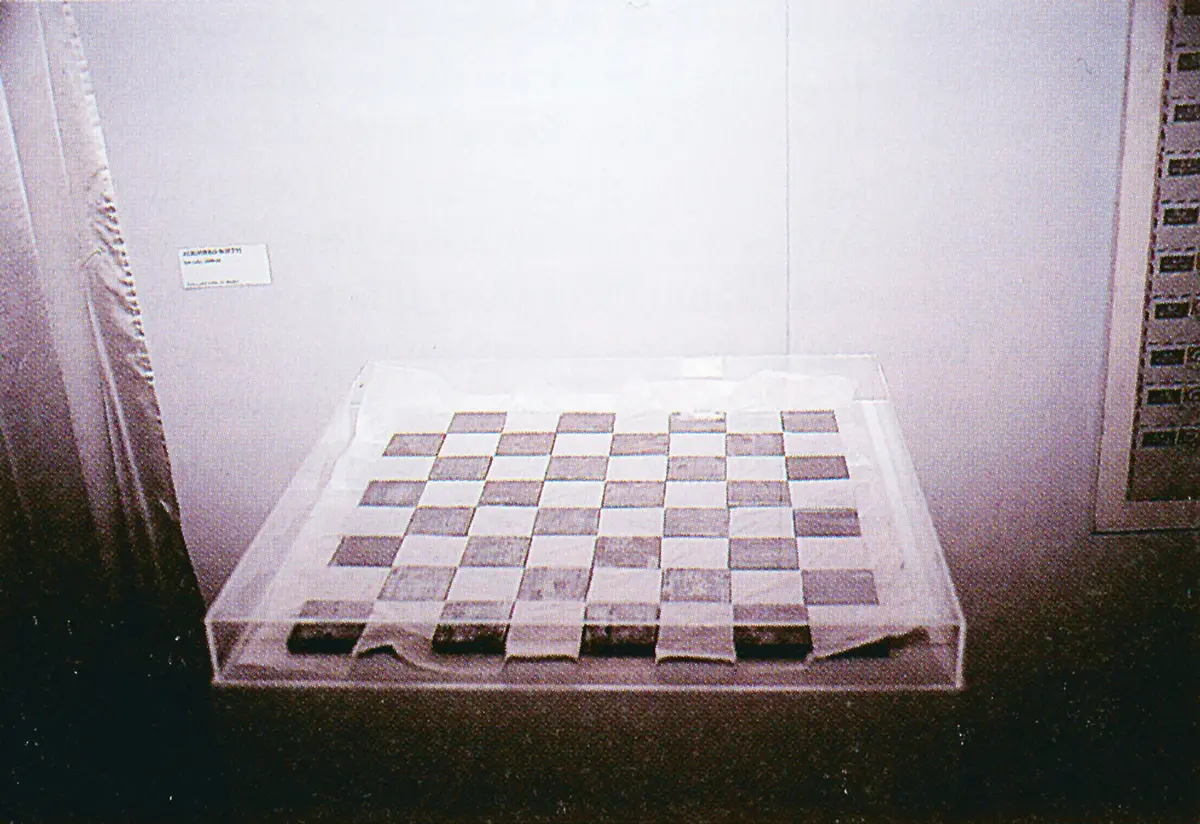
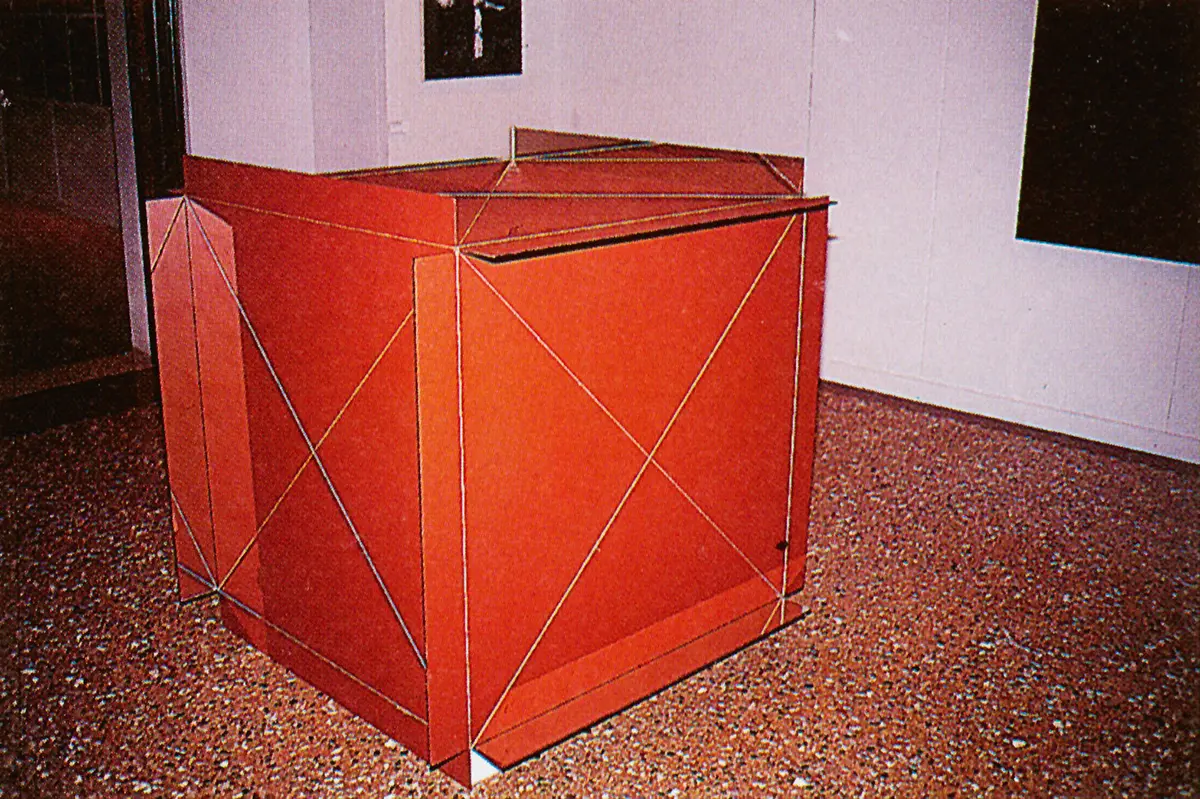
Oliva's show deals more with the linguistic economy than with forms of minimalism and the aspect that seems to remain constant in the spectrum he presents is an attempt to achieve complexity in suggestion—an activity that is not minimal. This is where Italian art separates and identifies itself as opposed to other hegemonic art scenes—in particular, the North American ones. The fine works in this exhibition seem to express themselves between the lines whereas orthodox minimalism and traditional conceptual art hold to the lines themselves, with a certain formal and semantic literalness. In mounting the exhibition, Oliva brought together in many cases paradigmatic works of great quality and infrequently shown. Particularly, among there arte povera artists there are first-class works. Paolini appears with his strongest pieces from the sixties, in contrast to the bland decoration he produced for the Italian Pavilion at Celant's request. Alighiero Boetti, in his Interval (1969-1986,) a surprisingly atypical work, creates a chessboard with iron squares. The white spaces are indicated by a piece of paper that covers the appropriate squares and which is held in place by the exposed squares acting as paperweights. And Michelangelo Pistoletto is represented by what is perhaps his most interesting work, Cubic Meter of Infinity (1966), a cube of mirrors that reflect and forth between themselves without the spectator's participation (except for the edges which stick out, the exterior of the cube is colored red to protect mirror surface of the glass.) The work exists totally in the imagination of the observer, thanks to the title. Without being able to confirm whether the interior is truly mirrored but without any reason for doubting it, one journey into speculation on infinite reflections, forgetting that, in fact, what one is facing is simply a red cube. It is the presence of this poetic transmutation that, to a certain extent, invalidates the minimalist terms suggested by Oliva but which, at the same time, gives the exhibition strength and obliges one to accept his curatorial instinct. It is an instinct that allows him to exclude figures such as Burri, Capogrossi, and Calderara without really diminishing his show. Oliva succeeds in affirming a certain coherence in the Italian twentieth century, a certain identity, which are not the only ones (there is the whole archeologist in the style of Campigli, the gesturealism of the Vedova type, the representation established by Marini and Greco) but which are persuasive in the way he has presented them.
Simultaneous with Oliva's show, in the Palazzo Grassi, is an exhibit put together through the joint effort of two curators of the same level of prestige: the Dutch Rudi Fuchs and the Belgian Jan Hoet. Here, the exhibit seems based more on an act of friendship than a thesis or an attempt to demonstrate a joint regional identity. The result, however, is sufficiently fertile as to be worth a visit. This is not an attempt to compare Holland and Flanders but rather to set one against another and, not out of sheer coincidence (Fiat is financing the event,) the influence of Italian art is used to define many theoretical points. In the catalog, both curators introduce certain overly generalized schema, and, at times, they contradict one another.4 The art of Holland, according to Fuchs, is characterized by its "serious sobriety," while that of Belgium by its "attractive grace." According to Hoet, the Flemish possess darkness and something shadowy while the Dutch are luminous. Fuchs mentions the Dutch conceptual artist (born in Surinam and a resident of Holland for 22 years,) Stanley Brouwn as an example of how reality is apprehended by measuring. In his works, Brouwn, concerned with the act of measurement, compares paces to meters. And Hoet, a few pages later, mentions that if one asks a Flemish person for the length of a meter, he will take a step, whereas an Italian, responding to the same question, would go in search of a ruler.
But if the catalog is not particularly useful as a theoretical contribution, the show, on the other hand, contains exceptional pieces of artwork and some interesting relationships.5 Nearly all the rooms contain references to paintings from the past (in unexpected moments works appear from the sixteenth and seventeenth centuries: Van Scorel, Patinir, Breughel, etc.,) to affirm identities and comparisons. Artists who are virtually unknown outside the region, like León Spilliart (1881-1946) and Jacob Smits (1855-1928,) the later Dutch, residing in Flanders, are revealed to be solid and powerful artists whose work provides a context for the formidable paintings of Mondrian in his pre-neoplastic period (for example Sunflower I 1907-1908,) which is also included in the show. Van Gogh set against Ensor—both well represented throughout the exhibit, in a show that is only vaguely chronological—has two still lives from 1886 that prefigure that emblematic painter but link him directly and without any break to the Dutch tradition of the still life from the seventeenth century.
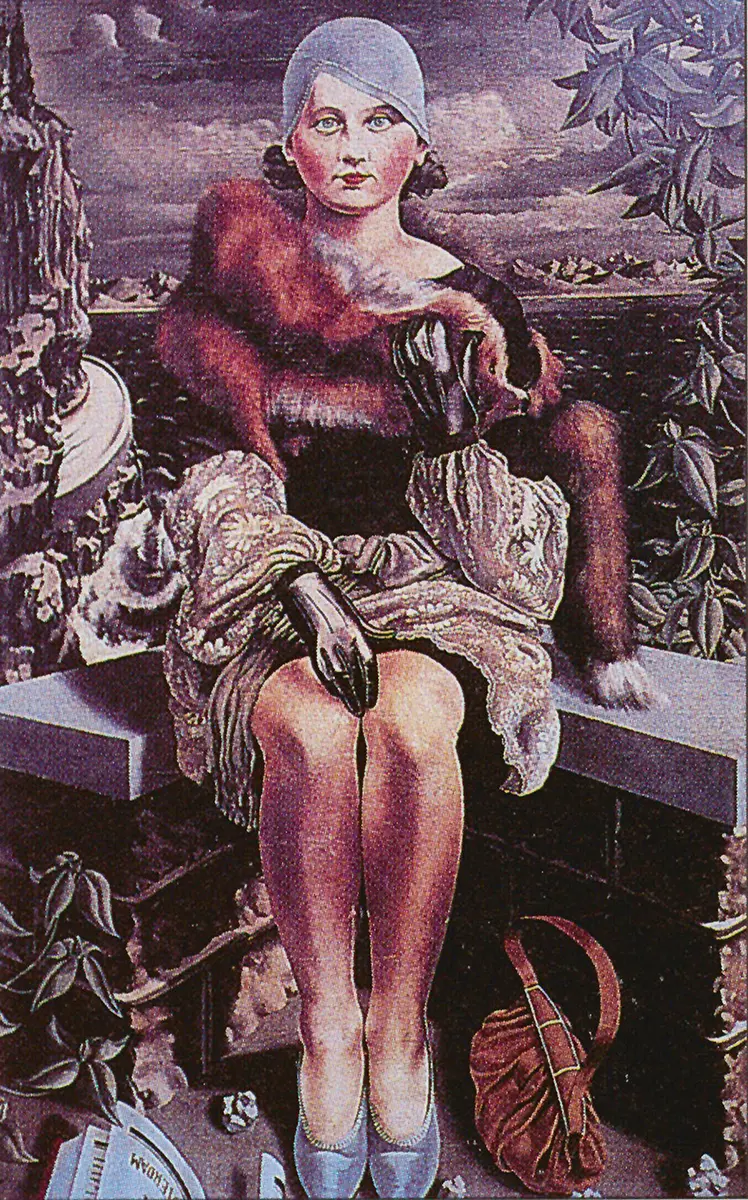
Another revelation, at least in terms of one's prejudices, is offered by an especially strong presentation of painters who worked parallel to and/or were influenced by the "new objectivity" from Germany in the twenties. Here, the aggressive part seems more distinct on the Dutch side, with Carel Willink (Portrait of Misje, 1928,) Charley Toorop (Women, 1931, in a rare combination of Germanic qualities and Siquieros,) against a relatively sweet Belgian, Gustave van de Woestijne (Liquor Drinkers, 1922).
The show has of course fine selections of Magritte, the artists from Cobra, Broodthaers, and finishes with Dibbets. Dibbets exhibits here very similar works to those he has in the show organized by Celant at the Biennial of Venice. The difference is that in the PalazzoGrassi they are textiles and not wall installations. The windows caught within pictorial squares, rather than occupying their place on the wall, lose their strength, charm, and effect and no longer fall in with the solid works of this artist. It is interesting how practically the same image in one case defines Dibbets as an important artist and in another, as an intelligent and commercial one.
The final work in the exhibit is not really that of Dibbets but a painting by Pieter Saenredam: the interior of a church painted in 1661 which, through a pair of doors, allows one to see an exterior garden. Vaguely related to the work of Dibbets, this connection across the centuries tries to symbolize and synthesize the intention of the exhibition to emphasize a certain coherence in the region, something parallel to the mentalism identified by Oliva but less understandable.
Whereas Oliva takes the liberty of dispensing with important works from the period under analysis, Fuchs, and Hoet, in support of their thesis, feel obliged to present a completer and more representative panorama of the region they have chosen. Thus, Oliva achieved a more coherent (and falser) exhibit while Fuchs and Hoet achieved something more informative and accurate, although with more ambiguous conclusions.
Both exhibits effectively set themselves against an internationalist statement of art (Fuchs even speaks of modernism as a form of censorship)6 and try, in different ways, to explore the identities of their regions. We are always shown a Mondrian within the constellation of artists from European modernism and here he is, for the first time, placed between Van Gogh and Dibbets. What is interesting about this location is that in the end, it is the correct placement for it to work. There is a continuous, evolving discourse that, while affected by influences and knowledge of art produced at the center of the day, flows along with its own courses; Oliva decided to choose only one of these courses; Fuchs and Hoet tried to cover them all. Neither one nor the others managed to clearly define the identities of their region—one from lack and the others from excess. But that is not of great importance. And if the Dutch and the Belgians also had weak pieces in their exhibit, these were part of that mutual explanation and for that reason, important. Oliva's show is seemingly more impeccable and appears to get closer to achieving the proposition of pinning down an identity but, due to the premises he uses, it remains on a much more hypothetical plane.
At a moment when globalism is so in a fashion that the idea of internationalism seems a provincial concept, finding a regionalist approach to the history of art is quite significant. For some, this is returning to the Stone Age. For others, it is a way of maintaining one's mental health. Neither of the two shows has the chauvinist proposals that would make them retrograde. Both—each in their own fashion—attempt to elucidate a problem that the dynamic of the market is tending to minimize. And complementing one another in their research, both shows keep the problem of local histories on the table.
NOTES
1. The subtitle of the show is “From Giacoma Balla to ..." suggesting a continuous process.
2. Flemish and Dutch Art: From Van Gogh, Ensor, Magritte, Mondrian to Contemporary
Artists.
3. Minimalia (Bocca Editors, 1997), xv.
4. Rudi Fuchs and Jan Hoet, Flemish Art and Dutch Painting, (Milan: Bompiani, 1997),
5. DirkJan Woffram (Holland) and Sophie de Shaepdrijver (Belgium) contribute interesting
essays on the history of both countries.
6. FlemishArt..., p. 22.
LUIS CAMNITZER
Uruguayan artist. Professor in the Department of Visual Art at the State University of New York, Old Westbury College.