
The Luis Caballero Prize, established by the District Institute of Culture and Tourism of Bogota, is open to Colombian artists aged 35 or older. It entails proposing a project to the jury created specifically for the event. The selected artists then present solo exhibitions in the Santafe de Bogota Gallery, at the rate of one per month, for a period of one year. After assessment by the jury, the final prize is awarded. The idea is a novel one and well structured, first, because it is a means of stimulating artists from an intermediate generation—people who are still young but who have already established themselves; and second because it allows that idea and its development to be viewed at an overall level. This first stage resulted in the selection of eleven artists: Luis Fernando Peláez (Jerico, Antioquia, 1945), Nadín Ospina (Bogota, 1960), John Castles (Barranquilla, 1946), Jorge Ortiz (Medellin, 1948), Gabriel Silva (Bogota, 1955), Hugo Zapata (La Tebaida, Quindio, 1945), Ronny Vayda (Medellin, 1954), Víctor Laignelet (Barranquilla, 1955), Rodrigo Facundo (Ibague, 1958), Álvaro Barrios (Cartagena, 1945) and Maria Teresa Hincapié (Armenia, 1956). The exhibitions which have been presented to date suggest several reflections on the present state of artistic activity in our country.
The first, perhaps obvious, remark is that there are artists both young and old, i.e., that art is not a problem of age. This is a rigid category in which attempts are made to pigeonhole a process that is more a matter of vitality than any linear conception of time; in some cases, the tensions continue up until the end, and in others, they give way. Gombrich’s remark that art does not really exist, only artists, is becoming truer every day—probably because works of art are individual acts, especially when they are in part the result of an exercise in the will. This conclusion is particularly valid in the case of Hugo Zapata, who early in his career had started out with an observation of the particularities of nature, its constructions, geological faults, and flashes of brilliance, in an attempt to create specific landscapes. However, on this occasion, he revealed a total sense of tiredness, not only in his work but in his disrespectful attitude towards the gallery space. On the day of the opening, the show was still not ready. A few days later, a container full of oil spilled its contents onto the floor. The installation process must have been slipshod, something unforgivable in the case of an artist with more than 30 years of experience. The work itself, titled Mantle of the Earth, made up of squares of coal on the floor illuminated from beneath with a red light, was a far cry from the forces of matter to which it supposedly referred, a merely simplistic artifice. Already in some of the artist's earlier work, this attitude had been evident, with his use of mineral ores that seemed to be added to the rock. To depict the "mantle" of the earth with a red light is to raise problems involving the translation of sensations to materials whose syntax the artist is not familiar with. If he were a pop artist the work might generate some interest, but given the solemnity with which he apparently seeks to endow his work, he has lost sight of the sense of struggle between forces that is characteristic of art, more so when the "other" is the energy of nature.
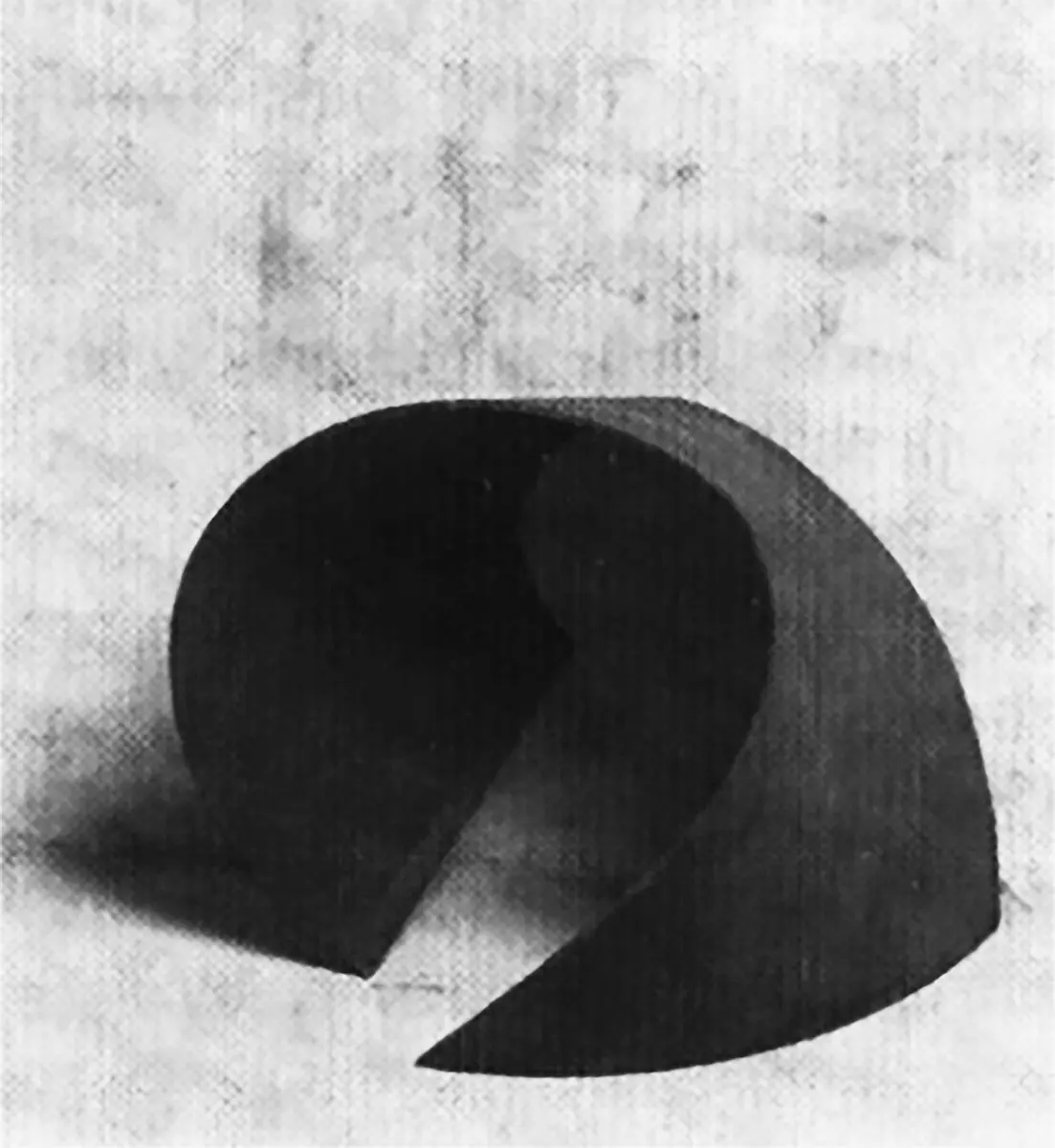
The fundamental relationship underlying the exhibition, Intersections by John Castles is that between sculpture and place. The works in metal were placed against the gallery wall, emphasizing the existence of a dialogue with geometry. In this case, the intersection, the sectioning of a solid by a plane, was plural, with the planes of the wall and floor describing the forms. Attached to the wall and seemingly ambiguous, they suggested all kinds of metaphors: from the streaming forms created by sharpening a pencil to fragments of turbines or pre-Columbian objects. The brilliance or oxide of the metal in the sculptures created a silky kind of skin that enhanced their impact and presence. Why then did the project not work in this setting? Because after modernity, to think is to invite the co-existence of many concepts surrounding a problem, without disregarding any of them, especially those which come with everyday life. Castles presented the object cut by an abstract wall and floor, without considering the real space, which did not allow him to render visible the prepositions "in" or "between." In this exhibition, the space "between" the works was empty, and the gallery floor, which itself was in poor condition, too "lived in," became the protagonist and did not allow the geometrical proposals to emerge clearly. For this reason, Castles’ works would be better exhibited "in" a park, "within" the exhaustion of the city, "in" an everyday place, which would allow them to reveal the life which they contain.
A simple idea, namely the expression within space of the chemical processes of photography, formed the basis of A Wood, a Garden, by the experimental photographer Jorge Ortiz. He transformed the gallery into a virtual forest, covering it with black cardboard impregnated with developer and fixer, and on which stains appeared which varied in color from white to golden under the effects of the light of the lamps on the chemicals. The installation also reflected his interest in landscape and the senses, which in his case are an archipelago enclosing moments of reflection which emerge magnified. The senses are a very complex universe of which it is better to tackle with simple ideas which grow with our sense of astonishment, rather than using a network of complexity that finally proves unmanageable. Deceiving the senses is not the same thing as deceiving a person, as Arthur Danto pointed out with respect to the origin of perspective. In other words, the observer knows that he or she is in front of an image and furthermore, has perceived reality in multiple and subtle ways. It is difficult to deceive. For this reason, a game has to be astute and persistent if we are to fall into its trap. Gabriel Silva gave a very intelligent title to his exhibition, Ambush, which referred to hiding in some vantage point to surprise the enemy. This ambush was a labyrinth of mirrors reflecting the visitor, and in a fragmentary manner, the video image of an insect. However, the work was finished so precariously that it proved less interesting than a theme park. The risk implied by the science-art relationship must be fully assumed, rather than by merely using video images of insects or animals are taken from magazines because the spectator is expecting something unusual, a genuine fiction. Ángel Rama, the literary critic, once said that Latin America was a continent with magnificent but undeveloped ideas. This is a very perceptive remark that provides food for thought.
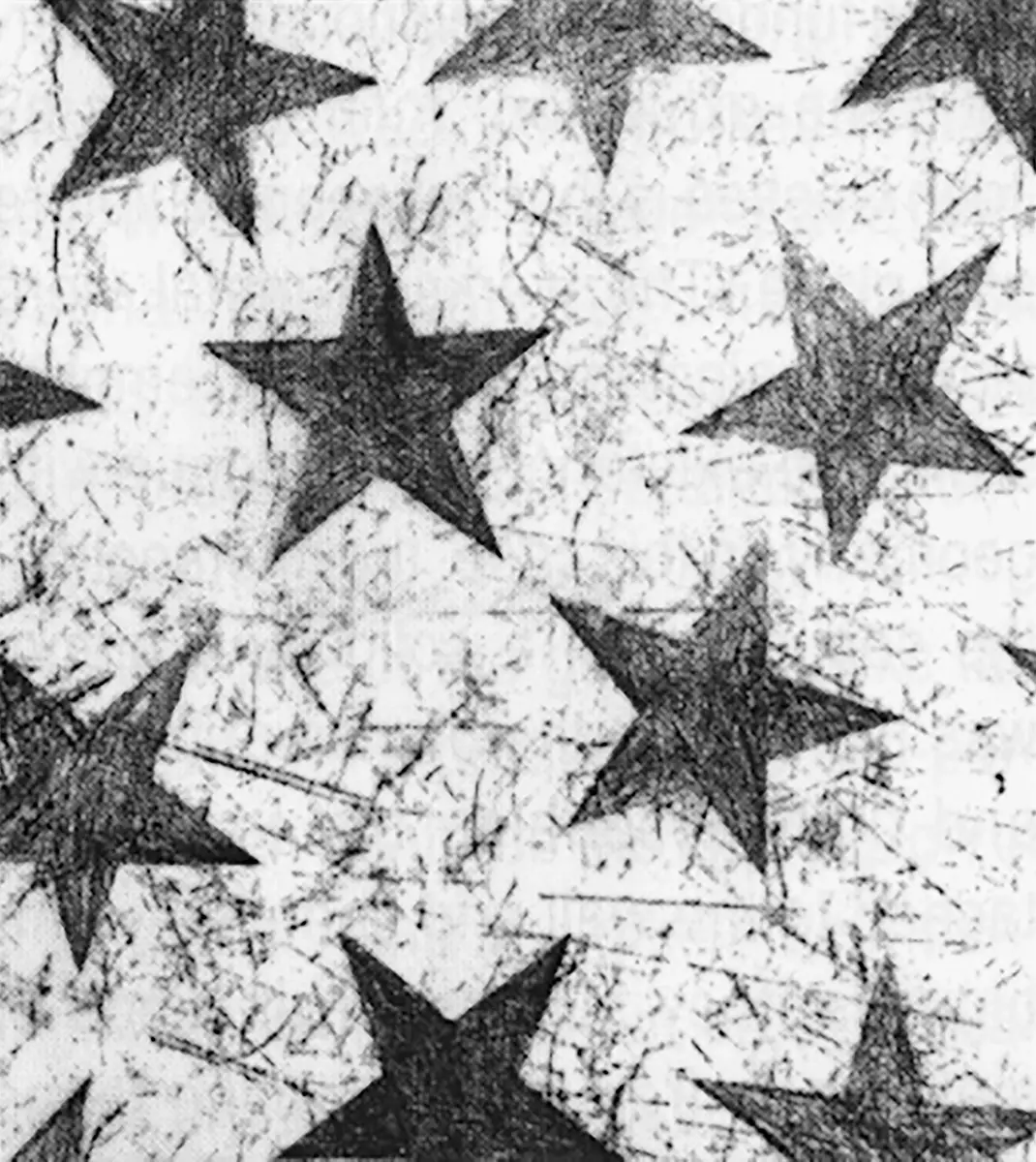
The exhibition titled Stars of Stone raised questions about drawing and painting. The artist Nadín Ospina played the role of curator and proposed to a group of people outside the art world the idea of presenting their work in a museum. The project was interesting not only because it involved the displacement of the artist from the role of creator to animator, but because the results—the drawings which were mostly done by anonymous persons, children from different social classes, artists voluntarily marginalized from the mainstream and students—raised a question which has almost never been addressed in the case of art. It is not exactly about what art is or what relations are established with the history of art, but rather, it concerned the visual culture of our country. That is, what images we retain in our memory, but above all, how we depict them with media that are apparently so familiar like painting and drawing. Sometimes this is done with freedom bordering on a game, while at other times only as a reproduction of stereotypes and judgments. This kind of extended network ranging over different places conjures up several inquiries which could result in future research in both the artistic and cultural spheres.
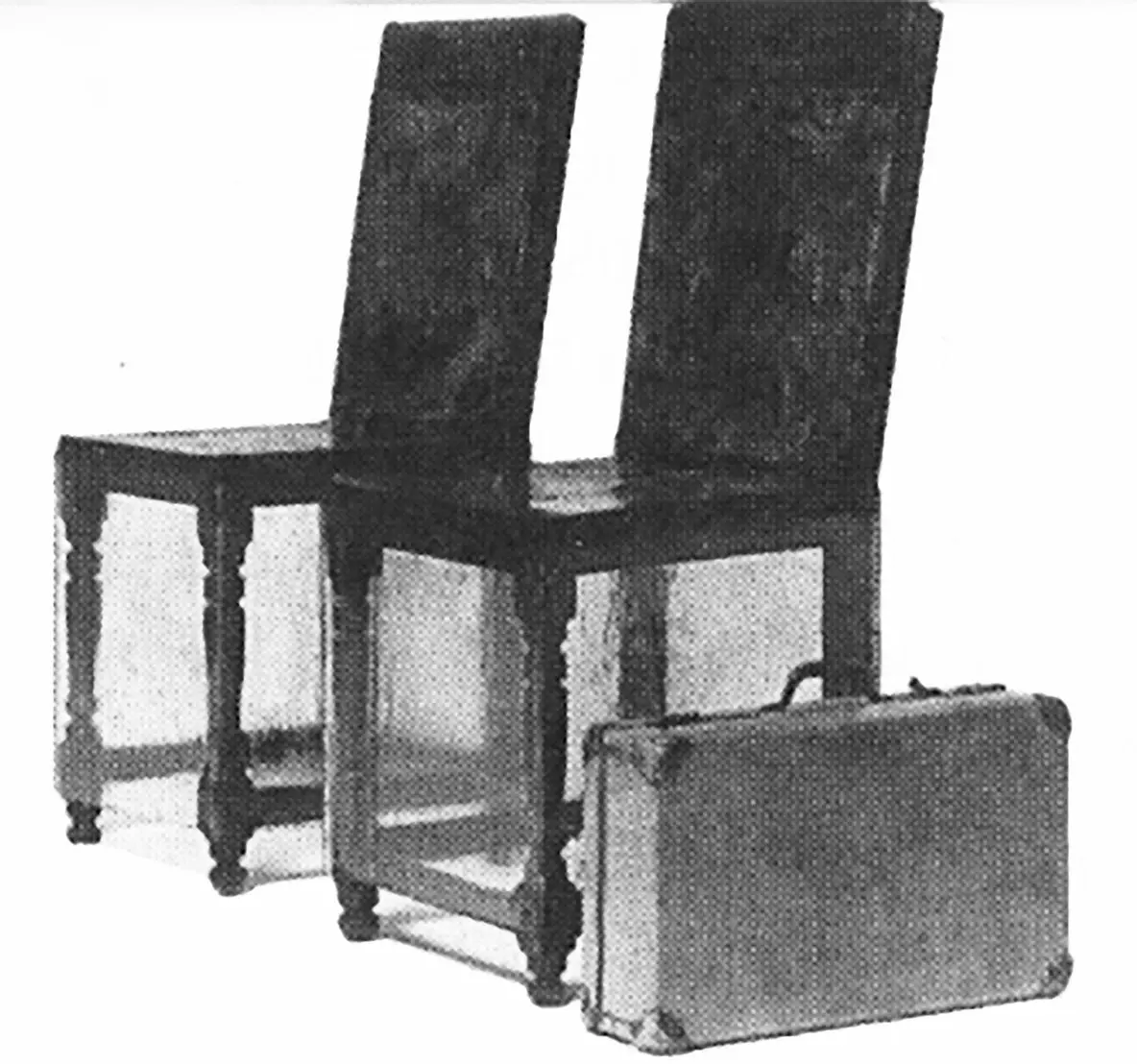
If we accept that the artist is a vagabond in time, culture, and metaphor, the exhibition titled City-City by Luis Fernando Peláez achieved its objective. The artist managed to place the spectator within a time that was not the present, transforming space with a glass floor where basic houses and the remains of objects questioned the sense of dwelling, vigilant to the effects of deterioration and oblivion. The exhibition was mounted in a worthy manner, although it left an air of nostalgia since memory was not used to illuminate the present, to painfully oblige the present to return to the past, an irretrievable past. Therefore, nostalgia is a place without exit. In the future, there will certainly be art, but it will not be our art, as Danto has observed. It is a remark which encompasses all time, and I see it as going against nostalgia and apocalyptic visions, because it sees creativity as something irreversible, although it also reveals our slow capacity to change. We must accept that although there will certainly be a city in the future, it will no longer be our city.
NATALIA GUTIÉRREZ