
After nearly interminable hesitation and indecision. Venice decided to organize the biennial corresponding to the year 1997. The period of doubt had continued into December of last year and the vacillation was based on whether it was necessary for the following one to coincide with the year 2000. While the final decision is still not clear, it was not long afterward that the decision was made to appoint a director and officially invite the participation of each country. The first miracle was that someone accepted the post; that the Biennial was put together in less than six months was the other. The only problem was that the miracles ended there, and this version of the biennial easily made good the obligatory observation regarding every biennial in Venice: “this biennial is worse than the previous ones.” The situation is even more notorious and regrettable due to the attention given to the glares exchanged between the Biennial and the documenta of Kassel, which was inaugurated one week later. In a battle of tiny titans, Germano Celant, from the corner of Venice faced Catherine David in the corner of Kassel. Not having seen documenta X, I cannot offer my opinion on who the victor might have been (although the Italian newspaper La Repubblica called it as 4 to 3 in Germany's favor,) but it does seem regrettable that two of the artistic events considered the most important in Euro- North American culture should end up being perceived as nothing but the product of the whims of two individuals. The explanations Celant gave to the press did not help much at all.
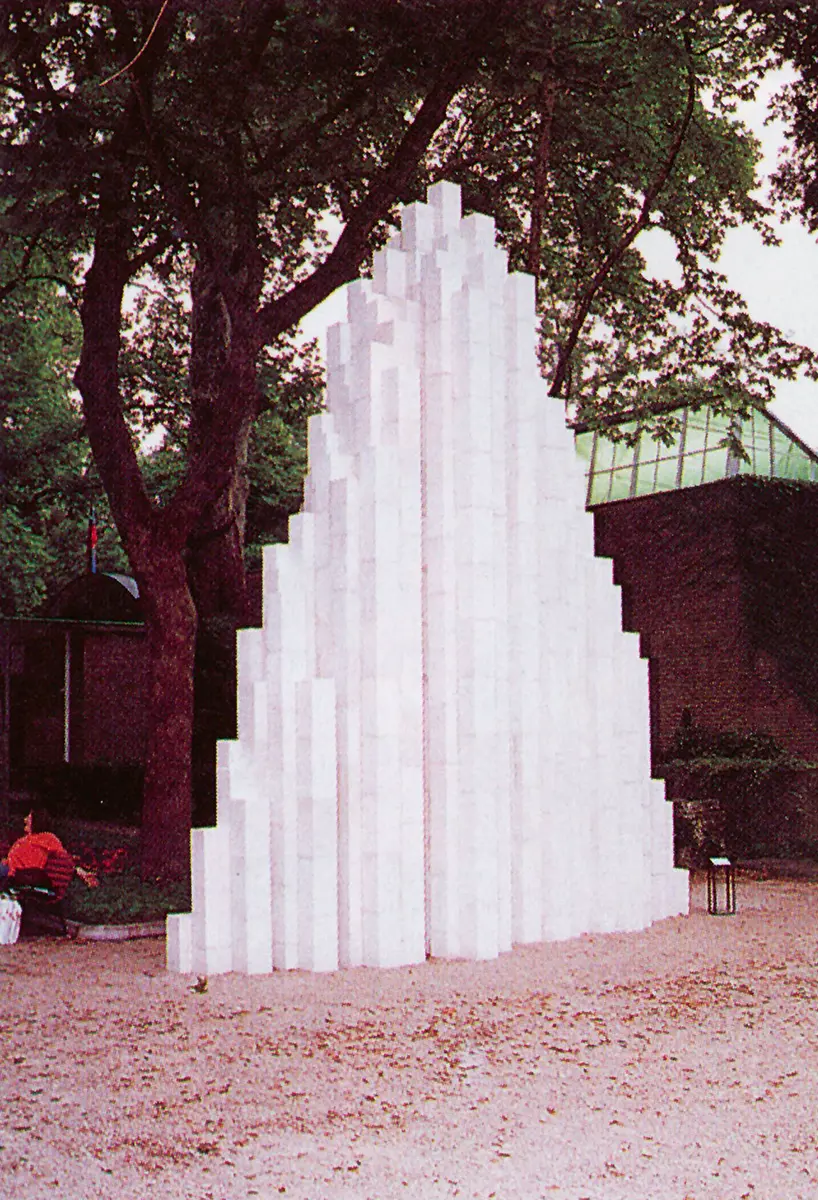
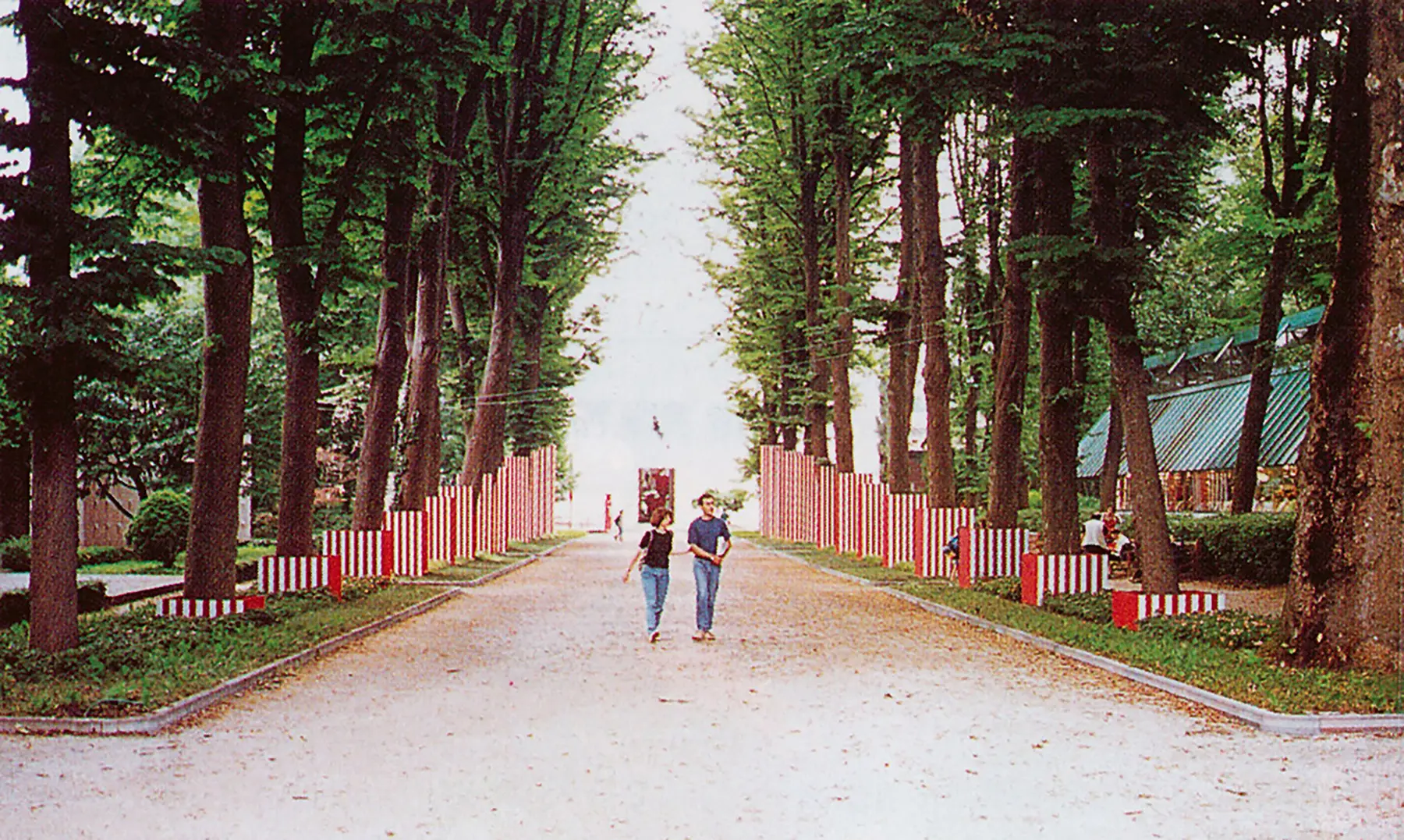
The Biennal, according to Celant, would be “astronomical, cosmological, and titanic.” (According to one article, astronomical because the artists who were excluded1 are also stars, cosmological because it attempted to represent all the universes, and titanic due to the task of putting everything together in a couple of months.) The theme of the Biennial, Future, Present, Past, appears, nevertheless, to be a good idea. With this theme, Celant freed himself of the content that generally and traditionally defines the names of the biennials. He did not manage to leave behind his own personal tastes (the entrance of the Biennial starts with a neo-Gothic sculpture by Sol Lewitt, passes through an avenue organized by the pull of Daniel Buren, and ends at the facade of the Italian Pavillion— where Celant’s show begins—, decorated by Paolini, all three artists have participated in his book Arte Povera in 1968,) but that is an unavoidable factor for anyone curating an exhibit. The interesting aspect of Celant's proposal is that it allowed for the meeting of three generations of artists now of intersection—the present—by requesting that they send works made especially for the Biennal, works strictly “made today.” Celant emphasizes and positives the use of the speed of production as determined by the short time available by defining it as a symptom of “a contemporary vision based on the speed of circulation in the art universe and of artistic information.” The structure thus established also allowed for the removal of the Aperto, the show devoted to young artists. These artists went on to form a (welcome) part of the large exhibit, twenty-some artists among a gathering of about seventy.

In this fashion, the principal show of the Biennal tries to present the art of the moment on the margin of formal styles or thematic propositions and in “global” form as it is conceived of hegemonically. The danger of the proposition is that its limitations end up being representative not only of the potential weaknesses of the artists but also (and above all) of the failure of the curator's criteria in selecting works for the exhibit. Not that there are serious errors in the choice of artists present nor in the omissions (if we accept the implicit though bewildering message: that there are no artists on the periphery.) Rather, it is that the show appears to be an incomplete catalog of exhibits put on by the major galleries during the last few years. Worse still, the artists included could just as well not be included and those not included could take their place with equal dignity and efficiency. The first impression one has is one of arbitrariness, of an eclectic taste, and of a lack of coherent vision as well as inquiry.
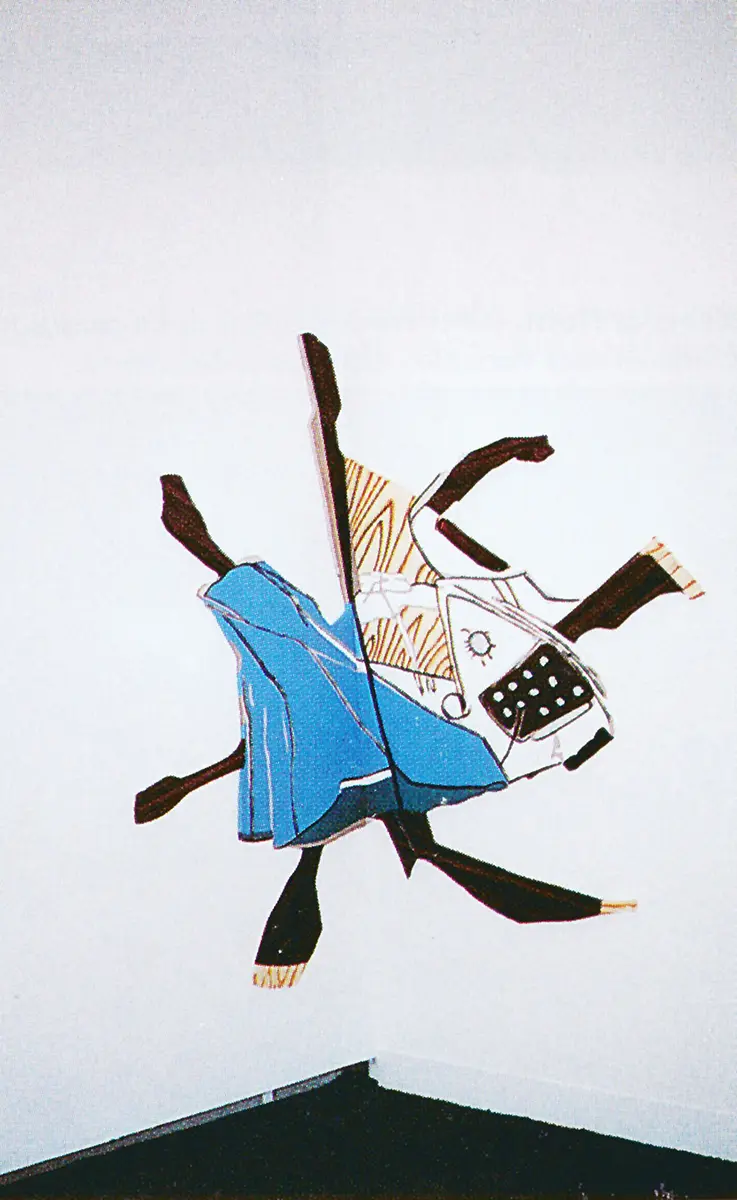
This “saladism" (to coin an “ism" with which to designate this biennial) on Celant's part does not lack rewards for the visitor, but they are entirely a reflection on the artists. Lichtenstein, participating with several typical and repetitive sculptures, also presents the image of a normal, stereotyped house seen on a large scale. In its design, the image seems to produce the expected protuberance in the corner formed by two walls. As one approach, one becomes aware of the optical illusion and that in the real life of the work, it is an angle with a negative space that contradicts the image. One way or another, Lichtenstein manages to postpone what appears to be an imminent artistic death through his use of humor, renewing his work once again. Artschwager makes a desk with a typewriter ‘explode’ against one corner of his room. Visually, the work is not particularly attractive, but it intelligently pursues one of his old special speculations of some twenty years. In those works, one visited and perceived a bedroom from the alternating points of view of the various objects that furnish it with their corresponding perspectives and distortions. In the work exhibited here, the center seems to be located not in an object but rather, in a personal rage that attempts to deform the commonplace object by means of destruction. He reconstitutes the space of the bedroom formally and objectively, freezing the initial emotion and transforming it into a nearly architectural document.
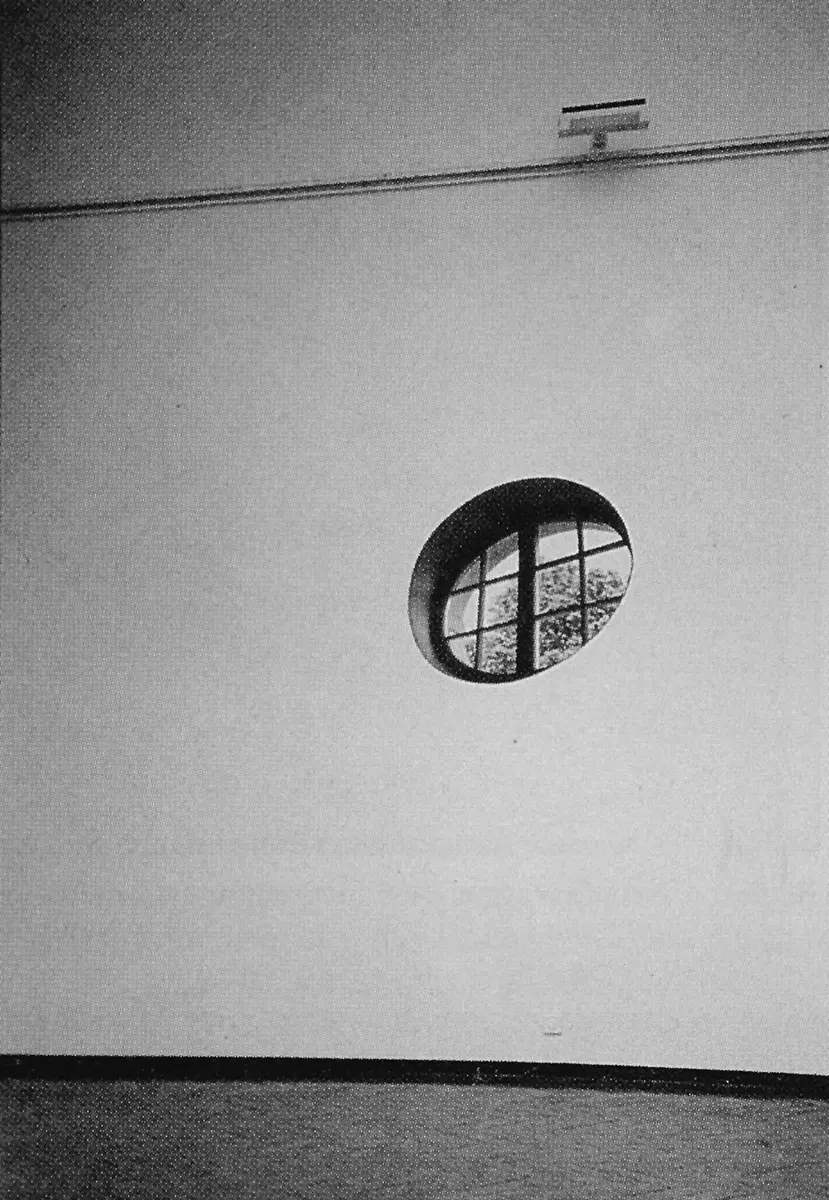
In one form or another, the architectural reference appears as an unconscious leitmotif in the exhibit, either using space in opposition to objects or through the very understanding of space. Jan Dibbets hung two photographs of round windows on as many walls in his space. Given the perspective of the photos, in discrepancy with the actual space, the walls, as well as the spectator, feel relocated in a surprising manner. Dibbets's installation is related to his fine works from the seventies and is one of the best in the exhibit. Mario Merz continues his (endless) series of igloos while the Kabakovs (as in the cases of Oldenburg and Christo, the artistic creation of Kabakov turned into a conjugal enterprise,) present an installation that does not allow one access. It was not clear whether it was because that day there was some insuperable problem or because that was precisely the content of the installation (one could glimpse a sort of interior through a crack.)
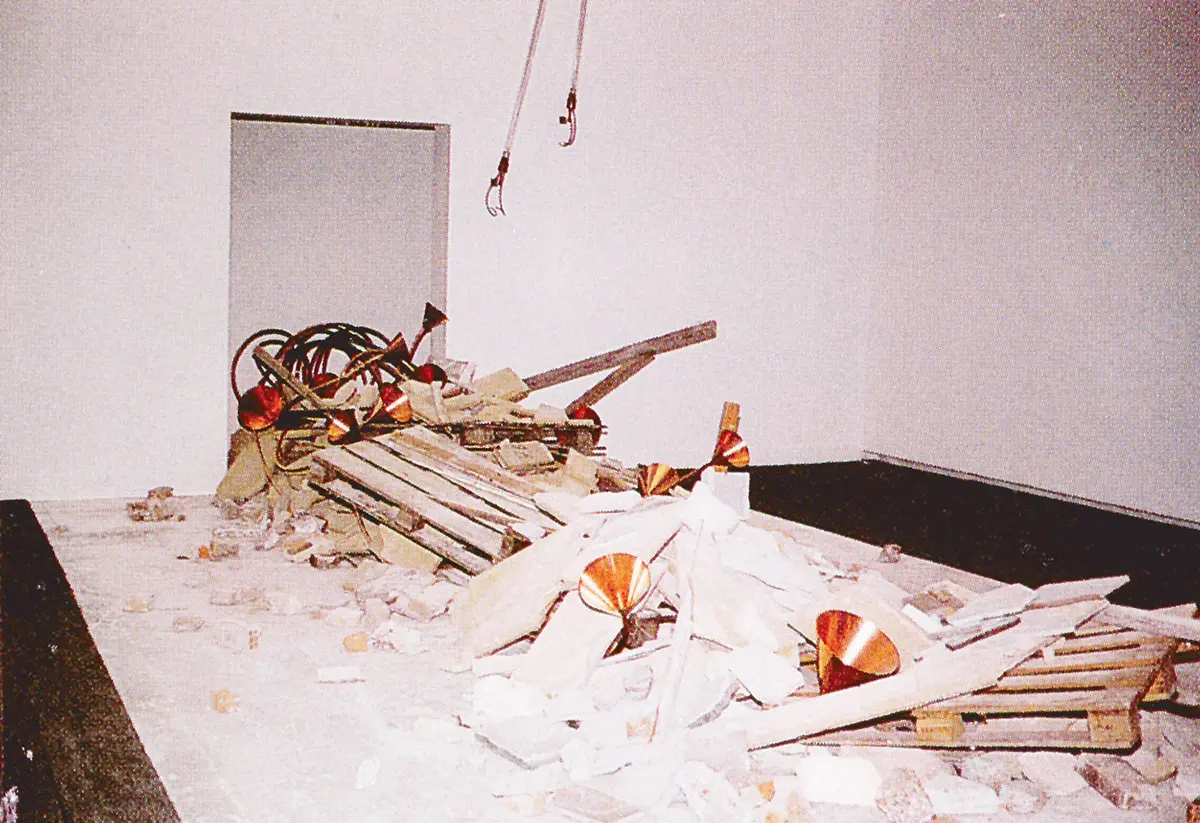
Rebecca Horn filled her room with the remains of demolition, though enhanced by the presence of a sort of copper funnel she has used in previous installations. In a strange manner, the trumpets order and poeticize that which otherwise would be a hermetic pile of debris. This organized disorder continues with the works of Jason Rhoades and Jessica Stockholder, while Maurizio Mochetti returned to absolute order, overwhelming his corner in the enormous space of the Corderia with two enormous balls (Gemini, each one measuring six and a half meters in diameter) made of white plastic.
Two video installations proved noteworthy out of all the works: those of Pipilotti Rist and Sam Taylor-Wood. The first, a Swiss artist, shows (in slow motion) a young, attractive woman taking a stroll who, in a Nirvana-like trance, breaks the windows of the cars parked all along her path. At the end of the street, a policeman can be seen approaching, and eventually, he reaches the protagonist. At this point, one anticipates an altercation between crime and the law, but it turns out that the policeman is a woman who does nothing more than greet the female vandal sympathetically, continuing her beat. The work of the Englishman, Taylor- Wood transforms three walls of his cubicle into a restaurant. The back wall has several tables with diners. The left-hand wall shows an agitated woman crying, reacting in the face of bad news. All that can be seen on the right-hand wall are two hands that alternate between holding a cigarette, shifting a glass of beer, and moving around to placate the woman.
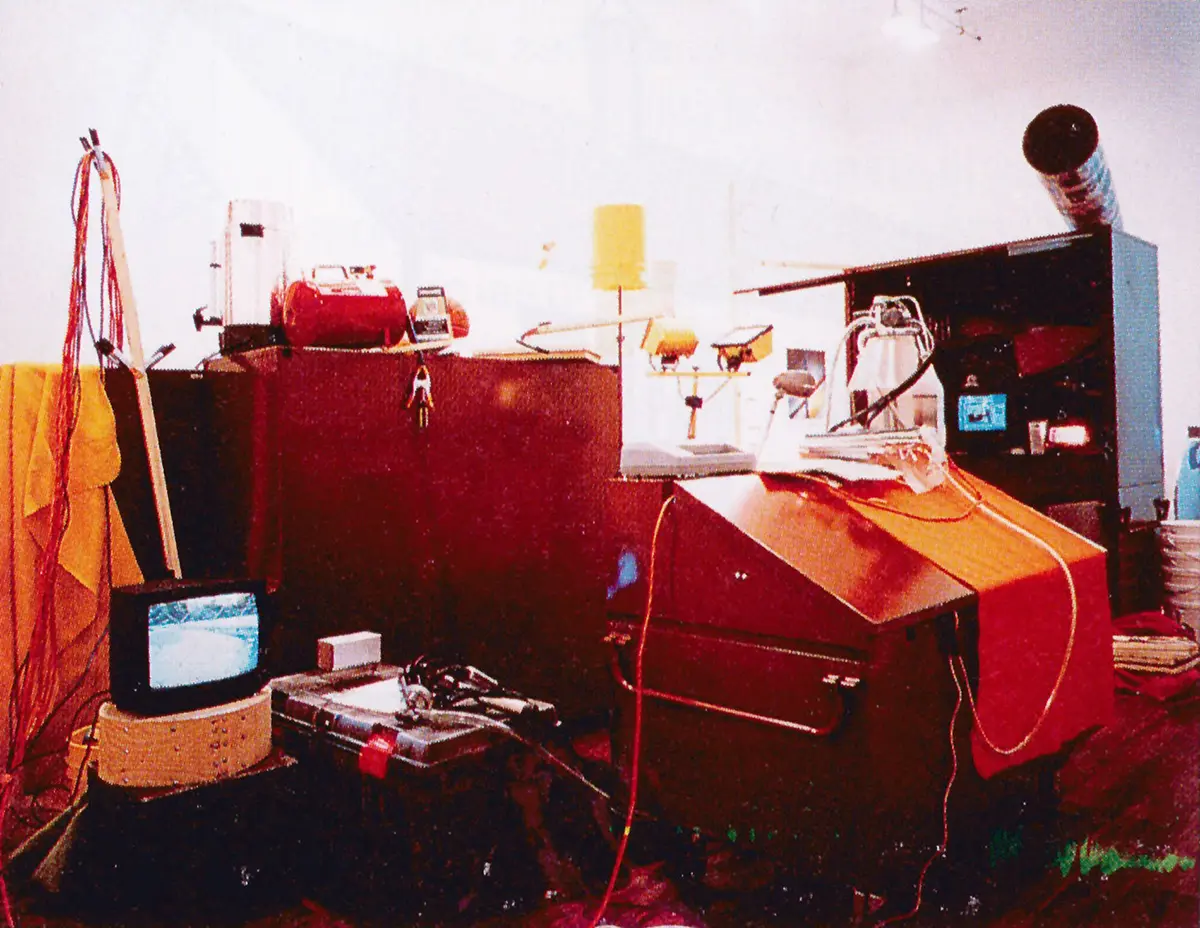
Neither of the two works is profound but both have effects that seem to be lacking in most of the works in the Biennial. Rist’s message is that of a ‘feminism-lite’ but it is impeccably filmed, each image calculated to produce an unexpected and powerful conclusion. Taylor-Wood makes the spectator feel as if he were at the center of the table— virtually transformed into the breadbasket— with an extreme and exquisite sense of voyeurism.
The voyeuristic fantasy was exploited most directly by the German, Tobias Rehberger, who decided to put an announcement on the wall saying that he would be selling underwear belonging to the female guards at the Biennial in the bookstore at the entrance. Indeed, for some two hundred dollars one could purchase a box containing a beige brassiere and panties, although without the possibility of verifying the authenticity of the merchandise. The work garnished one of the prizes with the indescribable commentary on the part of the jury: “because it percolates into the perception of the spectator with a real, fictitious, personal, and sculptural immediacy.” 2
If in general, the theme of the principal exhibit becomes the suggested theme for the national pavilions as well, the vagueness of the title on this occasion did not help much end the lack of thesis took hold of the entire show. Beyond even the show, I realized that the lack of a thesis took hold of this account as well. If here an emphasis is put on the description of works and not ideas, it is a symptom of the improvisation and light-handedness that was rampant throughout. When someone tried to probe more deeply, as was the case of Gerhard Merz in the German pavilion, who attempted to create a solitary space illuminated with an intensity equivalent to that of the sun and with the ambition of achieving the epiphany of abstract classicism, the sole effect was a fascist atmosphere. When someone tried to capitalize on and summarize a successful career over the last few years, as occurred with the British artist, Rachel White- read, the outcome was a display with the transparency of a recipe. White-read makes molds of the negative spaces in objects, a trick Bruce Nauman had already used with the space between the legs of a chair midway through the seventies. White read is known for having done it with a multi-story building and that work had been effective due to its scale and presence, once the shell of the building was demolished. But in the English Pavillion, the potential appeal of the works is reduced to what difference there might be between rubber and plaster or between a floor, a mattress, a bathtub, and a pile of books. The problem is always the same and what is expected of the spectator is that he answers the question: “What do you like the best?" The Russians, who were initially going to present the duo Komar and Melamid, changed their minds upon finding out about Celant’s show (once again the survey of the most and least popular paintings in one country, which this time is Italy.) In their place, they exhibited Maxim Kantor. With the best of intentions, Kantor responds to his own experience of persecution and agony he has endured during the years of the Soviet Union with stale and ineffective expressionism.
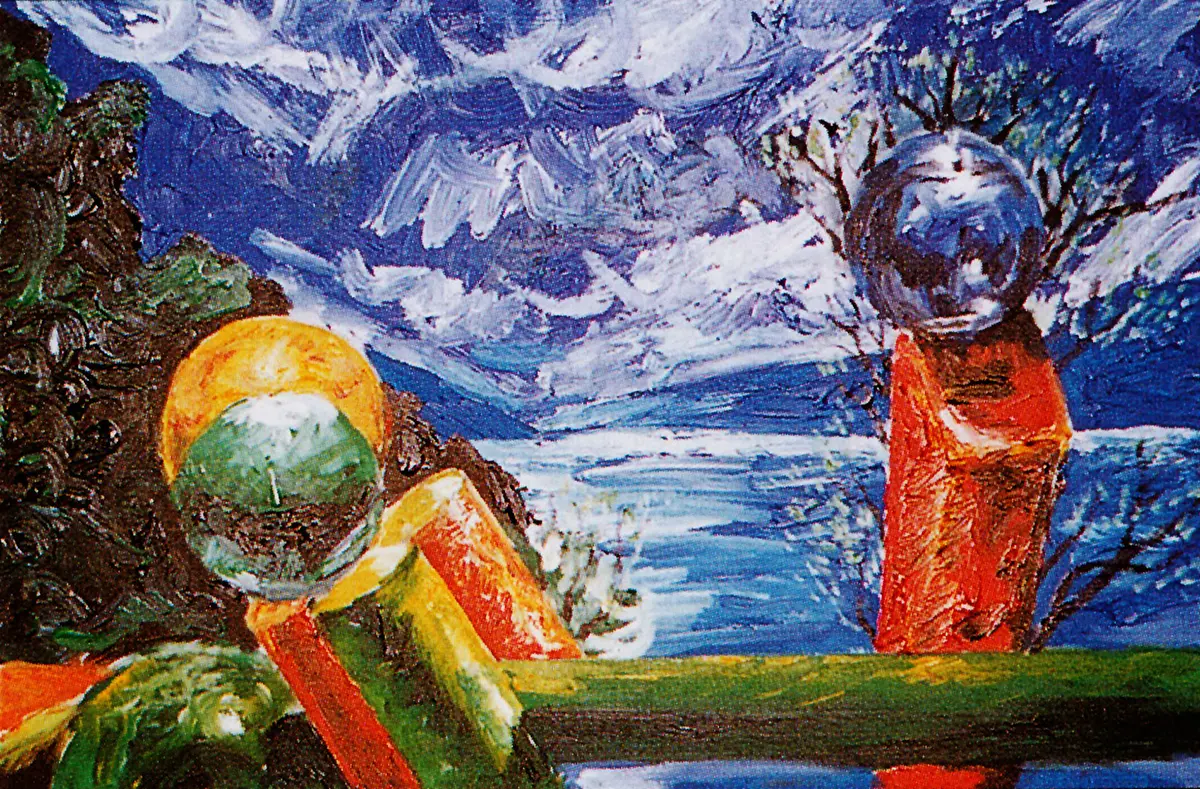
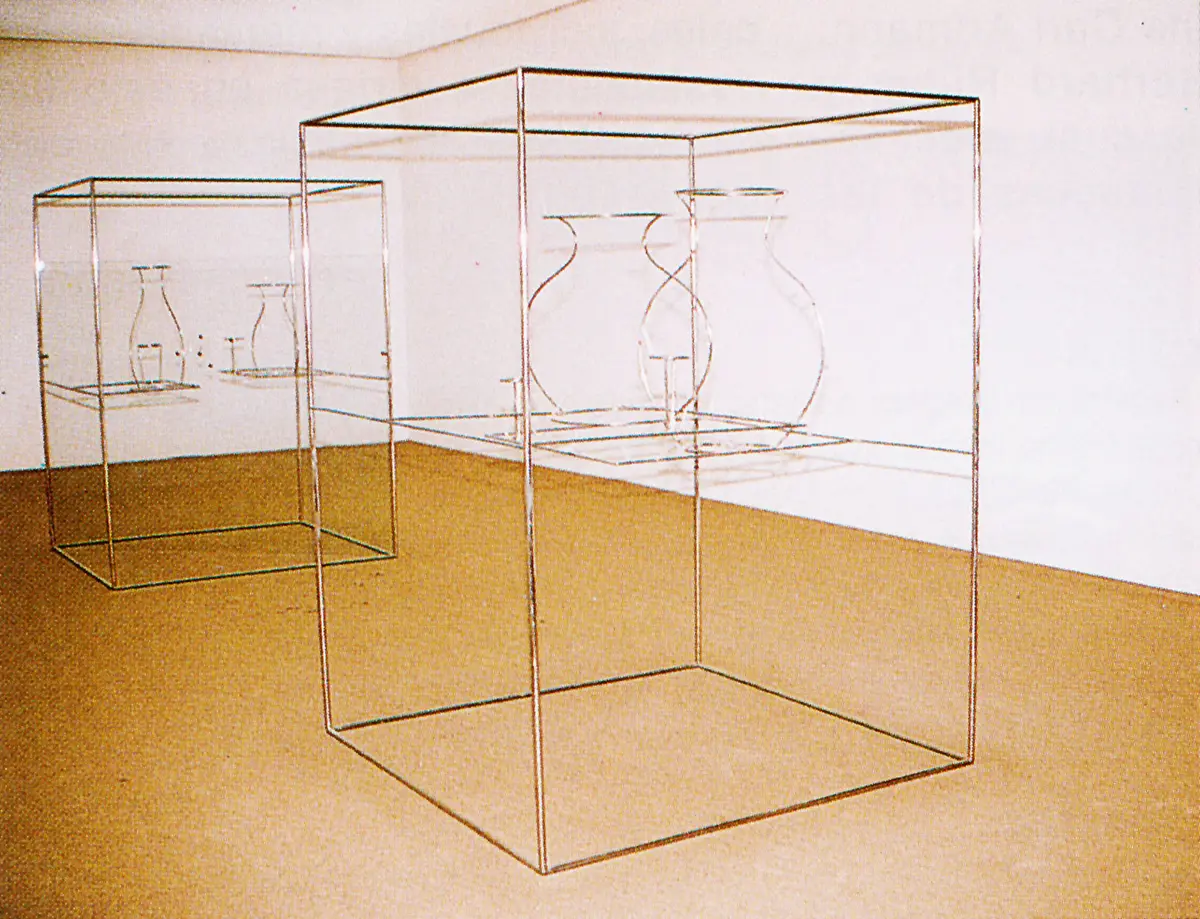
Brasil is honorably represented by Jac Leirner and Waltercio Caldas. The former with one of his typically obsessive accumulation of objects (this time, business cards of galleries at which he had appointments,) the latter with a series of sculptures made of chromed tubing describing still life’s that resemble pieces of furniture by Breuer and Mies van der Rohe. The works of Caldas, which have an impact on first viewing, grow weaker with a closer reading when the spectator sees that the tubes have labels stuck on them with the names of a series of artists who inspired the work and, in whose name, it stands as a homage. The two discourses, the formal and the conceptual, do not seem to come together. Otherwise, Latin America is, once again, atrociously represented. The accumulation of works presented by the Italo-Latin American Institute diminishes even the work of Francisco Toledo, who hybridizes the contemporary with the pre-Colombian in a series of ceramic pieces (a problem already treated more effectively and some time ago by the Colombian Nadín Ospina and the Peruvian Kukuli Velarde.) In the Argentinian booth, interesting paintings by Ana Eckel are buried in a visually arbitrary installation. Uruguay exhibits Nelson Ramos, an artist who has always been noteworthy for the renewal of his own language and professionalism. Here he exhibits a series of commonplace objects taken to an iconic level that looks like a study for late Latin American pop art. And Venezuela detracts from an interesting artist, Roberto Obregón, by showing a part of his Dissections, failing to communicate the ambition of his initial linguistic proposal.
Within this relative international poverty, there are two pavilions left that deserve mention: Holland and Spain, which, located one next to the other in the gardens of the Biennial, provide a certain respite and one pavilion—Austria—for what it symbolizes. Aernot Mik is one of the exhibiting artists from Holland with an installation that wisely combines video with objects and the use of the space. The spectator is faced with a pair of environments with furniture that excretes suspicious liquids at regular intervals while a video shows an individual kneeling on a platform slowly rising to the point of vanishing and descending once again. Meanwhile, other filmed spectators inflate and deflate rhythmically as the furniture sprays them with gray and purple. The situation is altogether preposterous, inexplicable, mysterious, and exceptionally funny. Mik manages to caricature the tedium of consumption and of anodyne repetition using those very dynamics in a humoristically poetic context that recalls the golden era of the movies of Chaplin.
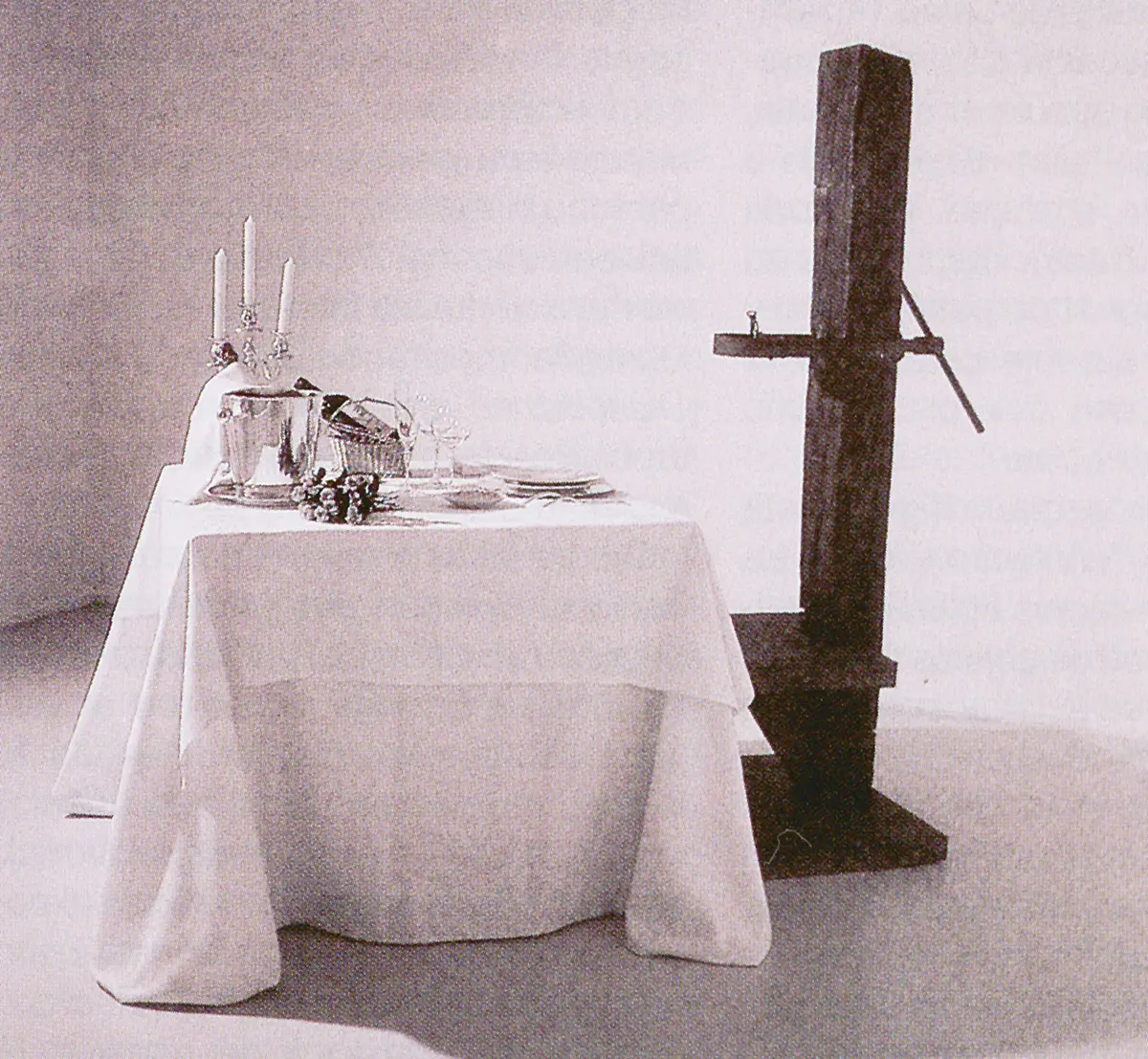
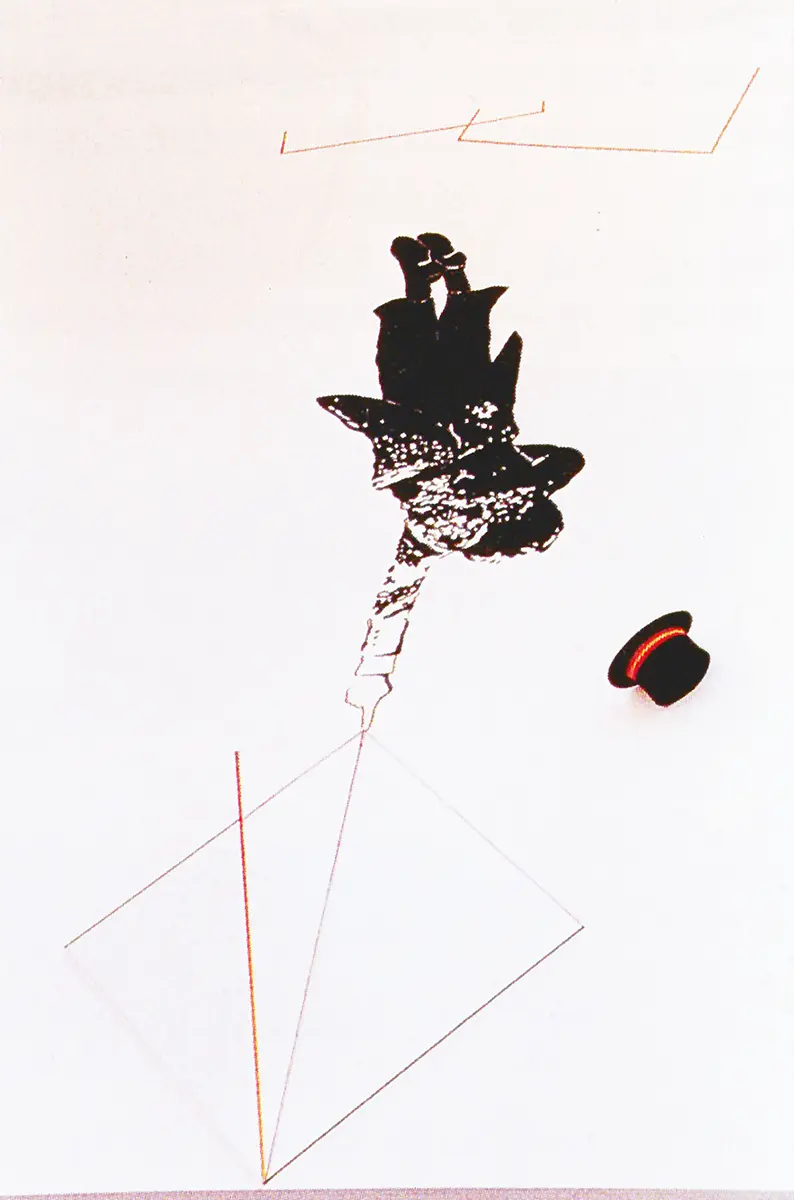
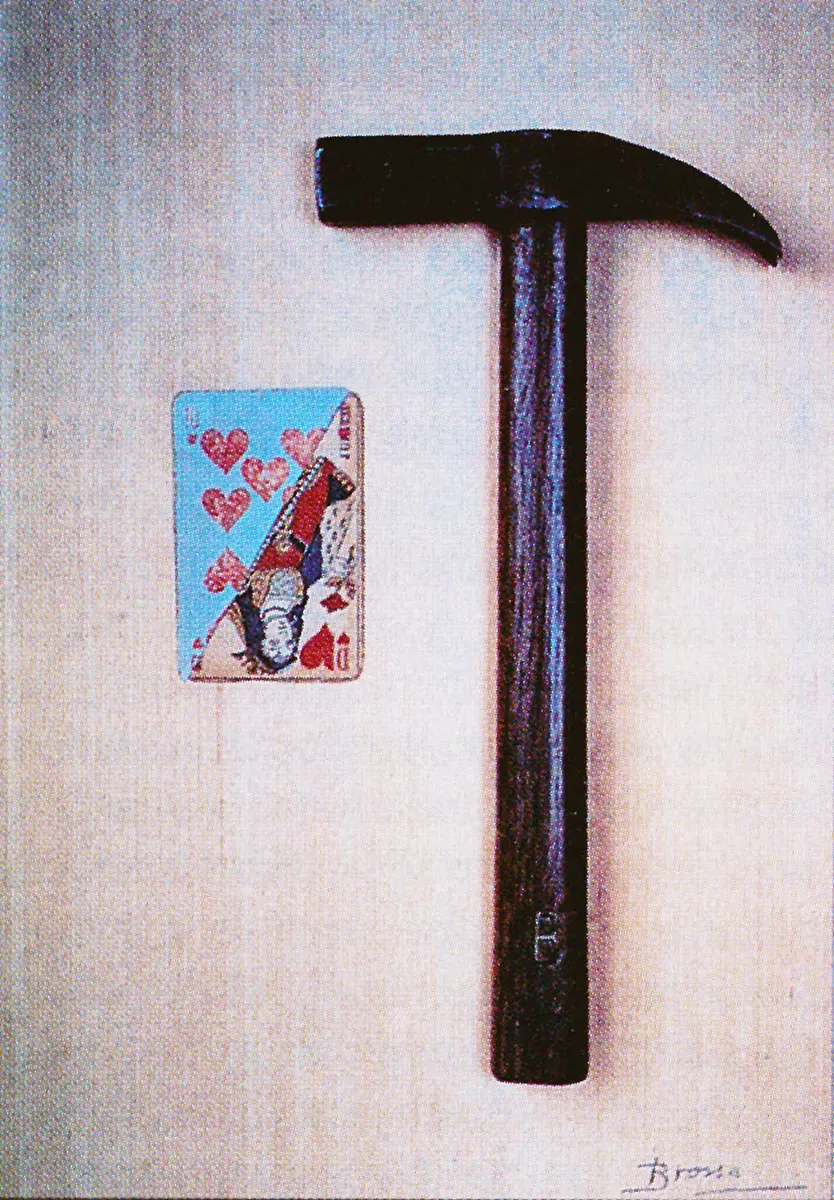
Spain does justice to the work of Joan Brossa, a Catalan artist in his eighties who, in a manner like Broodthaers, began as a poet and later entered the fine arts as he expanded his work. Unknown internationally despite the respect of his countrymen (Tapies among many others,) Brossa anticipated much of Flux- us art and conceptualism and was probably the pivotal figure for the generation of contemporary Catalan conceptual art. The show, even with a few slips toward the obvious, presents a collection of poetic ready-mades that extend from 1951 to 1994 and that constitutes one of the few submissions that justify a visit to the Biennial. On a less important plane, but creating a fine counterpoint and an elegant complement, Spain also presents the work of Carmen Calvo: pieces that develop across a series of blackboards and turn the objects applied into signs—reality as writing.
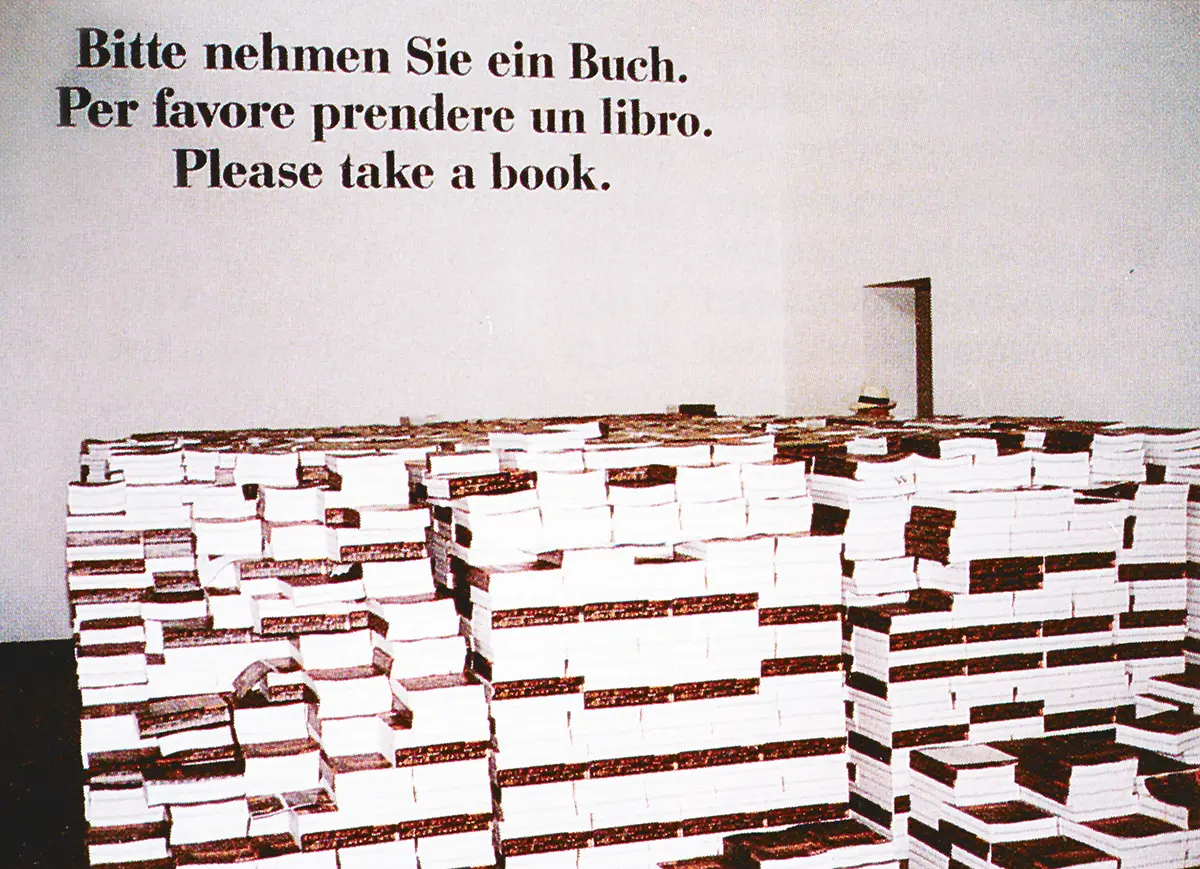
Finally, Austria, instead of exhibiting the works of artists exhibits a book of art. In fact, it is the entire edition of a book of art: thousands and thousands of copies of a 764-page tome which the public can carry away for free. As one might expect, many people took it with them from the pavilion but later decided that the contents were too hermetic or that the book was too heavy, and the gardens of the Biennial ended up strewn with literary memories made damp by the rain. But if it was the case that in visual terms Austria enacted a kind of self-immolation, as far as promotion goes, it accomplished an act of brilliance unequaled in the Biennial. The book is a documentation of the “Vienna Gruppe”, a group that, working from concrete poetry, acted in the arts from 1954 to 1960 and (like Brossa in Spain) prefigured much of later Fluxus and conceptualist art. Given that art history is not written in Austria (or in Catalonia or in any country farther out on the periphery,) these Austrian artists were never renumerated by international fame and “conceptualism” turned into a New York label applied only to works made a decade later within the appropriate geography. The book, for those who ended up taking it with them and, going even further, reading it, is extremely interesting and instructive. In a clear attempt to redirect history, the work of Friedrich Achleitner, Hans Carl Artmann, Konrad Bayer, Gerhard Ruhm, and Oswald Wiener is presented, which in fact predates many of the hegemonic works that brought other more recognized artists their fame. But it is not so much the work of these artists that attracts one’s attention (interesting in some cases) or their manifestos (antiwar and proclaiming the freedom of poetry) but rather the act, realized by Austria itself and what it means in the context of the Biennial. The country decided to invest in an action of historical recognition, an ambitious endeavor even when it is questionable whether the sought-after re-writing of history will be achieved. But to take it even further, it also unmasked the Biennial as an institution not designed to “appreciate and study art” but—using every medium at its disposal—to try and impose hierarchical orders on national, individual, and commercial levels. Austria’s impudence in this context was memorable and commendable and I still carry the catalog around with me.
NOTES
1. La Repubblica, June 11, 1997, p. 33.
2. Ten of the prizes at the Biennial were given to artists who were present in this show: Marina Abramovic and Gerhard Richter shared the International Prize; Agnès Martin and Emilio Vedova received the prize for artist development; Douglas Gordon, Piplotti Rist, Marie-Ange Guilleminot and Mariko Mori, the 2000 Prizes; Rehberger the special prize given by the Fondazione Cassa di Risparmio di Venezia; and Taylor-Wood received the Illycaffè Prize. France received the country prize. The remaining prizes, among the national submissions, went to Rachel Whiteread in the English pavilion, and Ik-Joong Kang in the Korean Pavillion with each also receiving one of the 2000 Prizes; and the Greek Alexandras Psychoulis with the 2nd Benesse Prize. With this distribution, the disappearance of the importance of the national submissions was reaffirmed.
LUIS CAMNITZER
Uruguayan artist. Professor in the Department of Visual Arts at the University of New York State, Old Westbury College.