According to the curatorial team of inSite 97, the participating artists were invited to localize or construct places of encounter and dialogue within the transnational context of the Tijuana and San Diego region. The various interventions carried out in public places in both cities also provided an opportunity to think about the capacity of art to function as a medium, a construction or articulation of meaning, as a strategy for examining its possibilities and scope. At the opening, the artist Andrea Fraser made her own inaugural speech after listening to messages from the Presidents of Mexico and the United States delivered through a government spokesperson, as well as to words from the different organizers. Her performance consisted of repeating the same words of protocol thanks, calling into question both the good intentions of the official institutions as well as the importance of the inSite initiative. Fraser's intervention was one of the few works of political content which were able to demonstrate that only by acting from within can critical discourse in art become effective. In this respect, only some of the artists who wanted to express a commitment to frontier problems were able to meet the challenge posed by subversion and denunciation.
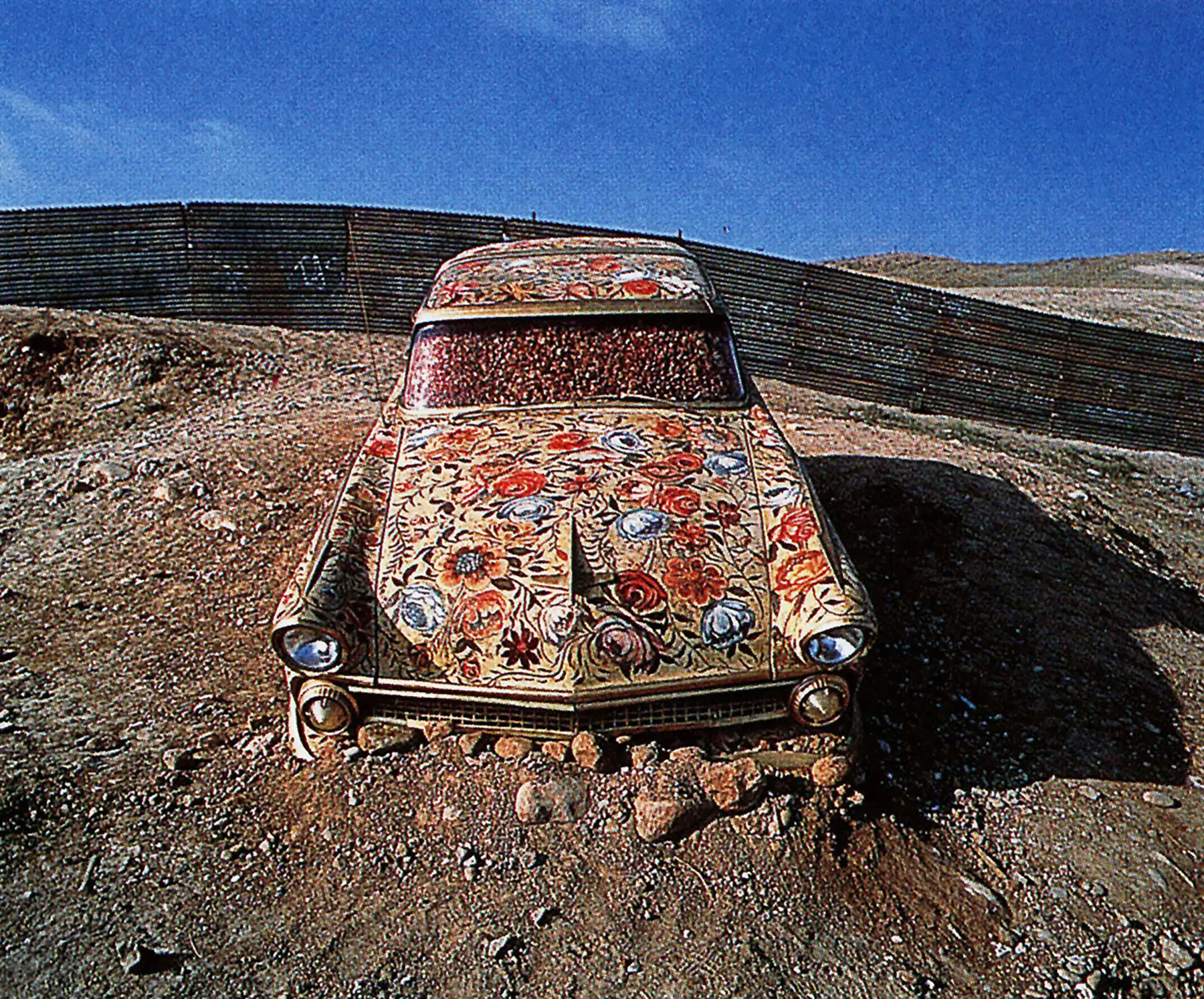
One of the most successful pieces was by the Colombian artist Fernando Arias, who drew a white line simulating cocaine under a sharp fragment of the dividing wall. By creating an atmosphere that was both disturbing and cozy, the work referred, Arias explained, to the themes of power, dependency, and separation, from a political, social, and economic standpoint. Power relations were also explored by Tony Capellán in The Good Neighbor, a work that was more aggressive and therefore less subtle. An electric saw moved from one end of a table to the other, generating a tremendous noise; at both ends, two empty chairs evoked the ineffective good intentions of our political leaders.

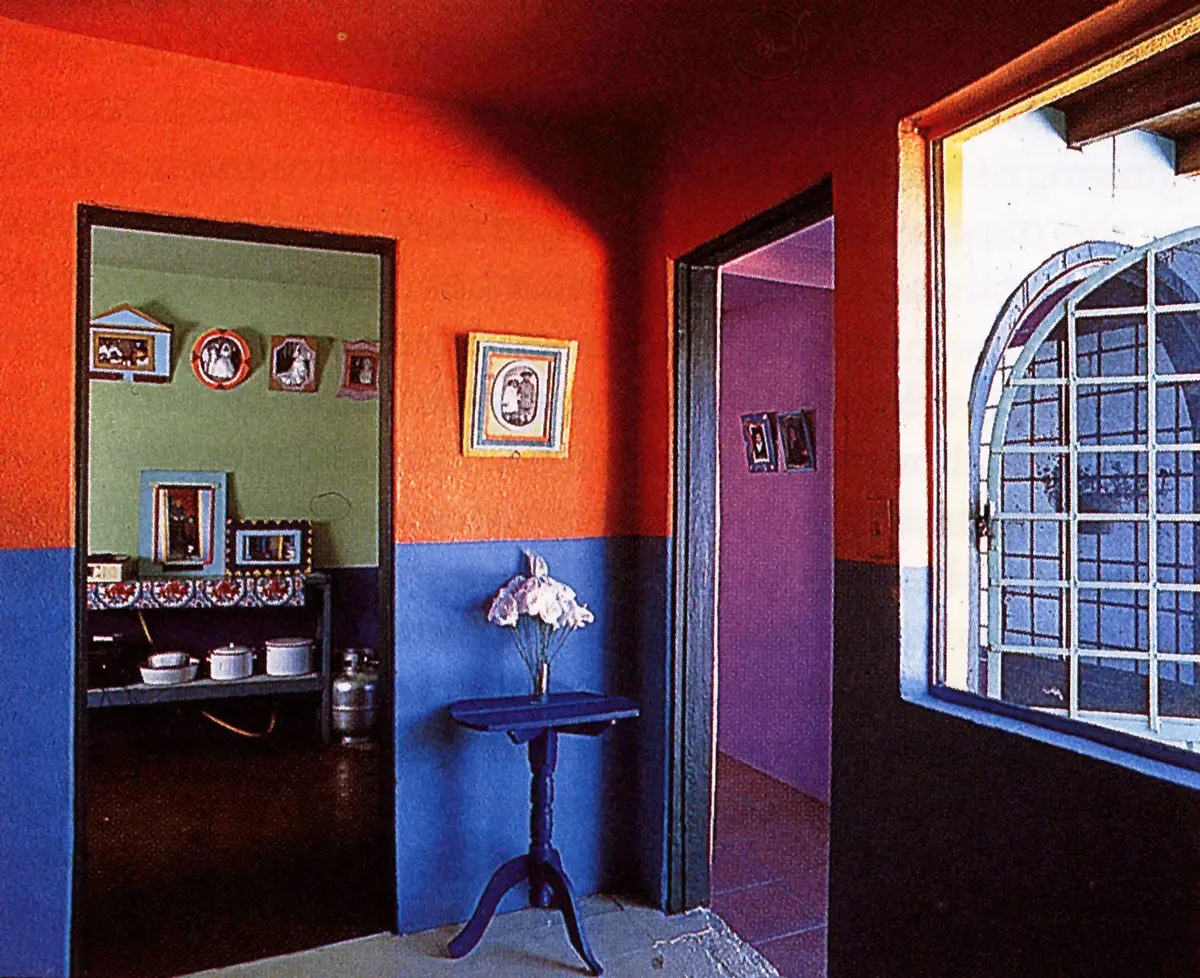
Many of the works that tried to adopt an ethical position proved to be mere illustrations of the political and social problems they wanted to address. Miguel Río Branco presented in a dark basement a work titled Between the eyes, the desert, three parallel projections which associated the tired eyes of migrants with the desolate images of a desert. The piece by Jamex y Cinar de la Torre, a pyramid that sought to denounce the loss of the values of national identity through the use and abuse of hackneyed symbolism, merely revealed its own recourse to cultural stereotypes. In a similar way, Patricia Patterson remodeled The little house in the small village of Altamira, painting its walls with Mexican colors which revealed the touristic exoticism of imported criteria.
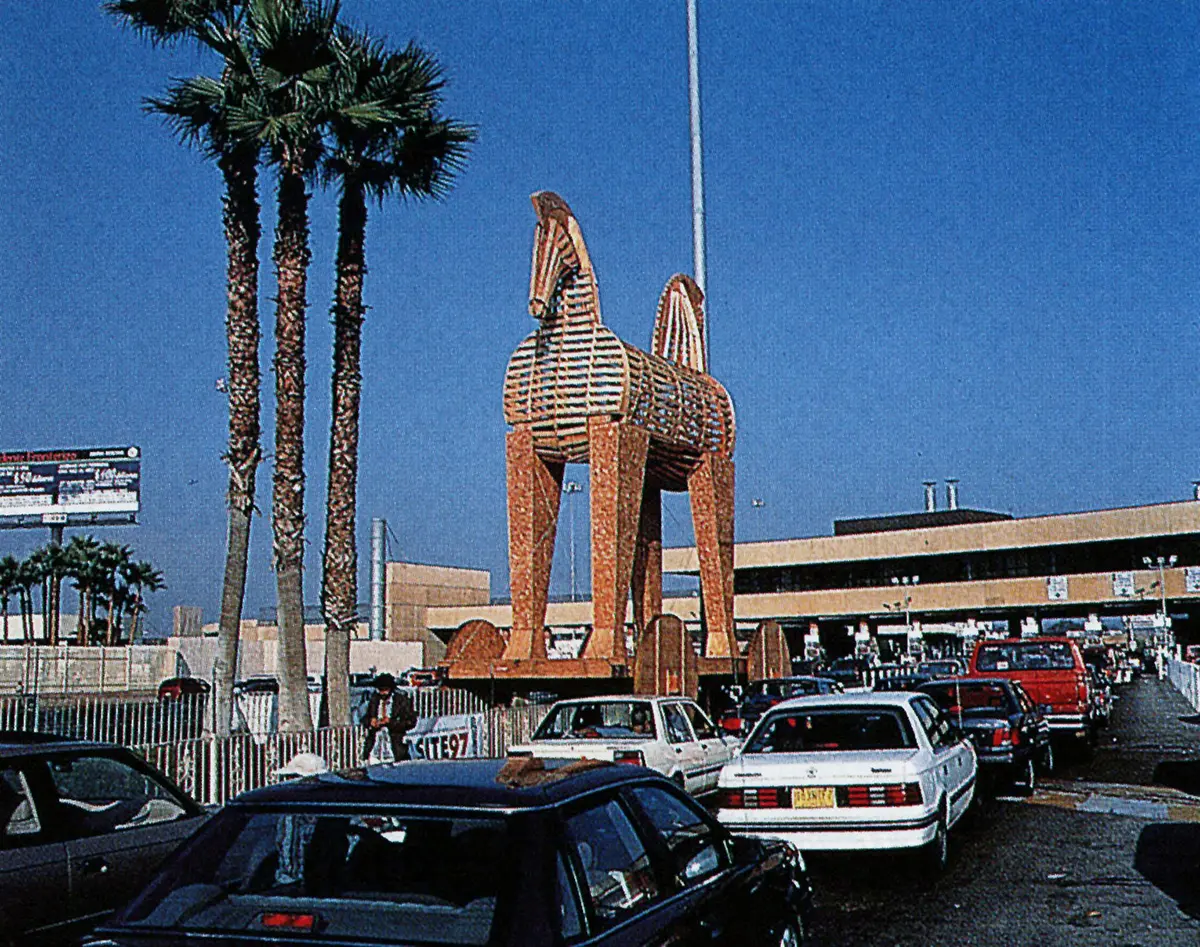
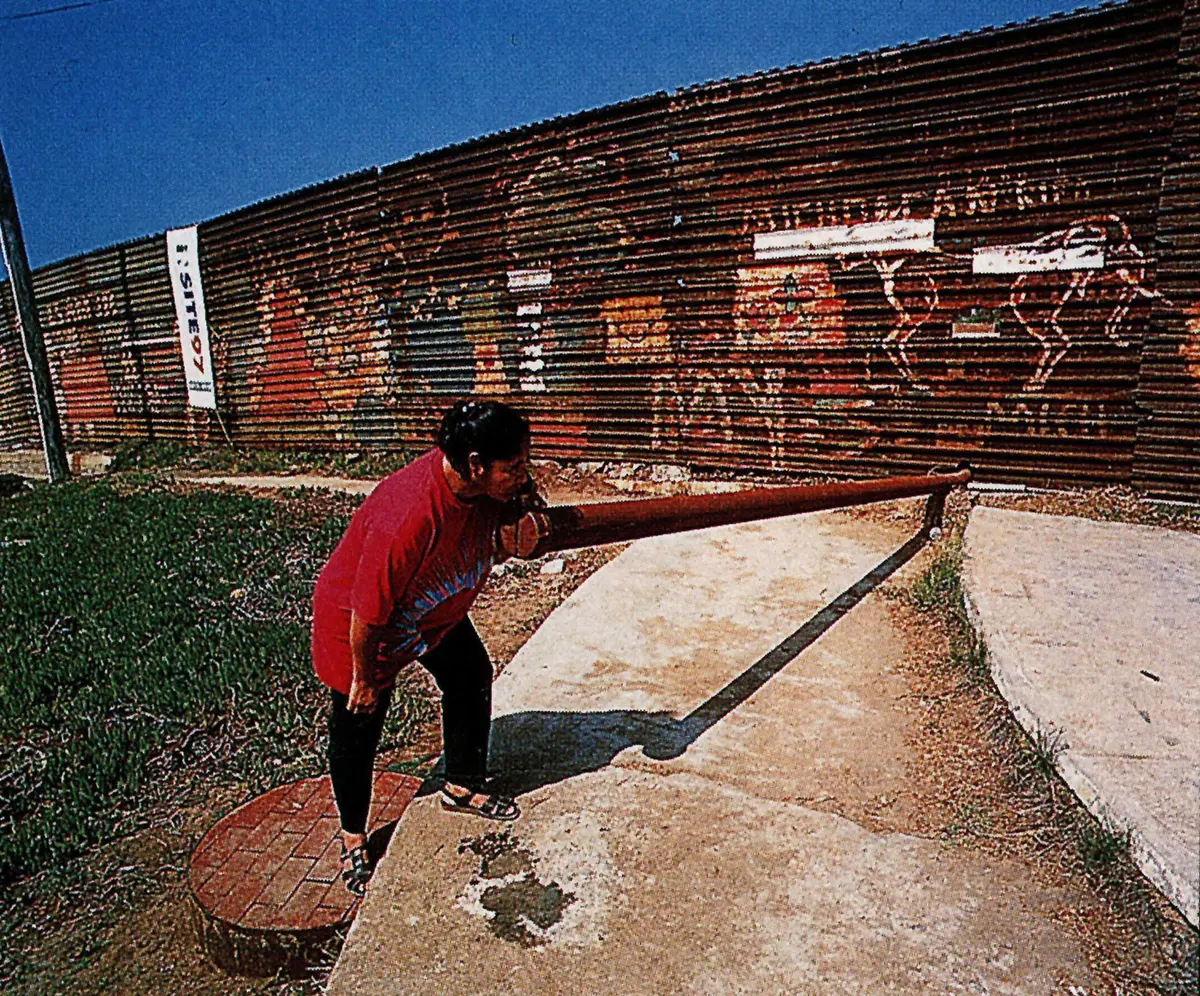
The most interesting works were undoubtedly those of the artists who worked in open spaces, encouraging the spectator to change their parameters of perception. The Trojan horse which Marcos Ramírez Erre constructed at the busiest point of the frontier clearly alluded to the idea of the invasion and the reciprocal influences of both cultures. The two heads of the horse—each looking to one side of the frontier—encouraged the spectator to see the wall, not as a dividing line but as an expression of contiguity. By acting in such ways on the implicit meanings of the frontier region, the artists established a network of the discursive systems that managed to link the two regions rather than point to their differences. On the beaches of Tijuana, Louis Hock's two drinkers appeared on both sides of the wall; converging to the same point beneath the wall, they offered visitors a drink of international water. The ambitious project by Vito Acconci, an island of sand subject to the ebb and flow of the tides, evoked the successful and failed encounters on both sides of the frontier. Set in the sea almost at the end of the wall, the work used the natural elements which challenge the artificial and arbitrary separation created by the wall, since the water remained the same, circulating in the same way on both sides of the line.
Alongside these works, others seemed to have reorganized geographical space, proposing new readings or alternate solutions to link both cities. Francis Alÿs' proposal was one of the most discrete and subtle: "To go from Tijuana to San Diego without crossing the frontier. (Going via Santiago, Papeete, Hong Kong, Alaska, Los Angeles...) I will take you around the world in a perpendicular line back to the point of departure". Irán Do Espíritu Santo arranged twenty granite dice on both sides of the frontier, with their sides suggesting that they had been cast at random. On coming across the dice, the spectator could draw an imaginary line between Tijuana and San Diego, depending on his or her trajectory and sense of perception. From a different standpoint, Thomas Glassford proposed in his City of Greens another trip through San Diego in which he allocated 18 greens in unusual places. The work played with the different connotations of the word green while at the same time functioning as a metaphor for the nearby Garden of Eden, the Promised Land to which access was difficult and from which expulsion was relentless. This is the desert.
Other artists worked in public places which, unlike the frontier line, lacked specific historical, social, or cultural connotations, and transformed them into specific sites. In a busy San Diego street, Melanie Smith create a discrete travel agency using a series of additions that, although artificial, seemed to be taken from reality. Mocking in all seriousness the less attractive tourist attractions of both cities, Smith reworked the meanings of national identity by showing how the intrinsic relations associated with this region become dissolved in a cultural amalgam. By ironically exalting these kinds of places, the artist highlighted their heterogeneous and bastard nature which did not cease to be authentic because they were artificial. From a different perspective and using different means, Lorna Simpson explored the phenomenon of hybridization in a video titled Call Waiting, which consisted of crossed telephone conversations in English, Spanish, Chinese, and Punjabi. Although they used very different languages, the speakers conversed with one another, creating a network of communication that was theirs and from which the spectator was excluded.
It is difficult to assess the more than 40 projects by artists from different countries of the American continent. However, despite the divergent themes explored and the different procedures adopted, the works as a whole tried to awaken a territorial or urban conscience, even though some of the pieces had little or nothing to do with the frontier issues of the region. This was the case, for example, with the "promotional stand» of Daniela Rossell in the windows of the Balboa Theater, and with the esoteric Kiosk which Pablo Vargas Lugo created for the Tijuana Cultural Center, a space that lacks an important component of all public buildings: a newspaper stand. From the beginning, the curators were aware that art does not promise any immediate solutions to the problems of a political or social kind that day by day is affecting this region, but they reaffirmed their belief in the fact that art exercises a force that strengthens awareness. And it is awareness winch in the final analysis that makes up reality.
MAGALÍ ARRIOLA
Mexican Historian and Art critic. Lives in Mexico D.F.