To begin with, a few locations:
1. The Cape of Good Hope is where the Atlantic and Indian Oceans converge, the passage through which, in 1498, Vasco de Gama sailed thus opening the trade route between Europe and India. What more perfect site at which to stage a global exhibition right now, when the preoccupations of artists are so focused on cultural traffic, and when the barometers of exchange and colonialism are again so theoretically mutable?
2. The spelling of the event name— Biennale—reflects some of the ambivalence that seems to lie at the heart of the Johannesburg event’s location. In using the Italian version of the word, an apparent homage to its most eminent (if not most direct) predecessor, Johannesburg invokes the prestige and dominance of art markets that accumulated in Venice and indicates the South African event's ambition to define a center of activity toward which trade routes will again converge.
3. The Electric Workshop is a gigantic old industrial building located in a derelict area of downtown Johannesburg which is currently slated for renewal by cultural means. The Workshop is the home of Alternating Currents, the core exhibition of the Second Johannesburg Biennale, and its renovation into a postmodern art space reflects the complicated set of dilemmas that this ambitious event raises—biennial as a coronation for emerging global cities, culturalized urban renewal as high-end business and civic strategy, contemporary art as alien in its own land, artistic expression as an incomplete metaphor for enormous social and historical processes.
4. Less than a mile down the main road, in a smallish room on the tenth floor of an office building, the Truth and Reconciliation Commission was in session, continuing its nearly two-year process of hearing firsthand from the victims and perpetrators of apartheid who have come forward to say what happened, from their experience and their perspective. Both gatherings tell volumes about the new South Africa, and its ambitions, hopes, and legacies.
The Second Johannesburg Biennale gathered contemporary art by 160 artists from 63 countries (though that’s counting in terms of place of origin rather than current residence). Altogether it consisted of six separate exhibitions, a conference, and a film program, all of which respond to the theme of Trade Routes: History and Geography. Core discourses in the works and conference included those of diaspora, postmodernism, postcolonialism, popular culture, multiculturalism, the meanings of territory, the character of national affiliation and citizenship, how the flow of labor and multinational capital interact, the reconfiguration of the urban and the rise of the metropolis as “global" site. The biennale’s conception of globalism seems to be a problematized one, in which globalizing nets are rife with dissonant chords, which result in an individual and collective identity which is characteristically contingent.
It is suggested, in other words, that globalism is the inverse of universalism. Ultimately, there was a sense that the rhetoric of the event looked hopefully, amidst the debris of violent nationalism that is constantly referenced, toward the prospect of a "post-national’’ state of culture. While this is all language that maps keenly onto the latest cultural theory, still it was hard not to wonder what exactly to do with this idea of post-nationalism in the midst of the South African context, in which there is only now the possibility of devising anything that is truly national.
Almost by definition, there was a tense relationship between this biennale and the South African arts community. In appointing Okwui Enwezor as Artistic Director, the biennale directorate was no doubt motivated by a complex agenda. While the curators of the first Johannesburg Biennale were both white, it was clear that the second would have to be organized under black leadership, and while the first was curated by South Africans, the second “expanded” its perspective by bringing in Enwezor, a Nigerian-born US citizen resident in New York. Enwezor is well-connected and respected internationally (he was one of the organizers of the African photography show last year at the Guggenheim and was one of Catherine David’s 100 esteemed guests last summer at Documents, for instance) and, in addition to this North American/European profile, he brings a more broadly African perspective to Johannesburg, since he has been a visible promoter of a whole group of contemporary African artists.
A little history is pertinent. Work on the first Johannesburg Biennale, which opened in 1995 on the first anniversary of democracy in South Africa, was actually begun in 1993 well before the elections and hard on the heels of the international cultural boycott which had imposed radical isolation on the country. The biennale’s primary organizers were individuals who had been identified with the apartheid-era cultural bureaucracy (if from liberal positions). The event was famously controversial and contentious (one curator broke another’s nose in a row that was reported in the Sunday New York Times), both for its racial politics and because of the high level of stress that accompanied the whole idea (not to say the logistical realities) of organizing such a large event while the surrounding country was literally reinventing itself. The first biennale was, by many accounts, obsessed with the question of South African identity, and with the replacement of apartheid's Eurocentrism with a re-minted Afrocentrism. In the spirit of the moment, the first biennale made a structural commitment to community-based art and education; a team of internationally-prominent curatorial advisors was invited to work with young aspiring South Africans in a mentorship scheme to train the next, democratically-oriented generation of arts professionals in the country, and its exhibitions were staged in many venues, including a handful of community art centers.
If the first biennale was meant to celebrate South Africa’s re-entry into the world cultural arena, the second was aimed to mark the critical passage of the Johannesburg Biennale into an established and ongoing event. In order to accomplish this leap of scale, it was necessary to forego the interior, national preoccupations of 1995 in favor of an outward-pointed internationalism. This shift was exemplified in the appointment of Enwezor who, in turn, invited colleagues from other faraway places to join him in selecting and organizing the project. This curatorial collaboration, along with the decision to eliminate national pavilions, are the avowed signatures of the 1997 Biennale; to them, I would add an element that was immediately obvious to every foreign visitor, namely the choice to position the project mostly within the international, rather than South African, discourses.
This was no minor matter. On the one hand, it brought to a South African venue an event of unprecedented proportion and gravity and brought the debates of the international art market and intelligentsia to those who were interested (some were). On the other hand, its internationalism drew a much larger imported than the local audience, mostly avoiding the local artistic signatures which, during apartheid, were integrally identified with the political struggle and with the popular organizations built across the country, and which still characterize much of South African cultural production. As was explained to me by a group of disaffected artists in Cape Town, the conceptual language of the biennale artists (much of the work was installation-based, while traditional image-making methods such as painting and sculpture were scarce) was seen as a colonial presence, a cultural declaration that had no roots in (black) South Africa and which was being imported via biennials and art schools and magazines while proper acknowledgment was not being made of the accomplishments of artists and art forms which had been so much a part of the country's process. This is obviously a very complicated question since for one thing, it is not true that whites are the only South Africans making installations, and it is also the case that, in the post-apartheid era, the entire country defines itself differently vis à vis the international community than it had previously. Still, it seems a shame that there could not have been some kind of explicit introduction to that context included as part of the biennale, some orientation about the country's history and how it has shaped what it means now and what it has meant to be an artist there, what it means to address the outside and to have outsiders come flooding in after the long years of the cultural boycott.
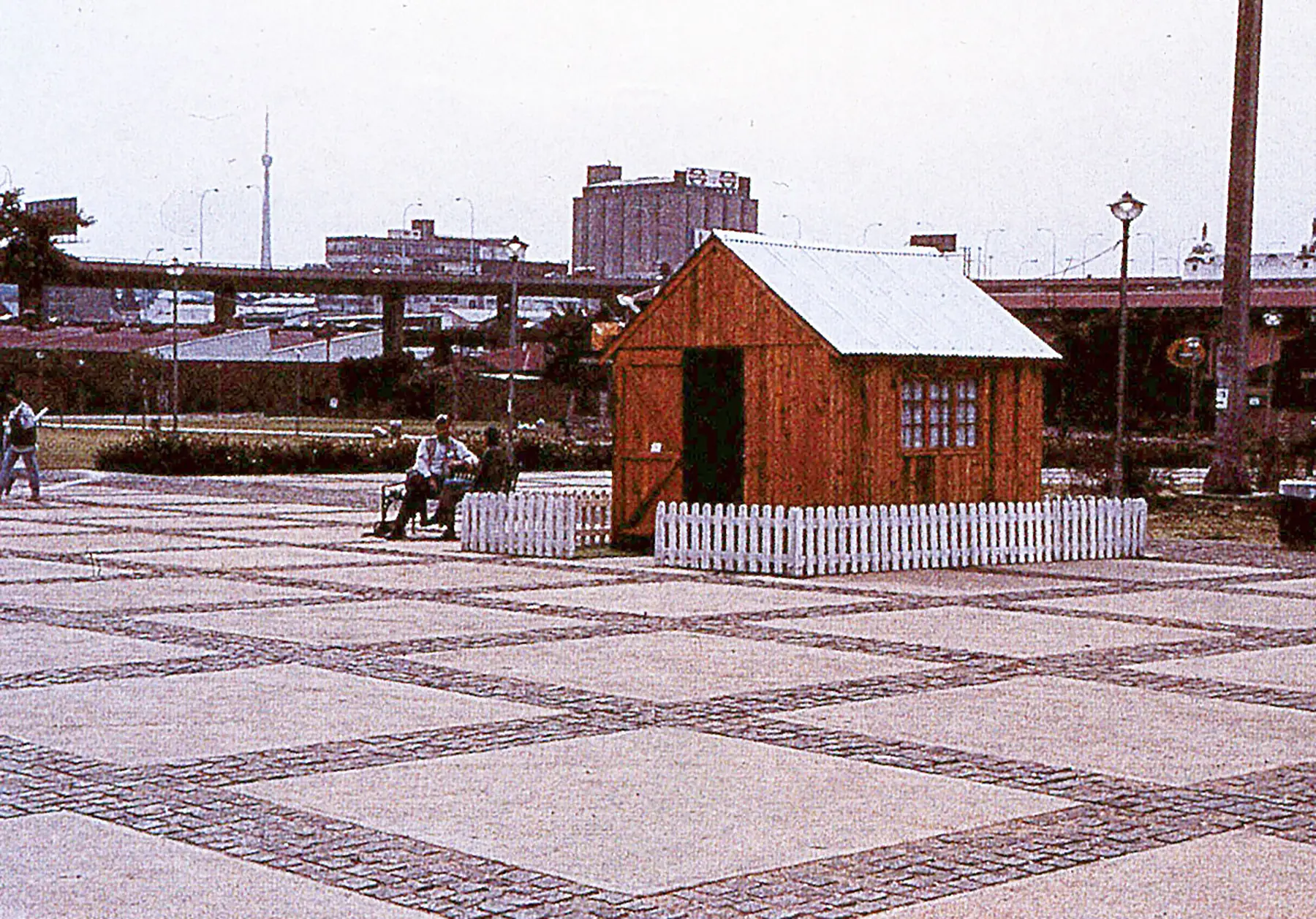
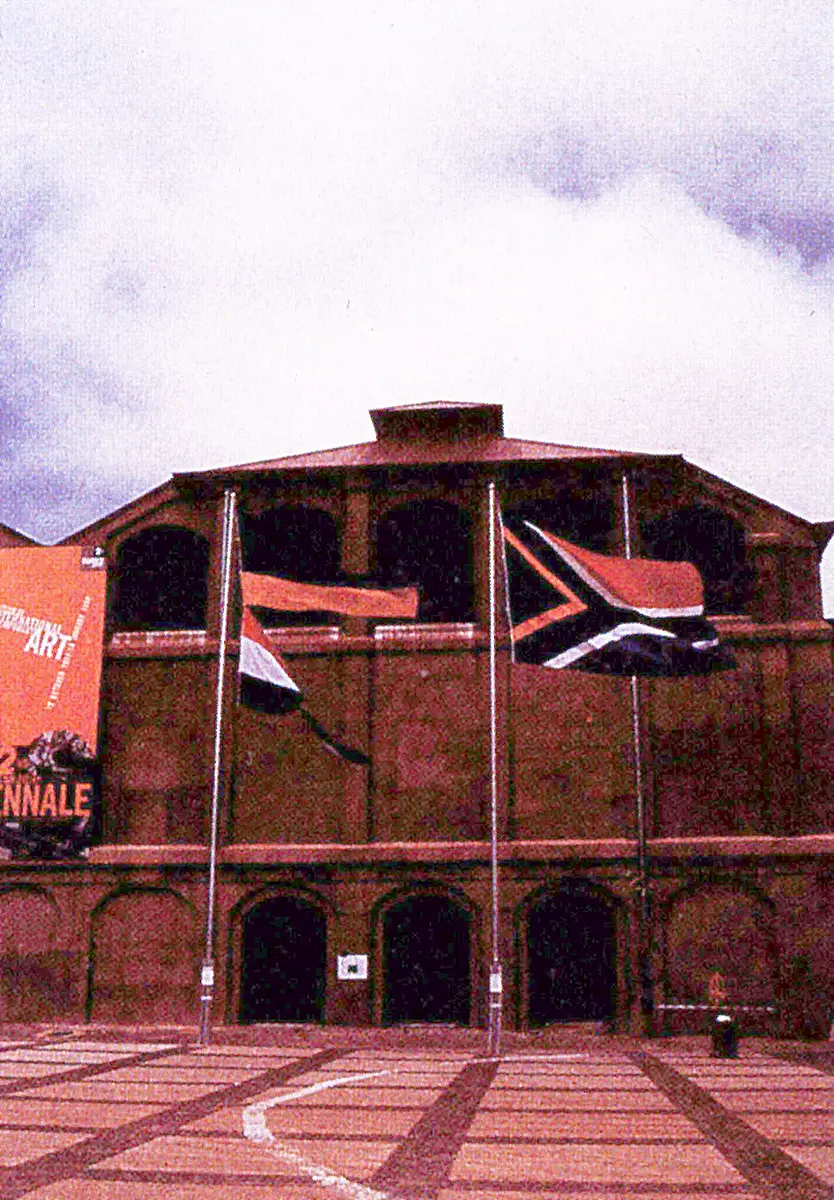
Having said all that, South Africa, and South African artists, were still a visible element of the biennale. The entrance to the Electric Workshop was bracketed by works from Andries Botha (South Africa) and Hans Haacke (United States), both of which insisted on the country's political history as the door through which the biennale must be entered. Haacke's The Vindication of Dulcie September consisted of three flags hoisted high above the Workshop’s front door. Two flew on one pole, the upper being the banner of the ANC exile movement and, underneath it, the old national flag tied into a knot. The second flagpole held the much larger flag of the democratic, post-apartheid nation. The title commemorated the assassination of Dulcie September, who had been the ANC’s ambassador in France. Across from Haacke’s flag poles, both a built a pastoral, a little house surrounded by a quintessential white picket fence. This gentle facade contained a malignant interior, a refrigerated, metal chamber lined with the words of witnesses in the Truth and Reconciliation Commission hearings. In contrast to Haacke's triumphant note, this morgue preserved the ambiguities of the TRC process which, although conceived as a way to build a new country on a foundation of truth about the past, has also become a site of denial and cynicism.
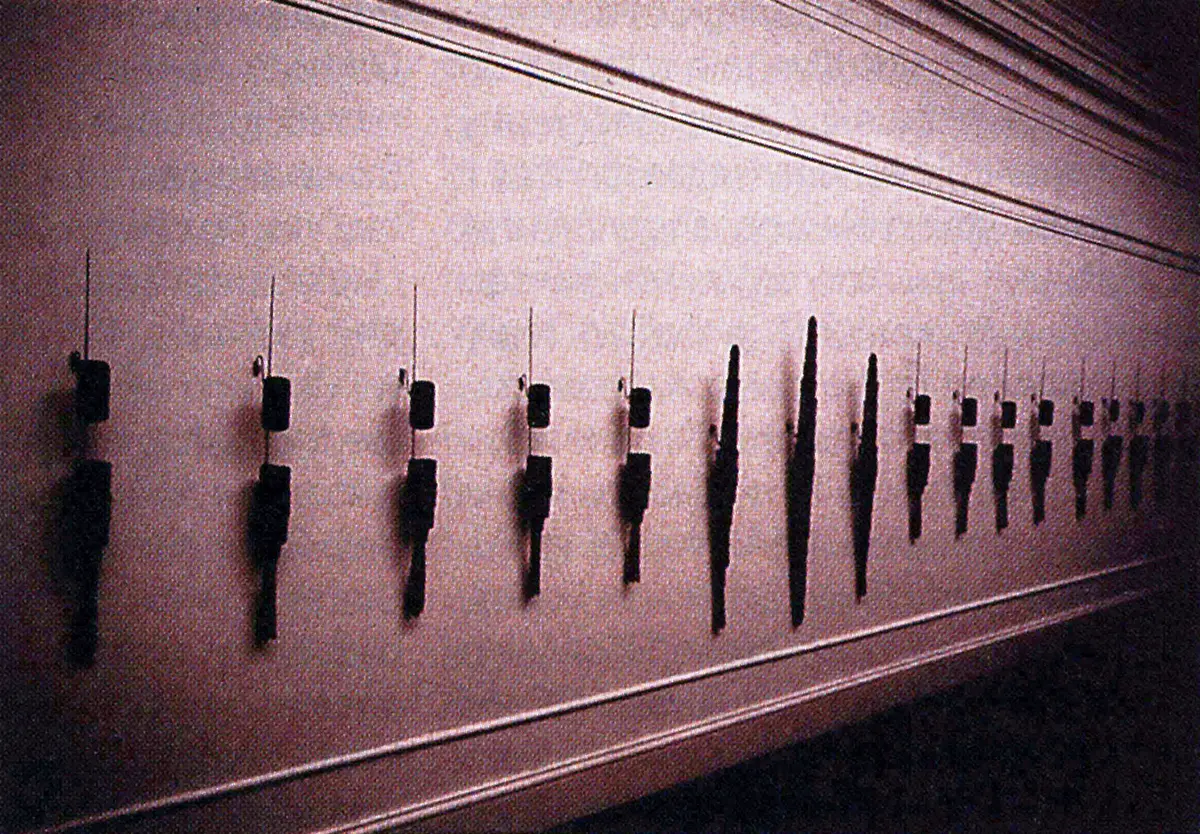
Other South African work in the biennale covered a broad territory. Graft, an exhibition staged in the National Gallery in Cape Town and comprised entirely of South African artists, aimed to articulate some of the new meanings of self and community that are surfacing there. It offered a series of vignettes, ranging from autobiographical to institutional in subject matter, and spanning a very broad formal terrain in suggesting that South African artistic production today is far from a simple story. Along these lines were Bridget Baker's embroidered family photos in First International Exhibition: 2nd Johannesburg Biennale, 1997, Siemon Allen’s wall panels woven out of discarded videotape (installed as barriers in the gallery's foyer in protest since the staff, due to institutional stuffiness, would not allow the de-installation of the permanent collection to accommodate the biennale); Antoinette Murdoch’s creepy walls covered with pink floral praying hands made of toilet paper; and Sandile Zulu's Frontline 3 with Centurion Models, in which a parade of typically African ceremonial staffs, replete with a surface of dung, concealed an equally typical array of grenades and gas canisters.
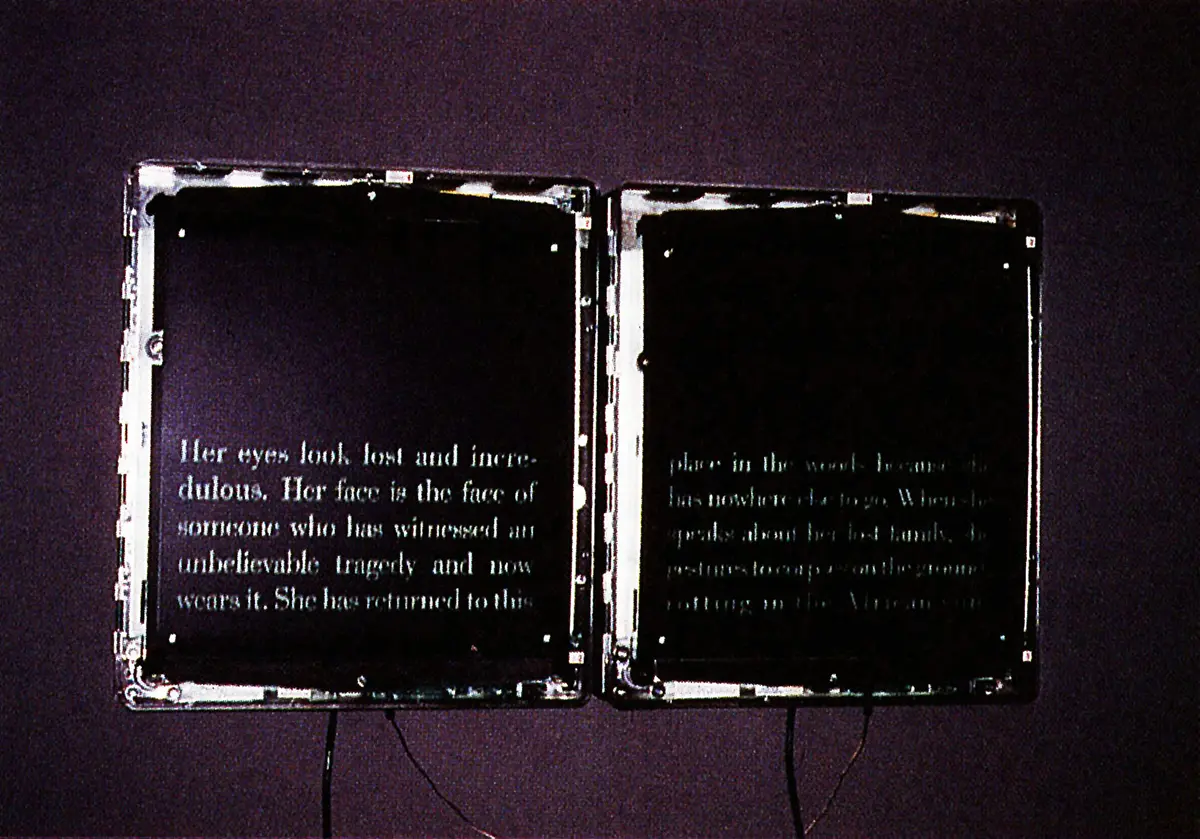
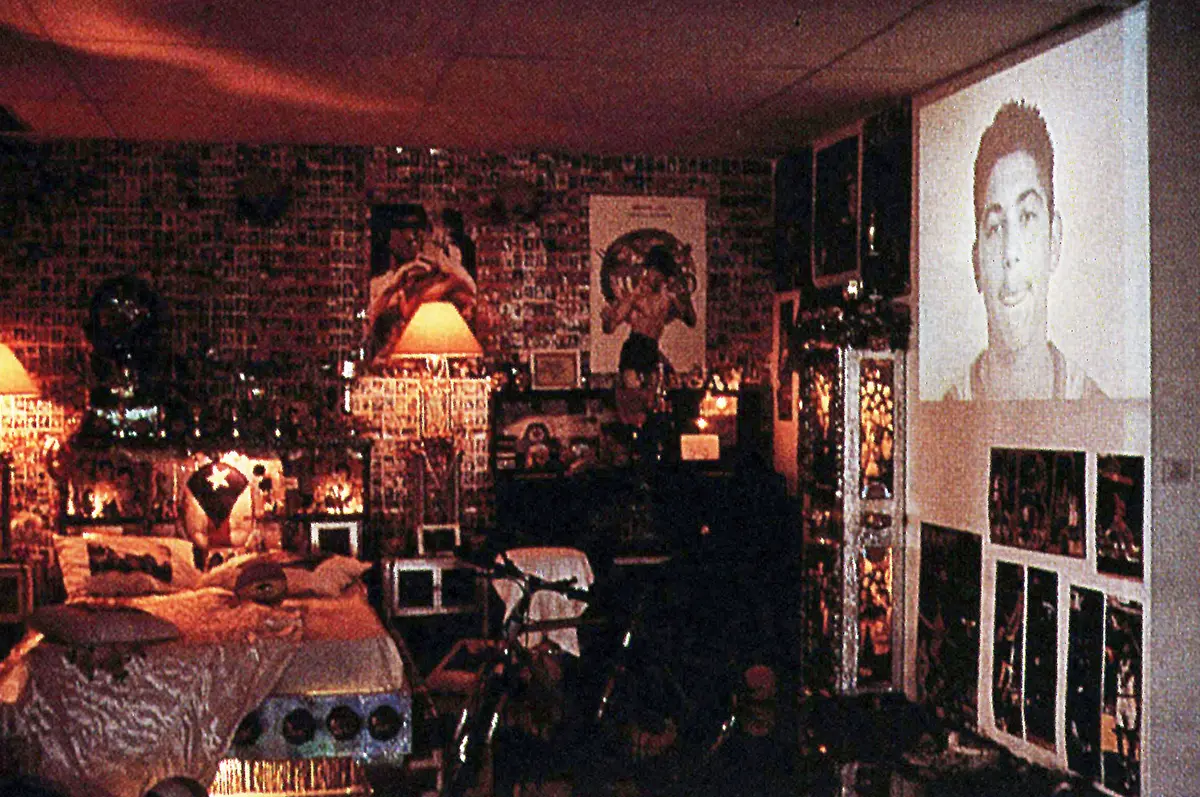
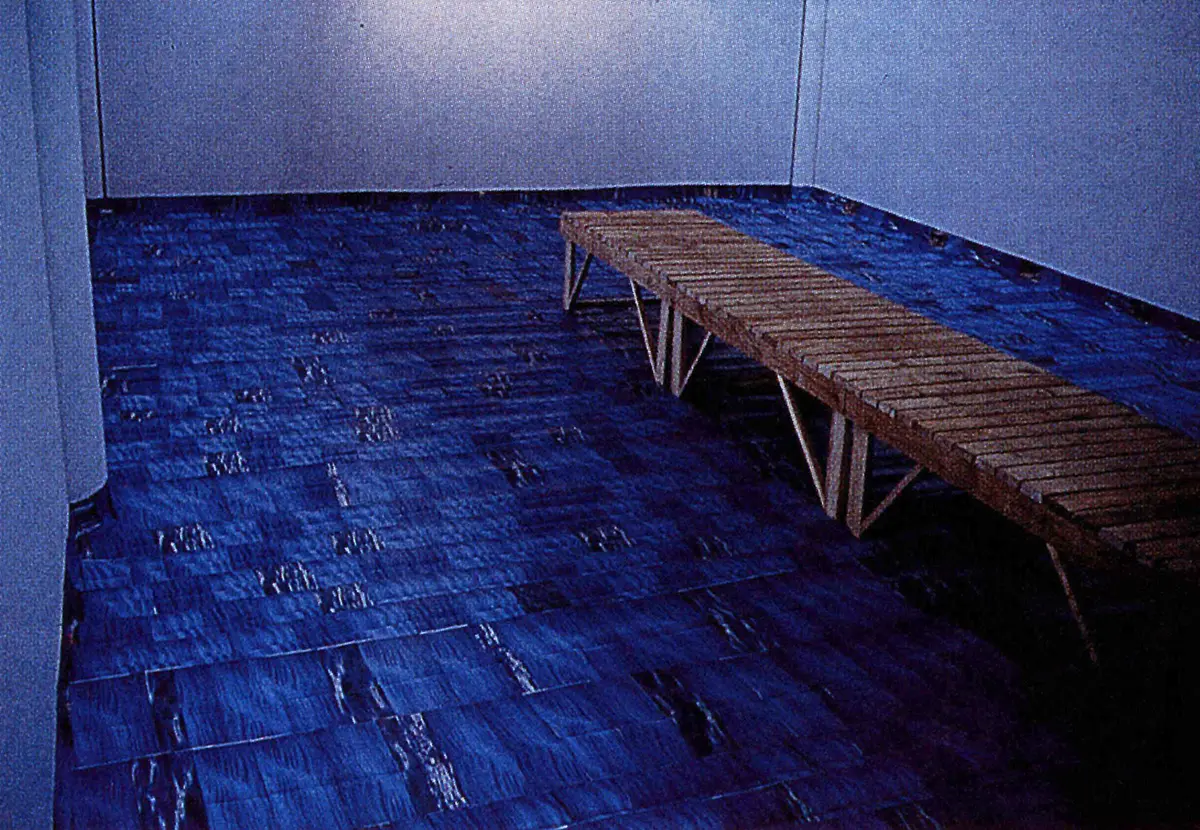
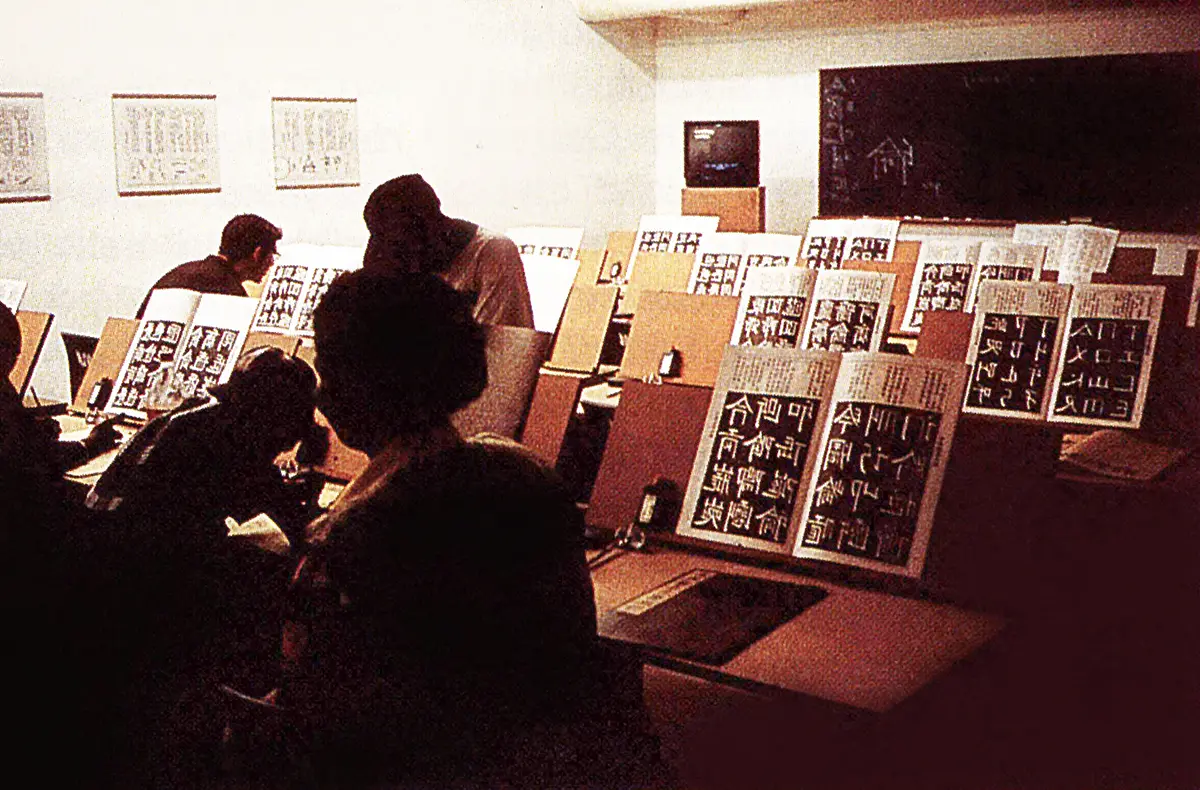
There was also a strong Latin American presence in the biennale, although so spread out in the exhibitions’ geography that it was only on later reflection that it seemed anything like a contingent; in this regard, perhaps, the organizers’ assertions of a (dissonant) globalism really were enacted in the curatorial process. Artists included members of a generation already well known to audiences in the Americas and elsewhere, including Eugenio Dittborn, Felix González-Torres, Gabriel Orozco, Pepón Osorio, Rosángela Rennó, Magdalena Campos Pons, and Alfredo Jaar. (Silvia Gruner and Valeska Soares were both to have participated but their works were unrealized due to technical problems.) Ana Mendieta and Cildo Meireles were in Important and Exportant, the exhibition organized by Gerardo Mosquera which also included other, cross-culturally and cross-generationally influential artists such as Sophie Calle and Frédéric Bruly Bouabré. Some younger and/or less exposed Latin Americans were also present, including Los Carpinteros (selling Cuban dirt) and Tania Bruguera, Milagros de la Torre, Carlos Uribe, and Sergio Vega. An extraordinary installation by Rivane Neuenschwander (Brazil) was, incredibly, able to command the cavernous space of the Electric Workshop with the most ephemeral of materials, and in the 17th-century fortress in which the Life's Little Necessities exhibition was installed, Melanie Smith’s (England/Mexico) terrific orange cascade of plastic, junk food, cheap toys, and cast-off plumbing yardage held forth. Overall, the tremendous eclecticism of the biennale project encouraged a curatorial strategy in which exhibitions functioned more as “access points” than as thesis; this was especially the case in Transversions, the exhibition organized by Yu Yeon Kim. It was in this exhibition that the full scope of the biennale’s ambitions seemed most closely fulfilled, in an essay that was visually stunning, an installation that allowed the complexity of the works, and their experience of them, to be grasped, and with a broad emotional and intellectual set of responses to the question posed by the biennale about the nature of contemporary reality. The exhibition’s investigation of the “real, virtual, logical and biological realities that form contemporary existence” placed an emphasis on technology without lapsing into a parochial digitalism; place, and placement, were allowed a wide range from Gary Simmons’ (United States) skywriting video to Osvaldo Romberg’s (Argentina) scale reconstruction of the foundation lines of the sacred plaza at Macchu Picchu. Further on, Xu Bing (China) had set up a classroom in which he was giving calligraphy lessons (and getting great results with his enthusiastic pedagogy). One of the biennale's most talked-about works was a tour de force by the team of Elizabeth Diller and Ricardo Scofidio (United States) in which, to an ominously throbbing electronic hum, projected video images of dozens of corporate logos endlessly morphed into each other in a seamless fabric of what Foucault must have had in mind with regard to his critique of globalization. William Kentridge (South Africa), who has become extremely visible on the international circuit in the past few years thanks to his animated films and his collaboration with the Handspring Puppet Company on productions such as Faustus in Africa, was represented here with a brilliant short film, UBU Tells the Truth. Kentridge is a masterful animator, using this handmade technology in a way that recalls Art Spiegelman’s comic book versions of the Holocaust, with equal impact. Here, his black-and-white drawn sequences convey some of the horrors of South Africa's undeclared war, with its hidden realm of torture, murder, lies, and complacency, and its veneer of civility and political rationale. Finally, Alfredo Jaar’s (Chile/U.S.) The Eyes of Gutete Emerita, also a horrible retelling, used two small electronic screens to post a short, eyewitness account of the massacres in Rwanda. This has been the subject of Jaar's work for the past three years, and its impact on him seems to have brought a far more personal tone to his work; in this piece, with its simple and low-end presentation, the viewer is brought square into contact with devastation, unadorned, and left to ponder it through the tiny aperture that contemporary art sometimes provides into such realities.
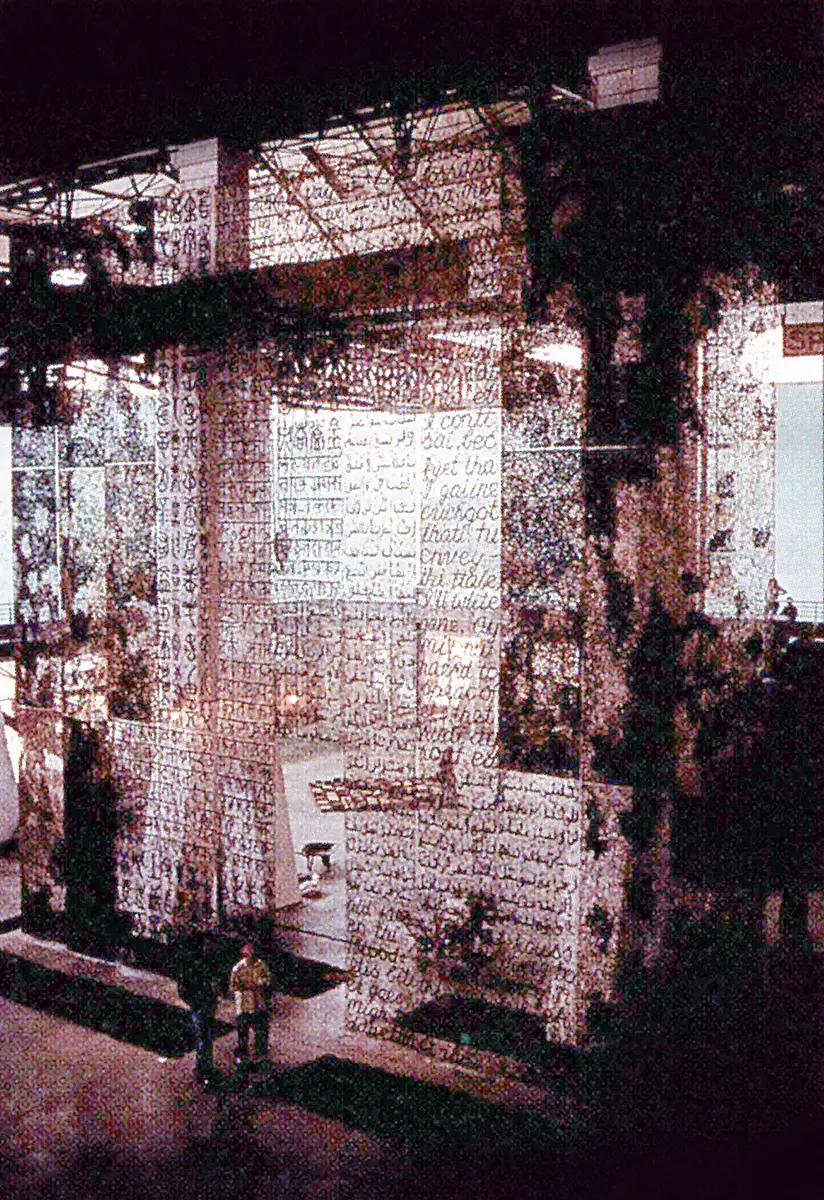
The Alternating Currents exhibition was also full of intelligence and even surprise, qualities that are rare in such unmanageably large shows. First of all, in the struggle between the artworks and the vast scale of the Electric Workshop, the show’s deployment of works often achieved a sense of place for the pieces, though eventually, this may have been at the expense of an overall shape. Nonetheless, there were moments. Wenda Gu’s (China) elegant spectacle United Nations Project—African Monuments: Oasis, just inside the front door, was a translucent wall of rice paper and hair-inscribed texts which hung floor to ceiling, surrounded by neat piles of more hair. Using Hindi, Arabic, Chinese and English alphabets, Gu invented nonsense passages, writing with hair that he had gathered from 300 barbershops around the world. At the top of the building's steel ramp, somewhere high above the hair panels, Suchan Kinoshita (Japan/Netherlands) had built a small plywood room that looked out, through a missing wall, over the open space of the building’s huge volume. A videotape was visible through the lens of a telescope placed inside, on which Kinoshita’s parents were speaking each in their native language (one Japanese, the other Swedish; the soundtrack was available on a pair of headsets), with the artist translating in jumbled English. The spatial metaphors of the work, the play on a scale between the intimate and faraway, along with its architectural strategy, combined into a moment of quiet force amidst the swirling contradictions of the biennale.
For some reason, the biennale’s catalog includes almost no information on the artists. There are only annoyingly truncated biographical entries (which seemed to suggest that the artists all emerged from nowhere within the last few years), and theoretical and thematic arguments have taken up the space of the curators’ essays leaving no room for any discussion of the artists’ works (Mosquera and Jones are the exceptions). There was also the predictable raft of technical and bureaucratic problems—videotapes sent in the wrong format, funds that didn’t materialize, equipment and materials which didn’t come through; all of these, while problems in Johannesburg, were kept to a real minimum given the scale of what was being attempted and the climate in which that attempt was being made.
The biennale, for all its emphasis on the in-between-ness of contemporary life, on the contingency of experience, and the prevalence of the trope of journey, movement, and irresolution—is finally a densely located proposition. There is the historical location, the oceanic straits through which early colonialism passed. There is the fact of present-day Johannesburg, verging perhaps on global status with all the attendant meanings of that. There is the ideological location of an infant democracy, the location in peoples’ memories being granted voice in the TRC. There is the location on the edges of an international art marketplace, and a host of ambivalences about how and on what terms to enter.
The theorization of globalism posits a world in which there is an imposition of the same system of exchange onto all national economies. It is the financialization of the globe, which steps into the place that was previously held by national political forces and identifications.
Biennials are an increasingly popular way of marking a city’s candidacy for global status. They bring enormous tensions to their host communities, between their function as pseudo-markets and their potential to serve as transverse lines of communication among the dozens of peripheral locations which have traditionally reached each other by way of the airports of New York, Paris, and so forth. In this scheme, who should the biennial be for? This was an incredible gathering of people from various corners of the (art) world, many of whom were meeting for the first time. That is an accomplishment, and maybe it is just silly to expect such an event to also be momentous for a more diffuse public. Can a biennial today be, as its 19th-century predecessors were, both state of a art trade show and a public promenade? In Johannesburg, the biennale audience could have promenaded down to the Truth and Reconciliation Commission to hear Adriaan Vlok, former Minister of Law and Order, explain why his call for political enemies to be permanently eliminated was not an executive order. Or, on the same day, they could have heard Pik Botha, former Foreign Minister, concede that there was “no moral justification” for what was done in the name of the apartheid regime, and then watched as Archbishop Desmond Tutu crossed the room to shake Botha’s hand. Now there’s a spectacle. These things could be part of the biennial globe; even if that is unrealistic, I can’t help thinking what a good idea it would be to aspire in that direction.
RACHEL WEISS
Chair, Arts Administration Program School of the Art Institute of Chicago.