In the setting of the VI International Fair of Contemporary Art in Guadalajara, Mexico, the International Forum on the Theory of Contemporary Art (referred to in Spanish by its acronym, FITAC) was held from September 26th - to 28th. The forum was under the direction of Guillermo Santamarina (from Mexico, responsible for this event during the first three years since its inception) and Marjory Jacobson (from the U.S.) This year's theme, which sought to include all others, was: Collecting in the New Millennium: Challenges after Post-Modernism.
Of greatest concern throughout the FITAC was the issue of old and new spaces for those contemporary works that pose great challenges, among them challenges from the artists; the theme of marginalized cultures including the Australian and certain Oriental cultures; the use of identity; the contamination of identity; the tendency toward internationalism; and finally, the new intellectual order that follows the new political and social order in which postmodern art is characterized by indifference. Unquestionably lacking was the presence and experiences of Latin American theoreticians and curators for 95% of the forum participants were from the United States, Europe, and Asia.
There were three main subtopics at the FITAC, each of them discussed by seven panelists: "The Dynamic of the New Media," "Centers of Patronage," and "Postmodern Geographies." In the first of these panels, an original initiative was proposed to bring a company, to the office spaces and zones by transiting the art of music, installations, and objects to create a less sad and monotonous environment, taking the reactions and comments of the company employees into account. This theme was not expanded upon by the Austrian impresario, collector, and curator Bernhard Starkmann, who gave as the example of his talk the corporation, Starkmann Limited of London, which he heads. His conclusion: avoid works with religious and sexual connotations to avoid problems.
The talk was given by Benjamin Weil, the French curator and critic living in New York, of little substance and lacking in concrete examples, attempted to discuss Ada Web, the site of which he is a co-founder and whose purpose is to attract artists like Jenny Holzer or Matthew Richie (who also spoke at the FITAC of his experience in the fine arts) to experiment on the Internet as a new medium. So it was stated that the Web is like a mirror that reflects intellectual speculations, fears, questions of authorship, etc. It doesn't cancel out pre-existing forms of communication for it has yet to be accessed through its own qualities but rather, in a manner that defers to video and audiovisual means. Nevertheless, Barbara van der Linden—speaking about the change in the situation in Eastern Europe since 1989 when much of the ruling censorship came to an end—indicated that in the case of Bulgaria, as one example, where there is no museum of contemporary art, the use of the computer and the Internet makes possible the creation of a virtual museum although the cost of the new technology also leads to segregation. So reference was made as well to interesting strategies of appropriation like that of the young Belgian Johan Grimonprez. There was discussion regarding the difficulty of collecting works created on the Internet (although there is an initiative at MoMA in New York) given that the hardware is constantly changing and what is stored today in one format perhaps will not be accessible for consultation within 20 years. This will either require high-tech solutions or that museums become collectors of hardware from different eras to allow one to look at material memorized in time.
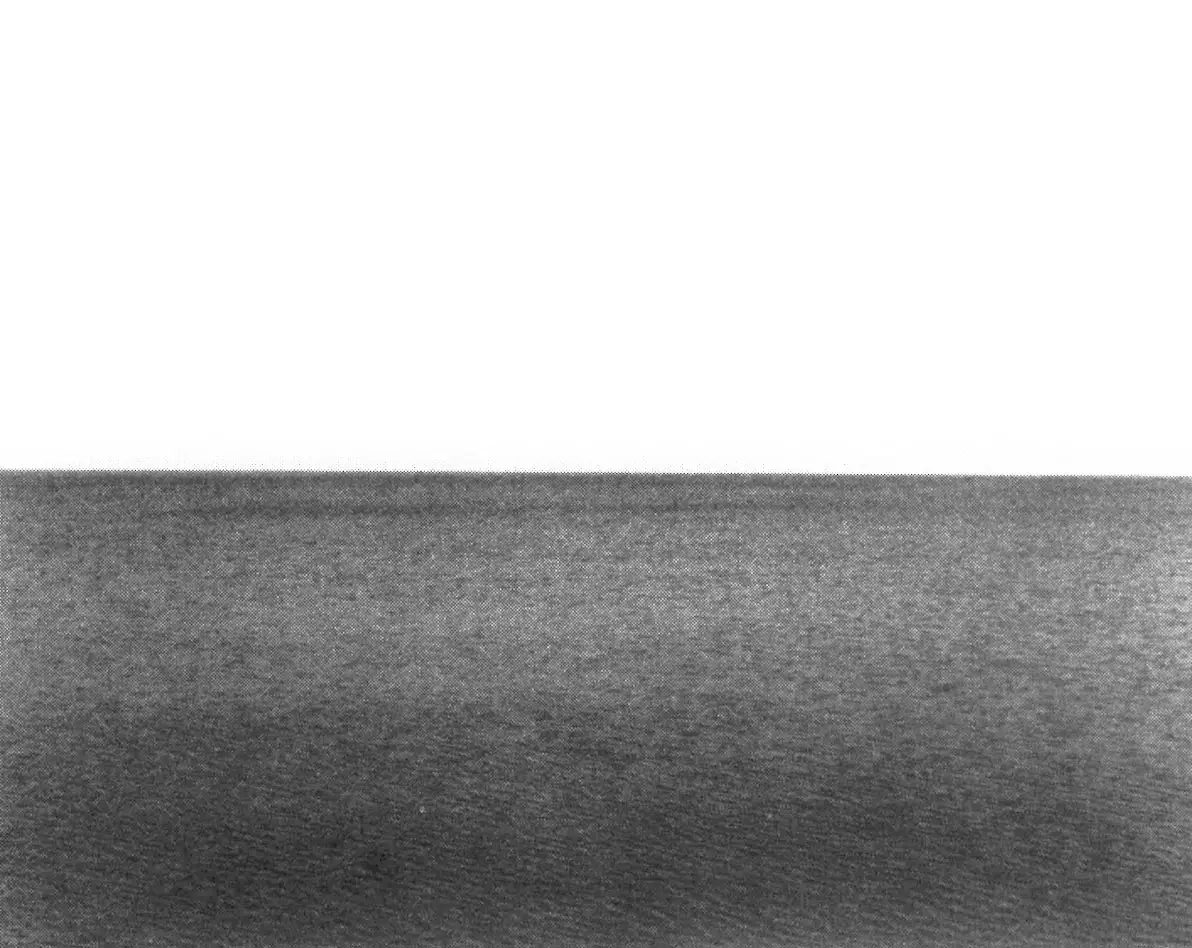
Regarding the video, Chrissie Iies, curator of film and video at the Whitney Museums in New York, spoke about the development of this medium since the seventies, the fusion of the languages of video and film, the dissolution of the line between the physical object and the projected image, which also relates to the architecture of space since it is determined by the latter, which becomes a total, synthetic experience capable of creating a field of consciousness, and the use of time, for which she cited the work The Greeting by Bill Viola, which is made to last twelve minutes when in reality it takes places over the course of only 45 seconds.
In turn, the professor and curator Caroline Jones spoke of conceptual artists of the sixties and seventies like Smithson, Oiticica, and Matta-Clark among others, classifying them as “nomads" since they intended their works of art not to be collectable, to move from one place to another. Above all, their actions were the opposite of those called—by Jones as well— "monads,” that is, the sponsors and critics, each of them considered as a unique entity, simple and indivisible, godlike in their great power. This vision was reinforced and enriched by the art critic and curator Guy Brett who also spoke of these artists who came from life on the street (of Lygia Clark and her radical projects that required the spectator’s physical participation) escaping colonial domination and seeking to interpret the development of the language of art and its decisive influence in cities of the so-called “First World" like London.
From the experience of the physically uncollectable, discussion turned to a criticism on the part of Lynne Cooke, curator of the Dia Center for the Arts in New York, of the so-called "canonical" museums, bound to tradition and the obsolete, and where collections are like products in contrast to the "synchronic” museums: multicultural, working on the periphery with marginal art, faced with the challenge of presenting and "preserving" difficult initiatives, either because of their dimensions, the material, or the space. The experience of the French artist, Marie Nage Guilleminot with her actions and pieces made of pantyhose, enriched the discussion of ephemeral art and its diffusion.
Finally, curators like Dan Cameron, the Japanese Fumio Nanjo, the Chinese Tsong Zung Chang, the Australian Alison Carroll, and Dana Friis-Hansen from the United States discussed the fact that there is no such thing today as a pure culture for there are many degrees of contamination that cause us to reflect on the so-called hegemonic art. How far might the definition of the other take us?
AMBRA POLIDORI