This travelling exhibition of work by Félix González Torres, which began in the Sprengel Museum in Hanover, then went to the Kunstverein in St. Gallen Kunstmuseum and will conclude its journey in the Museum for Modern Art in Vienna, seems to have a two-fold purpose. On the one hand, it provides a carefully presented panorama of the work of the Cuban-American artist and on the other, it has offered a luxurious excuse for the compilation of a catalogue raisonné of his work.
The planning of the exhibition began years before the death of González Torres in January of last year. After his death, the project naturally acquired a markedly retrospective character. At the same time, it was decided to use the exhibition as an opportunity for publishing an extensive catalogue in two volumes, one of the texts and the other, an exhaustive list of all the artist's work.
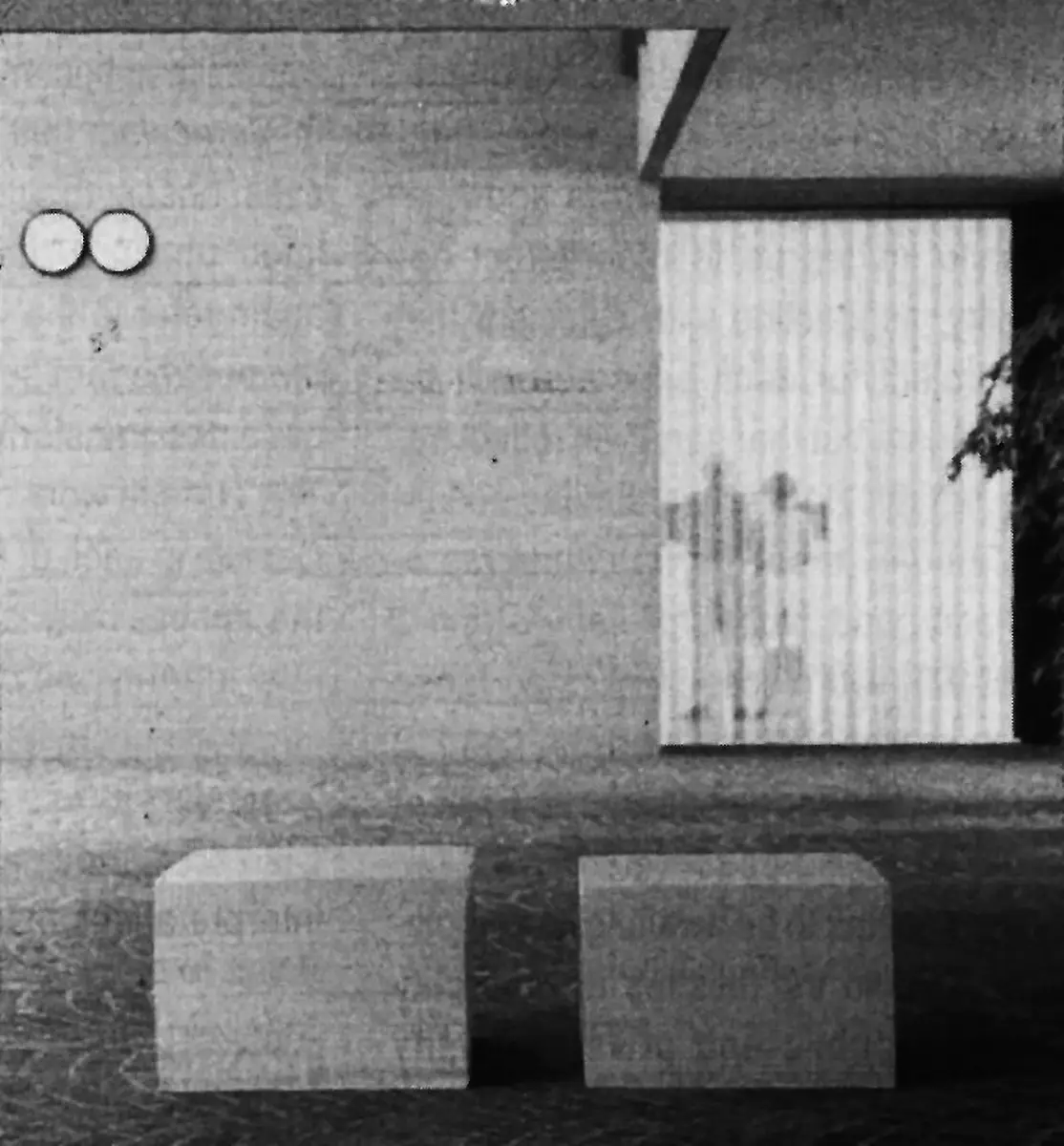
It would be difficult to imagine a more appropriate installation of the work of González Torres than the measured approach taken at Hanover. Before entering the exhibition rooms, the spectator is surprised to find two opposing piles of posters, the already legendary Nowhere belter than this place, Somewhere better than this place. The entrance to the exhibition proper was through one of the plastic bead curtains which the artist made in 1991. The choice of Untitled (1990) and Untitled (Chemo) (1991) as the preliminary works set the tone for the exhibition as a whole: these were works situated at the limits of the exhibition space which at the same time functioned on the frontiers between the artistic object and what might be called cultural ready-mades (the piled paper form could be considered as a given, if an account is taken of its relationship with minimalist sculpture, as a copy of the curtains in their relationship with similar objects adorning the entrance to poor households in Central and South America). At all events, there was nothing more pertinent for the inauguration of an exhibition by an artist who was always concerned about dismantling the conventions surrounding the art institution and the dynamics of the relationship between work and spectator.
The rest of the exhibition included examples of all the series of works for which González Torres was so unanimously praised from the time of his first exhibition at the Andrea Rosen Gallery in 1990: pieces with sweets, posters, puzzles and cables of lit electric bulbs.
In the last room of the show, in a kind of grand finale was Untitled (for Stockholm) (1992), a work consisting of two lamp cables, with 42 little bulbs per cable, which majestically occupied the center of the wide space which is lit with its banal yet mysterious light.
The dispersed installation and specific arrangement of works emphasized the singularity of each piece, but this same silent quality inevitably proved contagious to the spectator, who felt a slight sensation of void and sharp melancholy. One wonders what kind of perception a visitor to this exhibition would have if they didn’t know about the recent death of the artist and what appears to be the close link between his illness and death and the precise yet precarious nature of his work.
But in the end, it is the figure of death which appears most insistently in this work, in the artist’s fascination with limits, disappearance, dissolution, the reflecting surfaces which remain empty, the little mechanical failures which make two clocks which appear identical to function differently or for some of the electrical bulbs to burn out or go off. But the death which appears in the work of González Torres is never simply silence or some form of cessation. On the contrary, on finishing each work, the artist immediately began something new, so in the case of González Torres, the agony of the limit was but the beginning of a fever about what was on the other side. Death is the unique face of a coin, the brilliance of which is perfectly hallucinating. Without death, there are no ghosts and without ghosts, what possibility would there be for shutting oneself up with them in this interminable dialogue which we call, in this case, the work of González Torres or history in general?
And it is in this case on the side of the ghosts that the other side of this exhibition—the other side of this unique coin—appears, namely the catalogue raisonné of Torres's oeuvre. As David Deitcher points out in one of the catalogue raisonné's essays, the very idea of systematizing the work of an artist who was so clearly anti-system would at first sight seem to be contradictory. It would be to construct an archive based on a series of works which were in part conceived as a challenge to the very concept of art as an activity which could be catalogued, measured and standardized.
And paradoxically, it is precisely for this reason that the archive, this catalogue raisonné, proves so suggestive. There is nothing like the violence of memory to summon the ghosts and it is precisely these ghosts, to which in the first instance Dietcher responds in his text, which calls out to us from the pages of the second volume. The systematic nature of the catalogue raisonné makes us ask ourselves over and over again and with increasingly greater care about all those questions which arise in this work: about the limits which González Torres’ work both emphasizes and shuns, between the work and life, the public and the private, presence and absence, life and death. We ask ourselves and we ask these ghosts about these questions the validity and vitality of which reside in the fact that they have no final answers. This catalogue raisonné allows us to see once again that it is death, in life, which is the only guarantor of the presence of the artist in the work, and of the work in the archive.
CARLOS BASUALDO