It turns out not to be as preposterous a notion as it seems. It squared with the opinion that any collective grows out of the need for communication and that a commercial gallery is not the most suitable for sheltering creative ideals. But the Guatemalan group known as Imaginaria (Imaginary), emerged in a precarious artistic environment and amidst the weave of dense fabric, composed of the activities and anecdotes of a gallery and the need for a local project devoted to art, adversity not withstanding.
In the eighties, Guatemala was experiencing the least suitable conditions for the emergence of an initiative with transformational intentions. These conditions were the result of a war that had lost all notion of its original historical project and they combined to form one of the worst political, economic, and educational crises. The uncertain future was reflected in an artistic scene based on state institutions with obsolete criteria, a museum of modem art that had never shown signs of life, and a handful of private galleries with no interest in educating the public or in taking the risk of opening their doors like laboratories for artists to work their alchemy. Whereas in past decades there existed a notable level of quality in the discernment of gallery owners and buyers of art—who had acquired works with the full awareness of their content of social criticism or their value in terms of renewal and creativity—in the eighties, the sensibility of the new collectors was guided by a local market that supported decorative and commercial art. The phenomenon was part of a collective response, or defense mechanism, consisting of the polarization of the climate of violence that the country was experiencing. The intellectual sphere noted that the options in this country were confinement, internment, or banishment; others assumed a false face of well-being and frivolity. In any case, the need to forget and the lack of criticism supported the production of conventional and neutral artistic forms that set themselves up as representative of contemporary art in Guatemala. In the case of painting, a brazenly decorative product arose that replicated local color and exoticism or was the sum of the appropriation of elements of indigenous culture and the "recovery" of the geometric solutions of Carlos Mérida.
It was out of this cultural context that the painter Moisés Barrios and the photographer Luis González Palma, with boundless optimism, took the initiative to look for a space that would offer an alternative. Perhaps the primary reason for joining together was a real necessity to sell and survive. But their affinity for artistic sensibility and their feeling of discomfort when faced with the projects of existing galleries were immediately transformed into an activity that would subvert the friendly tone that accompanied the cultural activities that were occurring in the capital.
In 1987, in a small room subleased from a sausage factory, located in the colonial city of Antigua Guatemala, they opened the space that was baptized as the Galería Imaginaria (Imaginary Gallery). There, amidst sausages and hams, they began exhibiting works that had not yet reached the level of a true vanguard. But the name Imaginaria promoted itself as a distinct concept and communicative arena. The artists' taste for irony attempted to convey a new type of relationship between the artistic space and the public and to make clear that what took place there would not go hand-in-hand with convention. What was pathetic was that the subtleties of expressions as simple as: Imaginaria is an anti-gallery that exhibits anti-art, instead of provoking reflection, irritated the medium or were understood as nothing more than a pose "particular to artists." Some, with a paternalistic tone, advised them to consider the keynote of independent groups of the past. Such an insinuation, of course, went against their principles and revealed the chasm that existed between their intent and the public's perception. In any case, if the gallery achieved anything it was to consolidate its scarce interest in the rhetoric of the militant fronts of yesterday's "cultural workers."
With the aura of freedom that would only be brought down to earth when rent was due, the work of being a gallery dealer was a combination of mix-ups, anecdotes, and inexperience that had repercussions on the organization of activities. Against all expectations, these activities unfolded in a heroic atmosphere with interesting cultural energy and a feeling of complicity that brought together the artists who came to be known as imaginarios (imaginary ones). Gradually, artists approached the group like Isabel Ruiz, —who kept up an impressive collaborative sensibility—, César Barrios, Erwin Guillermo, and Daniel Chauche, as did writers and art promoters like Francisco Morales Santos, Ligia Peláez, and Miguel Flores.
But in this process, it was Pablo Swezey who defined a line of thought. A North American sculptor born in Mexico and only recently a resident of Guatemala, Swezey brought with him the advantage of academic training and familiarity with confrontational attitudes. His personal impulses and provocations caused the growth of great interest in the investigation, the handling of complex themes, and the establishment of a dynamic of discussion that generally pointed toward the demystification of artistic or extra-artistic values.
In a moment of crucial gatherings, the imaginarios reacted with what might be called the "search for references" syndrome. And they found them in Mexico. While there was no migration like that of Cuban artists to reside in the country to the north, Mexico became a close and accessible referent for quality. Its omnipotent artistic tradition and its contemporary dynamic of creation provided an invaluable flow of knowledge. The impact that such subtle work as that of Mario Torres Peña, an artist of the neo-Mexican generation, could give us a measure of the hunger they had, to learn about other forms. Through twists of fate, they came to meet the artist and invited him to exhibit in Imaginaria. The artist traveled to Guatemala by land and literally crossed the river with a series of drawings and collages that showed a great technique and freedom in the use of fairly unconventional supports that stimulated Luis González Palma to manipulate photography, lose his respect for negatives, to experiment with the application of patinas, and to engage in the strange pleasure of collecting and accumulating objects above his works like small votive offerings. To question their closeness to Mexican art and to suggest that it was an attempt to enter the Latin American art market falls apart in the face of what was achieved. Beyond the technical knowledge and the delight produced by the use of angels or popular symbols—used by the neo-Mexican movement in the extreme—was, for Moisés Barrios or González Palma, an act of reconsidering the mixture of races and its history and a vehicle for reflection upon their mestizo character in the face of an indigenous world. For them, many of their works coincided with their analysis of this process of hybridization as they did with the articulation of a multicultural society with severe problems of coexistence.
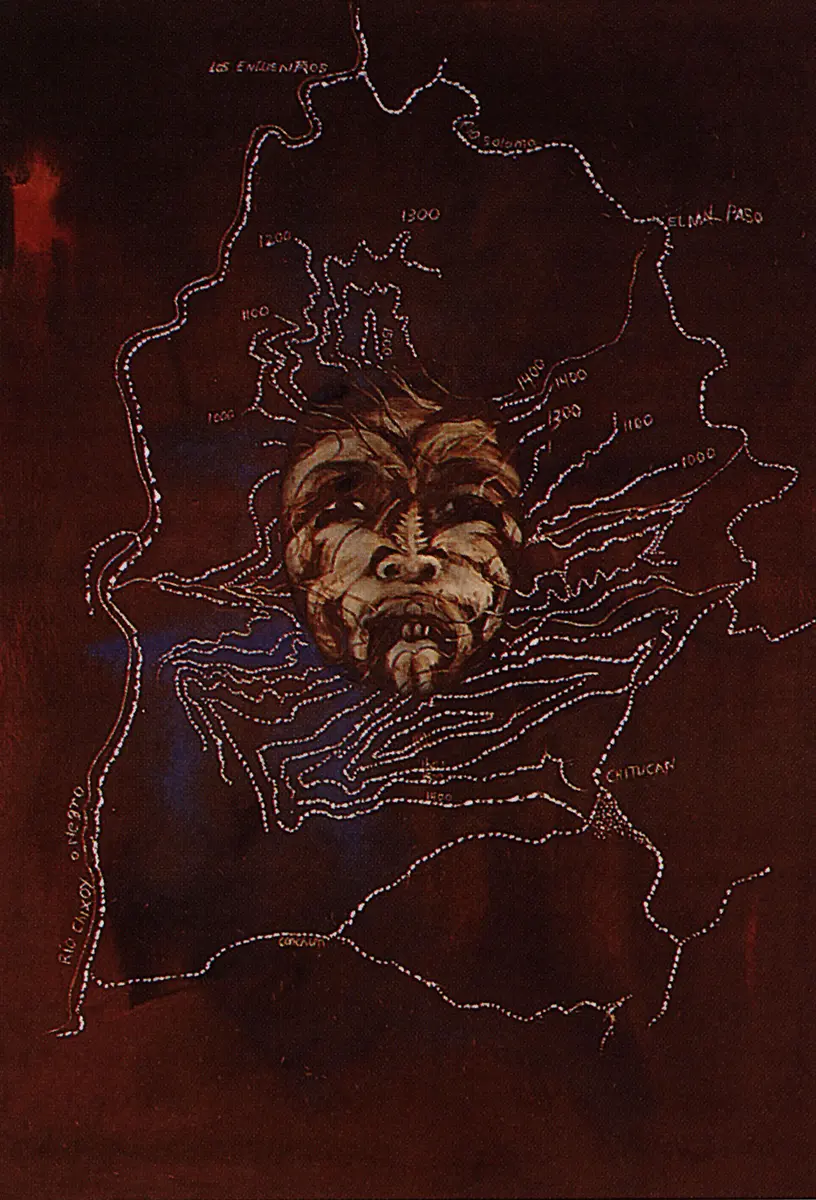
In retrospect, the exchange with Mexico was not precisely reciprocal. It was in fact lopsided. On this point, each artist had incorporated substantial changes in his or her works, in the light of which it was proposed—with a certain amount of ingenuity—the possibility of an exhibition in the place they considered a cathedral of art: the Museum of Modem Art of Mexico. It is tempting to describe how the exhibit in the first months of 1988 came to be, but above all, the fundamental event was the effect it had on the Guatemalan artists. The exhibition, most likely registered as an official visit, was the detonator for the initiation of self-examination and an understanding, once and for all, of the artistic level art that had been reached in Guatemala and the risks run in persisting in cultural isolation.
It was no coincidence that following the exhibition in Mexico one would be mounted in the Museum of Contemporary Hispanic Art (MoCHA) in New York. This collective exhibition, which included Isabel Ruiz, Pablo Swezey, Moisés Barrios, and Erwin Guillermo, was composed of works that signaled maturity and transcended the concepts of earlier periods. Isabel Ruiz's paintings reflected an undeniable political content. Without falling into demagoguery, they confronted the commitment to the memory of the violent occurrences that were scourging the country. And through her series of paintings with expressionist qualities, which she called "gutters," she consolidated her intense solidarity with the victims of violence and the need to exorcise the demons running loose over Guatemala.
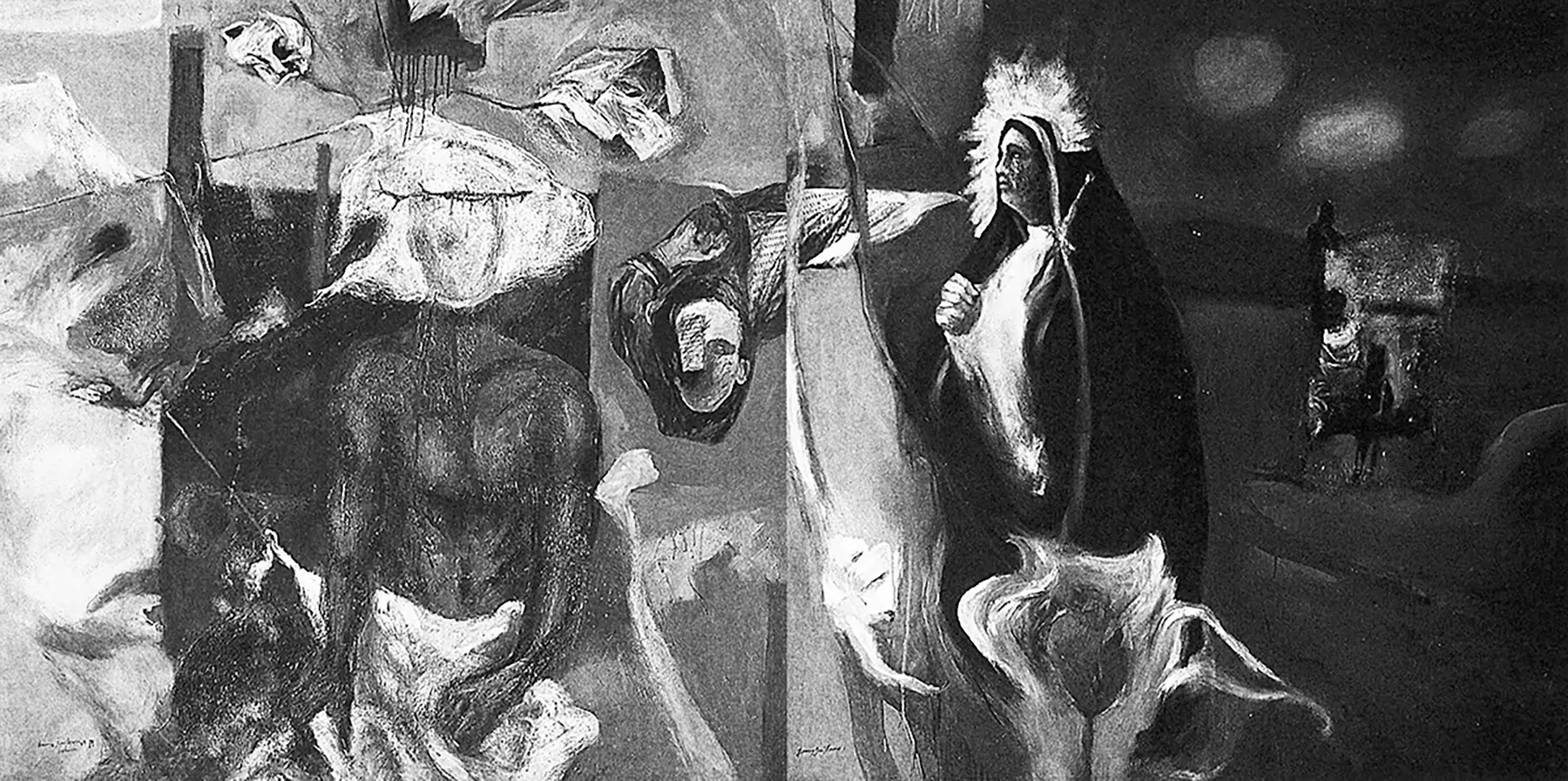
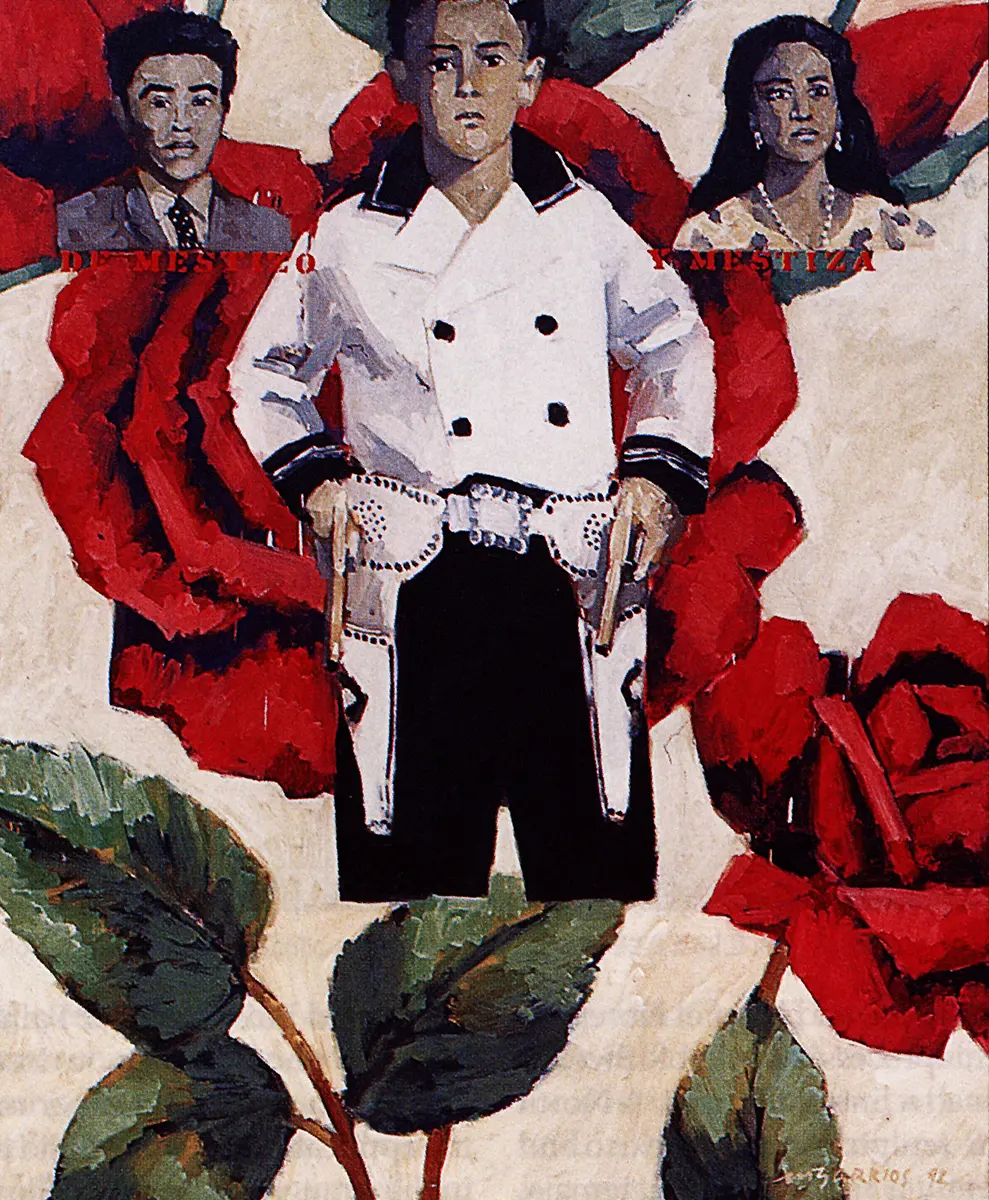
Erwin Guillermo, a great colorist, with strict academic training, produced the diptych Ecce homo. La Dolorosa (EcceHomo. Our Lady of Sorrow), bore witness to themes and expectations not considered in his previous work. The pieces by Moisés Barrios made up a series of painted portraits of people and everyday scenes in the context of great poetic content and a metaphoric language that underscored the resistance struggle for life under marginal conditions and his future interest in the discourse of otherness.
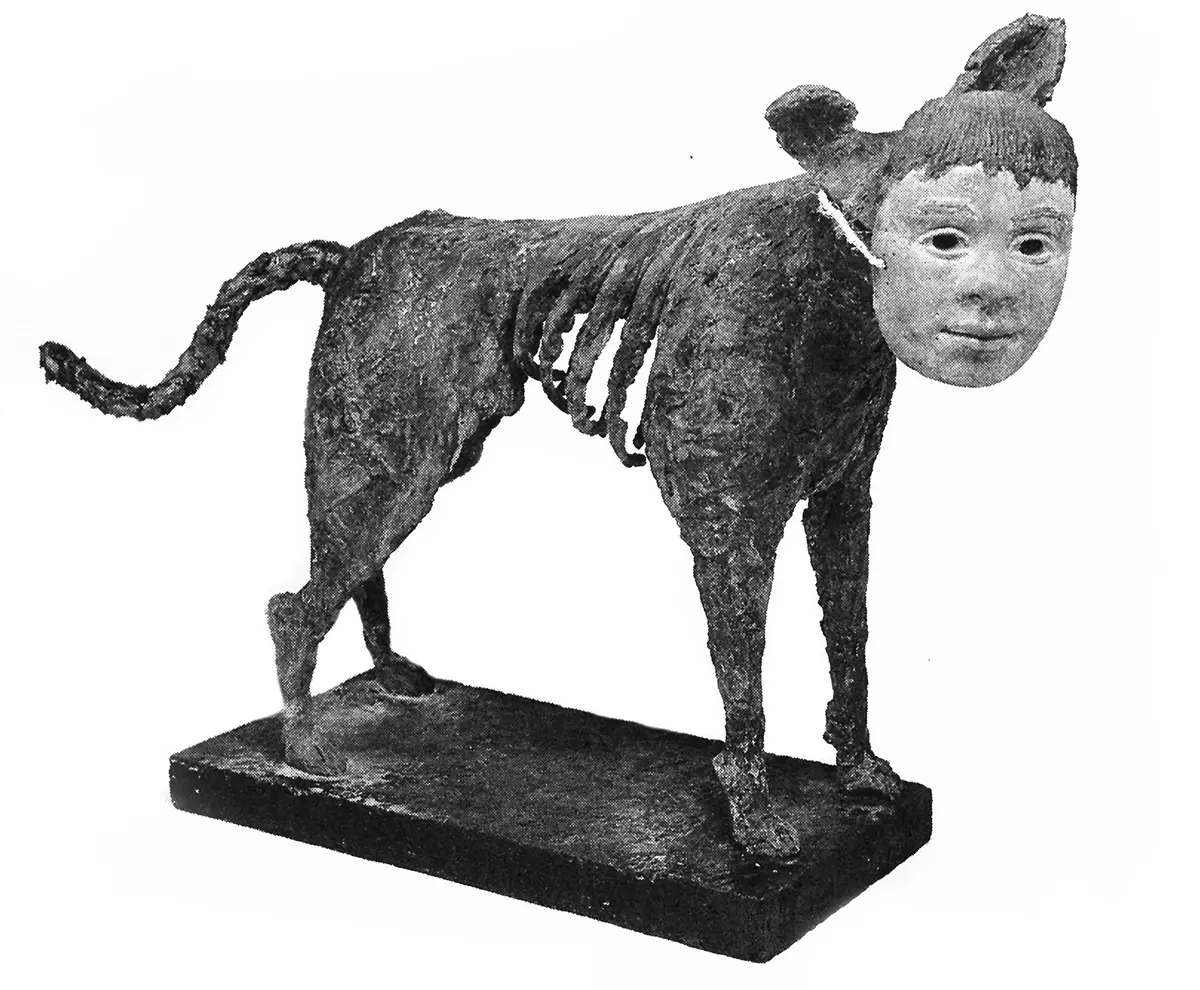
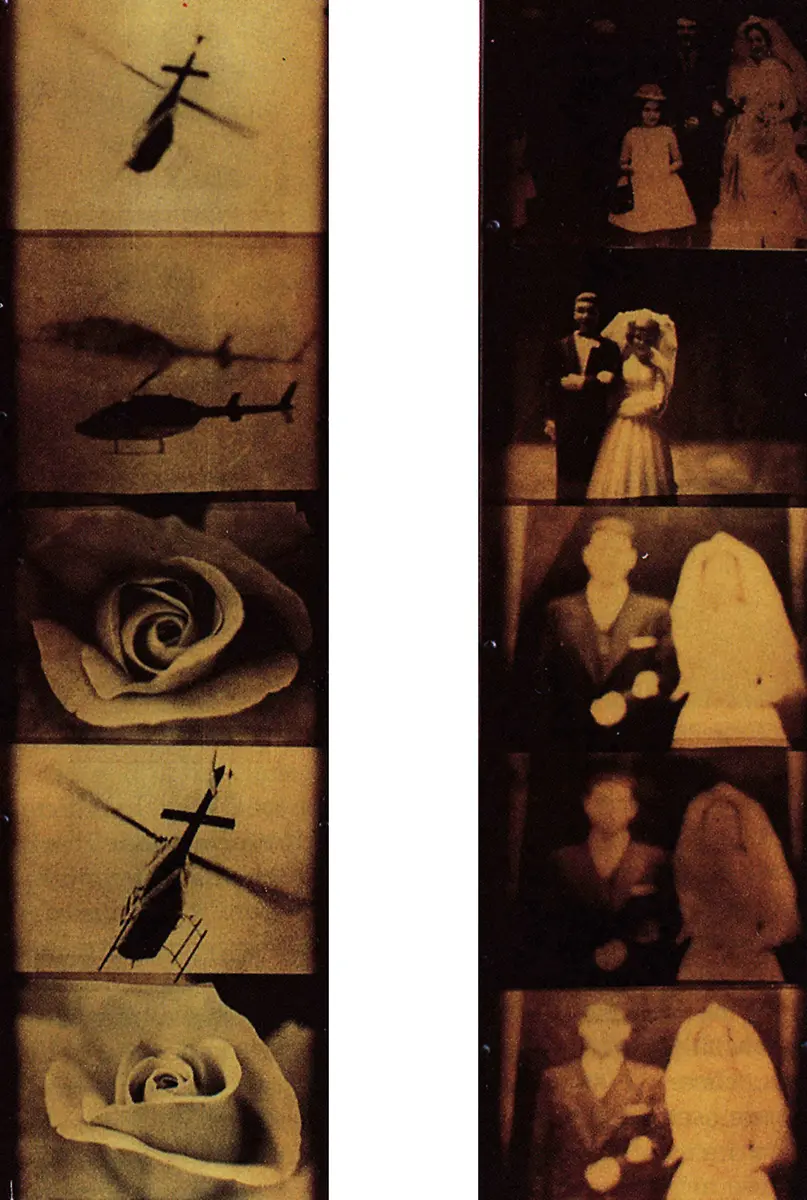
Pablo Swezey worked in two directions. The first consisted of a series of sculptures constructed in cement and the materials of poverty, attempting to direct a reflection on the problems of underdevelopment through representations of street dogs. The second direction was concentrated on the image of the human body and the confrontation of an environment composed of conservative religious values. It was at once a dichotomy between the seeming innocence of the individual, sheltered by holiness, and the hidden necessity for the profane. Even with the existence of links between the different works, Nilda Peraza, director of the museum, requested a personal exhibition of Luis González Palma to be shown alongside the collective. In the face of such a challenge, he produced his first series of works entitled Autoconfesión (Self-Confession), a work in which one glimpses the labyrinth of self-confession and, through characters of singular beauty and sophisticated environments, the suggestion of a dialogue between poetry and violence, present in the daily life of Guatemala. Each piece was composed of photographs printed on untraditional materials, like knives and thorny branches, which took on a symbolic character.
In 1990, between their activities abroad and the impossibility of maintaining a permanent location, Imaginaria took on a nomadic character. Despite the fact that the economic difficulties were always sover-come through the creative use of scarce resources, their record of having sold at most four works of art in the entire history of the gallery was creating a collective feeling of crisis. Due to the insistence of friends of the group and a public that was growing by the day, the life of Imaginaria was prolonged by the loan of the former convent of Santa Clara, a building dating back to the 18th century and partly in ruins. It was at this locale that the most contradictory activities took place: from a "New Song" concert to the most interesting ones, such as an installation by Isabel Ruiz, Historia sitiada (Besieged History). A contemporary dance group also performed there, offering an extraordinary interpretation of the genesis of the Indian and/or mestizo, described in the book El Tiempo Principia en Xibalba (Time Begins in Xibablá) by the Guatemalan writer, Luis De Lion.
Nevertheless, after a year of working in the former convent and a short period of uncertainty, Imaginaria closed its doors in 1991. Without renouncing all that it had stood for, its members sensed that the space had fulfilled its goal and that it was becoming increasingly more difficult to find interesting projects.
In an environment lacking so much, the refusal to compromise turned into a trap and a dead-end street. Few artists approached the quality level they demanded and to invite foreigners implied a complex infrastructure. But if anything was a burden it was the premonition that the space ran the risk of taking on the character of an institution or of becoming an ivory tower. The passion to join together and to produce would continue but through no other course than that of creativity.
Ten years after its opening, no one in Guatemala seem to be aware that Imaginaria had closed the book on its history. Former members continue to be called imaginarios. Isabel Ruis, Pablo Swezey, Moisés Barrios, and Luis González Palma continue along the path of inquiry and, in their original context, their work is a sort of marginal aesthetic, which many would like to push into anonymity and oblivion. With the irony of fate, curators have reunited them for collective exhibitions abroad without knowing of their past. How could one know? They left no records as a traditional group would have done—those that write manifestos or announce themselves by means of exercises in demagoguery in order that they not be forgotten. And yet, their grand conclusion was the understanding that to make art in a devastating and extraordinarily peripheral country like Guatemala is incompatible with the pretension of defining perfect and unalterable works of art. To make art here implies the pondering and comprehension of one's limits and springing forth, even amidst adversity.
NOTES
1. The group mentioned was the Taller coreográfico contemporáneo (Contemporary Choreographic Workshop,) directed by Carlos Andrade. Luis de Lión was an indigenous writer who was kidnapped in 1985 following a wave of violence in Guatemala. The central theme of his work, El tiempo principia en Xibalba was key for the imaginarios. The book is a coarsely realistic examination of the conflicts of identity experienced by the Indians and a confrontational discourse regarding current, ancestral, and religious myths. According to the literary critic, Sagrario Castellanos, "the work reveals the human being that lies in every Indian and kills the scenic aspect into which he has been converted by many writers and painters." In 1991, the gallery held a Homenaje Imaginario (Imaginary Homage) to the writer and published a document in which were assembled the most serious and important essays had been written about the author and his work.
ROSSINA CAZALI
Guatemalan Art Critic and Curator. Correspondent to "El Acordeón", cultural section of El Periódico newspaper. Member and founder of Colloquia Contemporary Art Center.