
During the 1960s Margarita Paksa was one of the pioneers of conceptual art in Argentina and a key figure in the mythical Di Telia Institute, which reflected the most advanced and critical artistic expressions of the decade. Paksa’s multimedia projects, objects, and videos, and her participation in collective artistic and political experiences, including the eight years of self-imposed artistic silence which followed the demise of the Di Telia Institute, always derived from a close dialogue with socio-political reality, which obviously contrasts with the appearance of innocence and acritical introspection with which art is dressed in Argentina in the 1990s.
At the end of 1997, the new management of the Museum of Modern Art in Buenos Aires, headed by the critic Laura Buccellato, provided Margarita Paksa with a room at the Museum enabling her to carry out a project which she had originally devised for the Di Telia Institute in 1967, but which had never been carried out. The artist, however, decided not to follow the original plan established at that time, but to prepare a new version, based on the original idea, by installing in the museum space a tennis court, coupled with a discourse on the domination of the winner/loser dichotomy over contemporary society. The tennis court, measuring 6 x 12 meters, and reproduced realistically, was divided by a net that was too high to prevent any game from being played. On each side of the net, against the wall, two illuminated signs could be seen which read "You are the winner and You are the loser," and flashed on and off alternately. The small court was barely lit by the light from a neon tube which emphasized the area of play and called into question both the possibility of a competition that had been thwarted by the net as well as the definition of a positive result since the decisions about the loser and winner were distributed between one or the other of the imaginary players in a capricious and pendular fashion.
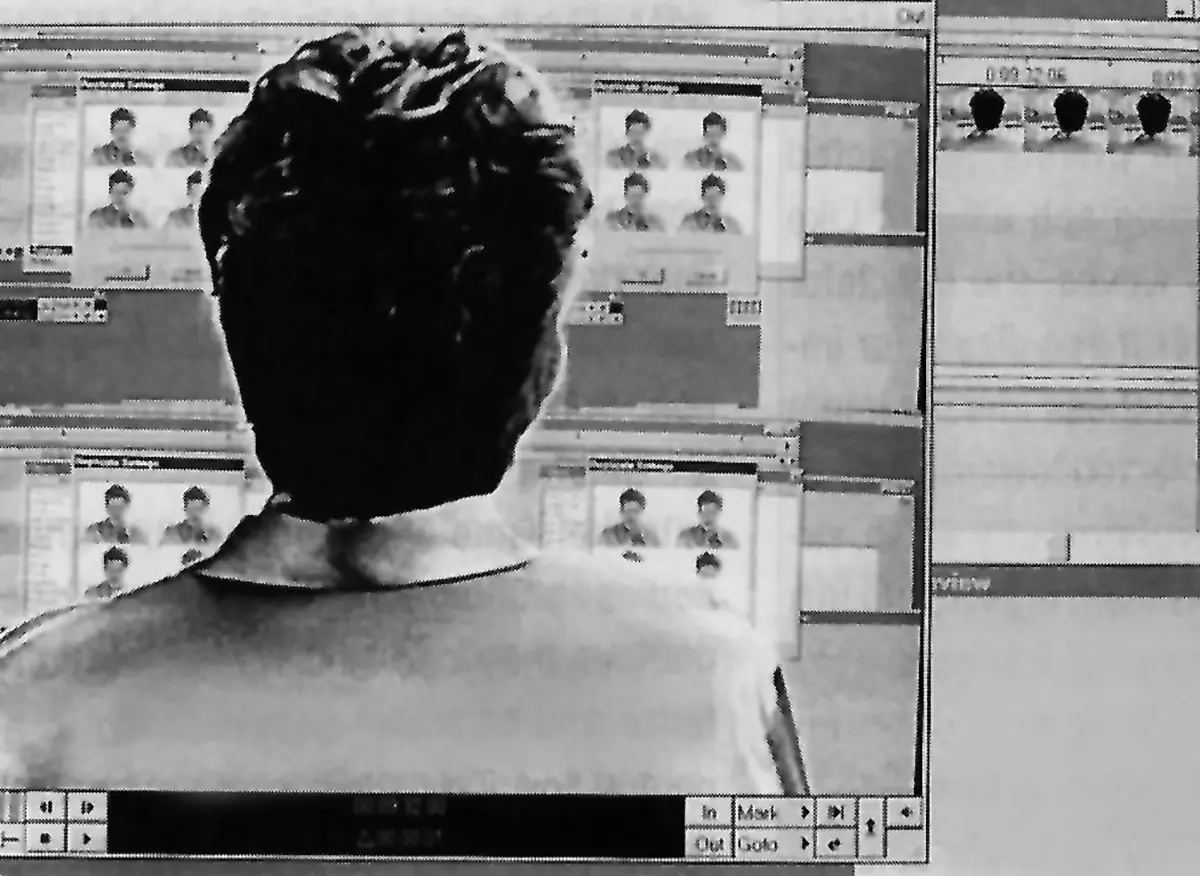
Thus through a project involving an anomalous and exceptional area of play, Paksa denounces the bipolar schematics governing the Western way of thinking. But her denunciation extends from the reductive terseness of the tennis court to the verbosity of a video projected onto the wall, in which the artist, with the parsimony and clarity of a schoolteacher, speaks about how the concept of loser and winner organizes neo-liberal culture, from sports to other social practices, since it is part of the structural foundations of that culture. With an ironic calmness, Paksa explains how the domination by a mode of thought based on pairs of opposites goes back to classical Greece, the division of things by means of a schema of conflict in which there did not seem to be room for synthesis.
The most distressing moment in the eleven minutes of the video is perhaps where the artist suggests that the domination of binary thought continues today, without there seeming to be any possibility for a critical alternative to calling into question the present state of affairs. An interesting feature of this work was the emphasis given to the language of computer programming. The presence of Paksa in the form of a speaking bust was subject to the opening, closing, and superimposing of windows cuts, repetitions, and signs to be found in the Adobe Premiere program. The continuous recording of the oral arguments of the artist was combined with the fragmentation of language made possible by the computer.
In a world artificially divided into winners and losers, Paksa perspicaciously adopts the language of the winners, the binary and fragmented language of the computer, in order to communicate her ideas. The critical strength of this artist continues to be relevant undoubtedly because of her capacity for adaptation to the new media, and because of the power of persuasion which, despite the changes of time, her ideas continue to have and which in this case are expressed through one of the oldest resources: the spoken word.
The unanswered question concerns the effects which work such as that of Paska may have in a context of marked political anesthesia, passiveness, and aestheticization which characterize much contemporary Argentinean art.
INÉS KATZENSTEIN