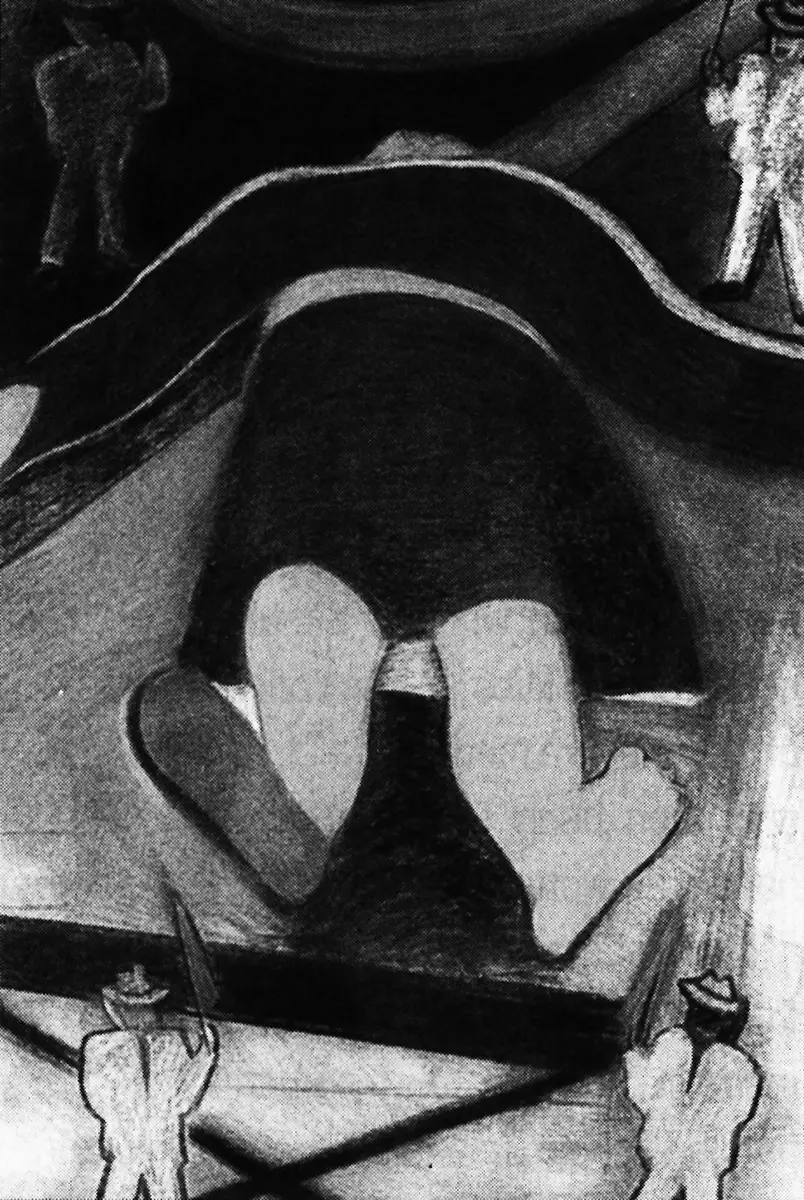
During the month of September, an exhibition titled Recreations: Colombian Versions of the History of Art, curated by the teacher and historian Germán Rubiano Caballero, was presented at the Centro Colombo Americano in the center of Bogotá. The show included work by 18 artists from different generations and tendencies in Colombian art, based on views by these artists of well-known works in the universal history of art. In the accompanying catalog, Professor Rubiano notes that several exhibitions have already been held on this subject, and mentions Art about Art, held at the Whitney Museum in New York in 1978, Arte dello Specchio which formed part of the special section of the Venice Biennial in 1984, Copier Créer at the Louvre Museum in 1992, and Memorias de la vision: El arte del pasado en el arte Contemporáneo venezolano at the Museo de Arte Contemporáneo Sofía Imber in Caracas in 1993. This exhibition, which was based on these earlier shows, explored the vision of certain Colombian artists who, in a tradition that extends back to the Renaissance, have looked at works from Western and Eastern art, as well as local art in their most diverse expressions. Each of the participants assumed different attitudes toward the history of art, in which it was clear that they recreated these works from the past with an awareness of belonging to a very distant present, looking at them with the eyes of the present and sometimes with considerable humor and affection shared by the spectator. The show included three works that can be considered canonical in the history of Colombian art, each of which refers to different moments of the Renaissance. Beatriz González looks at the famous Dead Christ of Mantegna, and as in that work, exploits the startling force of foreshortening in a pastel work from 1991 in which the figures of Christ and his suffering Mother disappear and give way to the presence of an enormous anonymous subject, surrounded by four hired assassins dressed in gabardine coats and hats—an image which has become sadly familiar in our national newspapers which have recorded the death of so many anonymous persons as well as public figures—people who disappear violently every day in our country. Fernando Botero, in his Mona Lisa as a young girl (1962) offers a version of the Giaconda seen in profile. Botero, as the curator points out, is one of the Colombian artists most interested in the history of art, and this version is from one of his strongest pictorial periods. In the charcoal drawing by Santiago Cárdenas, Couple in Homage to Masaccio (1969), a couple moves rapidly through an urban landscape, with the woman wearing dark glasses and making a gesture seemingly caught by a photographic camera. Massaccio's ancestral image of Adam and Eve abandoning Paradise is instantly brought into the sphere of the contemporary world. This drawing, along with the Botero work, is one of the most significant images of the 1960s.
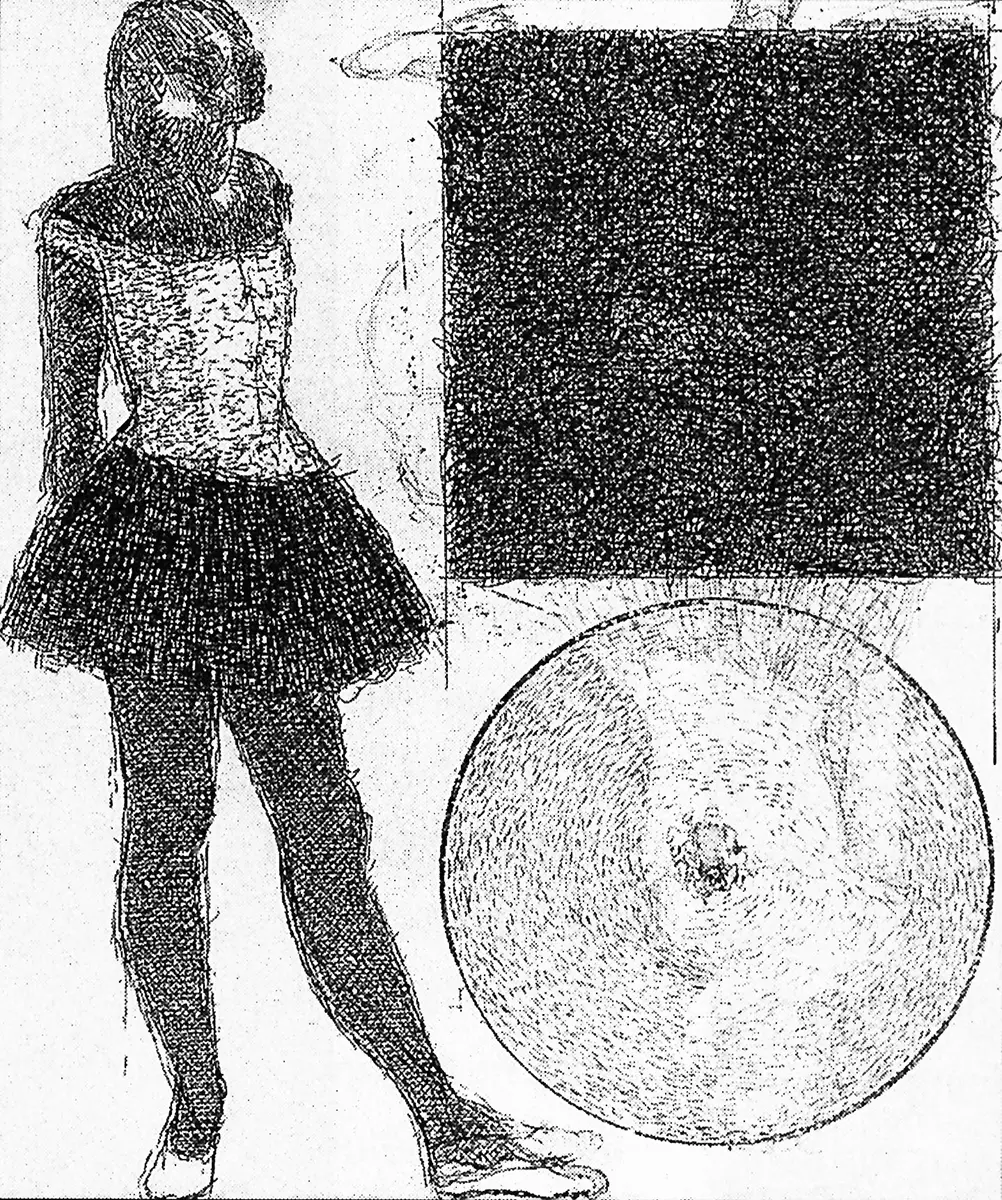
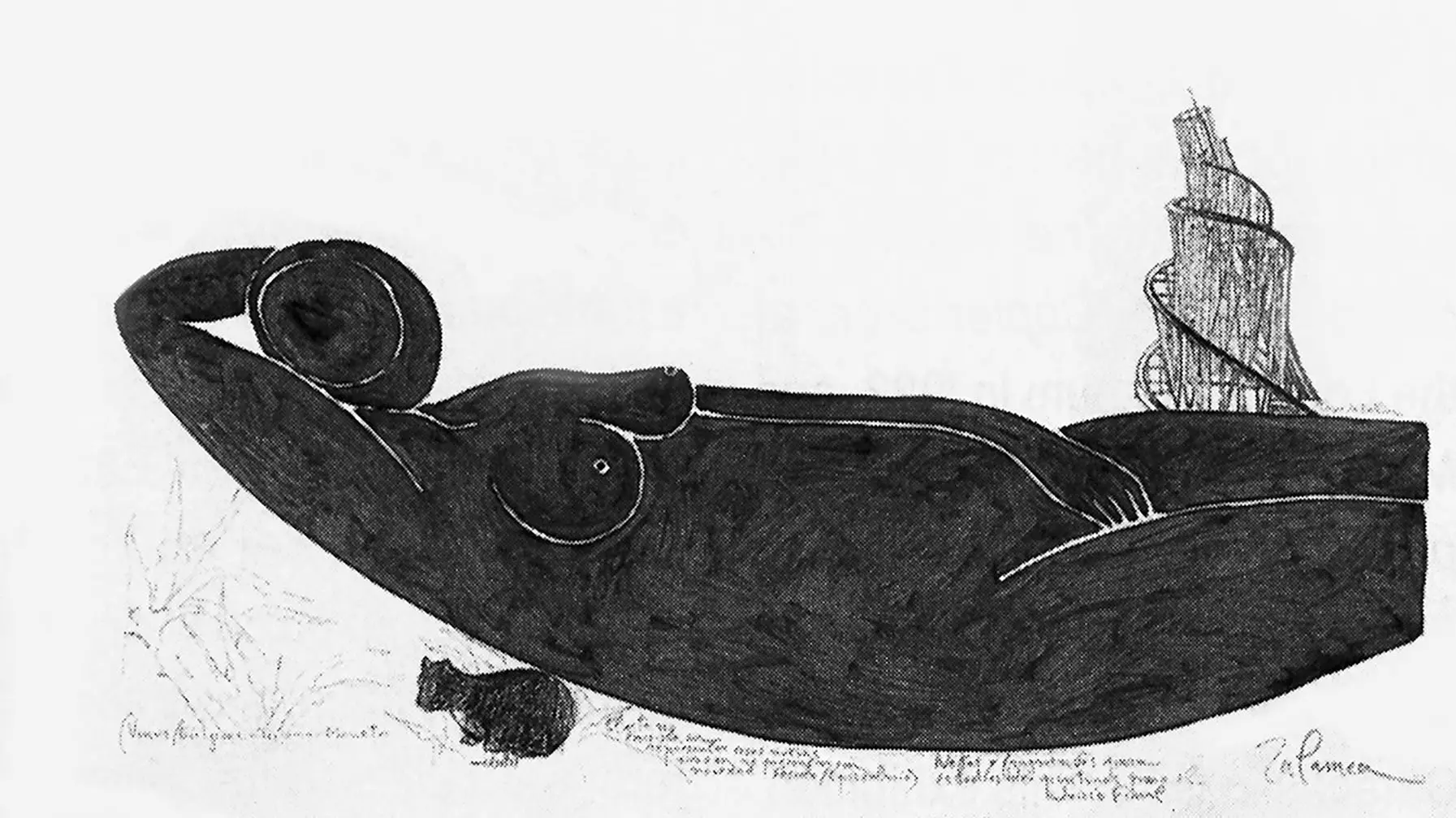
Two other artists who have created images that are part of our visual heritage are Álvaro Barrios and José Antonio Suárez. The former is an artist who on countless occasions has reflected on and created citations with the history of art. This time, two works were presented: Ofelia (1976) and San Sebastián (1977), drawings done in ink and pencil, characterized by their knowledge of, and admiration for artistic images, with an awareness of a man fascinated by the comic strip universe. The five small-format prints by Suárez created vast worlds in which the artist tells us in minute detail that he is fully aware of his debt to Ucello, Goya, and Degas. Francisco López presented five works from his series titled The Ten Most Beautiful, small wooden boxes containing female faces worked in gouache and pencil, taken from the works of Michelangelo, Gauguin, Lichtenstein, and Warhol, amongst others, and which engage in dialogue with another kind of reality, such as that of Alice in Wonderland. In addition to containing some of the most beautiful, the boxes were also full of wit and humor.
Another kind of work was that of Juan Cárdenas, in his oils titled Carrera séptima según grabado de Rodríguez (Seventh Avenue after a print by Rodríguez) and Santander Park. These works referred back to two metal prints that recreated the way the streets of Bogotá looked in the early years of the century. These images were incorporated into the painting and given the special kind of light characteristic of the artist’s paintings. Degas’ Absinthe Drinkers inspired Luciano Jaramillo to create a very free drawing in crayon and pastel which reflects the nervous graphic elements characteristic of his work. The exhibition also included lithographs by Enrique Grau recreating Goya's portrait of the Duchess of Alba, a painting of bright flat colors by Ana Mercedes Hoyos, titled Jawlensky Still Life, drawings by Gustavo Zalamea, as well as other works.
In the final analysis, what these artists show us is that the history of art is an inexhaustible source that can always be rewritten from the present, that works of art are not dead, mute, and finished artifacts, but living realities, and that despite the distance in time which separates them from the present, day by day they can be rediscovered and recreated with new eyes.
MARTA RODRÍGUEZ