With the implacable advance of the new technologies applied to art, it might seem that any attempt to “say something-” with different media and structures and with intricate ways of reaching the plastic object would be futile and only result in a long list of commonplaces. The turning of our gaze must therefore be backward.
Talavera, as a medium, reached maturity several centuries ago. Among its virtues is the fact that the materials used, the unusual techniques for working those materials, and until recently, its usual forms of expression were known to everyone. And now, at the end of the century, we are confronted with surprises. Talavera is no longer just a word used to refer to the well-known candlesticks, cups, and bowls splendidly decorated with designs that have given these works an aesthetic meaning first in Puebla, and then in Mexico as a whole.
The Amparo Museum in the city of Puebla recently presented an exhibition titled Talavera: An Avant-Garde Tradition which included works by Mexican and foreign plastic artists with considerable prestige, though in other media. They accepted the challenge of expressing their art in a language that was foreign to them, and this was precisely one of the central points of this exhibition. Painters and sculptors, i.e. creators, who usually employ media other than Talavera, agreed to create works in this medium.
The result in each case was very different, as different as each is from the rest of their work. Furthermore, there was a commonality: the difficult encounter with the Talavera technique which has kept its very special secrets for hundreds of years— and this was the case even with those artists who had already produced ceramic works.
Some began by working in large formats, and little by little had to reduce the dimensions of their work when they saw that the soft walls of clay folded relentlessly, or that there appeared, like a very thin frontier, almost like a strand of hair, a delicate line which came out of the oven transformed into a crack.
The application of color disconcerted more than one artist. A red is not red until it comes out of the oven: a light blue becomes changed into the color of a dark sea and wood-colored chestnut colors are barely recognizable on unbaked clay. The glazing became not only a decorative covering but a matter of volume and body.
The trouvailles of the artists in their work were an education in themselves, and at the same time, given the high quality of those participating in the exhibition, such enrichment proved mutually rewarding. The pieces included in the show were of considerable usefulness, objects which have now become part of our world of spiritual, visual, and tactile needs.
Rather than believing that the explicit and evident source of veneration is to be found in a T-figure or a cross, I prefer to imagine it and give it a voice, body, and history which match my desire. Therein lies its infinite value.
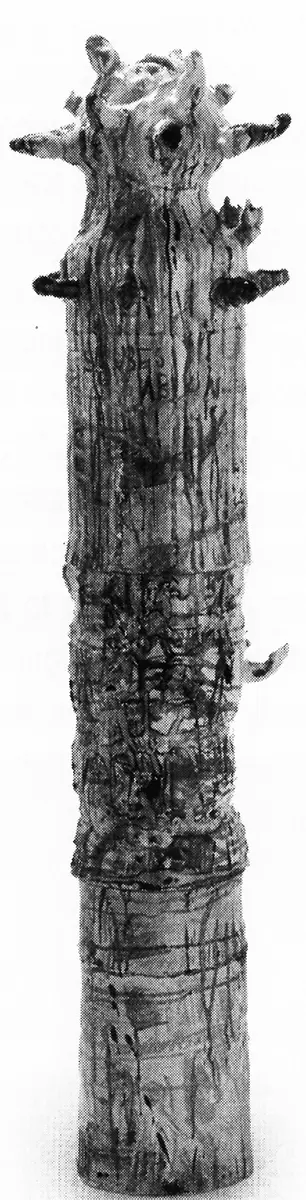
Luca Bray, for example, created columns formed by segments that were like spines full of strength and color, crowned with capricious finishing touches. Alberto Castro Lenero worked with one of the themes that have appeared in his iconography in recent years—the use of crosses. However, unlike those in other techniques, this acquired brilliance, and transparency which was very different from those of traditional ceramic art.
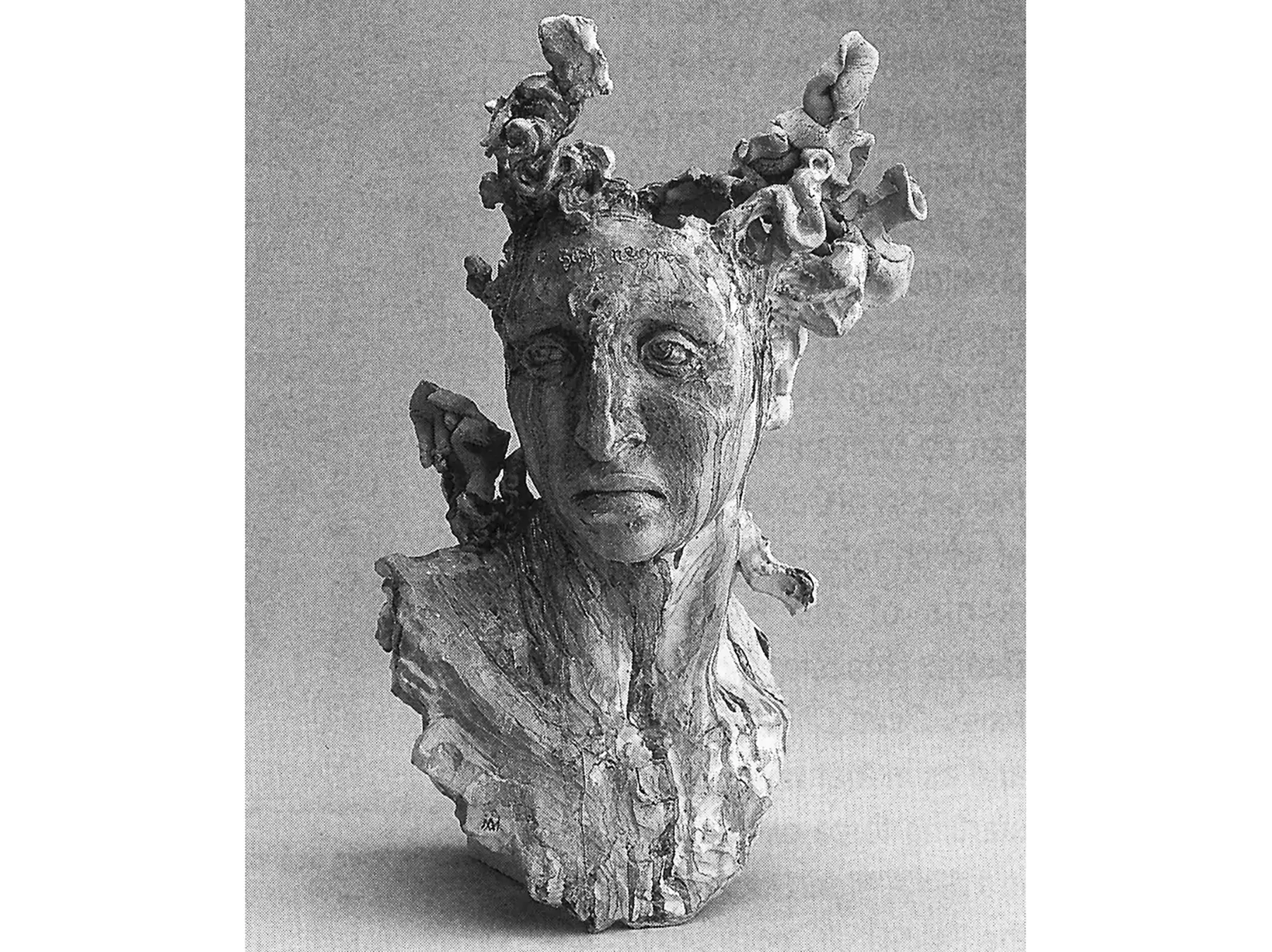
Raymundo Sesma, an artist whose work has been very well received by the public, found the right balance between the proposal of plastic work, a utilitarian object, and a design that could be produced in serial form. José Lazcarro kept closer to a more traditional undertaking, producing three sets of chess games, the pieces, and bases of which were done ex profeso for this show. The sculptor Javier Marín used his works which had previously been created in clay and ceramics and his well-known faces with their Greek influence. He was one of the artists who was most surprised by the simultaneous possibilities and limitations of the Talavera medium which had until then been the specialty of handicraft workers.
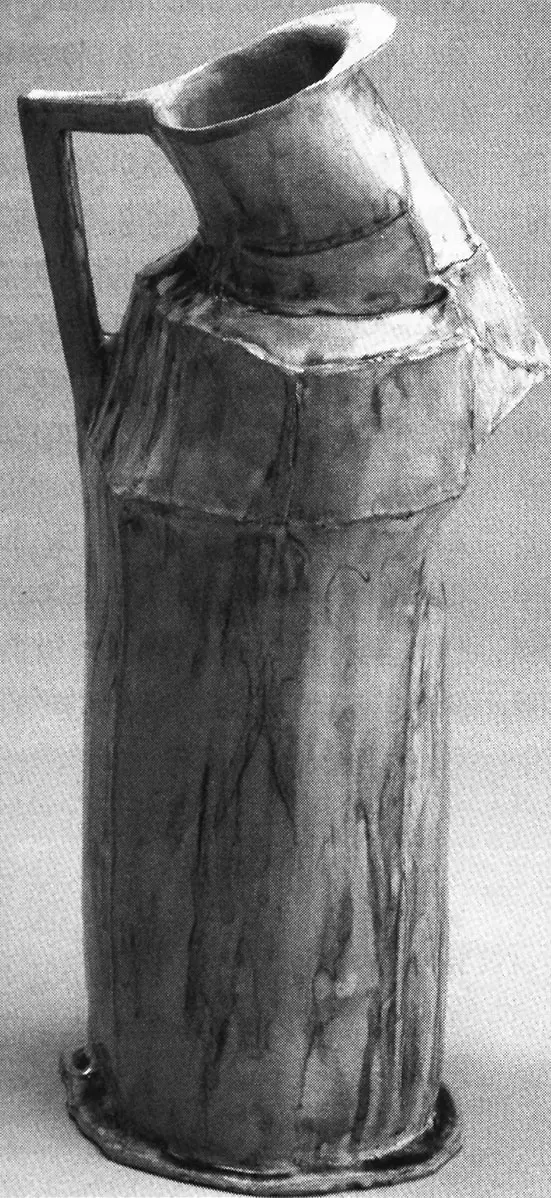
Magali Lara chose to work with the traditional forms of the objects made in Talavera. On these, she painted flowers, and plants and wrote texts. The result was a strong contrast between the works which seemed very different from the typical Talavera manufacturing tradition. Germán Montalvo, one of the most important graphic designers in Mexico, created large bowls into which he incorporated his own designs. Although his project was more conservative than that of Gerardo Azcúnaga and less audacious (and less spectacular) than the work of Gerardo Zarr, for example, it was very wise and closely aligned with a group of Japanese designers who, for reasons of distance, sent only their work in paper, i.e. with specifications of color and measurements for work to be done in Talavera de la Reina. The workshop is an essential part of this project and is where the artists worked under the guidance of handicraft experts throughout the year. The Asian artists included the outstanding Ikko Tanaka, well-known for his graphic, objective, and theoretical proposals, as well as Yuko Araki, Kazumasa Nagai, and Keizo Matsui, all of whom play a major role in contemporary Japanese design.
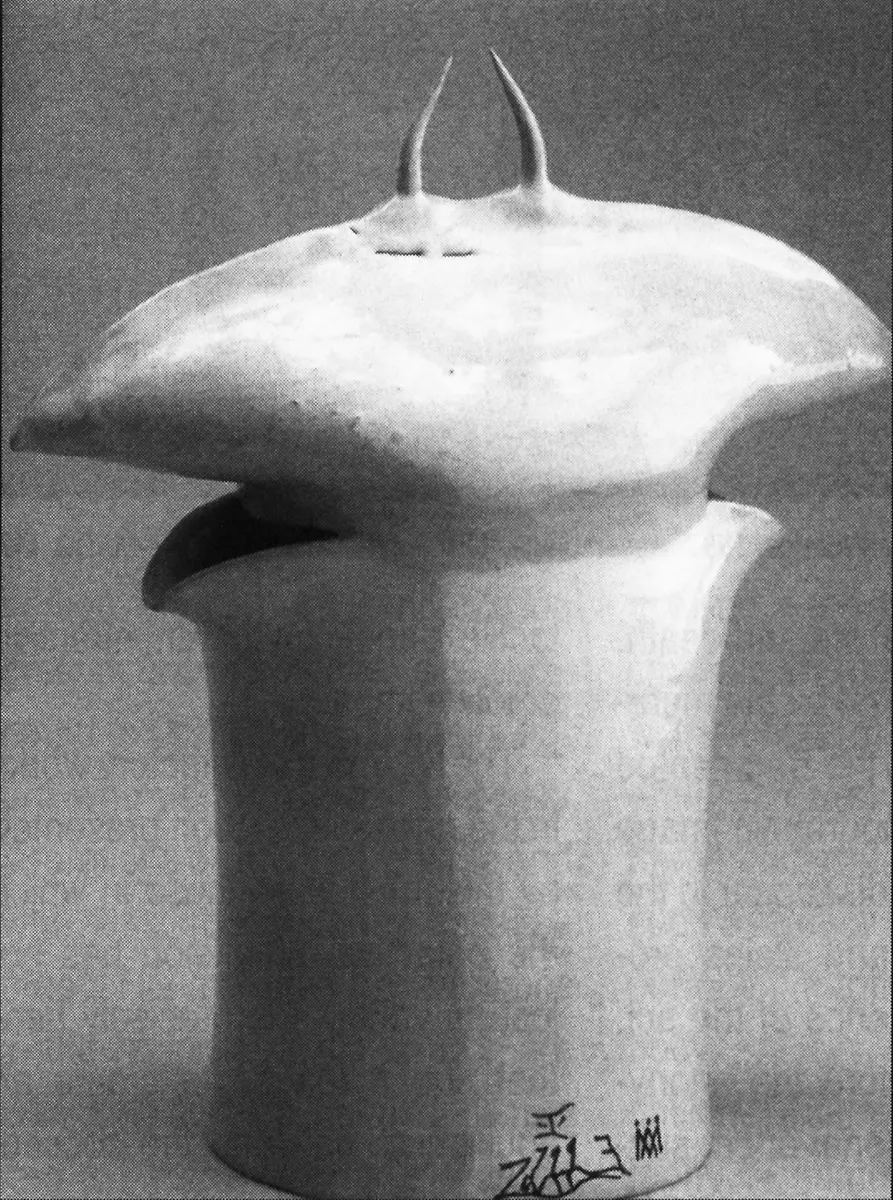
I do not want to give in to the temptation of classifying the creators who participated in this exhibition, dividing them up into those who worked in sculpture, those who only painted on pre-existing forms (almost always well-known in the Talavera language), or those who did a bit of both and even collected together fragments of broken works. Such groupings, although perhaps useful for an overall reading, would fail to explain the paths taken by each creator in doing what they did.
What is very clear in my mind is the fact that, over and above the results achieved, each piece on show was not only unique but that it responded to a mutual encounter between the artist and the technique: Talavera established its rules and the artist did likewise. The result was a broad range of giving and fake—merely the beginning of their exploration of new ways of saying things in a medium that had appeared to have exhausted its discourse or, in the best of cases, to be relegated to a decorative and utilitarian sense of pleasure.
For this reason, this show did not try to please the eye, although it was pleasant to look at. One of its objectives was to allow each artist to explore his or her expression in a medium that, as we have seen, paid back the work and hours of effort before a table of clay and a quintet of dishes with the pigments which only reveal their fullness after they come out of the oven. The works, now autonomous and separated from their creators, are living and expressing themselves alone. They secretly know that they are the first generation of contemporary forms after which other equally healthy and necessary efforts will be made. Let us allow these pieces to grow, to grow old, and I am sure that they will all do so gracefully.
SANTIAGO ESPINOSA DE LOS MONTEROS