
Wrapped Packages, an exhibition of nineteen works dating from 1965 to 1975, offered a nearly transcendent moment in the vocation of viewing art. A small and intimately installed exhibition, this show provided the opportunity for a close and succinct examination of a portion of Bravo's work that is often overlooked or popularly relegated to a less important status. In the face of the artist's monumental figurative paintings or startlingly realistic still life canvases, the work presented at the Bass Museum might have been passed by as a curiosity. However, these works can be seen as representing some of Bravo’s most important contributions to the still life genre. It is not often that the viewer is allowed to concentrate so clearly on a finely delineated portion of an artist's production.
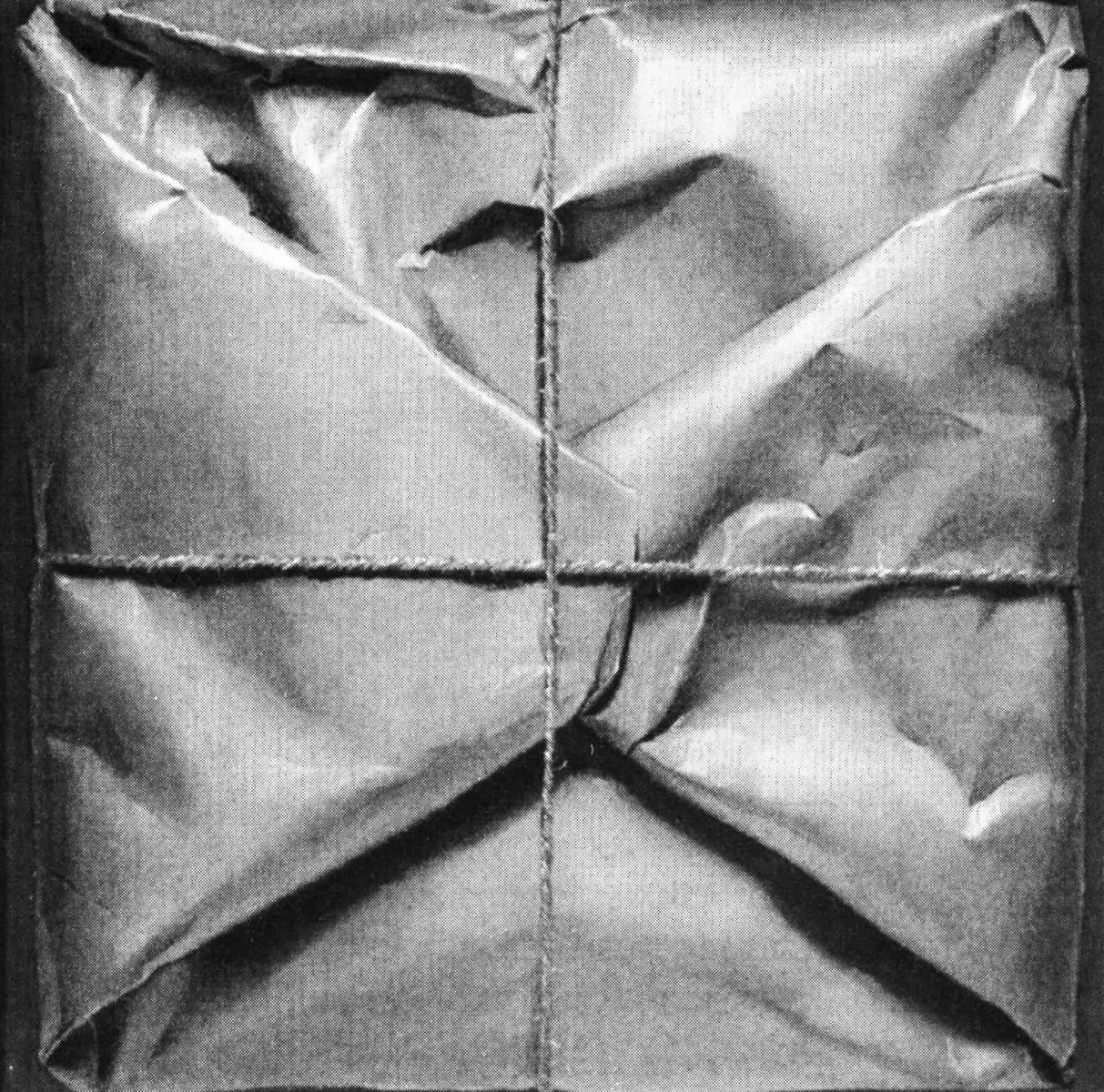
Inspired by Blue Package (1967) when it appeared at auction, the curator of the exhibition Sam Trower, set himself on a course to identify and locate as many of the package paintings as possible. He did an admirable job. It is safe to say that not since Bravo’s first New York show at the Staempfli Gallery in November of 1970, had a significant group of these paintings been exhibited. In his determination to assemble this collection, Trower gave the viewer the chance to carefully study each painting, examine the exhibition as a whole, and consider the place of these works in the broader context of Bravo’s complete production. The well-designed and illustrated catalog which accompanied the exhibit is more than a record of the show as it reproduces more than twenty other package paintings that were considered but not included in the show.
As is pointed out in Edward Sullivan’s catalog essay, many of the early package paintings were finished in New York and can be seen as a demarcation in the artist’s work. Having become well established in Spain as a much sought-after portrait painter, the packages were a marked departure. The essay documents the historical roots of the still life in Spain and the fact that, in some part, the inspiration for the packages came from the work of both Antoni Tàpies and Mark Rothko. In 1972, after earlier having considered a move to New York City, Bravo left Spain and moved to Tangier. In his text, Sullivan states that "The majority of the works in the present exhibition bear dates prior to 1972, the year Bravo moved to Tánger. While he continued to create package paintings after establishing himself in Morocco, they were principally executed while he was in greater contact with the current developments in New York and western Europe." Bravo has continued to paint packages of various sorts: wrapped paintings, bags, and boxes sometimes using them as elements of a larger composition. This exhibition, however, looked most closely at the earlier period.
The paintings varied widely in size, from the small gem-like pastel Blue Package from 1969 which measures only 15.5 x 15.5 cm, the shimmering surface of which brings to mind the fabrics of Vermeer, to the enormous oil on canvas, The Emperor, done in 1973 and measuring 258.5 x 135.9 cm. The Emperor perhaps depicts the wrapping rather than the wrapped, composed of two majestic lengths of cloth, one blue and one red, which tumble the length of the painting to the floor. Every piece, however, is carefully studied and technically polished. It is clear that the artist’s fascination with texture, luminescence, light, and shadow led him to look carefully at the subtle characteristics of wrinkled papers and crisp fabrics. While it is easy to become captivated by the technical aspects of these pictures, their true intellect of them lies in their ambiguity. The viewer has no means of knowing what is contained in these packages and is, therefore, forced to wonder what lay beneath the surfaces of these dazzling fabrics and sharply folded papers.
This show could serve as a prototype for exhibitions that allow curators to focus keenly on telling aspects or periods of an artist's work. As Latin American art becomes more familiar in the United States, Canada, and Europe, exhibitions like this one could become a valuable medium for educating the still developing audience. What could be more satisfying for both curators and viewers than a small, well-chosen exhibit with a well-designed and informative catalog which, in combination, increases the understanding of an artist’s larger production while, at the same time, adding depth to the field as a whole?
CLAYTON KIRKING