
The Soto Museum of Ciudad Bolivar is the host of the Art Biennial of Guyana which, between November 1997 and March 1998, gathered together a large number of artists around the concept of "frontier and regional art." On this occasion, the works were displayed not only in the Soto Museum but in various places throughout the city—so-called interventions on an urban scale— as well as in the Cathedral, the Ateneo, and the Casa del Congreso de Angostura, and the City Hall. In other words, the entire city seemed to be invaded by artists thinking in terms of edges, borders, and the boundaries of a vision that went well beyond the land that is one's own.
The invitation reflected the autonomy of a designer who decided to present a series of puzzles, on an 8-layered sheet of paper, with the names of the participants appearing one on top of the other, in white on yellow, and with a tiny list on one side. There was thus a deluge of paper and a negation of information. This impossibility of dialogue was one of the characteristics of this Biennial.
Entry to the event is by competition, or, by arrangement with the artist and the decision of a jury, as well as through the power of the organizer to send out invitations. The large majority of the participants were invited, although a few managed to get themselves accepted. It was clear from this version of the exhibition that the Biennial of Guyana has no links with the arts in the south of Venezuela or the state of Bolivia in particular. It is not interested in what is regional, although "region" appeared as one of its conceptual categories.
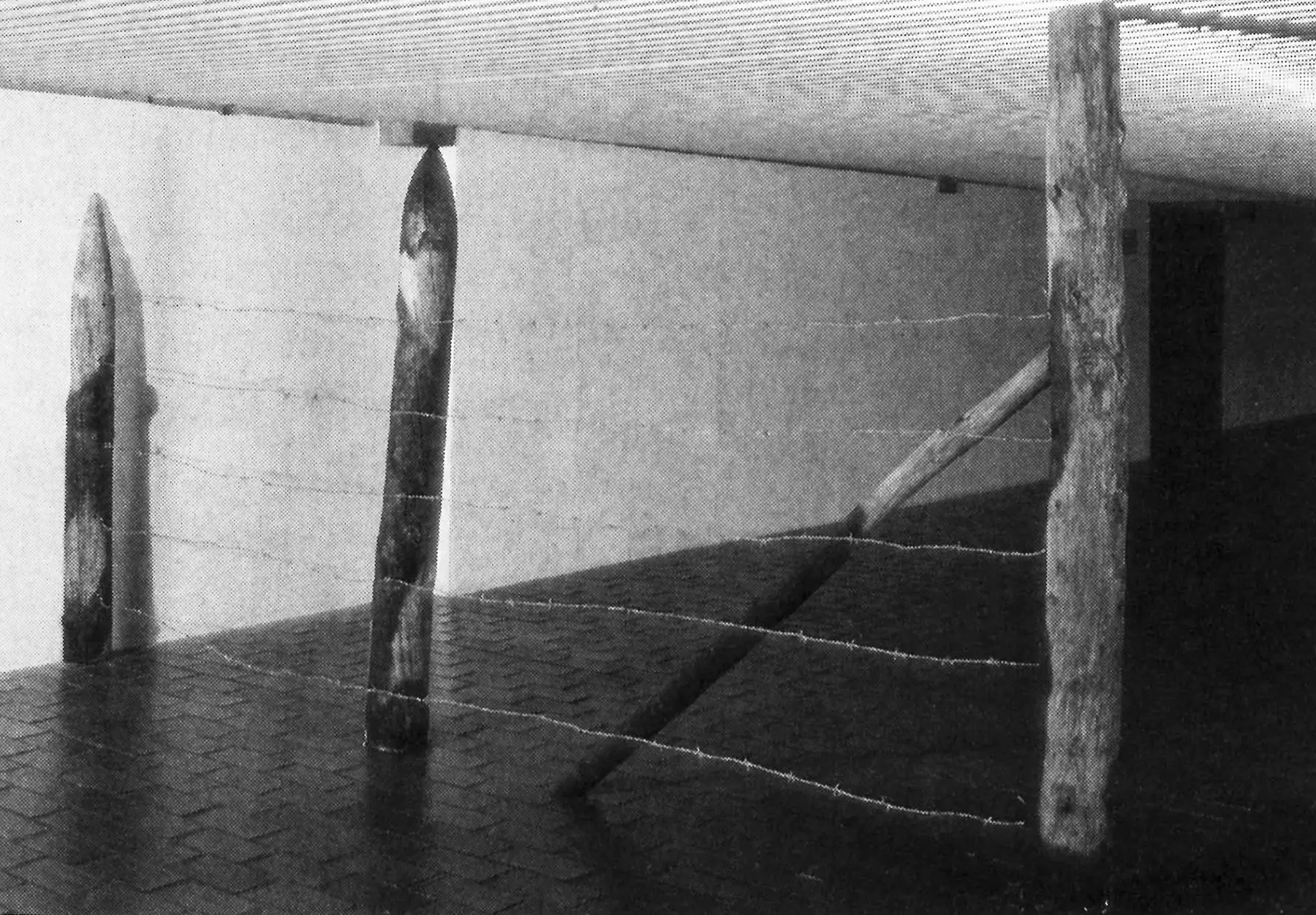
The Biennial showed art, in most cases (for example, the works of Milton Becerra or Ricardo Benaim), as an open process of creation. Experimentation was a common denominator. In the case of Becerra, it resulted in an intimate work, presented in a close space, practically without light, where the spectator could recognize the bodies, signs, voices, and nocturnal glow of the forest. Benaim for his part reconstructed a map of Venezuela on the earth, with green growing on it, the metaphor of freedom, and the negation of the limits that man proposes as conventions.
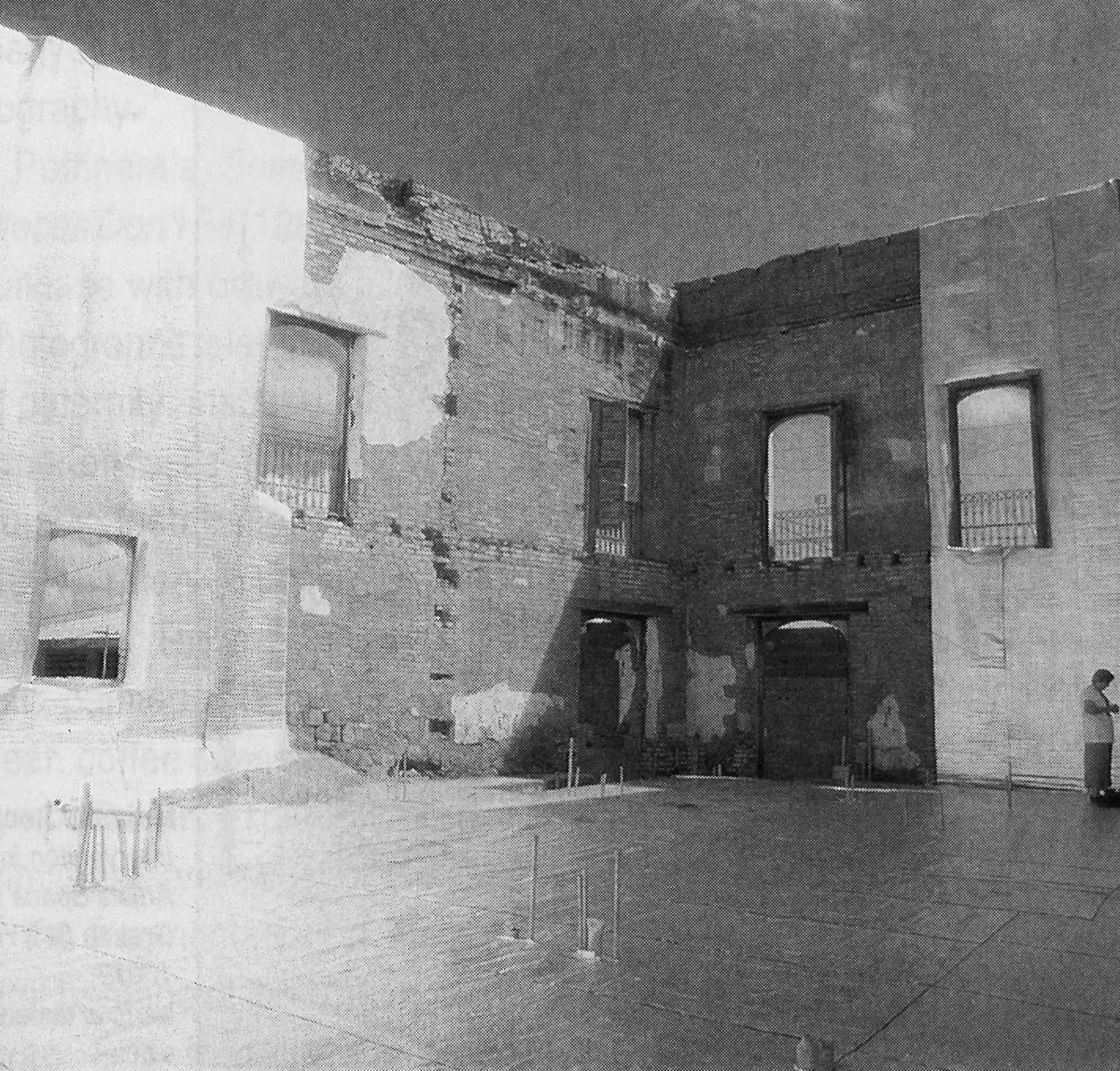
Except for the work of Joel Cacique, on the shell of a house that might be very old, the work done on the urban perimeter was of a modest kind, sometimes bordering on the ridiculous. Ciudad Bolivar is a place of glorious buildings and history, but those who wanted to work with this natural (and deteriorated) backdrop lacked the sense of audacity, poetry, labor, and culture required to establish a relationship with the site, its ancestors, and the parameters of the environment. Cacique used a house of which only the facade remained standing. Inside the enormous empty shell, the full impact of the solar light was concentrated to call attention to the lack of any policy for the preservation of our cultural heritage.
The Biennial also included an installation by Héctor Fuenmayor in an empty room that referred to the act of breathing as the first and last sign of existence. Nelly Ochoa presented a video/sculpture based on the mythology of El Dorado. Carola Bravo presented a drawing/installation on the geography of the Cerro Bolivar, while Luis Romero showed a video and toys referring to the fabulous elements of the region, with its landscapes and natural wealth.
Claudio Perna participated posthumously with his famous intervened maps. Using samples of water, Roberto Obregón defined the paths leading to Venezuela. Natalya Critchley did an enormous drawing in several parts that were based on a chronicle of Ciudad Bolivar. Patricia van Dalen placed a large number of small flags in red triangular form, as an expression of expansion. Clemencia Labin took her work to the walls and vault of the Cathedral as an illustration of the encounter of an ordinary man with art and religion. Marylee Coll used another church as the setting for her drawings in the form of infinite strips which exalted the lines of the church’s interior architecture. Oscar Machado created in cement, a rosebush for the Liberator. Ricardo Gómez Pérez presented his urban photographs. Adriana Barrios explored the contents of the Orinoco, the city, and its people through a vertical and transparent cut of the flux which makes up life. And finally, there was Alfredo Ramírez, an artist who won the Fifth Biennial Prize, with an aluminum skeleton work on the subject of electrical discharges.
JUAN CARLOS PALENZUELA