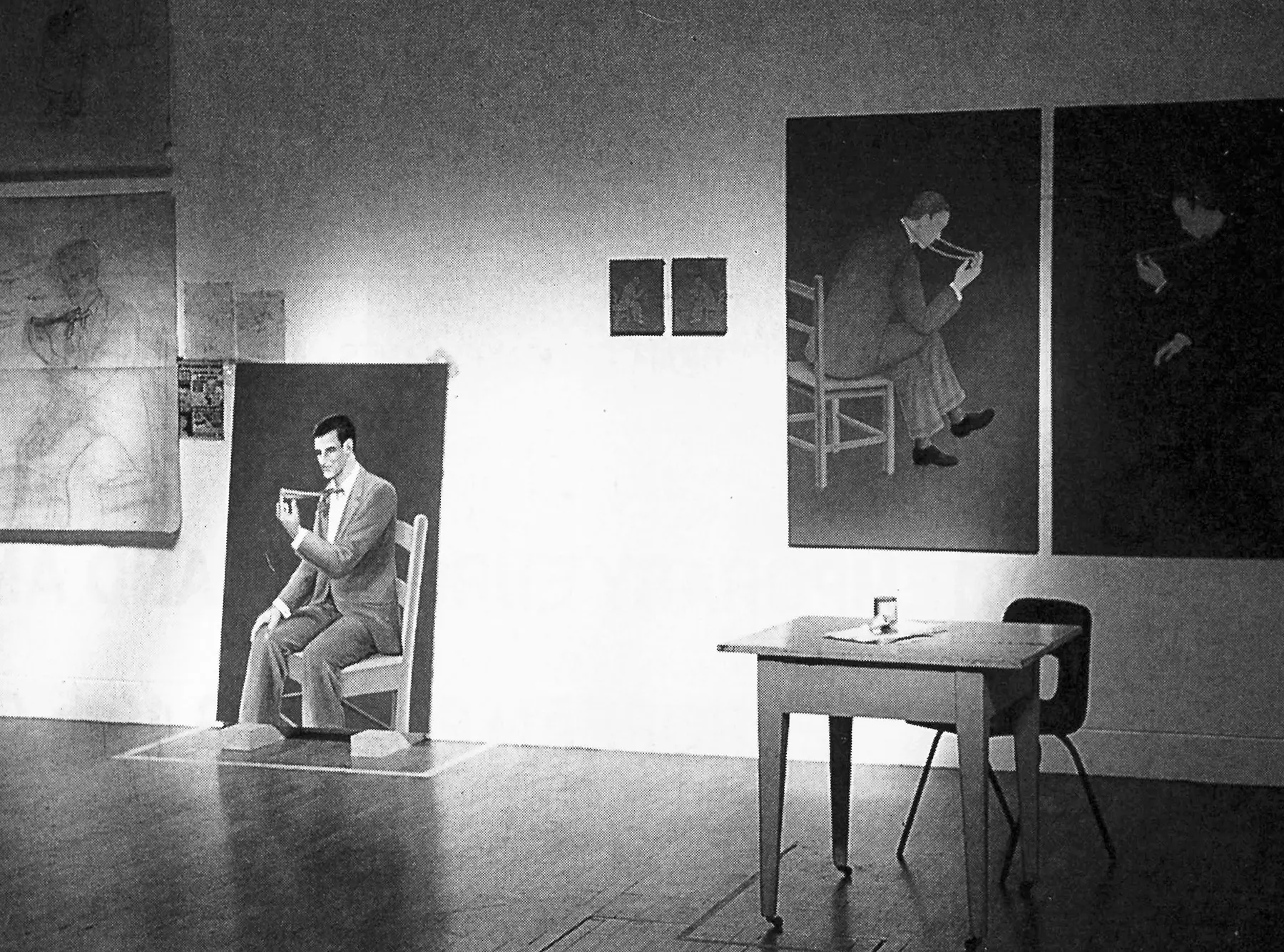
The pictures, sketches, videos, and other works which Francis Alÿs has produced since 1992 reveal the development of a creative process in constant gestation in which the act of walking is the common denominator. For Alÿs, walking does not only involve displacement in time and space; it also supposes a kind of alienation that encourages abstraction from thought. In one of the pieces at the beginning of this exhibition, the artist guides us towards this receptive state through the repetitive and automatic reading of the inscription: "As long as I am walking, I'm not choosing, / I'm not smoking, / I'm not losing..." between the final lines posted up on the wall, there is a white space that creates a kind of absence, before the final words: "I will not repeat / l will not remember."The work depicts the unusual and subjective nature of the experience of each individual's experience as he or she walks, with each walk being the result of specific circumstances which make up existence. By associating the text with a group of photographs of anonymous figures moving along the street, Alÿs not only documents an instant that is unique and unrepeatable but conjures up the many paths which could be taken and which, at the moment they appear before us, seem to diverge. He thus guides the spectator through one of the paths in his work, maintaining a distance that makes it clear that the finished products are not as important as the creative process since, in the artist's words, the invention of language goes hand in hand with the invention of the city.
Moving around, observing, and noting different events has enabled him to consolidate an artistic vocabulary in which the collection of Fabiolas, —round or square, embroidered or painted— plays a decisive role. The discovery of the proliferation of copies of the portrait of this unknown noblewoman encouraged the artist to explore the different motivations which led to the reproductions, along with the codes of pictorial expression and the real possibilities for communication. Alÿs confronts the subjective perception of the artist with the gaze of the spectator and calls into question the status of the image in a society in which symbols constantly strive for multiplication and end up becoming standardized. By bringing together these pictures on the same wall, his objective is not to reveal their similarity but to emphasize their differences since only by looking at them together can we identify subtle nuances in style and, above all, discover their singularity. Alÿs shows us that the unique character of the pictures does not lie in their authorship —some are signed by amateur painters, others are anonymous—, and has nothing to do with the elitist criteria which have been used to define a work of art.
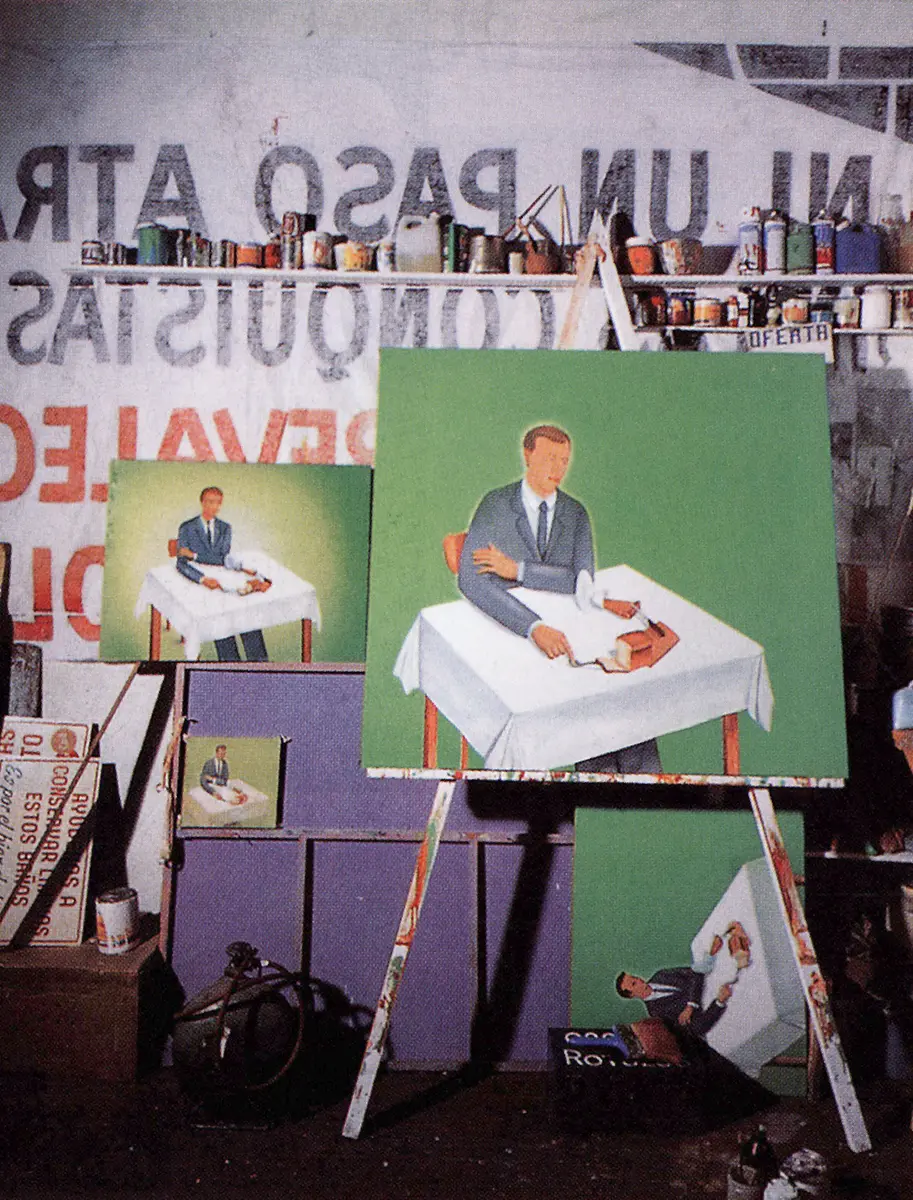
In 1993, Alÿs extended the parameters of his work by confronting his own pictures with the various interpretations of them made by the billboard artists of Mexico City. He then made new versions on the basis of the variants proposed by the latter. In doing so, he created a production chain, similar to that of the Fabiolas, in which the processes of plagiarism and creation become reversible. Whether they were genuine copies or false originals, the images did not lose their essential nature. The intimate and introspective aspect of the small canvases painted by Alÿs reappeared in the pictures of the billboard artists who, for their part, used saturated, brilliant colors, encouraging a more immediate reading of the forms. In this series, the objects and bodies set against monochromatic backgrounds appear as autonomous beings whose existence is justified by their mutual interaction, establishing affinities or tensions which re-signify the surroundings. Although they transpose with indifference a subjective gaze, they manage to communicate a transparent vision of the everyday world and show how the random effect of one thing on another regulates the actions and reactions which determine the direction of our lives. The pictures create a space of communication in which reaching for a shoe or holding up a pillow are not functional actions but expressive gestures and suggest, like walking, that existence is based on the acts of mimicry and the displacements which fill the void surrounding and separating each body.
Similar references can be seen in the urban images of the City Squats series (1995), in which cupboards make up for the gap which exists between the buildings, articulating spaces to give them continuity, however absurd and arbitrary that might seem. This continuity was evident throughout this exhibition in a succession of related images ranging from unusual photographs from newspapers and magazines which Alÿs often uses as a starting point, to preliminary sketches for pictures and others which, when superimposed on the canvases, become inverted. Behind this interpretation of the errant symbols which Alÿs collects from his various walks appears the flux of an inert and everyday reality, in which everything is repeated without ever being the same.
MAGALÍ ARRIOLA
Art critic and permanent editorial coordinator for ArtNexus in México.