
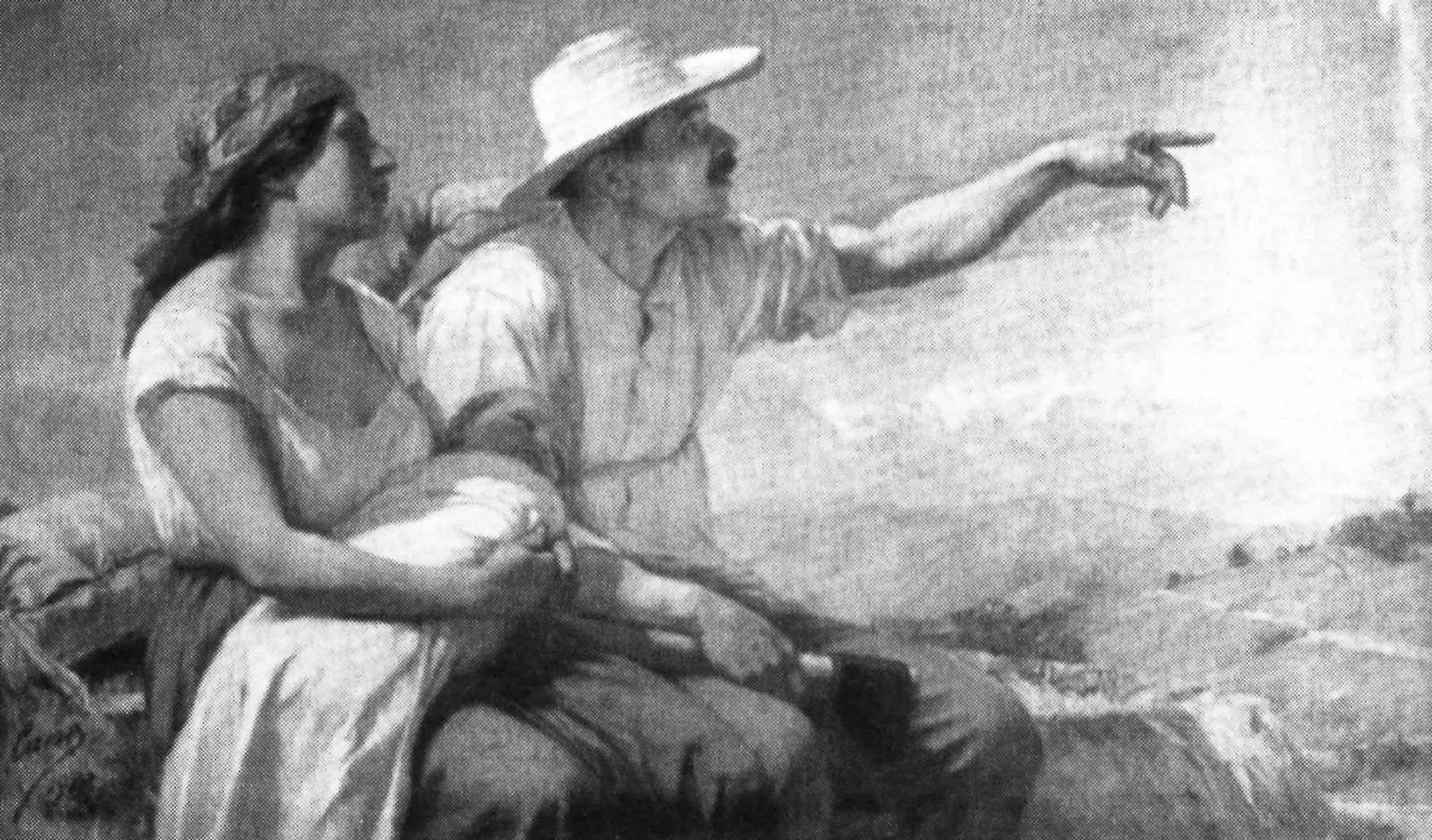
Is a watercolor showing a view of a river part of the concept of the landscape? Does an academic poem about an invented field pre-suppose the emergence of bucolic poetry? The celebrated text by Kenneth Clark on the landscape in European painting examines this kind of question which, when applied to Latin American reality, refers to nature as an academic theme rather than a real experience of landscape, as an existential experience of the sublime, as in the case of Edmund Burke or, of course, Kant.
Burke incorporates into the aesthetics of the sublime such definitive notions as the limit, the horizon, and panorama. What did Caspar David Friedrich perceive from the craggy heights? As Argullol has pointed out, it is a romanticism that brought forth the sense of a loss of the sacred and thus, the concept of an inner chasm, following the absence and irreparable loss of the sublime.
Or is the vision of landscape like a new homeland for someone who has been shot through with the sense of this loss, as seen in the visual chronicles of Remington in the conquest of the west? The early North American landscapes from the 19th century to those by Church were governed by academic standards: the painter did not see the beauty of the wild but painted only trees taken from art and from the academy.
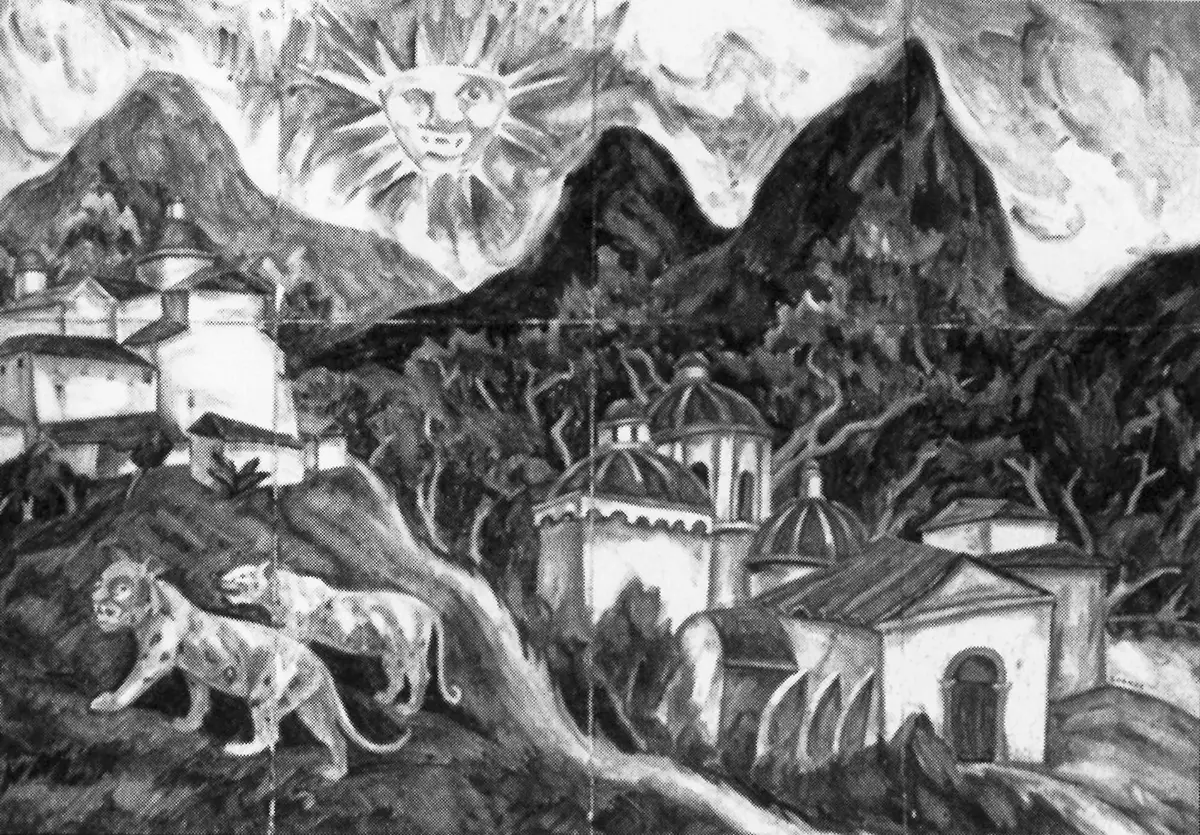
In the cultural process of Antioquia, importance must therefore be given to the so-called colonization in which the creation of geography led to the appearance of such terms as limit, horizon, and panorama. Landscape, profoundly linked to an existential experience— became reflected through characteristic states of mind—landscape as an expression of the soul in response to the finiteness of life, the fleeting nature of time, and the changing shades of light, as seen in the music and certain poetry from the region.
But it is also the discovery of an overflowing kind of nature, of the forest and the appearance of wild telluric myths, of primitive forms of life which are defined as an inner experience, or as a simple backdrop to a regionalist anecdote whose aesthetic value is indeed precarious: Pedro Nel Gómez, Arenas Betancourt, José Horacio Betancourt—their work attempts to explore the heart of this nostalgia, with trouvailles and failures.
A large team of research workers, sponsored by the Suramerican company, recently made an analysis of the theme of "Landscape in Antioquia" from its early expression down to what we would call the presence of a landscape school. Logically, it was important in the description of its historiography to take account of other elements, such as poetry, popular ballads, and prose. The result was an exhibition impossible in the scope given the amount of existing material that hindered any critical discrimination, and the evident partiality of the curators in their choice of "the most representative."
Obstacles notwithstanding, there were some outstanding works, particularly the early landscapes of Francisco A. Cano because of the intensity of their color which went beyond the academy, but intensity and emotion that the academy would, unfortunately, cause to dry up. The landscapes of Eladio Vélez were, without doubt, the best in the show because of their wise use of a single color, with the evidence of time slowly passing through these visions of a rapidly changing landscape.
Mention must also be made of the contribution of José Restrepo Rivero, curiously related to the Catalan landscape artists of his time, an artist whose vision of the landscape was strict and rigid, and imbued with an inner sentiment that prevented his work from becoming anecdotal or merely derivative. Humberto Chávez, kept under lock and key by collectors, continues to be largely unknown because of the impossibility of seeing his work critically in the context of his development, in which a characteristic landscape was already present in his figures. His concept of color and impasto clearly distinguished him from those who subsequently called themselves "regionalist" artists.
Of painters such as Rafael Saénz, the show included a few early works full of freshness that would ultimately disappear over the years. There was also a strange Pedro Nel Gómez watercolor from 1960 that seems like a work by John Marín. In it, as in his watercolor of the Magdalena river, the plastic element predominates over the telluric anecdote which led him to such unfortunate excesses.
What exactly do we mean by landscape? Where does it begin and where does it change into something else? Do we choose historicism, i.e., merely gathering together works in which "there is a landscape" or establish some theoretical argument concerning such concepts as nature, geography, and landscape?
DARÍO RUIZ GÓMEZ