
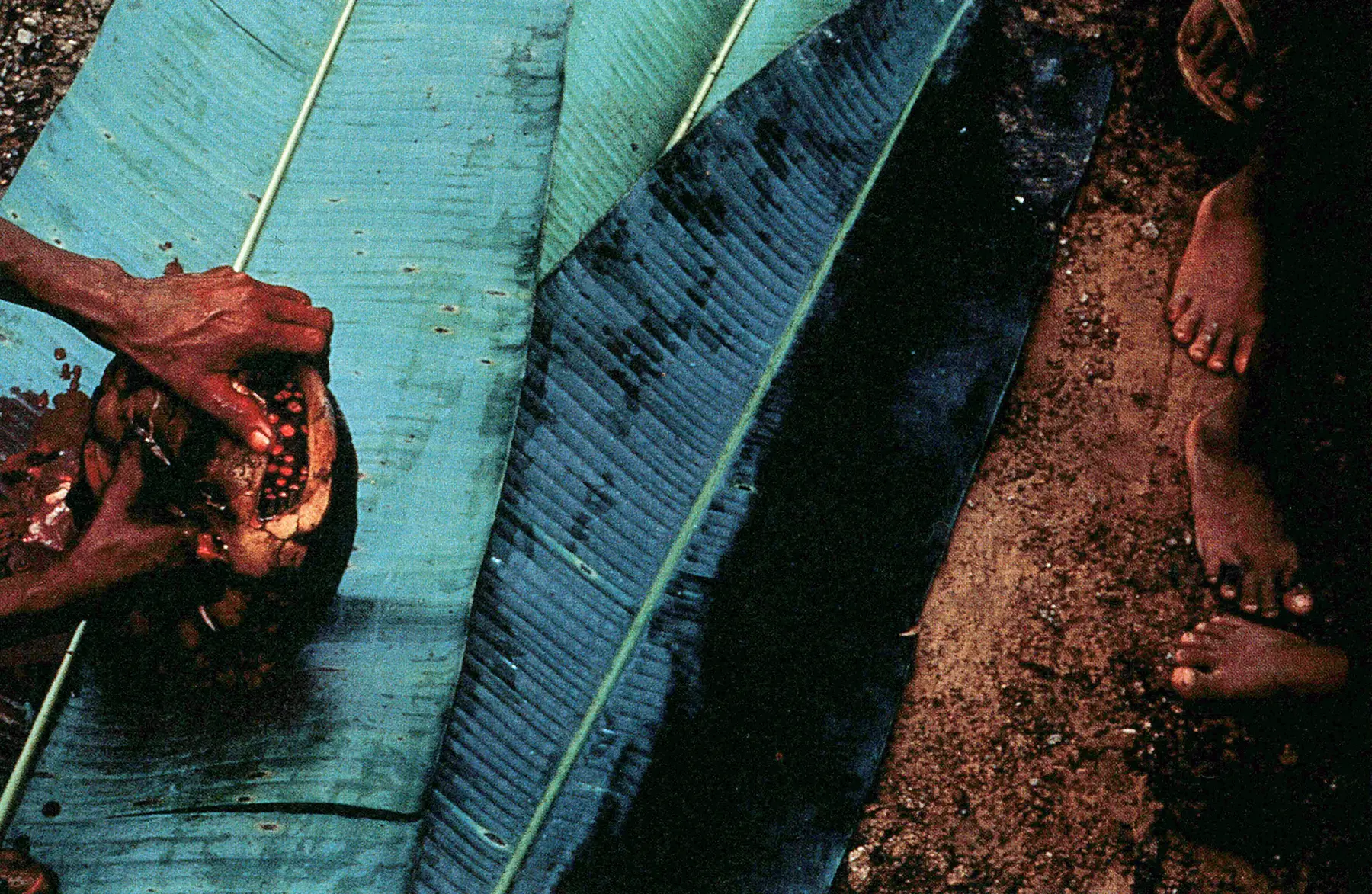
Contemporary photographers do not usually encourage the idea that their art is particularly enigmatic. From the 1960s, photography had already begun to direct the spectator's attention toward the reality that lies beyond the subject matter of the photograph, focusing the interest on the image as image, as artifice, an act of fabrication. Some photographers have even explored their own role in the process of creating the image, thus contributing to the gradual loss of confidence in photographic observation. Others, freed from the supposed ability of photography to exorcize through its "privileged moments" the anxiety and remorse created by the disappearance of such moments, have thus embarked on the adventure of creating other more "realistic" fictions. Still others, as the stability of the material world (dominated by special effects, digitalization, and the communication media) crumbles under the weight of suspicion and doubt, have tried to claim another surer and more reliable kind of reality.
The photography of Miguel Rio Branco does not reveal the nature of its genesis but the fragility of its beauty and the mysterious aura which seems to envelop so many of his images have convinced many critics to see a link here with the painting. The chromatic vibrations in the work of this Brazilian photographer and in particular, the dramatic effects which his compositions achieve in terms of light and shadow, would seem to justify such a comparison. A few writers have mentioned the names of Titian and Tintoretto, no doubt in the belief that the spatial dynamism, lighting, and sense of drama in the work of both these masters of painting have their counterparts in the spatial tension and extraordinary light characteristic of Rio Branco's photography. However, the one name that is mentioned as a historical reference by everyone in relation to Rio Branco's work is Caravaggio.
The clearest relationship between Caravaggio and Rio Branco would seem to be that of the tension that exists in both artists between quietness and movement, darkness and light, silence and sound. Equally obvious is the "realism" or extreme "naturalism" with which both endow their respective subjects. And their capacity to discover the extraordinary in situations and characters of the most ordinary and mundane kind. But, beyond any simple oppositional resonance, beyond the escape from canons and the transcending of the ordinary, what links them is their mutual interest in de-centering; the displacement, dilation, and degradation of the center; what Severo Sarduy, in explaining the cosmology of the baroque, called "the invalidation of the single center."
All of this may help us to understand the source of the ellipses in Rio Branco's work, the intensity of his compositions, and the incandescent nature of his images. However, it does not help to explain the discontinuity, the insistent irresolution of his narratives, and the disarticulated images that have become characteristic of his work. In the end, what Rio Branco proposes in a good deal of his photography (whether from the 1980s or the 1990s) are representations of figures and objects of an apparently familiar kind but yet unrecognizable, endowed with the supposed veracity reflected in the world which we perceive, but, to what extent do they possess the autonomy that painting continues to claim for itself? Of course, this does not in any way imply that the photographs of Rio Branco are simply crude depictions of a phenomenological kind. Yet can we attribute to them any other function than that of bearing witness retrospectively —and the process is by definition retrospective— and of affirming that something (whether real or fabricated) has occurred or existed?
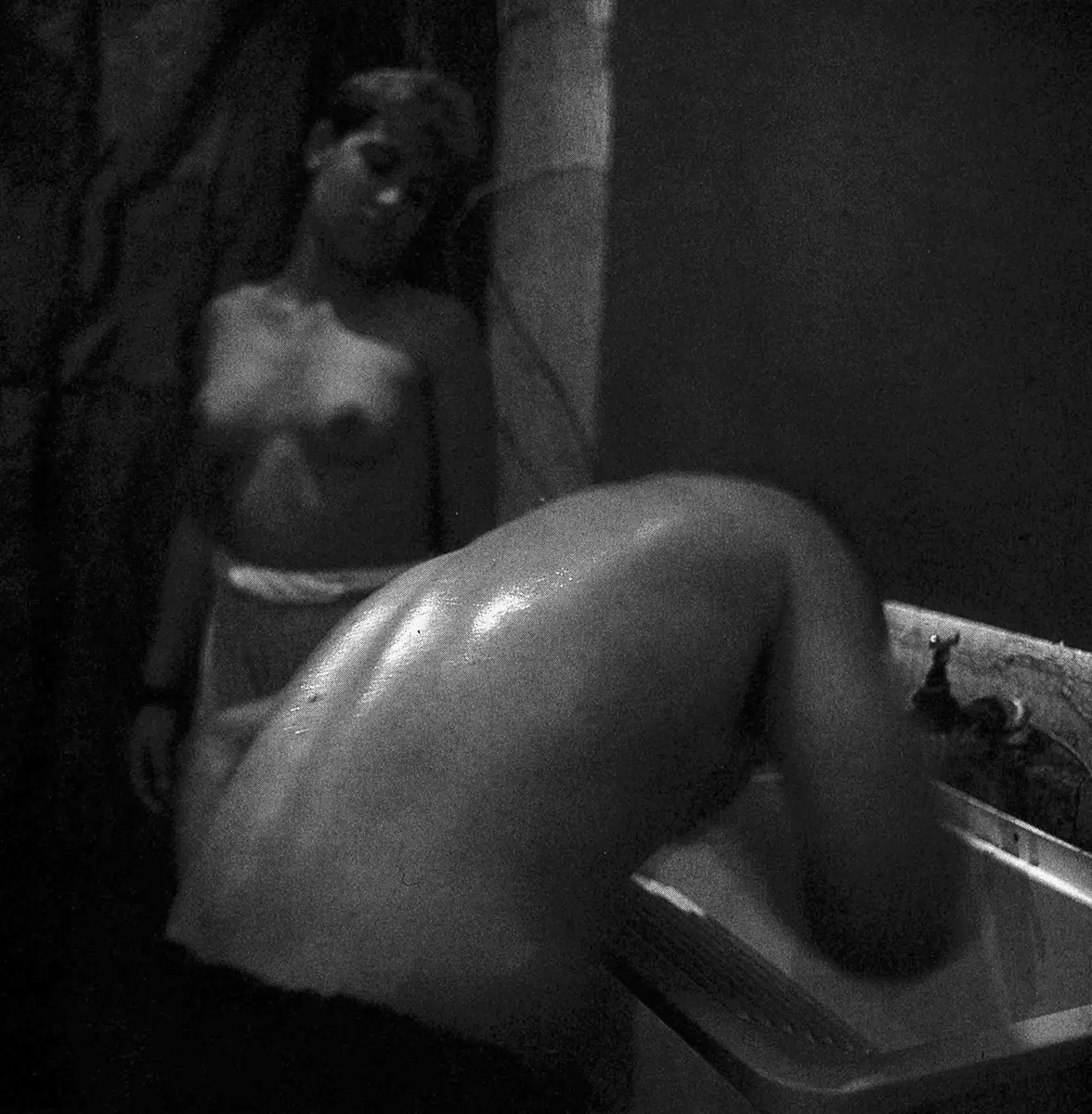
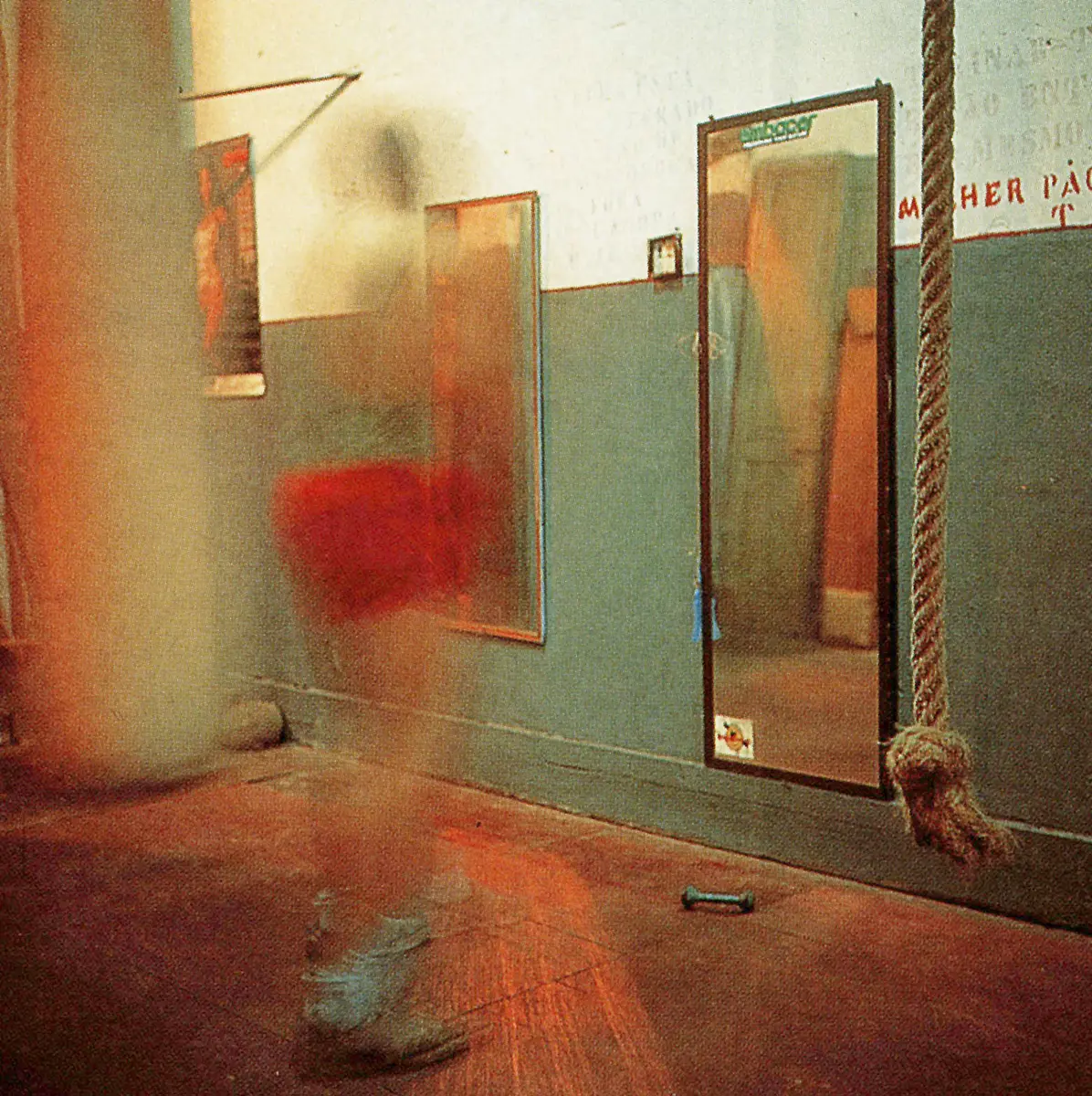
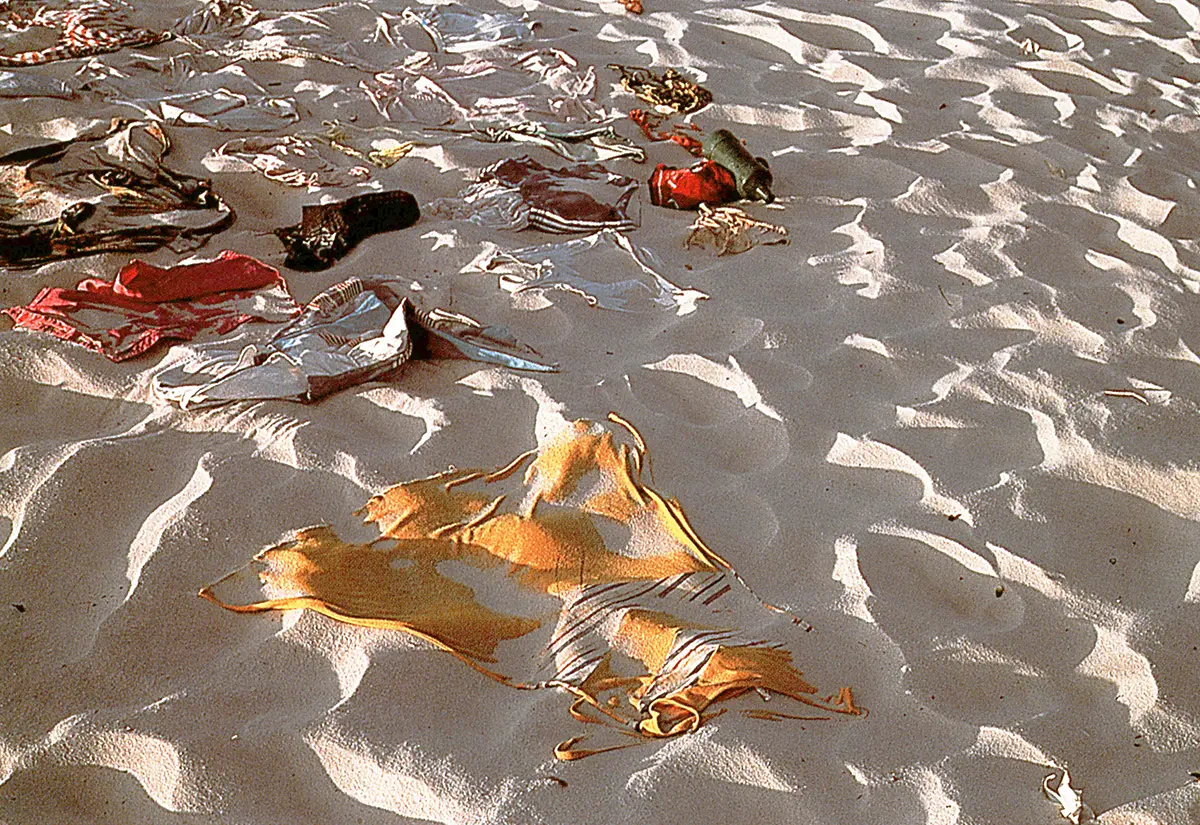
Miguel Rio Branco's photography has, on different occasions, already evoked the paradoxical nature of these questions. Lady Vanishes (1984), for example, shows objects on the sand that seem to be the belongings of a woman, or what remains, while in Double Mirror (1992), a boxer, who apparently jumps rope in front of two mirrors, then fades away. Both are privileged images but unresolved, discontinuous, and lacking in any identity. In both cases, we have arrived too early or too late. And yet, this irresolution is precisely what makes them more intense, more "real" as in Le Feu et la Lionne, which shows a lioness about to jump through a hoop that has not yet become a circle of fire.
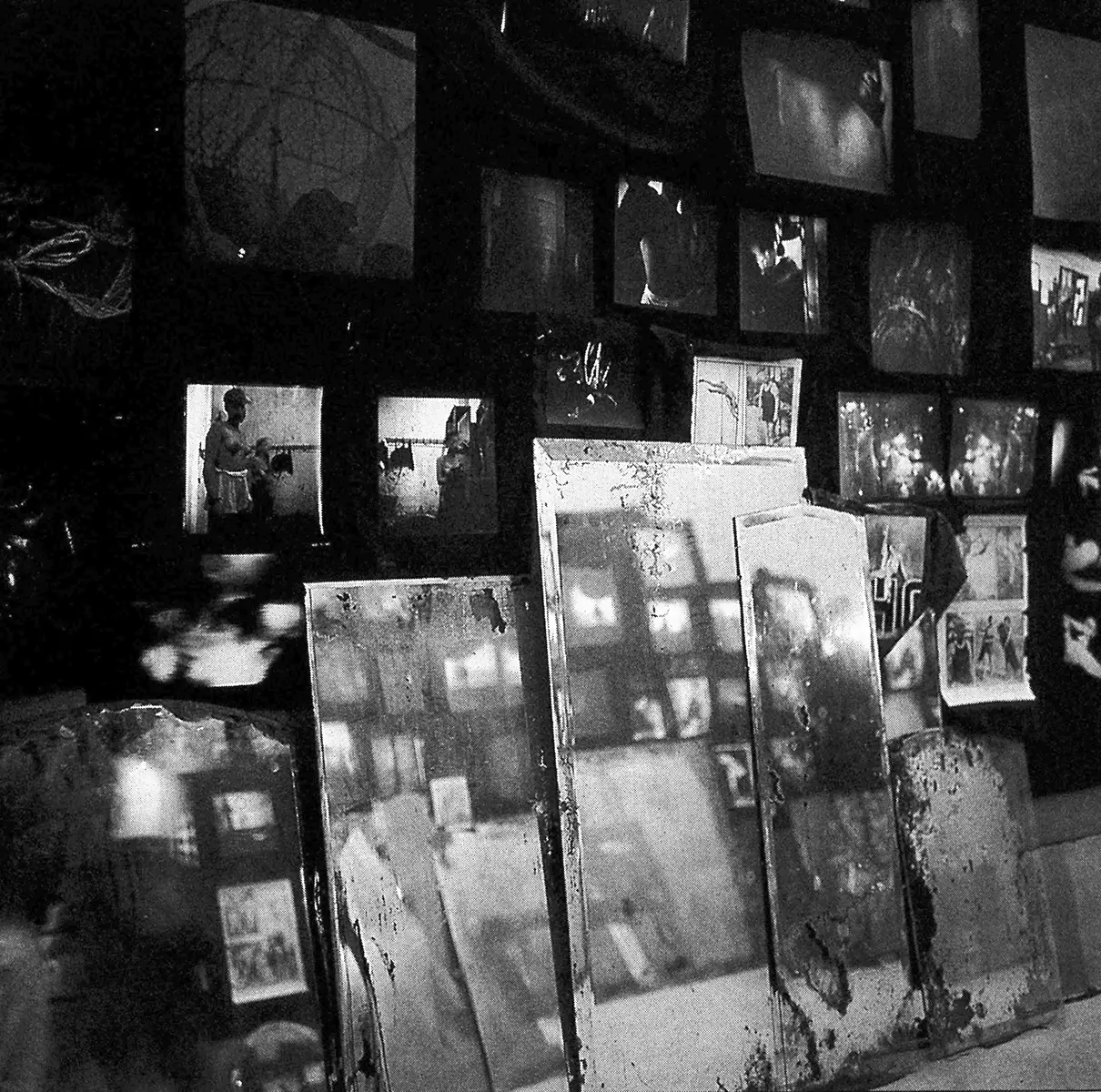
In each case, Rio Branco uses different kinds of artifice and resources to produce a paradoxical and indirect sense of intensification, so that the reality of the image is confirmed by its absence. As in most of his photographs, the search for a perceptible immediate reality —or rather, a correspondence with what we might understand as immediately real, is precisely what distinguishes his artistic endeavor— an endeavor always rooted in the reciprocal action of opposing forces.
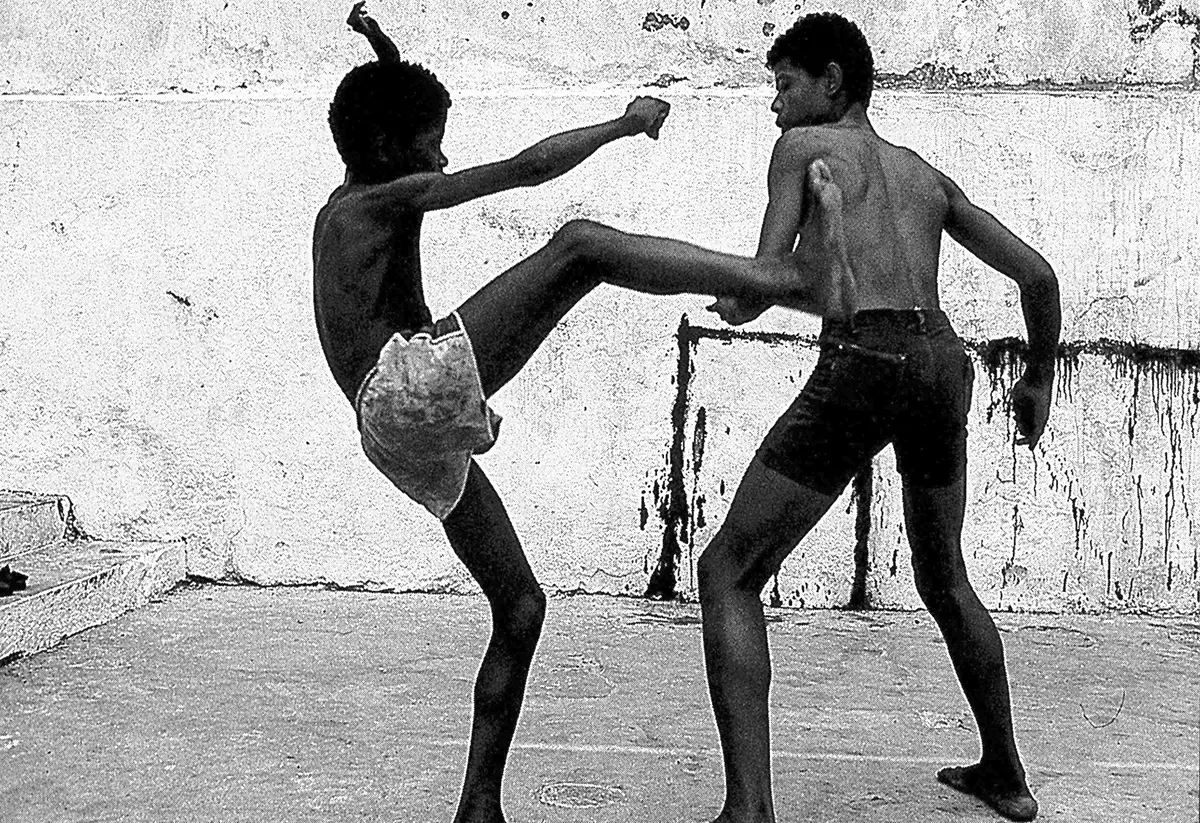
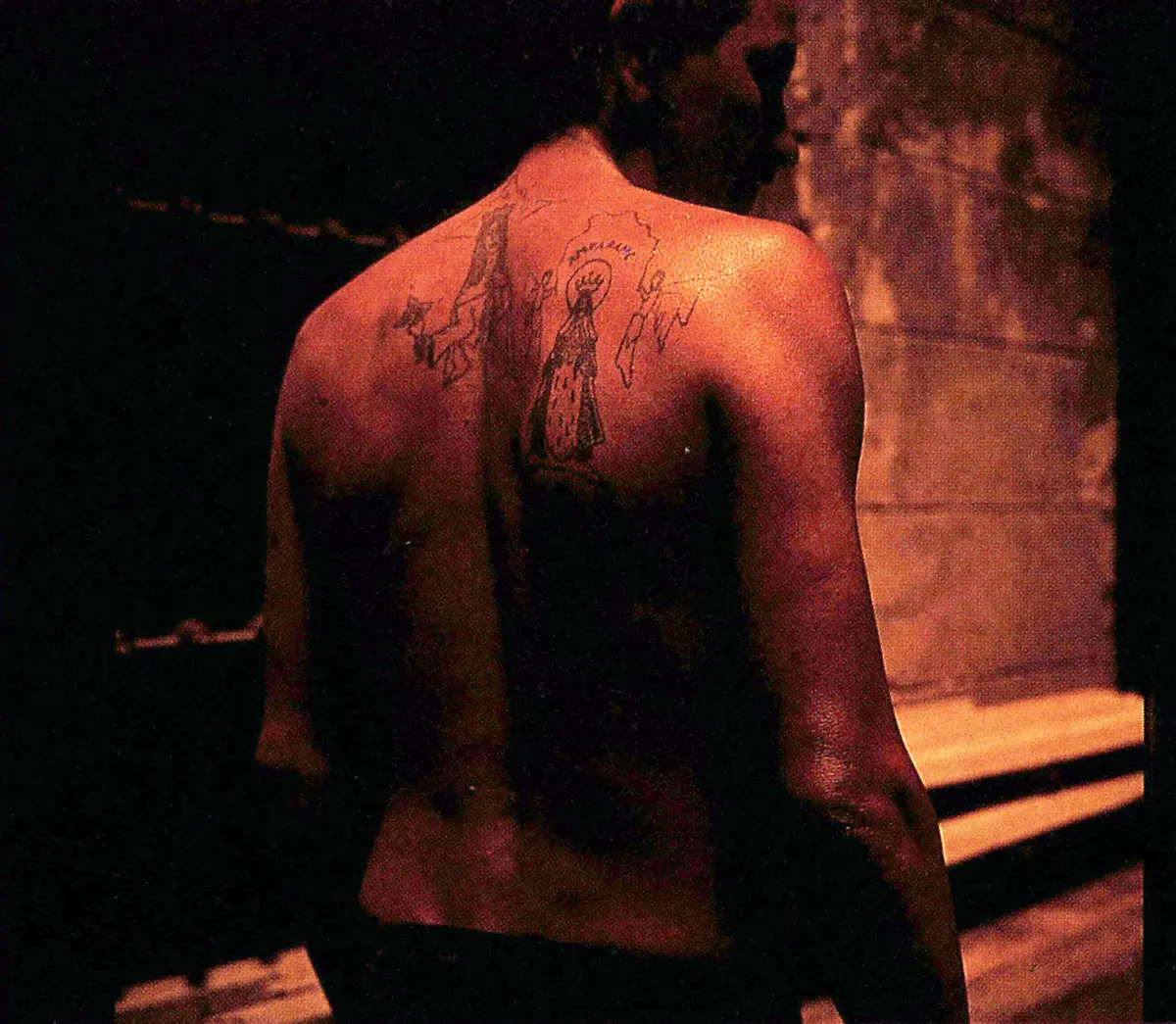
None of his images, however, seem to be able to maintain a fixed or definitive form, unless we isolate them completely, totally eliminating the universe surrounding them, subtracting them from the universal field of history's transformations. Perhaps Rio Branco wants to preserve them as immutable entities by immobilizing or freezing the displacement within the photographic frame. But the details, references, transgressions, erasures and corrosions, wounds, scars, tattoos, and traces all point towards an existence partaking of continuity, participating in the passage of time. And so the images are part of the dialectics proposed by Heraclitus: as a unitary structure within which opposites —plurality— are not only necessary but actually challenge any unity. In the work of Rio Branco, the image is never a finished entity, but a relationship... In this way, the image can never be completed, and when an image is made, it is by definition always open to change.
The photography of Miguel Rio Branco is thus both realistic and enigmatic since, even in those examples in which the limits of verisimilitude are transcended, his objective seems to be the expression of life, the life which we all live and suffer, and the flux which makes up our own being. Despite this interest, his photography is not based on any anecdotes or dramatic elements that would compromise or weaken the sensory impact of his work. Above all, he knows that neither the one nor the other is able to penetrate reality. On the contrary, his photographs establish for us a link with reality, because we participate in its beauty, although he reminds us too of its extraordinary dissonance: the anguish caused by that hostile imminence, death, which any apparently total understanding of life reveals in our most intimate being (Michel Leiris).
OCTAVIO ZAYA
Critic and curator, resident in New York since 1978. Associate editor for Atlántica (Spain) and correspondent for Flash Art (Italy).