
For thirteen years, Johnnie Walker has been carrying out an artistic program with the goal of establishing a Latin American art collection. This initiative includes an event open to national artists from different countries, as well as a series of exhibitions that have been held in Peru, Brazil, Chile, Colombia, and Mexico. In the Casa de la Moneda during the months of February and March, the works selected from the competition organized last year by Johnnie Walker, United Distillers Rueda & Co. were on display. The exhibition was curated by Carlos Arturo Fernandez, professor of art history at the University of Antioquia, Carlos Jimenez, dean of the faculty of the culture of the University of the Valle, John Philips, general manager of United Distillers Rueda & Co., José Ignacio Roca, the head of the Plastic Arts Department at the Luis Angel Arango Library, and Miguel Angel Rojas, an artist, and teacher at the National University of Colombia. They examined 560 portfolios of Colombian artists between the ages of 25-45. Initially, 60 artists were selected. In accordance with the regulations of the event, they each created a work that reflected “through the exercise of painting on 'Red' as a color, in association with a series of concepts, ideas, and meanings throughout the history of mankind." Finally, the group of curators examined the works produced and selected 25 for this show, which will travel this year to the major cities in the country.
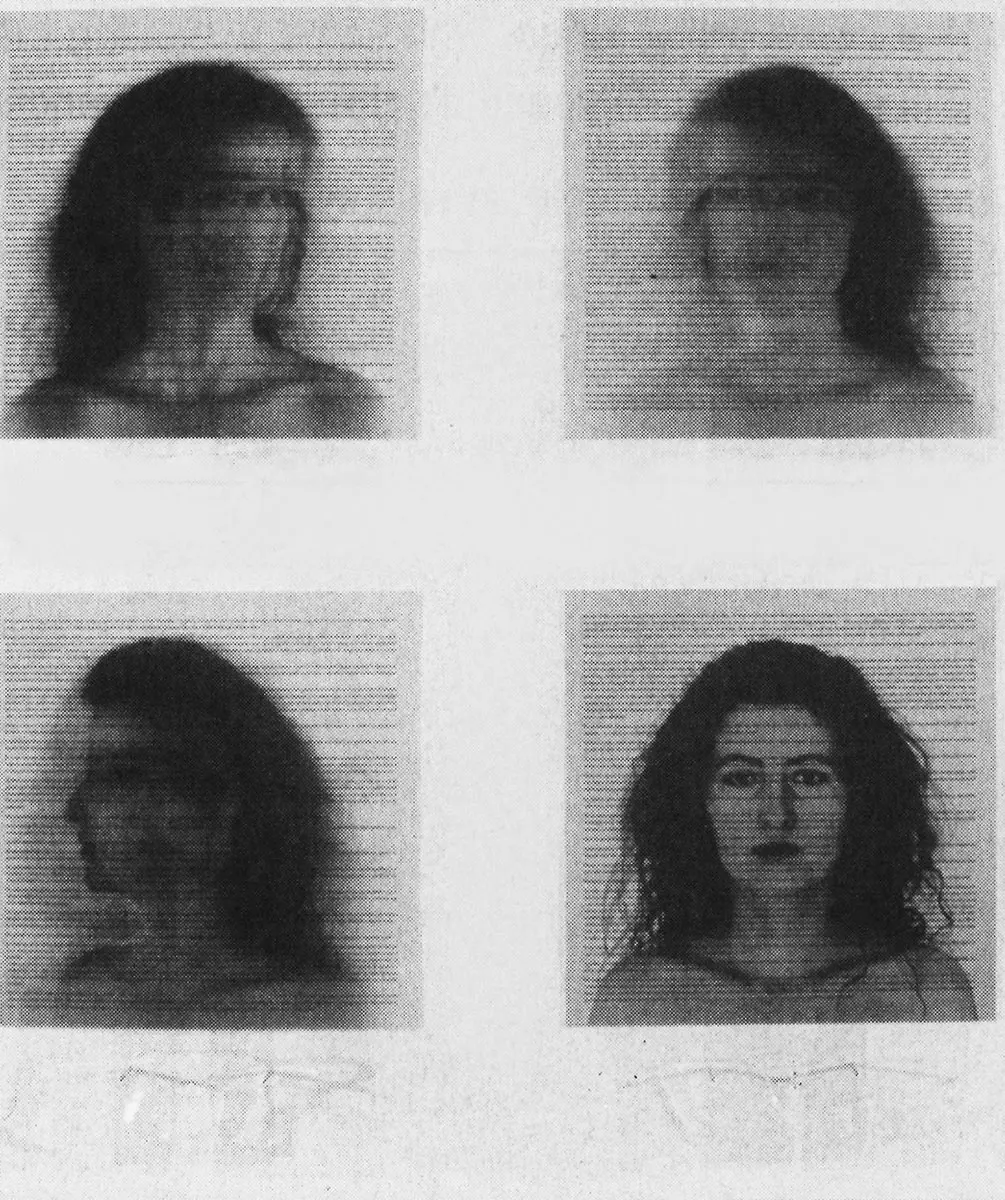
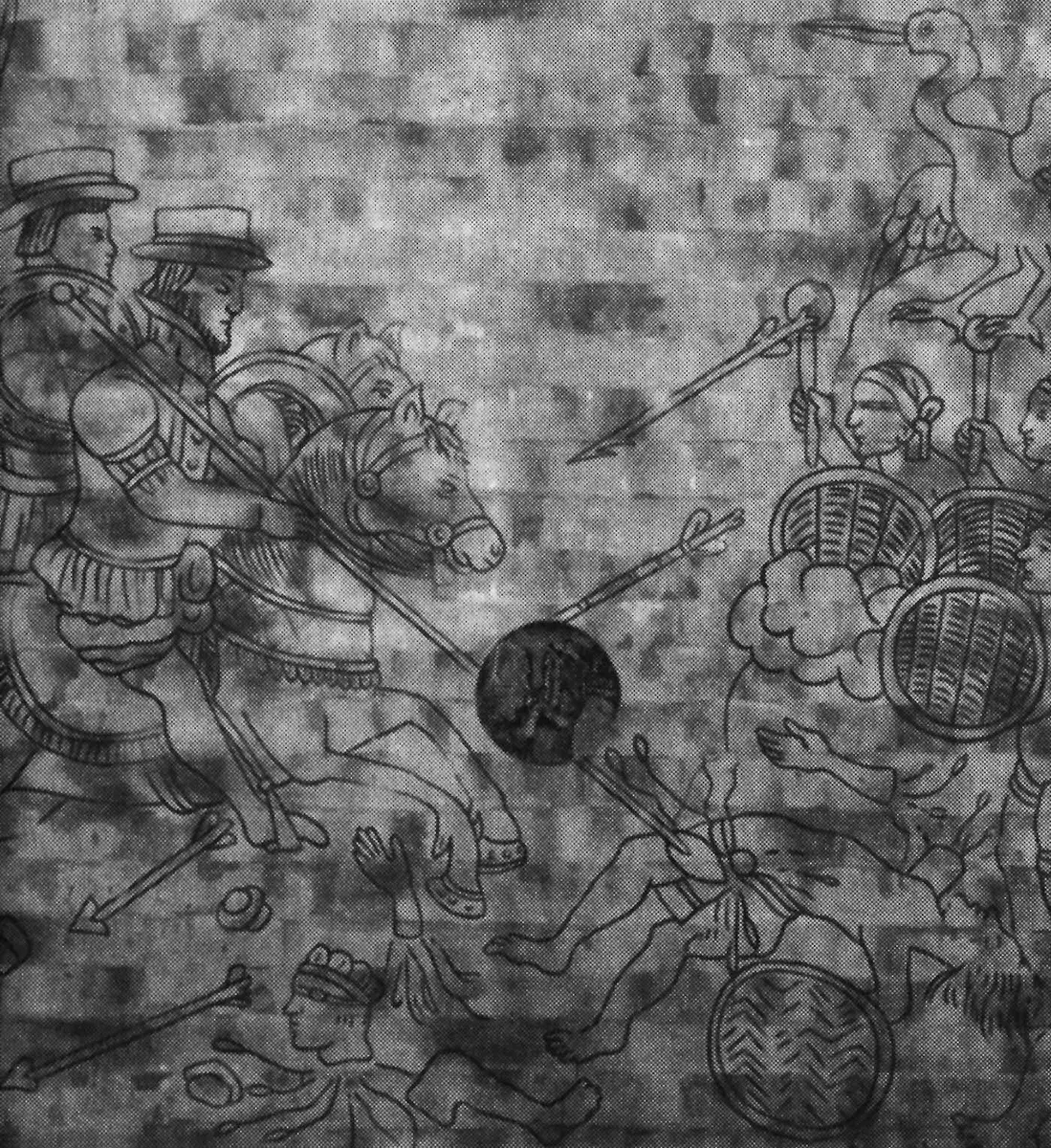
The prizes were awarded by an international jury made up of Catherine David, curator of the Documenta X, Ivo Mezquita, an independent curator and visiting professor at the Center for Cunational Studies, Bard College, New York, and Carolina Ponce de Leon, curator of the Museo del Barrio, New York. The first prize went to a work titled I don't know anything, by Patricia Bravo; History in red and gold by Raúl Cristancho was awarded second prize, and the third prize went to a set of paintings titled Warming up by Beltran Obregon.
It is worth noting certain aspects in the organization of this event that reflected a serious and careful attitude that in turn resulted in the generally good level of the show as a whole. First, the age required for participation seemed to reflect certain precise criteria, since the choice of these generations provided access to projects by active artists who are either beginning or bringing to fruition, a process of artistic maturity. This excluded very young artists, as well as those who are fully established in favor of those who are in a process of development.
As José Ignacio Roca pointed out, this program “makes use of a thematic structuring around the notion of “red", but not so much as a color as a concept in the complexity presupposed by the contemporary exercise of pictorial activity.”1 Such a structure is both interesting and suggestive, especially if we remember that many national events seem to be interested in decreeing the definitive demise of painting due to causes that do not seem to have been clearly defined.
After seeing the show, and as the essay by professor Carlos Arturo Fernández confirms,2 it is clear that the chosen theme was a timely one given the enormously rich conceptual and historical implications associated with the color red and with the history of painting. The selected artists responded, each in his or her own manner, to this challenge, with some exploiting the impactful nature of its presence, and others, no less forcefully, evoking its presence through absence.
For many artists, red is an appropriate vehicle for evoking the situation of violence affecting the country. Two of the prize-winning works took this reference from very different angles as their starting points. Patricia Bravo used, as on other occasions, her own image as a container of dreams. This time, they were dreams of violent events in which various individuals, men, and women, told their own dramas. Raúl Cristancho also used stories, in particular those of the conquest of the Americas, to highlight the way our history, as the title of the work indicates, has been written from beginning to end in red and gold. As on other occasions, Cristancho used collage to create an encounter between two eras on the same surface, so that on top of one image taken from a Mayan codex he places another taken from a newspaper image in which the army transports one of the many corpses we are used to confronting every day in Colombia.
The evocative power of red is also explored in the work of Delcy Morelos, who presented a large diptych in acrylic on paper, in which the color red is spread and bursts forth in an aggressive manner, suggesting the flow of blood. Ana Claudia Múnera offered a digitalized video image in which she also evoked the idea of blood, in the everyday setting of a bus seat. Johanna Calle also used the theme of violence, but the red appeared in her monochrome work as an absence, as a complement to the mourning of the orphans who become more and more numerous in our country. Germán Londono’s work was part of this group, but for its title than its iconography.
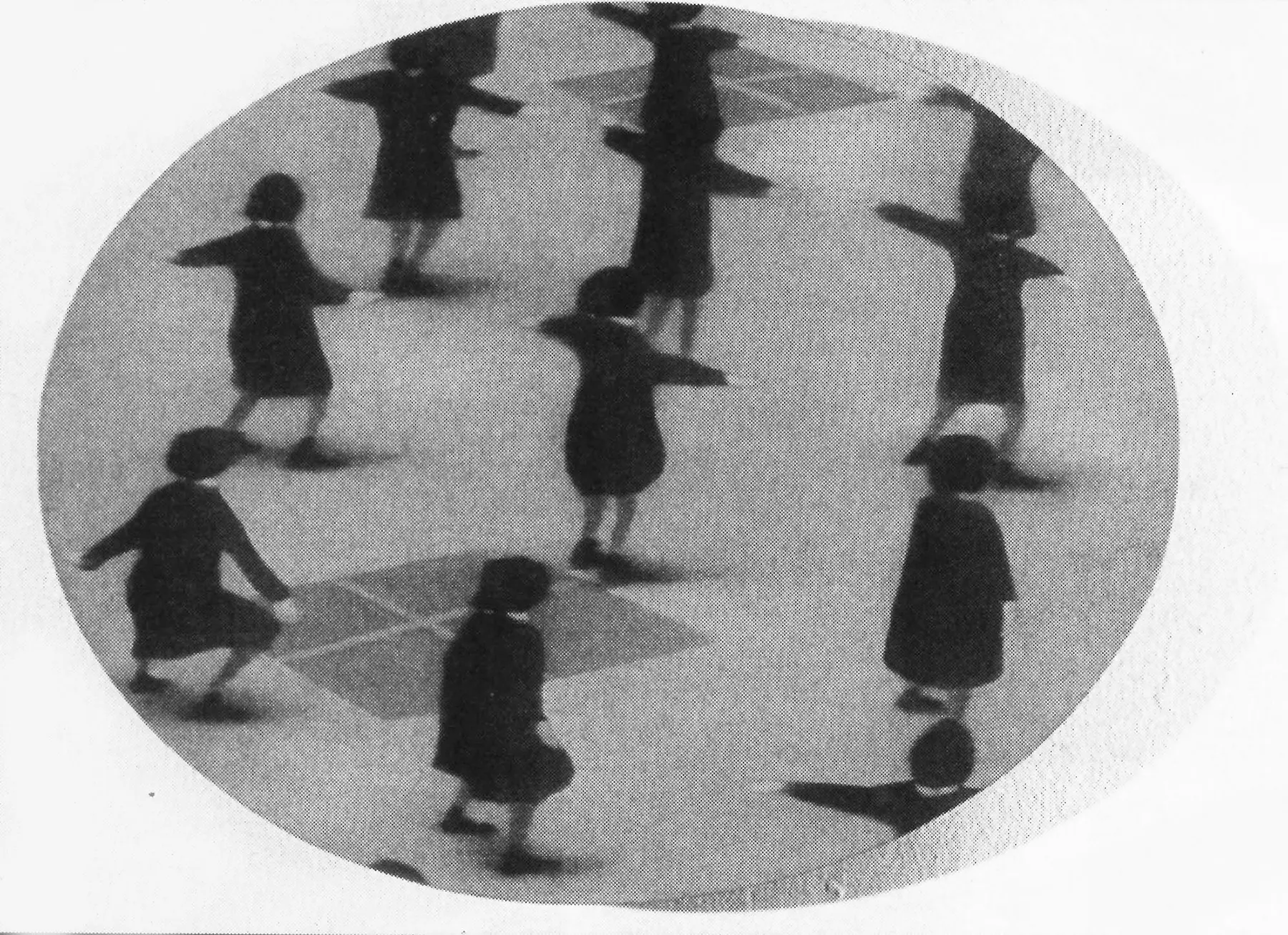
The work of Beltran Obregón is, without doubt, one of the most interesting in this show. As noted earlier, she was awarded the third prize for the work which presented images painted in neutral tones, suggesting a greenish kind of tonal range, on nine small oval-shaped wooden boards. The paintings showed little girls on the patio of a school, performing warm-up exercises. These images, which look like slightly out-of-focus photographs, reveal how, with each move, the girls' bodies rotate, while a light red shadow falls behind each board. This is a work that enables the spectator to conjure up a host of different memories, including those of cold and heat, the latter being associated with the warmth of the color red. Olga Lucía García and Ana María Rueda also worked on wood, but from diametrically opposed angles: the former created considerable humor in her work, while the latter explored the transcendence of fire.
An artist suggesting the presence of red was Víctor Laignelet, who explored the theory of color. But unlike the formal purists, he chose to paint two cows, one monochrome and the other green, whose bodies were divided to show the traditional cuts used for the human consumption of the animal. With this image, he invited the spectator to do visual exercises so that the color red emerged as a supplementary optical effect.
The presence of a red surface was fully evident in the white-stamped velvet fabric of Ana María Cano, in the large format paintings of Luis Fernando Roldán and Jorge Julián Aristizábal, the large canvas of a more formal than conceptual kind by Jaime Franco, in the painting of Fernando Uhía, Nadín Ospina, and in the piece by Jaime Iregui titled Sputnik, which was halfway between a painting and an object.
In other works, red appeared as a sign, a focal point of the image. This was the case in the painting by Jose Horacio Martínez, the handkerchiefs of Rafael Ortiz, with which he recreated the traditional children's story of the Colombian writer Rafael Pombo, Rin Rin Renacuajo, The red surface became an object in the large hyperrealistic envelope of Esteban Villa. In the case of Gabriel Silva, red appeared as a stain that flowed like a symbol from one side of the canvas to the other. Cristina Llano used red as a background and figure to evoke the themes of violence and sex, while Carlos Blanco and Luz Ángela Lizarazo associated red with skin and vital organs.
The work by Carlos Salas, entitled Busiraco, proposed a very interesting relationship between surface and stain. The work is a two-dimensional construction made up of three bodies painted with acrylic on wood and canvas. In each one, red is evoked in a different way, as a line, then as an almost imperceptible presence hidden beneath layers of paste-like paint, and finally transformed into powerful stains, through a process in which the painting becomes a constructive event.
Red on Red invited its participating artists to see the painting in a way consistent with the circumstances of art in our century—as a means of reflection. In each work, the painting appeared to regain a sense of life and to reveal beyond the flat, two-dimensional surface-now in the throes of extinction- another surface open to a multitude of different readings and explorations.
NOTES
1. José Ignacio Roca, Rojo sobre Rojo, exhibition catalogue.
2. Carlos Arturo Fernández. El rojo desde el ejercicio de la pintura, ibid.
MARTA RODRÍGUEZ