
Cambio is a series of group shows curated by Kenny Schachter and presented in New York and Mexico City. The curator produced the shows with a grant from the US-Mexico Fund for Culture, and selected more than 30 young, vital, and under-represented Mexican and American artists. Cambio displays a wide variety of esthetic and formal proposals with the added twist of a curious gap (national or geographical) between the themes, interests, and motivations of the Mexican and American artists. The first part of the show took place at a very large, temporary space in Chelsea that created the impression of a labyrinthine flea market were paintings, installations, photographs, and all sorts of objects competed for the public’s attention. The effect of confusion and chaos was in fact a pleasant surprise. The second part of the show in New York consisted of a much smaller and focused selection of works at the Sandra Gering Gallery in Soho.
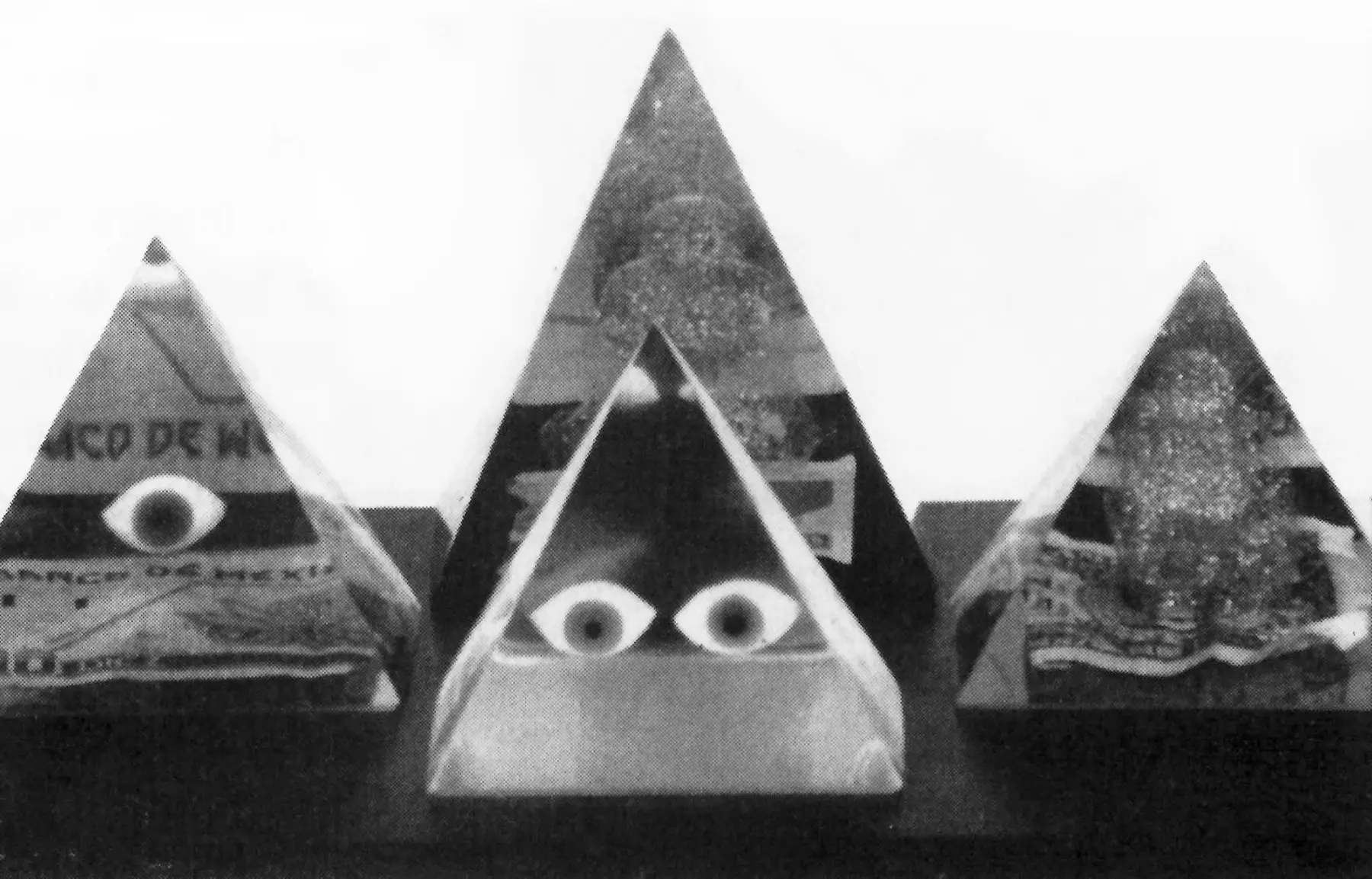
The Spanish word cambio is loaded with meanings, the most obvious a reference to change and transition. In this sense, the show offers an interesting change from the standard fare of Mexican art shown in New York. Among these artists, there are no wanna-be Fridas, Tamayos, or Toledos. There is a clear rupture with the heavy burden of past masters, including pre- Columbian artisans, and the commercial ideal of Mexican art. Any element of folklore is also avoided. In fact, Artemio’s photographs of people with large sombreros and serapes posing in front of European tourist sites are a mordant commentary on the stereotypical way Mexicans were portrayed in the media. The over-exploited “magical realism” iconography is fortunately nowhere to be seen; in its place, there is the "plastic magic" of Vicente Razo’s resin pyramids, a re-fashioning of the popular amulets commonly seen on taxi dashboards and witchcraft stands in several Mexican markets. These cheap magical objects remind us that cambio can also mean loose change.
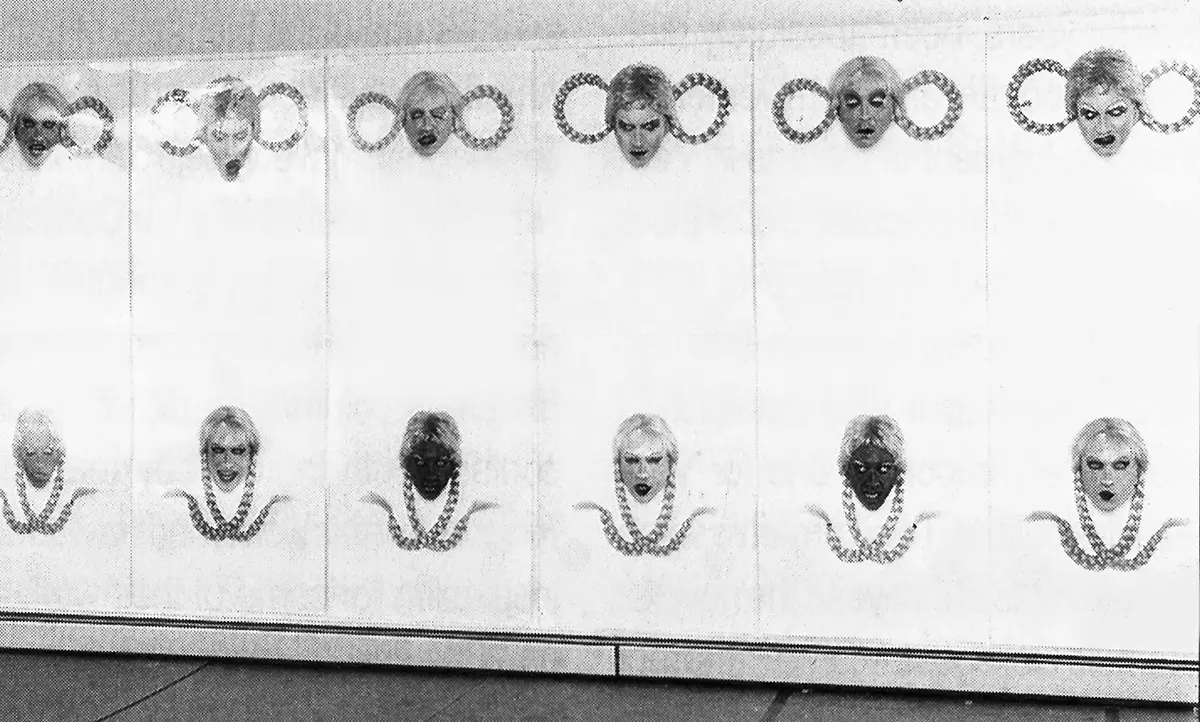
Cambio is an exchange, too, and in this case, it takes the form of a dialogue between Mexican and American cultures. Even if clear elements of national identity or openly political statements are absent, the show proves that this dialogue is not always an abstract exchange of ideas, but is sometimes a reaction to transculturation and the integrated- but-unequal logic of the dominant culture. The most eloquent reflection on how a culture is perceived, colonized, and used by another culture is Miguel Ventura’s New Interterritorial Language Committee (NILC) a long-term project on language, identity, ideology, and gender, of which he included a series of digital prints, photographs, drawings, and five videos. A more direct approach to the complex relationship between the two countries is present in Sergio Munoz-Sarmiento's, Otobiographies, photographs of one Mexican-American border area where construction, street signs, and the landscape speak of the insurmountable differences. Alfredo Martínez's nonfunctioning motorcycle was built of scraps of plastic and was an obvious reference to how Mexico recycles American garbage. In the same spirit, Razo's pyramids recycled old political icons and unfashionable ideologies in a new and mystical context.
Another translation for cambio is "trade:" the cure for all macro-economic problems in the neoliberal mythology. For many Latin-Americans, it is a word that inevitably evokes casa de cambio, the ubiquitous and all-important money exchange office, an influential business in every third world city, and a disturbing phenomenon in contemporary culture. Schachter knows the importance of the Casa de cambio and made an explicit reference to it on the invitation. Decades of economic instability and currency devaluation in almost every developing nation have created social unrest and a feeling of “monetary paranoia.” The exchange rate, or cambio, of the local currency against the dollar has become a barometer of the national well-being and continually gives us a distorted perception of ourselves and our place in the world.
In one way or another, humor and irony are present in most of the works exhibited, from the cartoon-influenced paintings and drawings of Daniel Guzman, Edgar Orlaineta, and Fernanda Brunet; to the sexual trompe l’oeil of Artemio's Sex on Wheels video or the huge Kenny Schachter Mobutu poster, House of Style. Cambio satirizes and ridicules the modernist discourse and the unattainable objectives that it imposes on society as pillaged and devastated as the Mexican culture has been.
NAIEF YEHYA