
The artists represented in this collective show produce their work and live in such culturally and geographically different cities as Barcelona. Boston, Monterrey, New York, Miami, and Havana. Two features bring them together: they are all Cuban by birth, and their work has developed over the last decade. The statement of these brief historical and geographical details is in itself a declaration and framework for understanding the work of this generation of Cuban artists. But the vision of the show's curator, Manuel González, and the dedication to the late young Cuban artist, Félix Gonzalez-Torres, bring into play another series of connections.
The objective is to define a territory, a sense of belonging, through its absence or impossibility: a sense of de-territorialization. The grouping together of the works under the category of conceptual photography highlights the relationship with the work of González-Torres. However, the guiding principle behind the reference to this artist is much more evident in terms of the production by this group of works of what might be called an intense sense of affectation, sometimes desperate, and essentially melancholic. The de-territorialization I referred to above hovers over and through the conceptual and iconographic universe of Cubaon as a sense of loss and absence. This lack, this sadness, to put the matter more plainly, is dealt with by means of different strategies.

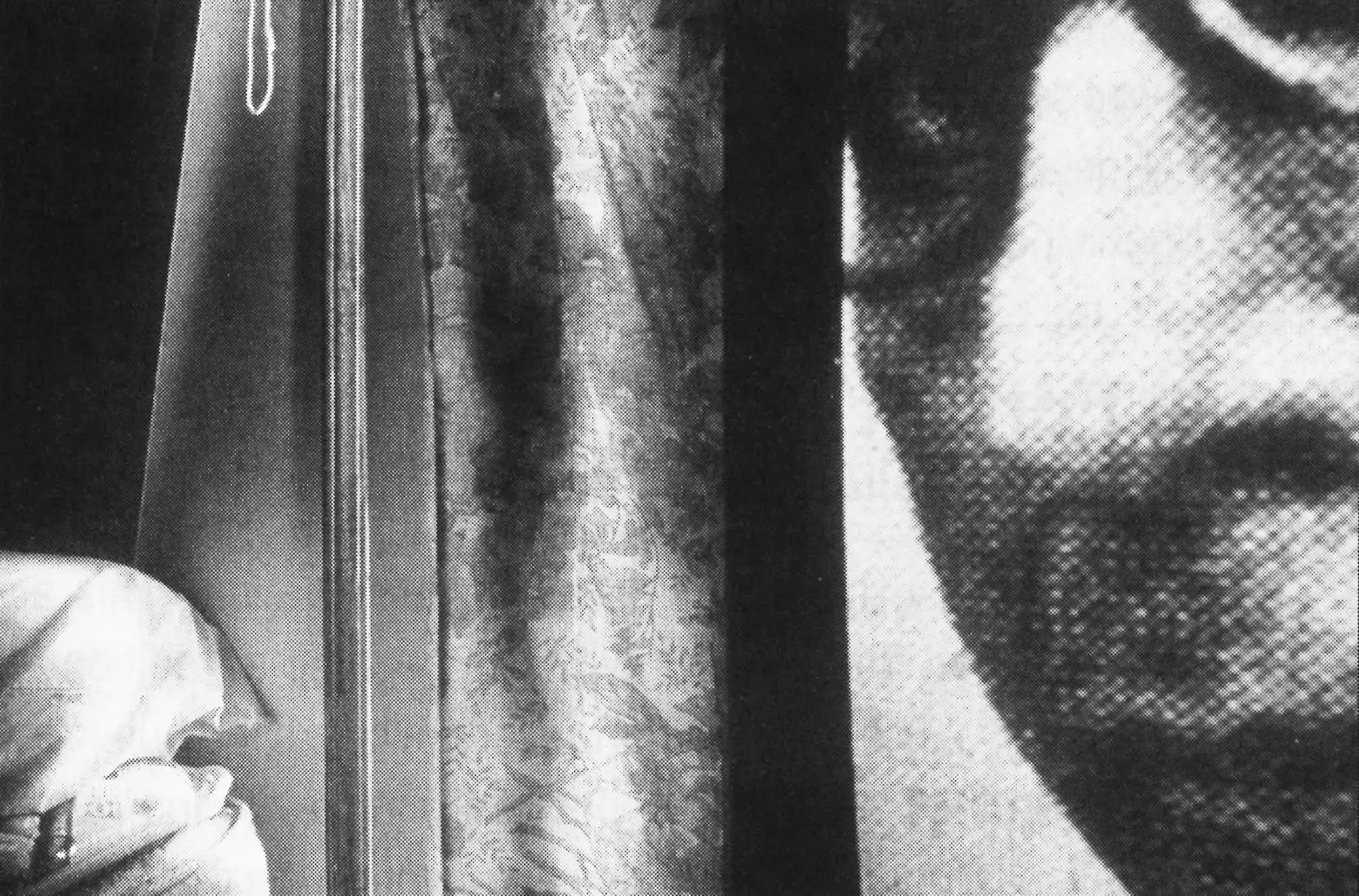
Those who choose as their theme a direct statement on the conditions and sensations of exile include Eduardo Muñoz Ordoqui, Pablo Ballester, and Arturo Cuenca. In Ordoqui's careful assemblages of fragments, scenes succeeding one another in rooms or interior settings, a television screen shows images of individuals who seem to be worried, with a small detail—tike the plastic-covered label in the comer of a mattress indicating the name of the manufacturer—defining the place in which the action is occurring (the action of being a spectator to a drama). The photographs of letters and readers of letters by Pablo Ballester emphasize the importance and anxiety, but also the cruel limitations of the epistolary event. The text of the works by Cuenca, written in the de-territorialized language of Spanglish, consists of a condensed Thisn't Havana. Through the letters which function as holes of meaning on a surface made of soft and diffuse lights, there appear urban landscapes which are evidently not Havana.
More realistic, without the artifice of construction, but more evocative of a pleasant and economically metaphysical sense of melancholy is the splendid and discrete set of photographs of the sea horizon from beaches and sea-front promenades, titled No man's waters by Manuel Pina. The same metaphysical quality, developed in a colder, more distant, and spectacular manner, is also evident in Cross of light by Quisqueya Henríquez.
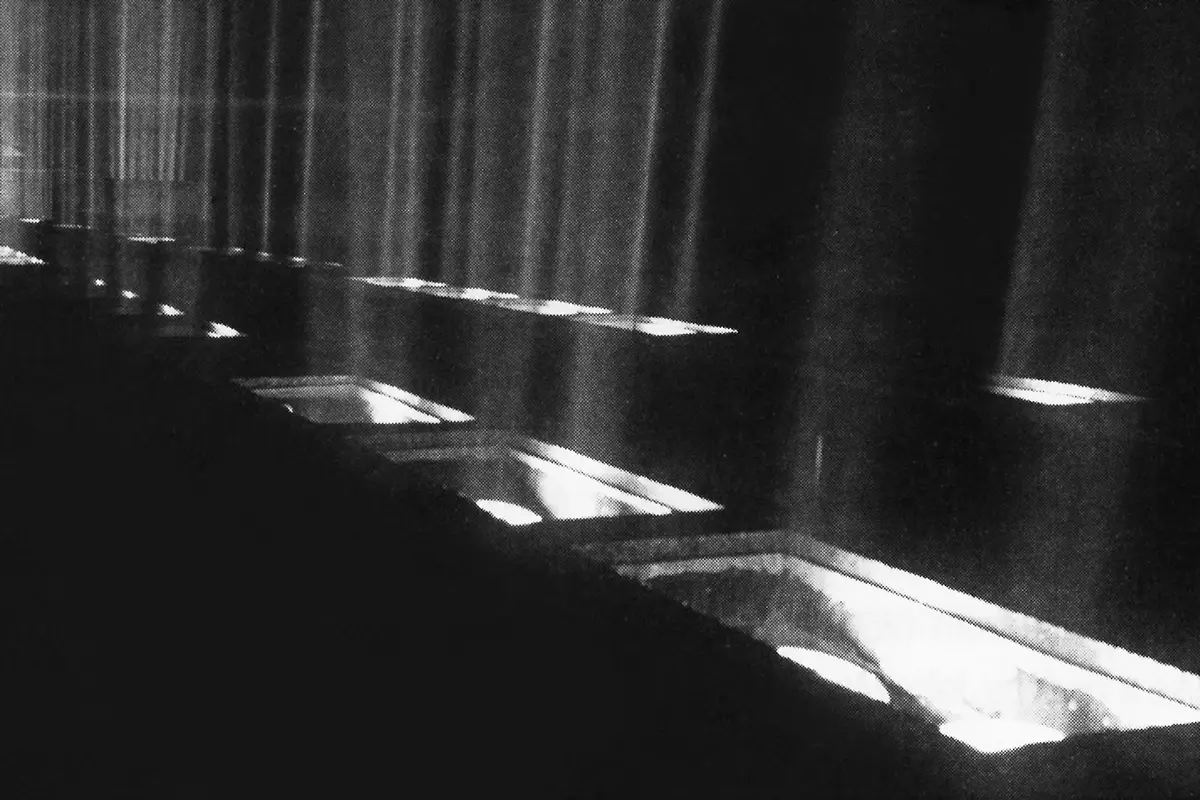
Carlos Garaicoa presents architectural projects in which the technical specifications and materials are spiritual qualities or conditions. Accompanying the set of projects of an idealism already lost in advance, are little photographic images of half-destroyed buildings, eroded by the wind from these, eaten away by time, taken over by the beach, and anti-monuments. An analogous proposition is made in the research on the camera oscura by Abelardo Morell, in which a Manhattan landscape mysteriously inhabits a private, empty room. In another photograph by the same artist, a Coliseum is mirrored in an even more private object, a book.
Consuelo Castañeda, Marta María Pérez, and María Martínez Cañas exploit the most evidently iconographic aspect of the use of photography. Images against a white background, decontextualized from any other detail denoting a relationship with a specific reality or which might distract from the chosen metaphor. In the case of one of the works by Castaneda, the artist proposes a series of self-portraits that include her mother, both in a fetal position, the mother enveloping the daughter in a regression that is both sweetly desirable and impossible outside the fictional level of the representation. Even more literary are the images by Marta María Pérez and the prints by María Martínez Cañas.
Special mention must also be made of the works by Manuel Pina, the only photographs that clearly belong to a realistic and thematic genre. Nocturnal youths, set within an even more obscure night, engage in acts of provocation and rituals of a sexual kind. The sensation of danger, the fleeting vision of individuals totally given up to their own sense of paroxysm, are perhaps more evident that the transgressive aspect of their activities. Once again there is a kind of melancholic sense of pleasure, the irrefutability of a desire as destiny, rather than a statement of principles such as we find, for example, in Mapplethorpe.
With various levels of complexity and elaboration, and making use of almost the full range of conceptual possibilities open to photography, these artists do not make any direct political declaration as such in their work. Although the current situation permeates and contextualizes the exhibition, it would be impossible and condescending to try and make a specific ideological reading in any given direction. What is palpable and evident, however, is the ghostly presence of loss.
NICOLÁS GUAGNINI