
The Museo de Bellas Artes in Caracas recently presented an important selection of photographs by Roberto Fontana, which offered the public the opportunity to see some of the significant works of this major photographer, who died at an early age, as well as unpublished images from his extensive production.
The exhibition was divided into the series that Fontana produced: The Tiger (1979), which was his first mature work and was intended to illustrate Alfredo Armas Alfonzo's story titled Tigre-Oficina No. 1; Anare (1980), one of his most moving series and which established his reputation, the origin of which goes back to work done by Fontana for the film Pandora by Ana Henriquez; Venice, The Night (1982), in which he “portrays the dark side of Venice”, with strong and handsome images of the nightlife of the city, and three unpublished series, Belluno (undated), images of solitary, snowy landscapes; Animitas, the record of his travels from 1979 throughout the country, and which constitutes an “archive of Venezuelan images” on funerary monuments; and finally, Self-portraits, photographs taken during his experiences in Venezuela and Venice and in which the artist is, in one way or another, present.
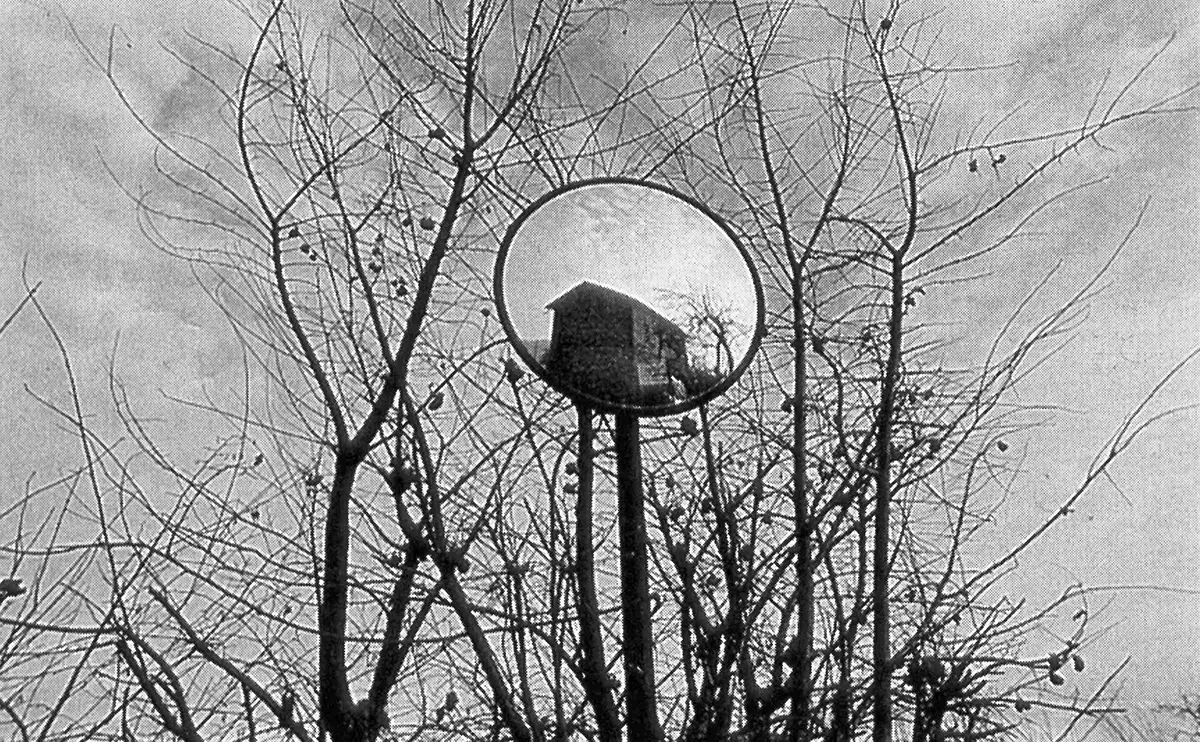
These photographs reveal the frank and sensitive relationship that Fontana maintained with the world. In a sense, with these photographs, he was speaking about himself. Through the handling of light and the selection of motifs, angles, and composition, the works reflect different states of mind. Fontana knew what solitude was all about, as well as strident and unbridled laughter. All these things made up his intimacy. And in these images, light, darkness, and transparency are the stuff of his reality. Fontana once said: “The most beautiful thing for me about photography is that I learn to know what light is.” This is crucial to the capturing of the mood which emerges from the various situations recorded by his camera. These effects were enhanced in the prints which he made in the laboratory. Fontana was an excellent printer, creating effects of light and shadow which enhanced the poetic impact of the image. Most of the prints in this show were done by the artist himself, with the exception of the unpublished series which were excellently printed by Franca Donda.
The works in this show confirmed that death as a theme or atmosphere was in one way or another always present in his art. It is clear in the images of tombs that make up the series Animitas, but it is also there in the solitude and sense of desolation of certain landscapes (Belluno, for example). “People say that there is a lot of solitude in my photography, but the photographs are not alone. Perhaps the solitude is mine.” A solitude that is evident in certain perversely festive scenes in Venice or in the alienated nights of the patients in the psychiatric hospital of Anare. Fontana's photography can in a sense be read as an intimate journal- another manner of extracting light from the darkness. Perhaps it is this which accentuates the densely poetical atmosphere inherent to these works. With his photographs, Fontana managed to imprison time and never forgot his own history.
SUSANA BENKO