
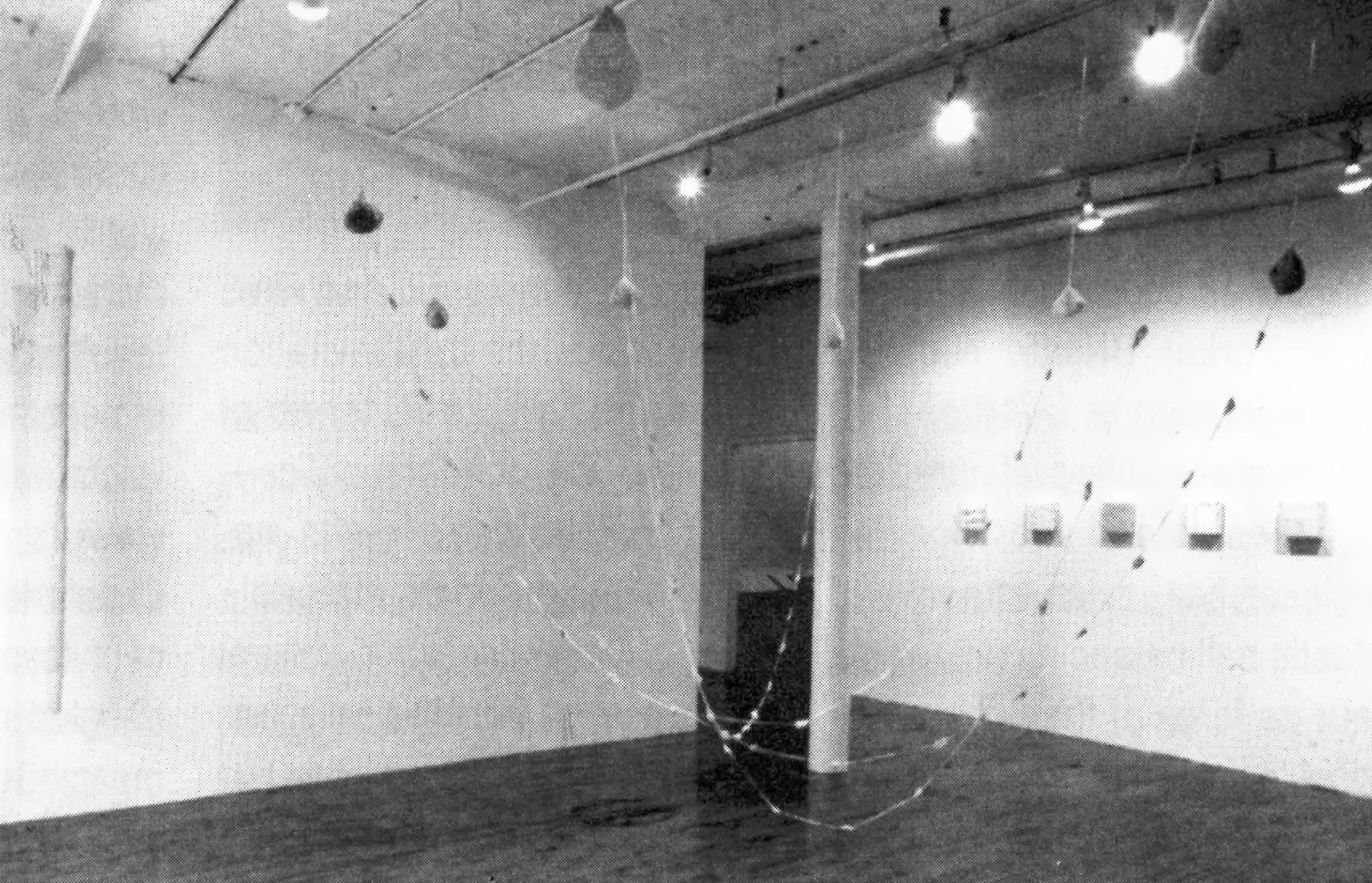
Suspended Instants, a collaborative exhibition pairing five artists from New York City with five from Rio de Janeiro, occupied the galleries of two of Manhattan’s leading alternative spaces: the uptown Sculpture Center, and the downtown Art in General. The exhibition was the brainchild of Claudia Calirman, a Brazilian curator working in New York, and was co-curated with Holly Block, the director of Art in General.
The curators’ desires were twofold. First, there was a desire to inject some new blood into the New York scene (and vice versa—the exhibition will travel to Brazil later in the year), and second, to give visibility to an aesthetic sensibility that has been very much out of local fashion—an informed, expressive, minimalist vision emphasizing form and design over narrative polemic. The most successful work utilized relatively formal visual vocabularies to produce contemplative experiences so fundamentally irreducible that they could not be parsed—the experience of literally and figuratively suspended judgment suggested by the exhibition’s title. The artists pursued this existential moment with wildly divergent strategies. The work varied from pieces so insubstantial as to be only tenuously extant to objects of emphatic, occasionally massive, presence.
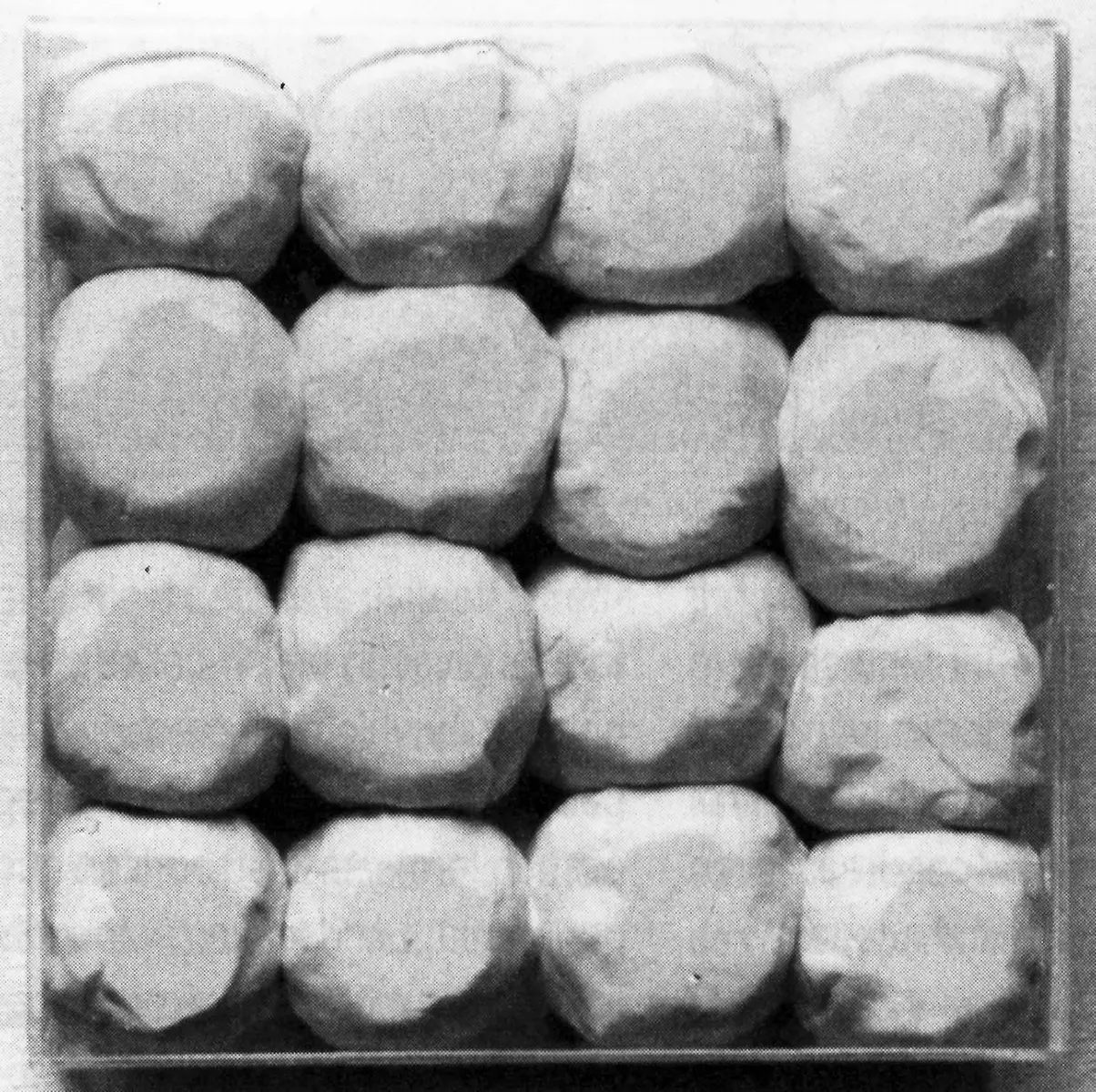
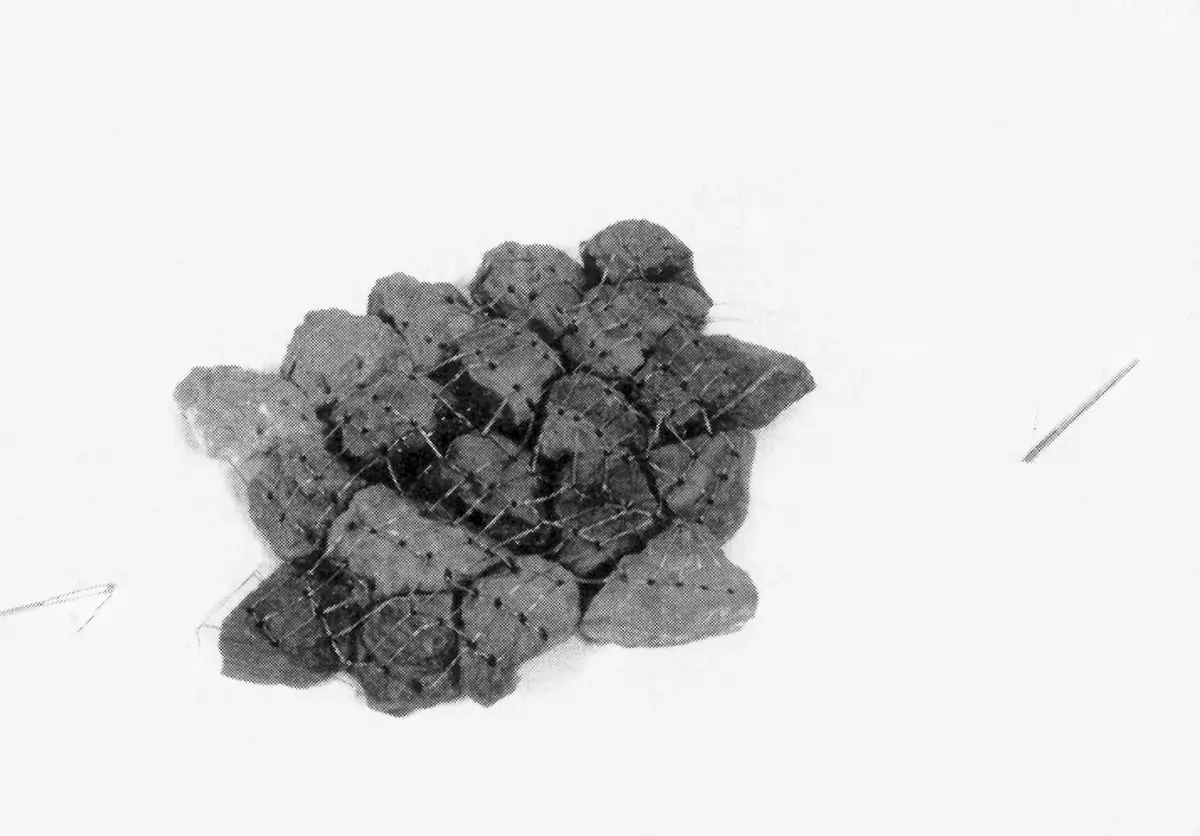
For the Sculpture Center's portion of the exhibition, New York artist Heide Fasnacht installed two of her signature rubber and spring wall maps star chart constructions. At once buoyant and tense, these complex organisms were coils of bunched kinetic energy, their structure and their inferential message at once identical and contingent. Her work was oddly mirrored on the opposite gallery wall by the Brazilian José Damasceno’s Elastic Cinema. Using only nails and rubber bands, Damasceno produced a strangely mesmerizing maze. His far more tangible sawdust floor installation of linked guitar forms was confoundingly droll. New Yorker Brigitte Nahon's Icholi Hauperyre L (10) o, (21), whose elusive title prefigured the unfathomable but compelling logic of her mylar thread and plastic ball balancing act, was a tour de force of the ephemeral. Icholi’s most distinct profile was in the dark shadows it cast on the back wall. Anna Linnemann, a native Brazilian here representing New York, contributed seven small stone tapestry sculptures, rocks woven with wire and thread. The peculiar and self-evident poetry of the gesture of puncturing and sewing overrode the tacit invitation to read the works in terms of their implied gender politics- traditional woman’s crafts applied to inappropriate material.
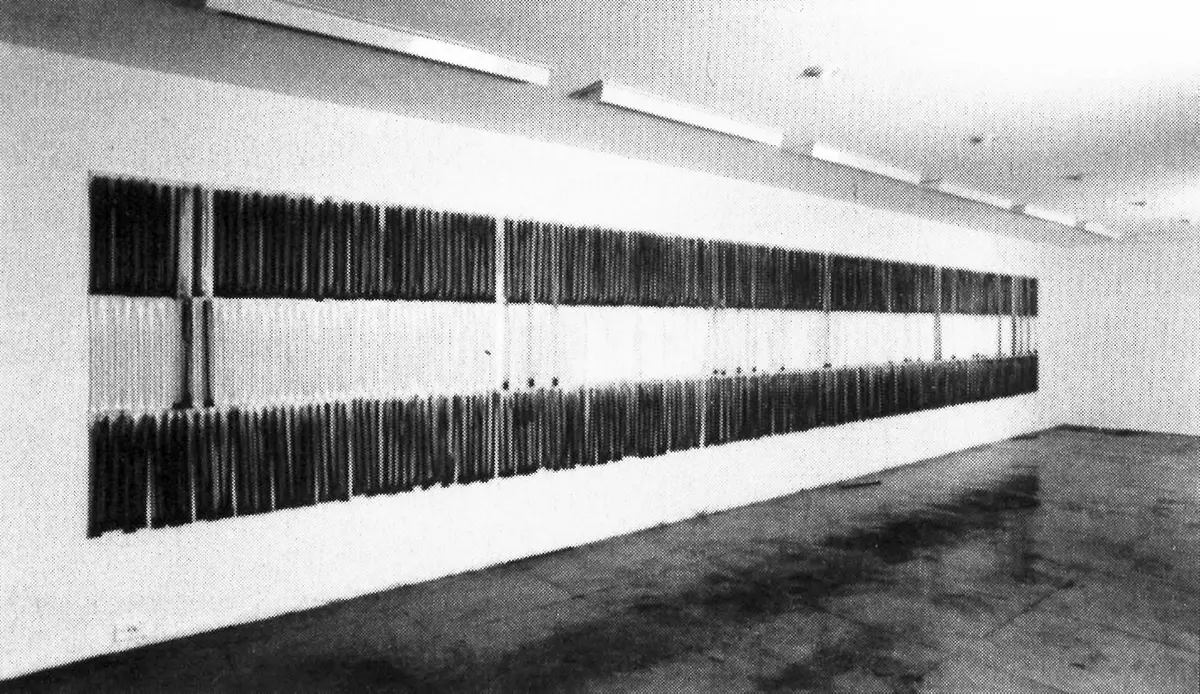
Art in General featured several of the most frankly physical sculptors in the exhibition, as well as two of the most elusive. A preference for material and process was evident in Brazilian Carla Guagliardi’s large wall installation Untitled/Fifi, which marked the passage of time through the gradual oxidation of iron in water, and in fellow Countrywoman Marcia Thompson’s clinically elegant and straightforward series of oil paint in acrylic boxes. American John Monti's two works, notably his stately but humorous black plastic and fiberglass floor piece, Black Belly, would have been formidable in any context. They were especially confrontational here, to the extent that they threatened to completely overwhelm their neighbors, especially Brazilian Fernanda Gomes’ minimal thread constructions, some of which were so marginally visible as to actually beg the definition of presentness. They required a guard at the opening to protect them from disastrous collisions with all but the most alert viewers. New Yorker Seong Chun's delightful woven tapestries of philosophical texts looped and dangled in the ether. No coherent meaning could be teased from the fragmented texts, rendering the meaning of the words that hung in the air no more significant, deliberately so, than the space around them.
The national identities of the artists turned out for the most part to have been essentially irrelevant. One would have been hard-pressed to discern simply from their work which artist represented which country. Perhaps the exhibition’s most salient contribution was its demonstration of the close linkage that now exists between contemporary artists in widely disparate communities. It may be that, unlike the larger culture that surrounds them, the art cultures of cities such as Rio de Janeiro and New York are no longer mutually exotic. Suspended Instants' confluence of sensibilities was partially a byproduct of the curators’ strong controlling vision, of course, but it was no less a testimony to the homogeneity which characterizes much of contemporary art.
Indeed, the remarkable achievement of the exhibition was not that it bridged the thousands of miles that separate Rio de Janeiro from New York, but that it traversed the far more imposing four-mile chasm that divides Tribeca from the Upper East Side within the provincial island of Manhattan.
MATT FREEDMAN