
A mega-super-hyper exhibit held at the Guggenheim Museum in New York attempts to establish the North American artist Robert Rauschenberg as the Picasso of the second half of the twentieth century. The hyperbole was used at least twice—once by Thomas Krens, director of the museum, and again by Yves-Alain Bois in the magazine Artforum. Bois first refers to his own definition of Jasper Johns as a North American Braque in order to then situate Rauschenberg as the corresponding Picasso. Given the investment in space devoted to the event in order to show some four hundred works —the main building on Fifth Avenue, the satellite Guggenheim space in Soho, and the Ace Gallery downtown— the undertaking to situate Rauschenberg at that level seems to be serious. Despite the fact that Jasper Johns' recent retrospective demonstrated that the reference to Braque is nothing more than an expression of provincial pride, the versatility of Rauschenberg over the course of this half-century was cause for certain anticipation. A show of this magnitude constitutes a type of exam. Rauschenberg, who is 71 years old, here submits to what could be —apart from what art history may do in the future— a final judgment.
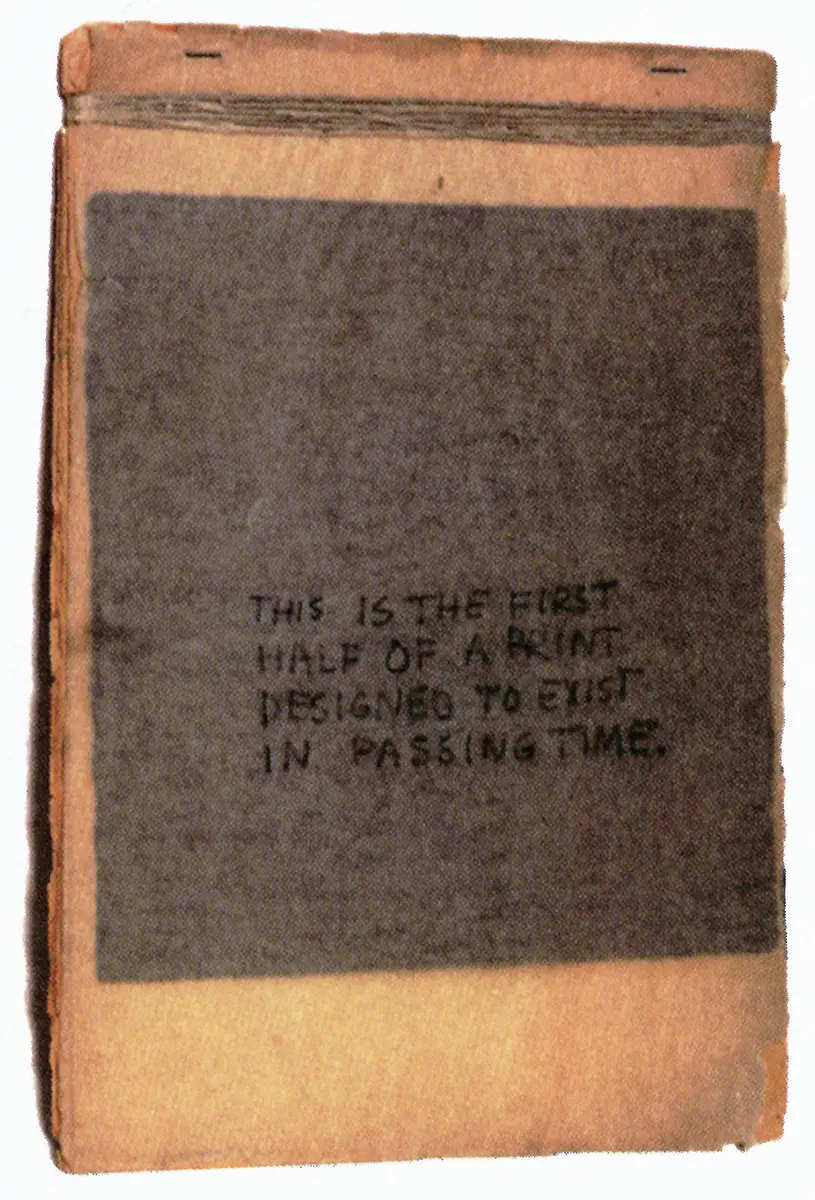
The first section in the large (and recently expanded) Guggenheim begins with promise. The work produced in Rauschenberg's first decade is fairly spectacular, especially if one celebrates the action of rupturing other artistic achievements. Chronologically, the show begins with This Is the First Half of a Print Designed to Exist in Passing Time from 1949. Made when Rauschenberg was still a student, it is composed of a series of prints from a wood block that, with successive cuttings, signals its own disappearance. The process stops at the moment when about 50% of the wood had been cut. The piece doesn't have any great visual attraction; its power is purely conceptual. It prefigures Picasso's linoleum prints of a decade later where Picasso gradually reduced the same plate for successive impressions.
More importantly, his searches seem guided more by an almost childish curiosity than by artistic claustrophobia. The guiding question is What would happen if... ? rather than an affirmation of the need for change. This explains why Rauschenberg doesn't hesitate to use references and models from other people to play with his own speculations, one of the recurring mainstays during his first years is the work of Joseph Cornell. His black paintings, for example, coincide with works by Burri, whom he met in Rome. But in other works, Rauschenberg escapes the mold and his de Kooning drawing, erased in 1953, bears no relation to the work of anyone. The drawing, which de Kooning gave him expressly for this purpose, was meticulously erased, line by line, with a greater investment of energy than the original work required. It presents the un-making of a work of art, a sort of conceptual reflection of the original act though with a negative sign. That is why the piece is not simply the drawing itself but includes the frame and label as integral parts.
The white paintings are perhaps his most extreme works. Aiming for a sort of visual silence, the canvases were rolled with white paint as evenly as possible. Made in 1951, before the "black" paintings of Ad Reinhardt (less radical given that Reinhardt includes tonal variations), these works influenced the composer John Cage. It was due to these pieces that Cage composed his4'33" musical silence in 1952, a piece that was highly influential in the thinking of North American minimalist and conceptualist artists.
In 1953, Rauschenberg produces a new link to the Cage's print Using Cars: inking up one of his tires, he prints the ride on twenty sheets of paper creating a continuous strip nearly seven yards long. It, like his first work, is one that uses the concept of print, not its discipline.
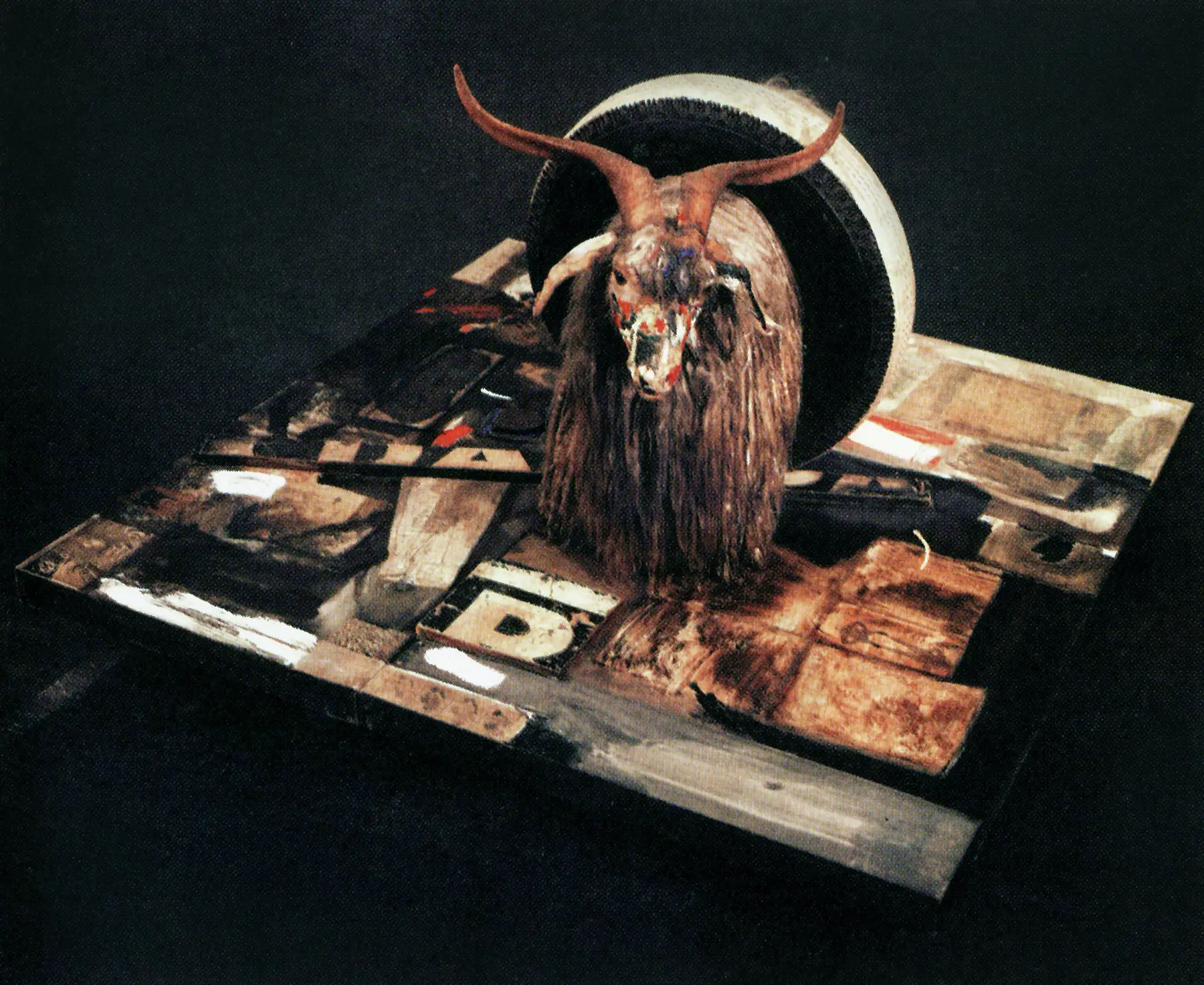
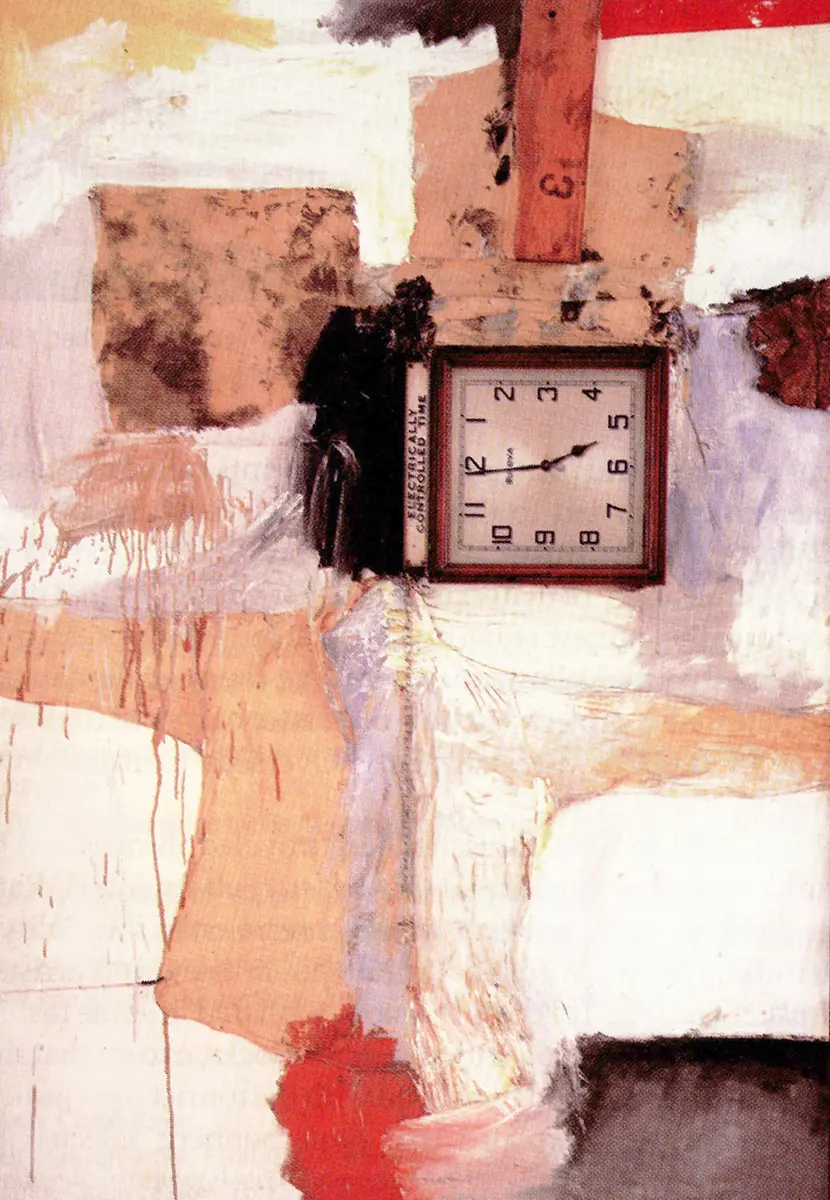
The following year witnessed the first appearance of combines, a word Rauschenberg used to designate an integration of painting and sculpture. If in fact, the traditional word assemblage might serve equally well, for Rauschenberg it seemed to be more a matter of alternating between activities than that of piecing together a puzzle. In that sense, the works of Rauschenberg always contain a performative aspect, and precise technical borders (assembling would be another relatively precise technique whereas combining allows for anything) are limiting. His work with dance, happenings, and technology is proof of this interdisciplinary necessity. They combine synthesize experiences up to that point and, though they are three-dimensional, they give priority to the pictorial element. These are the pieces that for a long time constituted the artist's visual signature: Bed, 1955, Coca-Cola Plan, 1958, and Monogram, 1955-1959, among others. They are also the pieces that, because of their use of everyday objects, made Rauschenberg's work a precedent for North American pop art. Shortly after, in 1961, he makes his time paintings, canvasses with alarm clocks that determined, upon ringing, that the pieces were finished. These pieces were produced on stage with microphones attached to the canvas to amplify the sounds of their execution and to share them with the audience.
In 1952, during a trip to Cuba, Rauschenberg made his first transfer of newspaper images onto drawing paper. He used a pencil on the obverse of the printed image, and his forceful lines crudely reconstructed the image as a textual effect among brush strokes of gouache and other materials. They are small pages in light, pastel colors. Six years later, this time using solvents, Rauschenberg embarked on an illustration of Dante's Inferno, maintaining the same sensibility but on a somewhat larger scale. The images are ideal for reproduction using lithography, transferring images directly onto the stone, and his return to the print finally took place in 1962. Only that this time it wasn't a conceptual approach to the technique. Lithography is no longer used to recreate an effect. The piece is no longer the act, it is the preexisting image.
It is with this piece that the second stage of the show at the main Guggenheim begins. The image passes through lithography to silk-screen printing that is eventually applied to fabric or to other materials, always with images taken from everyday life, sometimes with content, other times as effective. Whether as praise to President Kennedy, to the space voyages, to the media, or to private stories, his use of photography inevitably ends up being an effect equivalent and complementary to the pictorial brush stroke. With interruptions presented by objects, installations, and constructions, it is the continuity of this sort of work that will characterize Rauschenberg to this day.
The show at the Fifth Avenue Guggenheim handled this situation elegantly. It took the spectators through mini-exhibitions of photos and prints, a room with prints veiled in fabric —pastel colors carried to their extreme—a new car tire track (Hound, 1974) but this time done in clay, and compositional games in a variety of materials. These are variations that never recapture the interest of his first decade but which break from the boredom and allow one to forgive the megalomaniacal and paternalist project that he would later carry out under the name of R.O.C.I. (Rauschenberg Overseas Cultural Interchange).
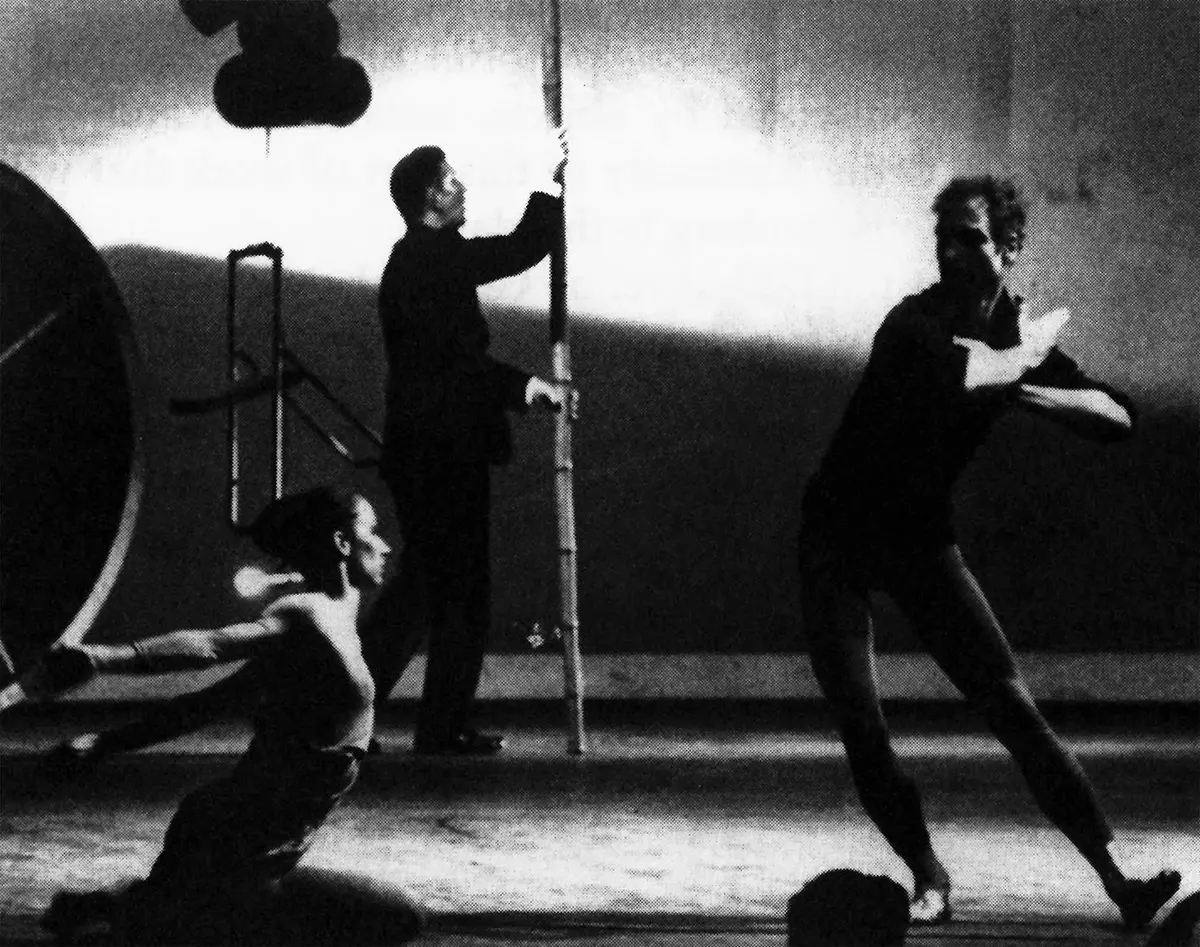
From 1984 to 1991, Rauschenberg traveled throughout the world to promote world peace through art. Self-financed, Rauschenberg created a series of works in reaction to the reality of each country and in collaboration with artisans and artists of the place. The result of these missions is related in some fashion to the paintings of 1961 with the alarm clocks, except that they are less interesting and burdened with the tourist's prejudices. The catalog text explains that Rauschenberg selected the countries based on their position external to the hegemonic tendency of international (western) art or because he wanted to reintroduce an artistic dialogue among those peoples who live under repressive or undemocratic regimes.1 The list of countries —and luckily it is not made clear which ones are repressive and which are marginal— includes Mexico, Chile, Venezuela, China, Tibet, Japan, Cuba, the Soviet Union, East Germany, and Malaysia.2
The exhibition also includes new pieces made in 1997 of cast glass and chrome-plated metal. Brooms, pillows, and truck tires, all in cast glass, show that Rauschenberg, at an age when most artists begin to relinquish new inquiries, still preserves his initial curiosity and the fearlessness he had at the beginning of his career.
After seeing all this, I left the museum feeling quite enthusiastic. Rauschenberg's first decade of work is spectacular. The other periods have their ups and downs but his career is definitely praiseworthy and the inconsistencies (save that of R.O.C.I.) are due more to a personal difference in tastes and strategy than to objective judgment. Using Picasso as a metaphor seems a bit of exaggeration but it is certain that in the United States, Rauschenberg steals the scene in the second half of the century and that even on an international scale, he is noteworthy for his marked inquisitive power and versatility.
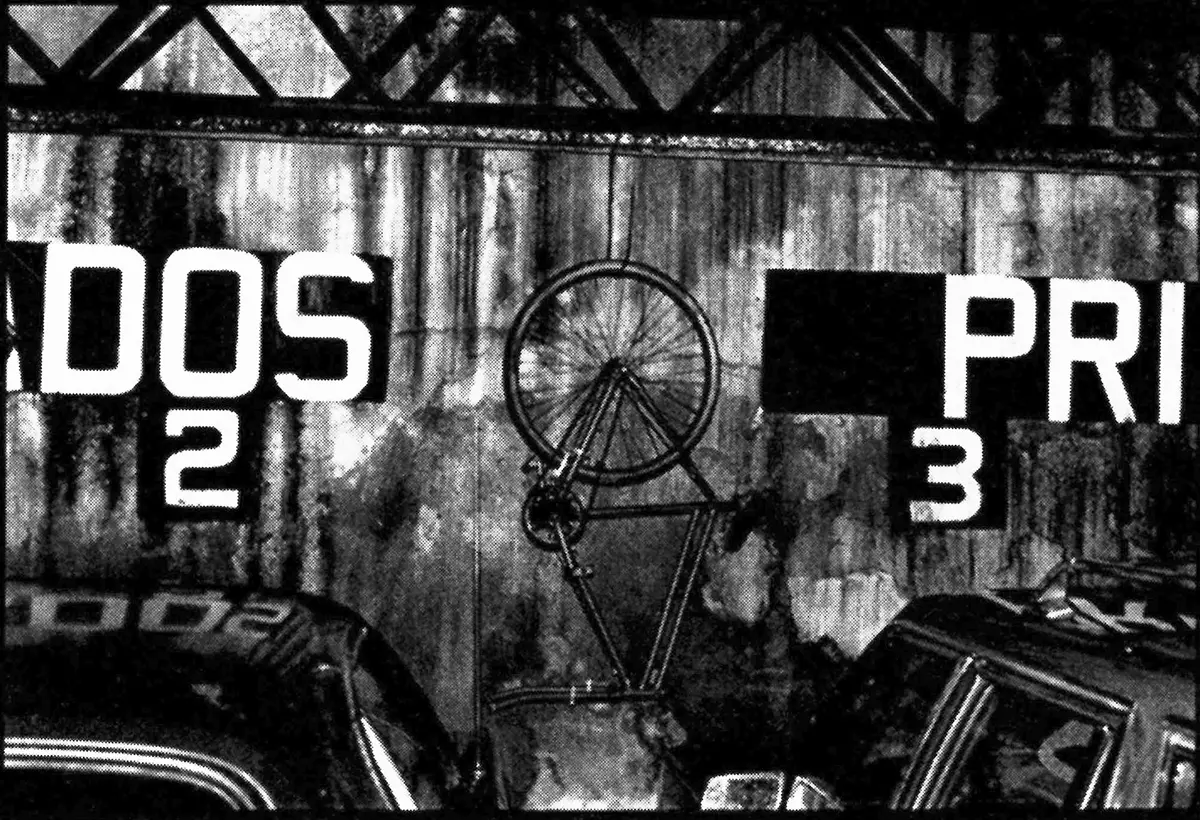
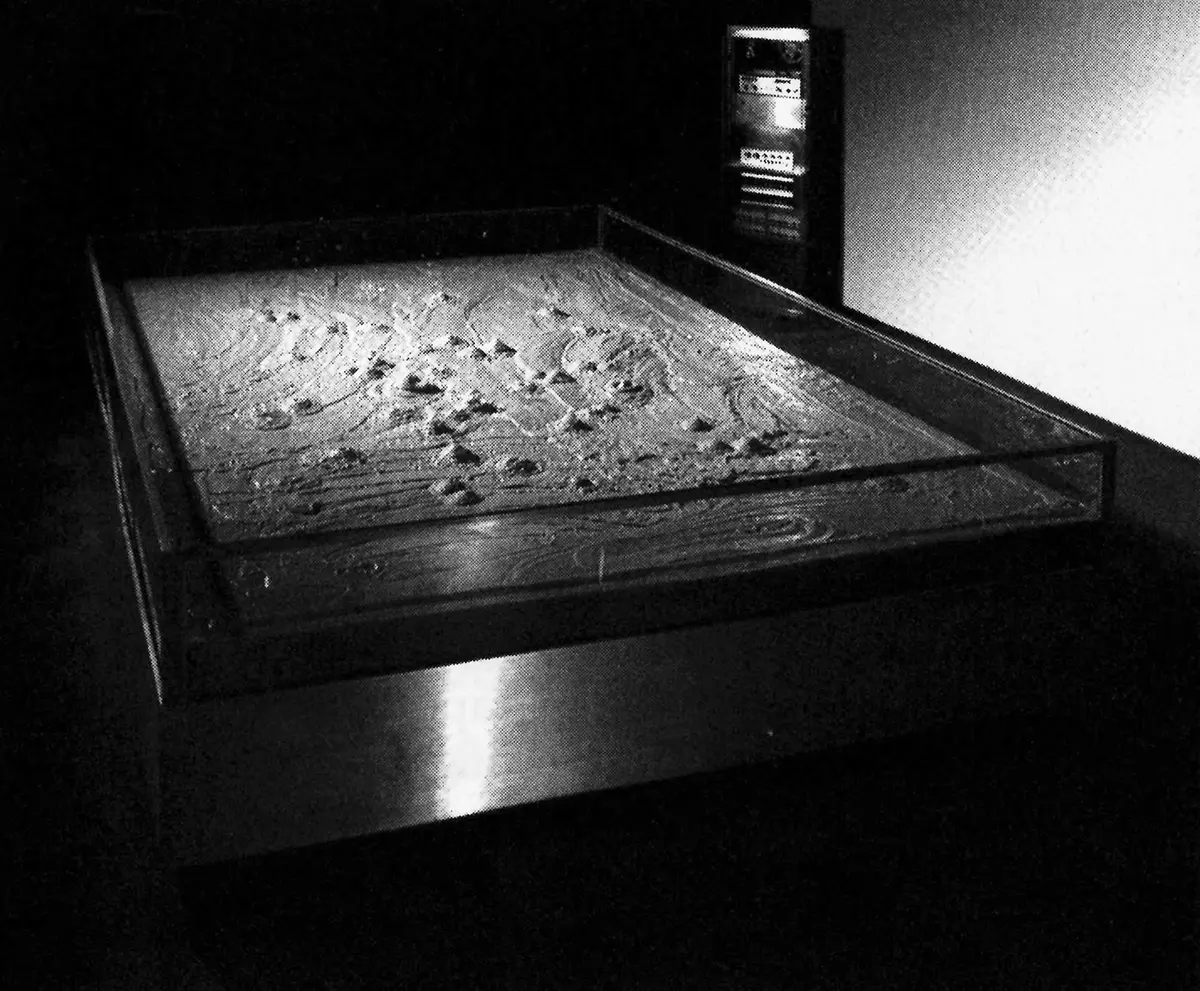
This was my state of mind as I went to see the second part of the show at the Guggenheim in Soho. The lower floor was divided into two sections: the pieces related to technology and to performances, respectively. The upper floor contained works on metal and others made with vegetable anilines. For the most part, the technological pieces had been anachronistic at birth, which is to say, not even in their time were they any more than modest novelties. A wall of mirrors, with lights that lit up in reaction to sound (clapping or stomping on the floor), revealed silk-screened chairs on various planes (Soundings, 1968). A fragment of a can turns when one speaks into a small microphone (Dry Cell, 1963). A few pieces are broken. In addition, there was Oracle (1962-1965), an installation of scrap metal with speakers and pumps that circulated water. The most spectacular piece was Mud Muse (1968-1971), an enormous washtub filled with bubbling mud. The bubbles were produced by an air compressor that responds to the prerecorded sound of air bubbles. The piece was larger than the idea but still effective. All these pieces are most interesting in the documentary sense; they are examples of interdisciplinary collaboration, particularly with Billy Kluver (a scientist at the Bell Laboratories) with whom Rauschenberg founded E.A.T. (Experiments in Art and Technology) in 1966 to sponsor interdisciplinary work between artists and scientists.3
The space devoted to Rauschenberg's performances contains videos and objects used on stage and again, their interest is mainly documentary. What is shown is the beginnings of an aesthetic that in actuality culminates much later in the theater of Robert Wilson. But the relationship Rauschenberg had with theater, ballet, and happenings are important because it is an extension of his way of solving artistic problems. Furthermore, it is a relationship that began in his days as a student at Black Mountain College, came into contact with John Cage and Merce Cunningham. The college, with the arts under the direction of Josef Albers (beginning in 1933), had become one of the centers of the avant-garde of the United States. Xanti Schawinsky, a former student of and assistant to Schlemmer in the Bauhaus who had been called by Albers to teach at Black Mountain, presented the first performances or proto-happenings there in 1936. This was also where, in 1952, John Cage presented his Theater Piece #1,4 considered to be the first happening in North America.
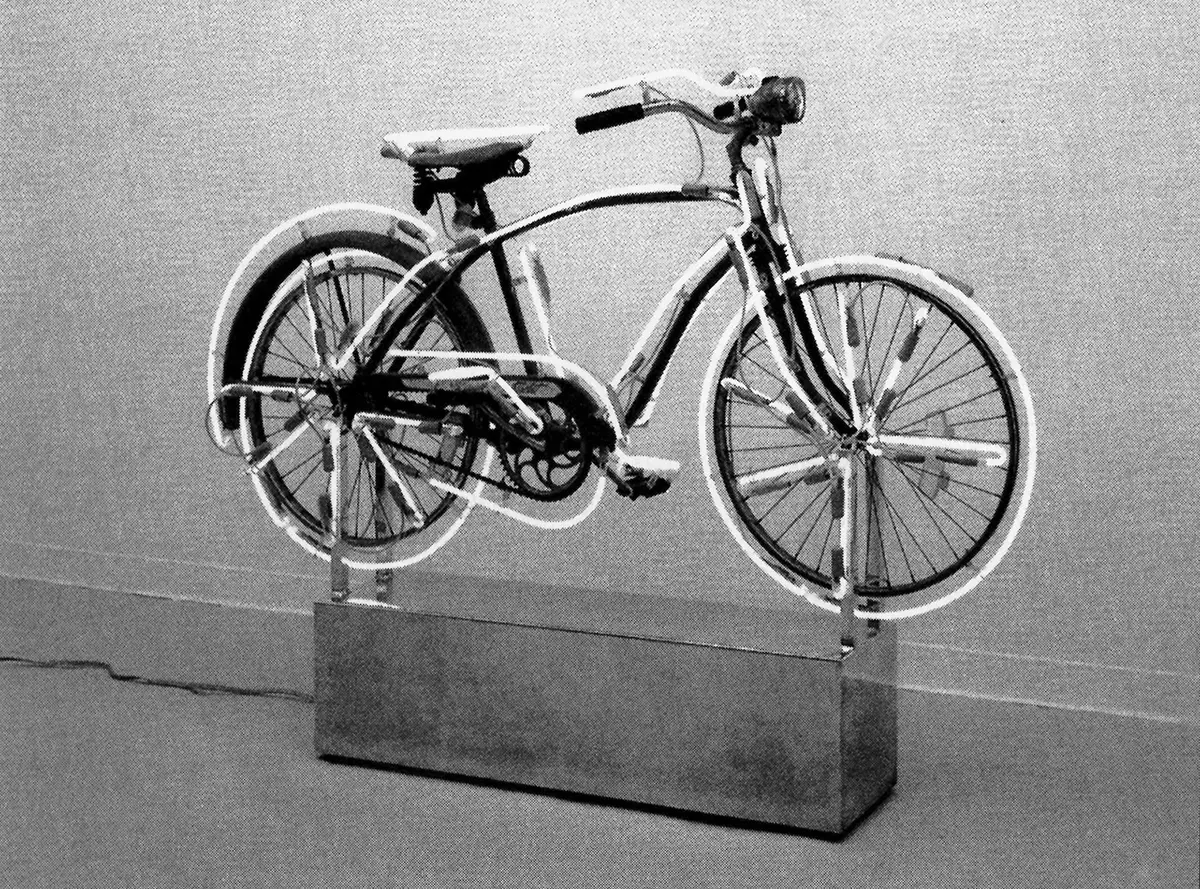
Rauschenberg had enrolled as a student at Black Mountain College in 1948 after taking courses in Paris. Half a semester later, Rauschenberg went to New York and returned in the summer of 1951. Cage and Cunningham were offering courses then and the meeting of these three men led not only to collaborations that affected all the arts in the United States but confirmed and stimulated even further Rauschenberg's interdisciplinary predisposition. For Cunningham's dance company (which began in 1953 with Cage as its musical director), Rauschenberg worked as a scenographer, lighting person, and choreographer, as well as a participant in the shows. It was this experience that, after other collaborations — happenings by Allan Kaprow in 1959, work with choreographers such as Paul Taylor, experimental dance with Judson Memorial Church groups— eventually led to the series Nine Nights: Theater and Engineering, a collaboration between artists and technicians that resulted in the aforementioned E.A.T.
This component of the exhibition is essential to a complete vision of Rauschenberg's career. If the main building of the Guggenheim were larger, it would have enhanced the larger exhibit. The problem is that this section accompanies what takes place on the other floor in Soho.
With two interminable and repetitive series, one of works on metal (1986-1995) and another made using Iris prints (1992-1997),5 the upper rooms of the Soho Guggenheim read as an enormous, decorative paperhanging whose most notable aspect was the absence of sofas which would have provided context. Even if justification had existed for a careful reading of these images, the continuous repetition of the fragmented composition and the watercolored atmosphere that predominated indicates the triumph of Rauschenberg's taste to the detriment of his conceptual and speculative powers that nourished the first part of his work.
No one can be asked to maintain his or her creative level over the course of half a century. There are always ups and downs, and the sculptures of 1997 seen in the Wright building prove that Rauschenberg has the ability to overcome obstacles. The overwhelmingly boring show in Soho probably is more the product of a curatorial problem than an artistic one. Here is where the Picasso syndrome returns. The entire oeuvre of Picasso is not one of genius either, but the name is compelling and within a given market, allows for this. But here, supply clearly exceeds demand —to such an extent that, instead of heading over responsibly to see the third chapter in the Ace Gallery, I decided to ignore this part of the show. The work on display there is 1/4 Mile or 2 Furlong Piece6 and I found the prospect of seeing 400 more yards of Rauschenberg impossible—at least for the time being.
NOTES
1. Robert Rauschenberg. A Retrospective, Guggenheim Musseum, Nueva York, 1977, 630 pp.
2. In 1988, when he went to Cuba, Rauschenberg gave a talk which was received with two performances by Cuban artists. Aldito Menéndez wore a loincloth and a feather on his head and crouched on the floor in front of the first row. The Grupo Provisional (Carlos Cardenas and Glexis Novoa) unfurled a banner with the silhouette of an Indian and the words “Very Good, Rauschenberg,” satirizing the success of the act of colonization.
3. The other two co-founders were artists Robert Whitman and engineer Fred Waldhauer.
4. The white paintings by Rauschenberg formed part of the scenography for the piece.
5. Iris is a process of digital printing that uses anilines.
6. A furlong is a measure equivalent to 1/8 of a mile or approximately 200 yards. The installation was started in 1981 and continues in production, practically like a self-contained retrospective show but with no foreseeable end.
LUIS CAMNITZER
Uruguayan artist, Professor at the Visual Arts Department in the University of the State of New York, College at Old Westbury.