
For six days in early May Chicago became the site for dealers, collectors, and curators from around the world to survey contemporary art world trends. With 208 exhibitors (50% of which were non-US galleries) representing over 2,000 artists, Art Chicago 1998 offered the viewing public a comprehensive look at international visual culture. Optimism from a healthy US economy was reflected in art sales which exceeded expectations reaching an estimated $35 million—the largest in the fair’s six-year history. Such continued success secures the event's status as the most important and prestigious international art exposition held in the United States.
Having received considerable attention and critical acclaim of late, artists Mona Hatoum, Vanessa Beecroft, Kara Walker, and various members of the "Young British Artists" contingent such as Damien Hirst, Gary Hume, and Sarah Lucas were highlights of the fair. Paintings by Kerry James Marshall at the Jack Shainman Gallery (New York) also created a buzz as museums and private collectors alike vied for space on the waiting list for his work. Along more traditional lines, informalist paintings by Lluís Lleó at Galeria Carles Taché (Barcelona), and an impressive selection of German Expressionist drawings and wood-cuts by Ernst-Ludwig Kirchner and Karl Schmidt-Rottluff at Garton & Co. (Wiltshire, England) merit special mention.
One very noticeable trend this year was the widespread presence of photography, characterizing a tremendous increase in its popularity among artists and collectors alike. Whether it was worked by such modern masters as Man Ray, Manuel Álvarez Bravo, Brassaï, Henri Cartier-Bresson, or Graciela Iturbide, or imagery by more contemporary and experimental artists such as British bad-girl Abigail Lane, or French plastic-surgery devotee Orlan, galleries once committed to representing one-of-a-kind paintings, drawings and sculptures have begun to include the technologically reproducible photograph as a highly desirable and saleable commodity. Color photography was especially pervasive this year and among the many who were advancing this trend was Miguel Río Branco at Galeria Camargo Vilaga (São Paulo), Iñigo Manglano-Ovalle at the Christopher Grimes Gallery (Santa Mónica), and Pablo Ortiz Monasterio at the Gallery of Contemporary Photography (Santa Mónica).
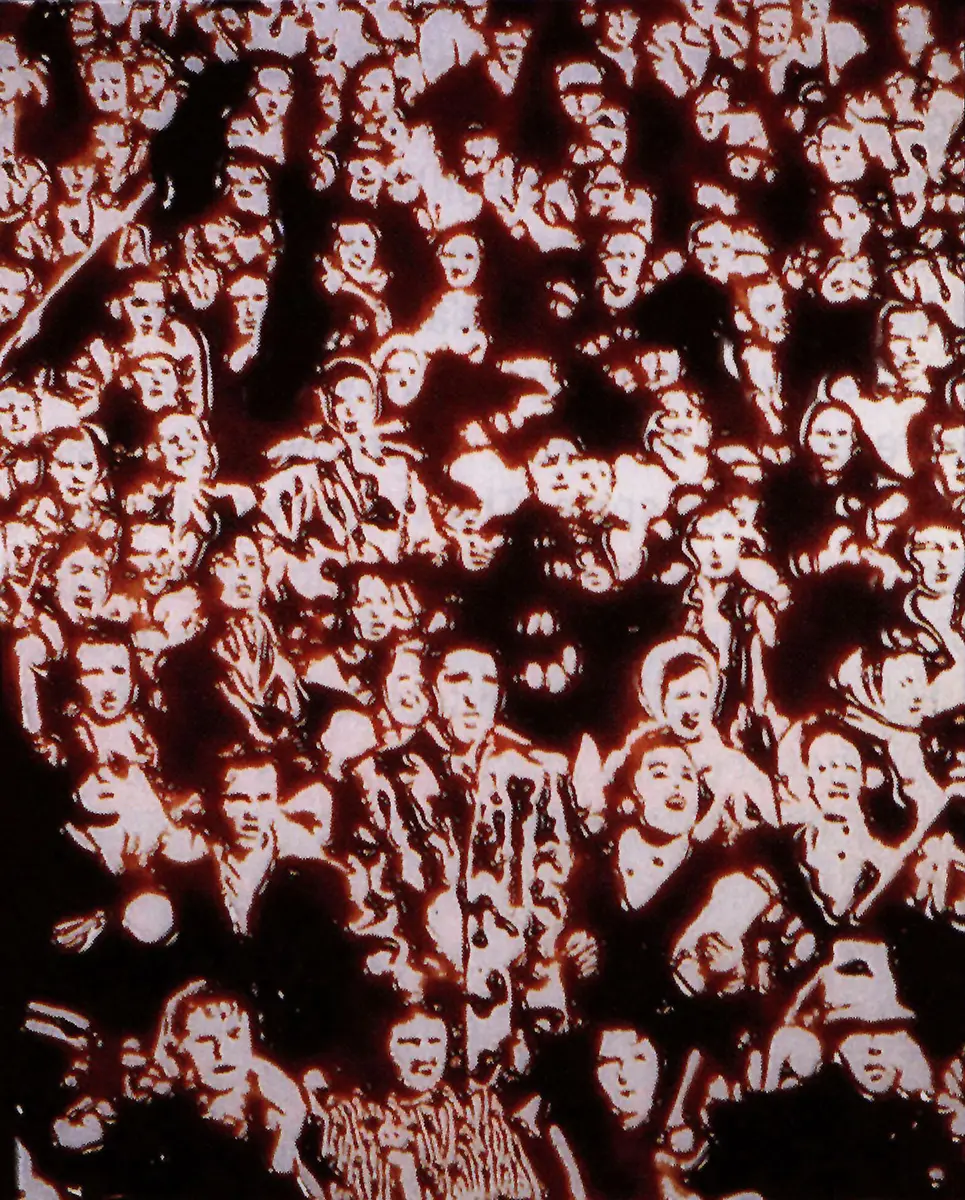
Mixed media works using varying combinations of photography, painting, drawing, and collage by artists Eduardo Medici and Oscar Bony at Galeria der Brücke (Buenos Aires), Óscar Muñoz’s Narcissus series at Galeria El Museo (Bogota), as well as Vik Muniz at Rena Bransten (San Francisco) and Phillipe Pasqua at Espace d'Art Yvonamor Palix (Paris/Mexico) are deserving of mention. Vik Muniz’s latest photography/drawings using viscous syrupy chocolate to define contour lines were represented by no less than three galleries at the fair. Employing a small light-box as his canvas, Muniz drips and manipulates chocolate syrup using the head of a straight pin, and later photographs and enlarges his drawings presenting them as large Cibachrome prints. Portraits such as Walt at the Rena Bransten (San Francisco), and The Last Supper at Galeria Camargo Vilaga (São Paulo) seem humorous and at times even irreverent owing to Muniz's unconventional use of materials.
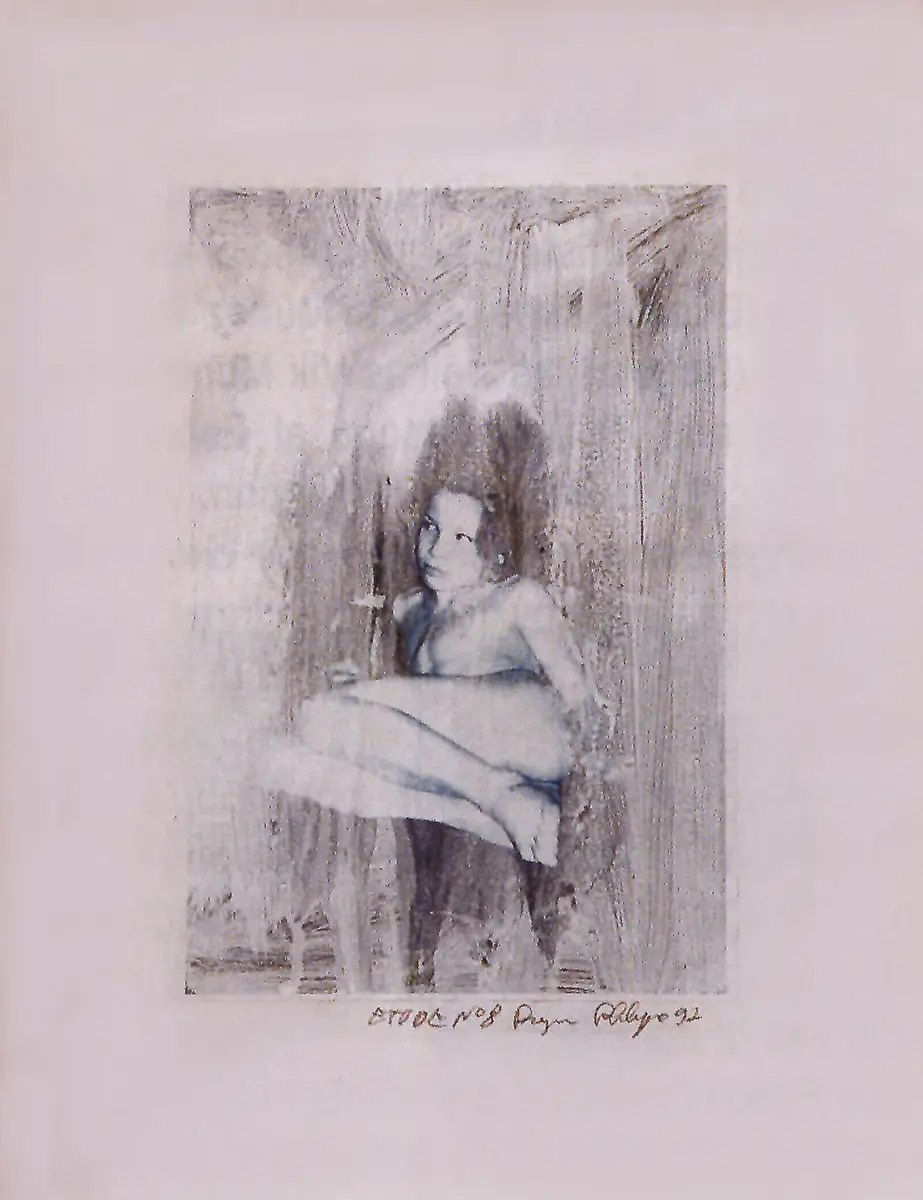
French artist Philippe Pasqua collages and paints in an expressive and gestural style over his large format photographs. In his, Les grand petites lilies (1998), Pasqua presented a series of images depicting pre-pubescent girls often cast in seductive poses, representing the obscure edges of childhood where adult behavior and gestures precociously appear. His portraits question acculturated ideas about childhood and innocence as well as the prurient implications that our own responses may elicit. Pasqua is one of the many artists that Espace d'Art Yvonamor Palix will bring to Mexico City this year when the gallery opens its doors in Colonia Roma in June.
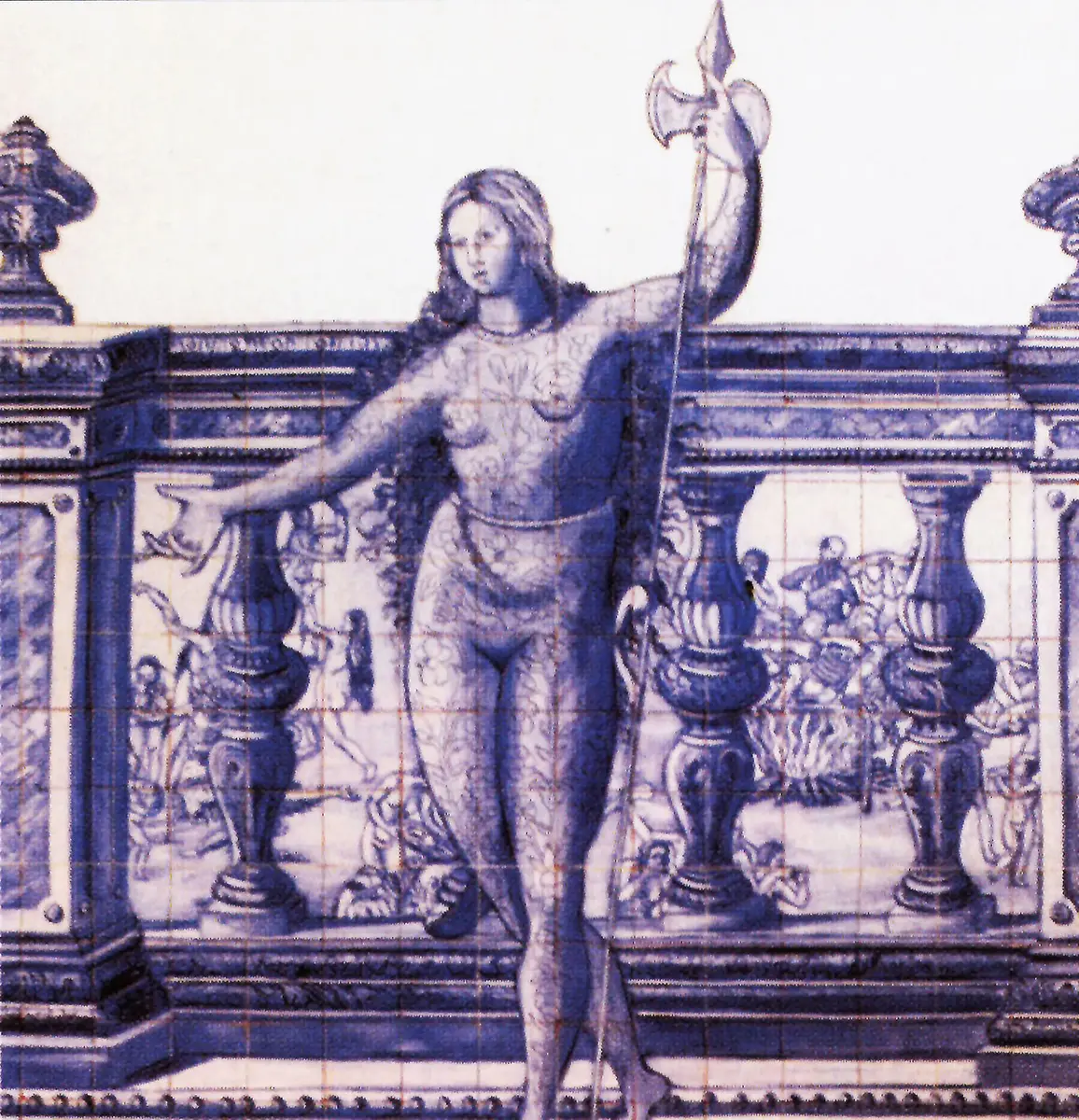
Photography was, of course, not the only type of work found at the art fair. Adriana Varejão's beautifully rendered painting, Figura de Convite (1998), at Galeria Camargo Vilaga (São Paulo) illusionistically recreates the effect of Portuguese tiles alluding to Brazil's colonial past. Her work strategically deploys the concept of Anthropophagy conceived by avant-garde writer/poet Oswald de Andrade in the 1920s, which called for the assimilation or “cannibalization” of the various cultural traditions that comprise modern Brazilian society, and the simultaneous rejection of those qualities that were deemed useless or inassimilable within Brazilian culture. Varejão incorporates images of fragmented body parts suggesting the idea of cannibalism, and the digestion of European, African, Oriental as well as native Brazilian elements into a cultural fusion. The ideas behind Anthropophagy allow Varejão to create her own versions of history, consciously selecting and manipulating the myriad cultural elements of Brazilian society within the space of her work.
Also of interest at this gallery was a sensual and biomorphic work by Ernesto Neto titled Glob (1998). Circular in form, the pliable white nylon sculpture filled with miniature polystyrene beads was conceived with a depression at its center where Neto deposited heaps of reddish-brown cinnamon spice. The viewer was invited to experiment by wrapping one’s arms around the malleable sculpture and inhaling the spicy and pungent scent of cinnamon. In the tradition of Lygia Clark and Hélio Oiticica, Neto offers his audience the opportunity to actively experience his artwork in ways that involve sensorial pleasure and ludic exploration.
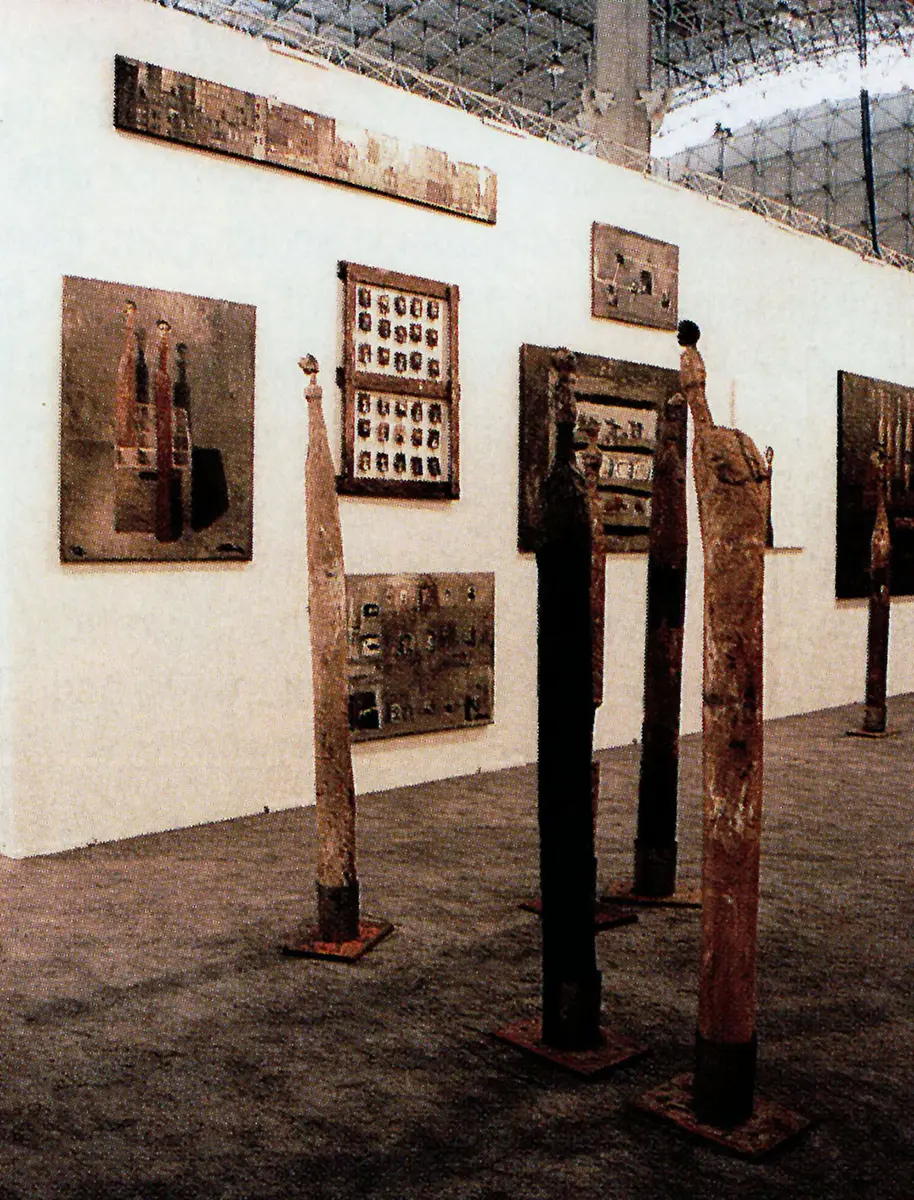
This year Praxis International Art (Buenos Aires) devoted their entire booth to the work of artist Ignacio Iturria, exhibiting paintings, sculptures, and assemblages displayed in a theatrical installation. The effect was impressive creating the illusion of a small universe populated with Iturria’s animated and anthropomorphic beings. In El Espejo, Iturria presented a free-standing bottle sculpture observing its painted reflection, setting up an interesting dialogue between the nature of painting and sculpture. Iturria’s mirror, however, seemed to be flawed, exhibiting subtle discrepancies that suggest the incongruity between self-perception and outward appearances. This dark psychological observation was tempered by the whimsical nature of Iturria's work, which presents human imperfection with a sense of humor and child-like playfulness.
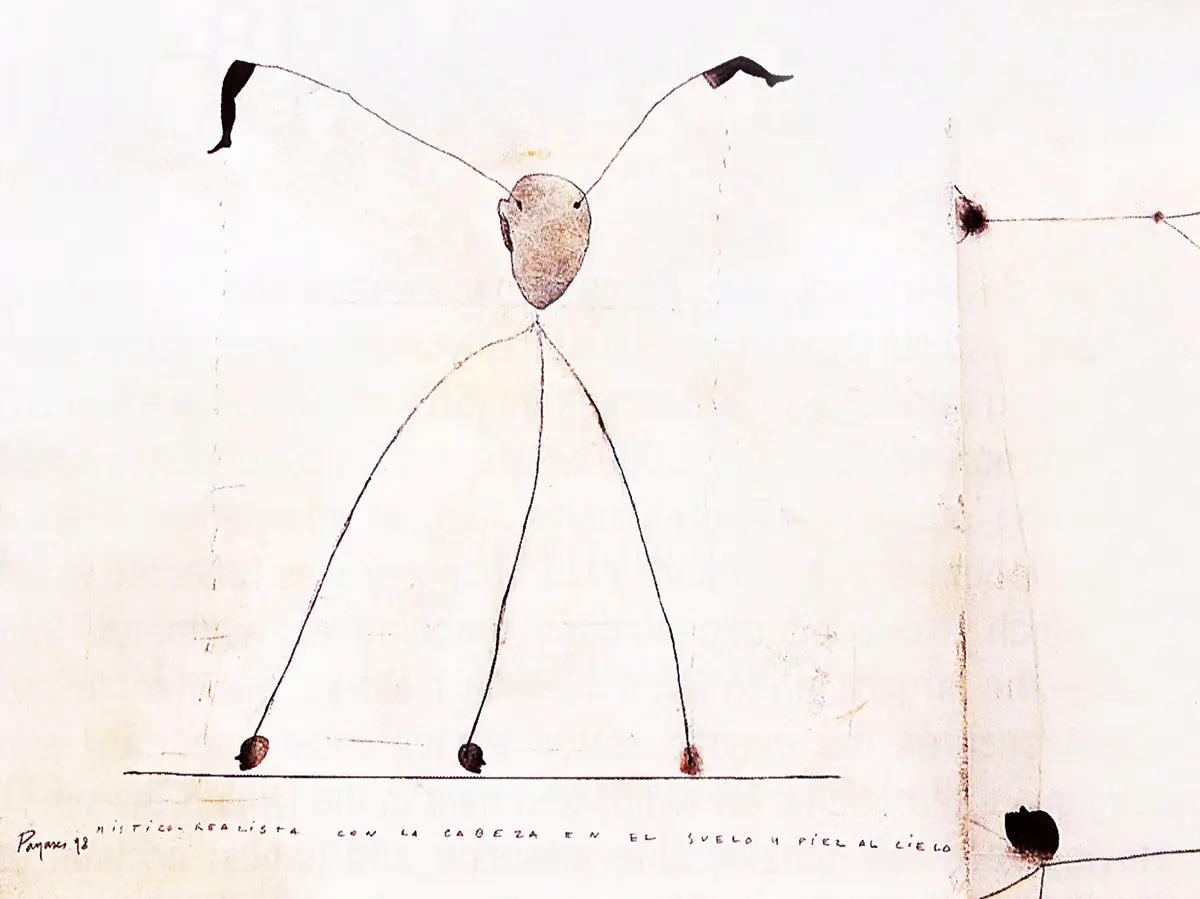
At Galeria Nina Menocal (Mexico City) the work of Sergio Payares was represented by a number of paintings combining personal and Afrocuban symbols to express ideas associated with exile and his relationship to Cuba.
Payares’ gestural line and themes of migration and exodus reflect an earlier association with José Bedia, his former professor in Havana. In Místico-realista con la cabeza en el suelo y pies al cielo (1998), Payares presents a spider-like creature, whose body has been reorganized in an unnatural manner— legs become antennalike extremities attached to a featureless face, with three appendages supported by disembodied heads. The transposition of body parts suggests Payares dislocated status, where life has been turned upside-down by the daily experiences of unfamiliar people, places, and cultural practices.
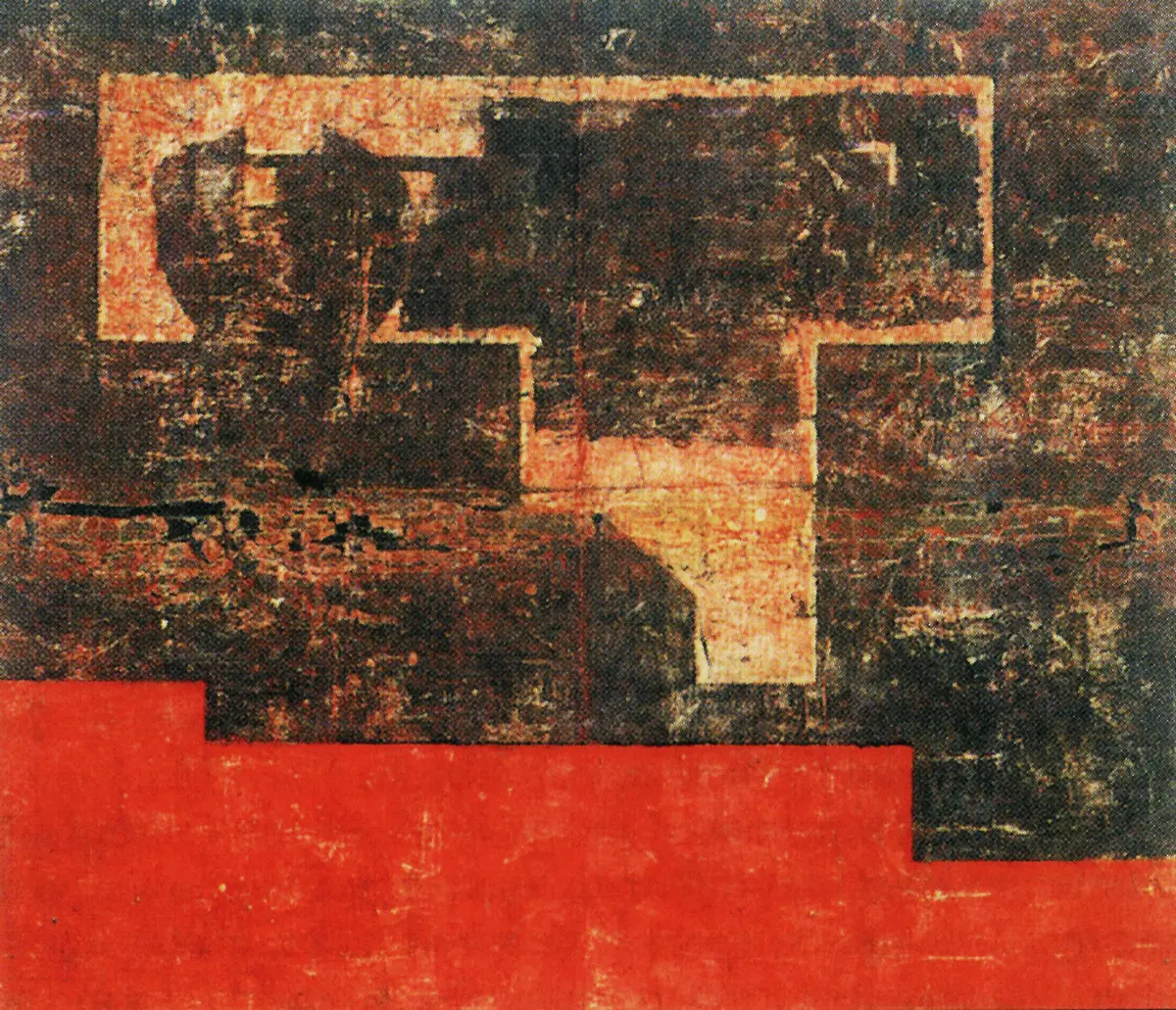
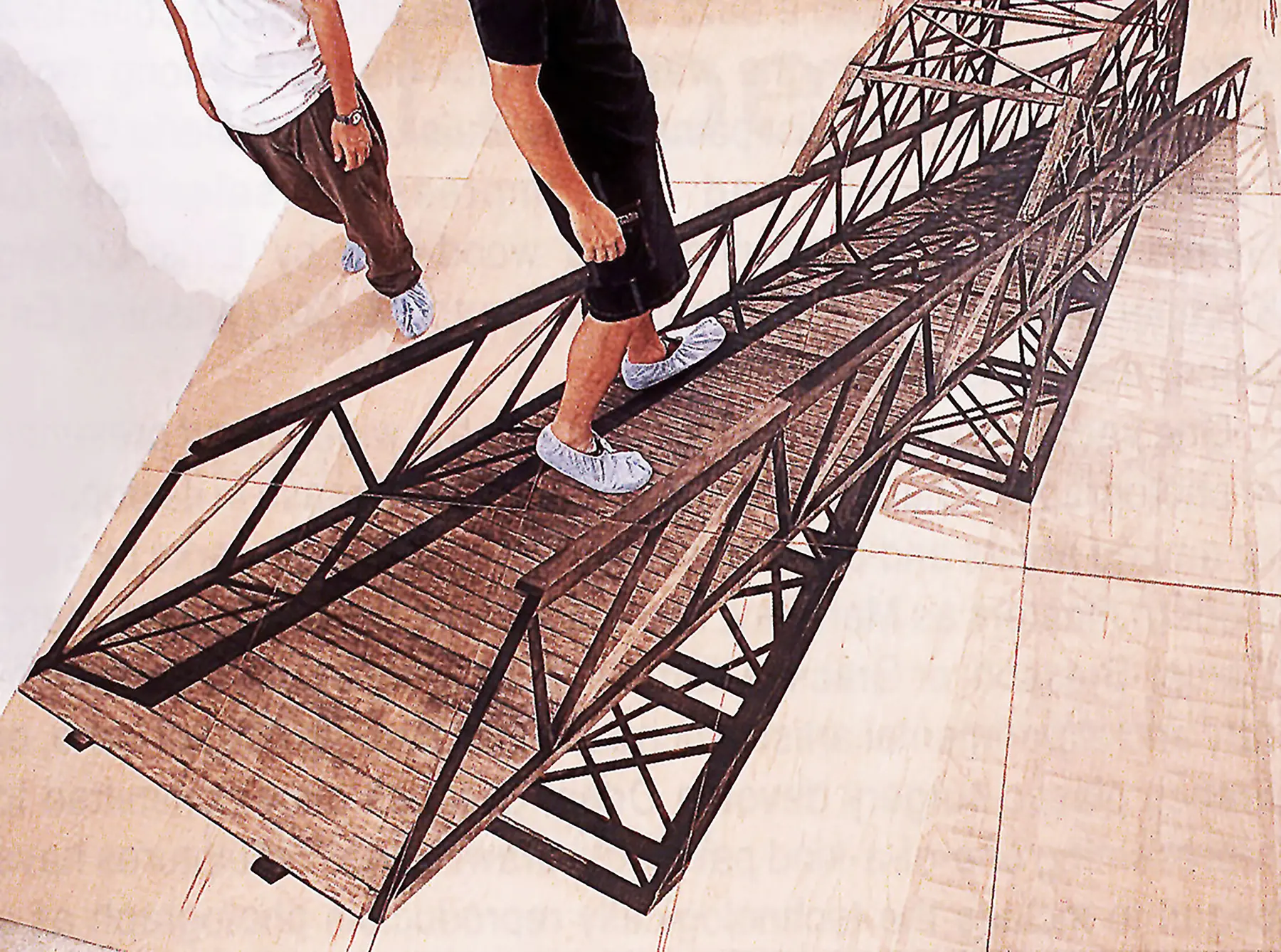
Also of interest at this year’s fair was an installation by Jennifer Allora and Guillermo Calzadilla at Jacob Karpio Atma (Costa Rica). To experience Charcoal Interlace (1998), one was asked to put on blue hospital booties and enter a room where the sound of radio static was played through speakers. A trompe l’oeil image of a wooden bridge was drawn with charcoal onto the light birchwood floor panels. Due to the perspectival distortions of the drawing, the viewer was unable to cross the bridge, thus being caught in a liminal space. By frustrating forward progress, the artists intend that the viewer reflects on spaces in-between the natural and the industrialized worlds, suggesting the creation of a balance whereby individuals become conscious of their relationship within these two extremes.
A new and important addition to this year’s art fair was the inclusion of the United States premiere of Documenta X: The Films, a six-part film series that debuted in Kassel Germany last summer. Originally produced for Documenta X under the direction of Catherine David and Bridgette Kramer, the inclusion of film and video at Art 1998 Chicago recognizes a global trend toward the merging of traditional fine art with a range of technologically reproducible works, providing a more complete multi-media experience for the art viewing public. This development marks a practical movement toward a more inclusive approach to artistic media—one that is more in keeping with our late twentieth-century music-video and computer-literate world.
CHARMAINE PICARD