
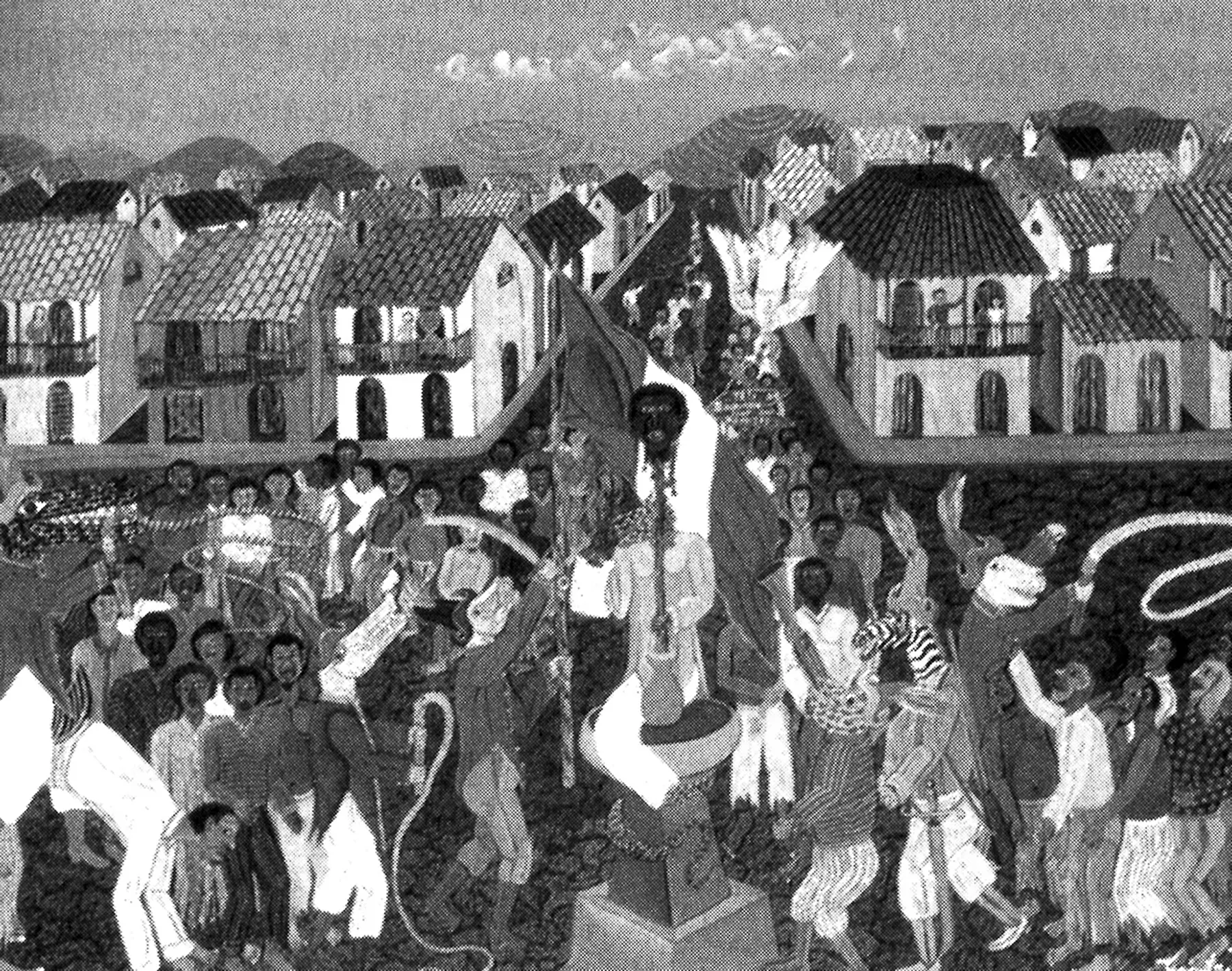
The ninety naïf paintings exhibited dealt with the outstanding periods and events in the history of Haiti, illuminating with their figures, scenes, and colors the third floor of the Museum of Modern Art of Santo Domingo. This group show, an exceptional anthology, offered the spectator a genuine source of visual enchantment. Three international organizations organized and sponsored the event: Afrique en Creations, a dynamic, multidisciplinary center that acted as the “producer”; Agence de la Francophonie, which in the past has organized linguistic and literary events in Santo Domingo; and Union Latina, an international body that campaigns on behalf of the survival of Latin culture. One must also acknowledge the moral support provided by Unesco.
In general terms, Haiti: 500 Years of History reflected a fundamental aspect of cultural policy: the Dominican-Haitian exchange process. Despite their similarities and close proximity to one another, Haiti and the Dominican Republic do not know enough about each other’s art and culture. Frequently, clichés or pre-conceived ideas are obstacles to the exchange of information. This exhibition presented some very high-quality primordial Haitian paintings, followed by a survey of the early history common to both countries, a period which was one of mutual suffering: discovery and colonization, the extermination of the indigenous peoples, and slave labor—the slave trade and physical abuse which also affected the Dominican blacks.
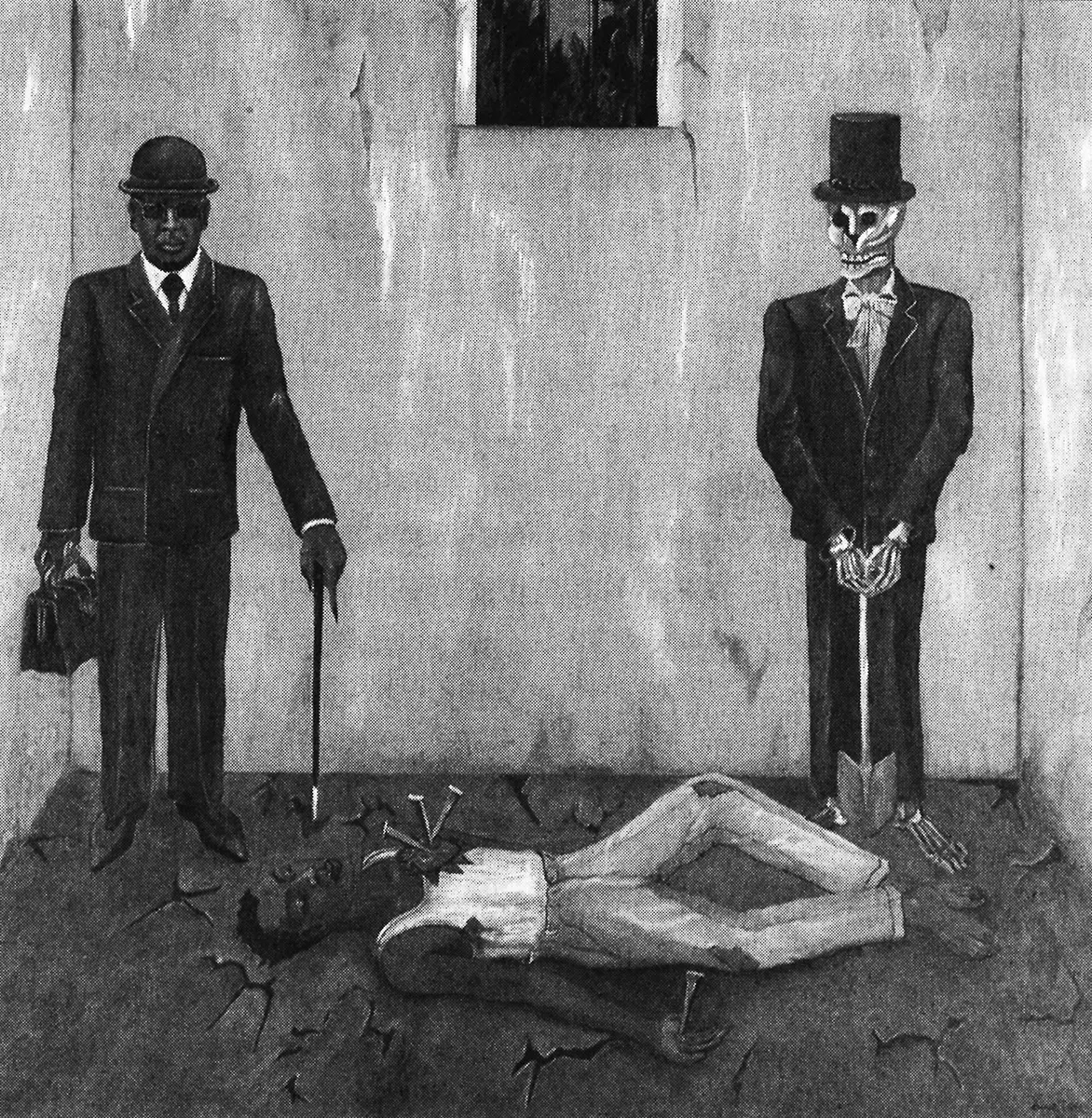
The show has the advantage of being presented in various countries, on different continents. This will broaden our familiarity with Haitian art, which has been recognized internationally as demonstrated by the Art Naïf/Art Voudou exhibition in 1988 at the Grand Palais in Paris. The conceptual focus of the show also merits praise. The exhibition was curated by Jean-Marie Drot, an art expert and the main specialist in naïf art. He decided to gather together a selection of works based on the history of Haiti—an intelligent way of “commemorating" the 500 years of encounter between the two worlds (the last pictorial exhibitions were held in 1995). In documenting this historical journey, some existing paintings (by deceased artists) were displayed, although probably the majority were commissioned from carefully selected artists known for their style or mastery of themes. The selection was very personal, well-organized, and impressive—the work of a connoisseur, the kind of curatorship which produces the best results.
I am sure that the show will generate theoretical analysis and reflection about naïf art and its characteristics. However, much has been published on the subject and opinions differ. One more controversy would add nothing to the immense interest of a very special anthology of art and history. Ingenuous, primitive, primordial, popular, and intuitive are some of the synonyms associated with the word “naïf in art, whether painting or sculpture. Jean-Marie Drot uses the word enchanteur, enchanting.
The painting becomes a document, a chronicle that can be read by any spectator, literate or not. It is important to note that the descriptive/narrative density is such that one scene is tantamount to an entire chapter. From the many examples on the show, mention might be made of the series of misfortunes resulting from Discovery by the marvelous Eddy Jacques; Life and Death of Henri Cristophe, by Alfred Altidor, and the Portrait of President Aristide, by Fortuné Gérard. These works do not propose just a saga or a visual story full of details and observations but offer a strong and vibrant message. The painter is weeping, and becomes indignant or joyful, depending on the circumstances. Thus Michel Saint Fleur moves us with his representation of the suffering inflicted on the slaves. We deplore, with Jean Baptiste Jean, the fate of Toussaint Louverture while The Victory of Verriére, an extraordinary military fresco by the same artist, announces independence. There is no doubt that in the history of Haiti, misfortune has generally prevailed but these painters have expressed the courage of the Haitian people.
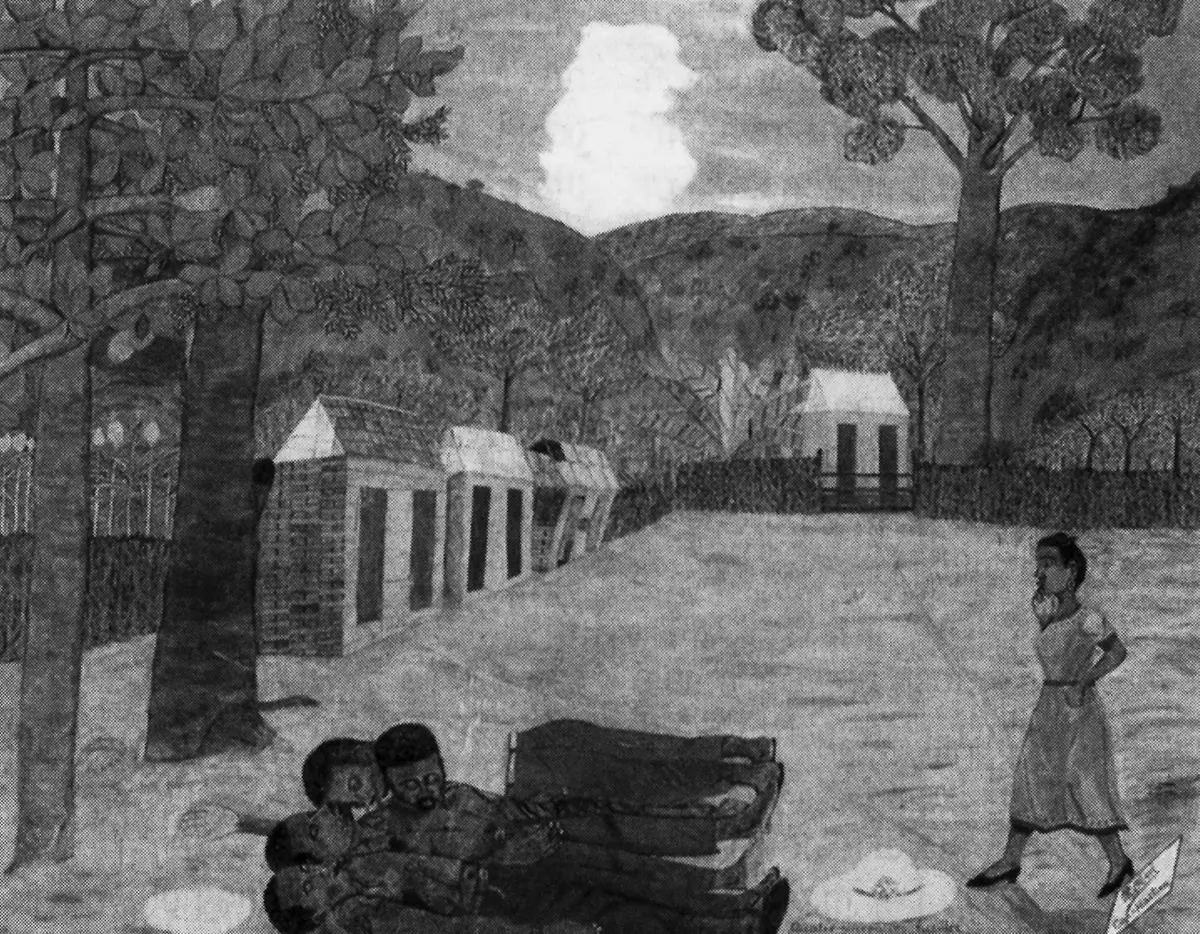
Most comments on naïf art refer to its element of fantasy as if it were about simple dreaming souls, irrational creatures immersed in their own worlds. In this show, there was a great sense of imagination, an ability to recreate-both objectively and subjectively —a secular or recent history. But this fantasy is based on beliefs— as in the Vudu Gods before the Destiny of Haiti by Cameau Rameau— or symbolism —as The Shadow-Men in the Prisoner Country by Roland Etienne. The fabulous or fabled element appears in Tonton Macoute Ti Bobo, Ave de Rapiha Uniformada by Fritzner Lamur, and in the delightful prints by Frantz Zéphirin, a magician-painter who puts animal heads on the enemies, or the prows of ships.
Then there are the more humble, part-time painters, as well as full-time high-caliber professionals, such as Philomé Obin and others, or Cesner Almand. But it is not a matter of the number of works. The masters may be represented by a single canvas, as in the impressive Overpopulation by Préfete Duffaut (who has a legion of imitators). There may be two, as in the case of the magnificent Edouard Duval-Carrié, sculptor and painter, one of the most important contemporary artists, with his tremendously symbolic death of Stephen Alexis, and the curious encounter between Hector Hyppolite and André Breton. Mention must also be made of Pascale Monnin, a very young artist who is rapidly becoming well-known.
The catalog for the show is excellent, with a wealth of information, texts, and photographs. It is a book to be kept and consulted and deserves special recognition. All the works on display are reproduced (with a few exceptions.) In Haiti: 500 Years of History, the Haitian painters tell us where they come from and who they are, although they do not know where they are going along the path of their turbulent and cruel experiences. Thanks to their talent and unmistakable personalities, the interest, and dedication of international institutions, and the wisdom and experience of a great expert, it has been possible to mount this fascinating exhibition. May it continue to travel successfully throughout the world.